


Are Rebuilt Titles Safe? Everything You Need to Know
November 22, 2025
More than 40 million american vehicles change hands each year, and a surprising share come with complex histories. Buying a car with a rebuilt title can seem like a smart way to save money, but it brings unique risks and rewards. Understanding exactly what a rebuilt title means, how these vehicles are certified for safety, and what this status means for registration and insurance can help buyers make informed and confident choices.
Table of Contents
- What Is a Rebuilt Title Vehicle?
- Key Differences in Rebuilt Title Cars
- How Safety Is Assessed and Verified
- Insurance, Registration, and Utah Laws
- Costs, Value, and Buyer Transparency
Key Takeaways
| Point | Details |
|---|---|
| Definition of Rebuilt Title Vehicles | Rebuilt title vehicles are formerly damaged cars that have been professionally repaired and certified to be roadworthy. |
| Cost Benefits | These vehicles typically sell for 20-50% less than clean title counterparts, offering significant savings to buyers. |
| Inspection and History Importance | Buyers should ensure a thorough inspection and obtain a comprehensive vehicle history report before purchasing to assess safety and reliability. |
| Legal and Insurance Considerations | In Utah, rebuilt titles are permanently branded, and sellers must disclose the vehicle’s repair history, influencing insurance coverage options. |
What Is a Rebuilt Title Vehicle?
A rebuilt title vehicle represents a car that has experienced significant damage but has been professionally repaired to return to roadworthy condition. According to the Utah DMV, a rebuilt vehicle is specifically a salvage vehicle that has been restored to operational status and receives a special branded title indicating its history.
The American Association of Motor Vehicle Administrators provides a more technical definition, describing a rebuilt vehicle as one that was previously registered, rendered inoperable due to damage, and subsequently reconstructed to its original design by replacing major components with equivalent parts. This means the vehicle has undergone extensive repairs to make it safe and functional again.
Key characteristics of a rebuilt title vehicle include:
- Significant prior damage that previously made the vehicle non-operational
- Professional repairs using replacement parts
- Inspection and certification by authorized professionals
- A special branded title that indicates its repair history
- Potential price advantage compared to similar clean title vehicles
While rebuilt title vehicles can offer substantial savings, they require careful evaluation. Potential buyers should always conduct thorough inspections and understand the vehicle’s complete repair history before making a purchase. Learn more about these unique vehicles in our guide on rebuilt title meanings.
Key Differences in Rebuilt Title Cars
A rebuilt title vehicle is distinctly different from other types of vehicle titles, with several critical characteristics that set it apart from standard used cars or salvage vehicles. The primary difference lies in the vehicle’s repair and certification process, which transforms a once-damaged car into a roadworthy automobile.
The most significant distinctions between rebuilt title cars and other vehicle titles include:
- Repair History: Unlike clean title vehicles, rebuilt titles indicate the car has undergone major repairs after significant damage
- Inspection Requirements: These vehicles must pass rigorous state-level safety and structural inspections
- Value Impact: Rebuilt title cars typically sell for 20-50% less than comparable clean title vehicles
- Insurance Considerations: Many insurance companies have specific policies for rebuilt title vehicles
When comparing rebuilt titles to other vehicle classifications, it’s crucial to understand the nuanced differences. For a comprehensive breakdown of how rebuilt titles differ from salvage titles, check out our detailed guide on title differences. Some key points to remember include the fact that while salvage titles represent vehicles deemed total losses, rebuilt titles indicate those same vehicles have been professionally repaired and certified for road use.
Potential buyers should approach rebuilt title vehicles with a balanced perspective. While these cars offer significant cost savings, they also require more thorough due diligence. Always obtain a comprehensive vehicle history report, have an independent mechanic inspect the vehicle, and carefully evaluate the extent and quality of previous repairs before making a purchase decision.
How Safety Is Assessed and Verified
Safety verification for rebuilt title vehicles is a comprehensive and meticulous process designed to ensure these vehicles meet stringent roadworthiness standards. According to the American Association of Motor Vehicle Administrators, rebuilt vehicles must undergo thorough structural integrity and mechanical safety inspections overseen by jurisdictional authorities before being deemed safe for road use.
The safety assessment typically involves multiple critical inspection points:
- Structural Examination: Comprehensive evaluation of frame straightness and structural integrity
- Mechanical Systems Review: Detailed inspection of brake, steering, suspension, and drivetrain components
- Electrical System Verification: Checking all electronic systems and safety features
- Physical Damage Assessment: Identifying and confirming proper repair of previous damage
- Test Driving: Practical road test to validate overall vehicle performance
These rigorous inspections are designed to protect consumers by ensuring that rebuilt vehicles meet minimum safety standards.
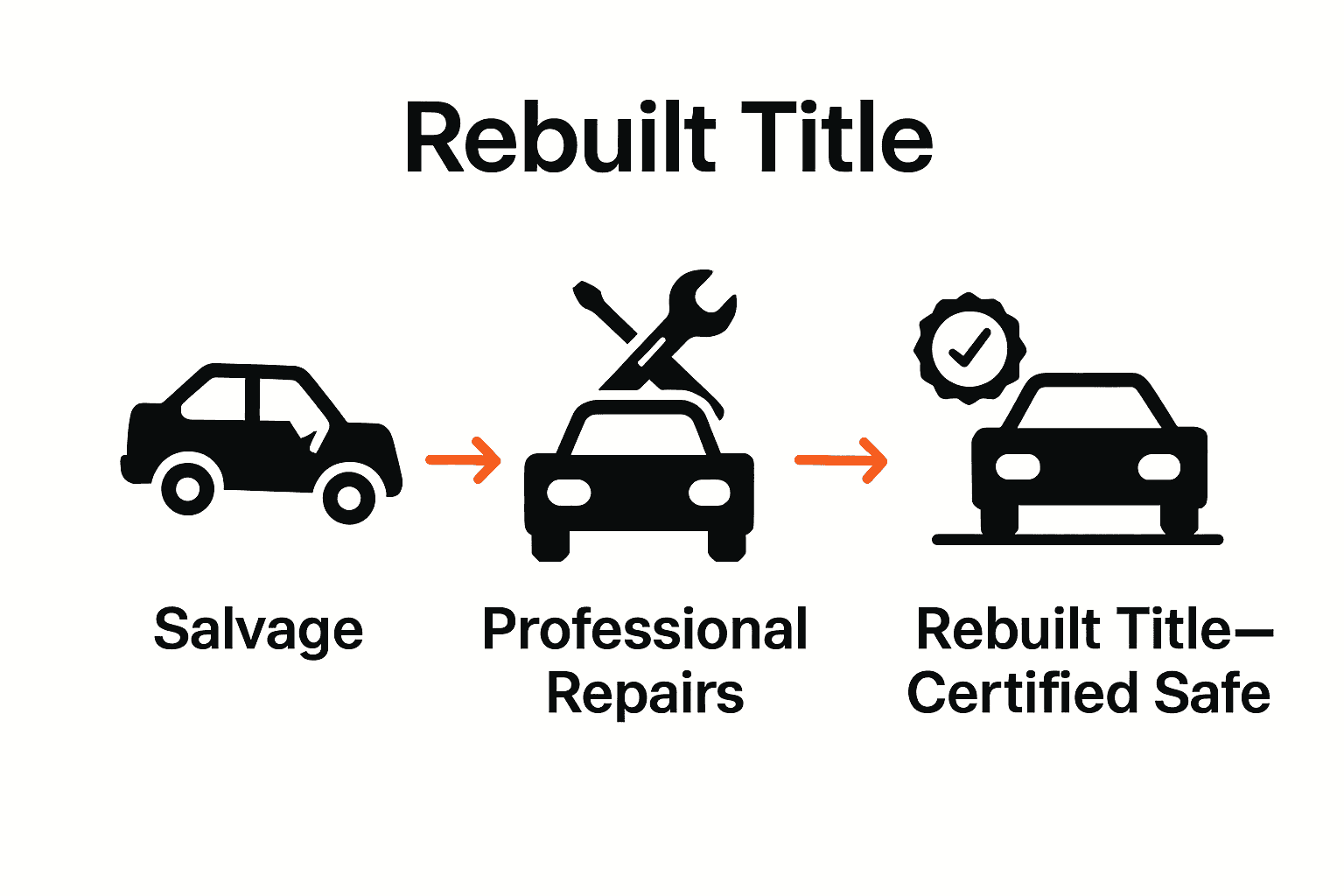 While the process varies slightly by state, the core principle remains consistent: every rebuilt vehicle must prove its roadworthiness through professional, multi-point evaluations. For additional insights into navigating the world of rebuilt titles, explore our guide on rebuilt title safety.

Potential buyers should remain proactive in their safety verification process. Beyond official inspections, it’s recommended to obtain a comprehensive vehicle history report, hire an independent mechanic for a personal inspection, and carefully review all documentation related to the vehicle’s previous damage and repair. Remember, while rebuilt title vehicles can offer significant cost savings, your safety and the vehicle’s reliability should always be the top priority.
Insurance, Registration, and Utah Laws
Navigating the legal landscape of rebuilt title vehicles in Utah requires careful attention to specific state regulations and requirements. Utah’s Department of Motor Vehicles mandates that rebuilt vehicles receive a permanently branded title, ensuring complete transparency about the vehicle’s history and status.
Key legal and administrative requirements for rebuilt title vehicles in Utah include:
- Permanent Branding: Rebuilt titles are permanently marked, and this status cannot be removed
- Seller Disclosure: Sellers must provide comprehensive disclosure statements about the vehicle’s previous condition
- Inspection Requirements: Vehicles must pass rigorous state-level safety inspections before registration
- Insurance Considerations: Most insurance companies will provide coverage, though potentially with some restrictions
According to Utah Legislative Code, the legal framework surrounding rebuilt titles is designed to protect consumers by ensuring complete transparency. Potential buyers must be fully informed about the vehicle’s history before purchase. For a comprehensive walkthrough of the registration process in Utah, check out our guide to registering a car in Utah.
While the process might seem complicated, Utah’s regulations are actually designed to make rebuilt title vehicle ownership straightforward and safe. Insurance is typically available, though rates may vary. Buyers should obtain multiple insurance quotes, provide complete vehicle history documentation, and be prepared to demonstrate the vehicle’s current condition through professional inspection reports. The key is transparency and thorough documentation.
Costs, Value, and Buyer Transparency
Rebuilt title vehicles represent a unique opportunity for budget-conscious buyers to access high-quality transportation at significantly reduced prices. These vehicles typically sell for 20-50% less than comparable clean title vehicles, offering substantial savings without necessarily compromising on quality or performance.
Key considerations for understanding the value of rebuilt title vehicles include:
- Price Point: Substantial discounts compared to traditional used vehicles
- Depreciation Factors: Potentially faster depreciation due to title history
- Inspection Costs: Additional professional inspection expenses may be necessary
- Insurance Implications: Potential variations in insurance rates and coverage
Transparency is the cornerstone of making a smart rebuilt title vehicle purchase. Buyers should conduct comprehensive research, including:
- Obtaining a detailed vehicle history report
- Requesting complete repair documentation
- Hiring an independent mechanic for thorough inspection
- Comparing market values with similar clean title vehicles
For those looking to maximize their purchasing strategy, understanding how to price a rebuilt title car can make a significant difference. While these vehicles offer incredible value, success depends on careful evaluation and a willingness to dig deeper into the vehicle’s complete history. Smart buyers approach rebuilt titles as an opportunity to find a reliable vehicle at an unbeatable price point, armed with knowledge and a discerning eye.
Discover Safe and Transparent Options for Rebuilt Title Vehicles
Buying a rebuilt title vehicle can be overwhelming with questions about safety, repair history, and value. The article highlights the importance of thorough inspections and understanding a vehicle’s background before making a decision. At ReVroom, we solve these challenges by offering every listing with detailed accident history information and photos of the vehicle before repairs, giving you clear insights without the usual hefty investigation costs.
With rebuilt titles pricing up to 50 percent less than clean titles, ReVroom is the only online marketplace built specifically for these vehicles. We bring transparency and fairness to help you confidently find the right car for your needs. Dive deeper into how rebuilt title vehicles work in our Are Rebuilt Titles Safe? Everything You Need to Know article and explore expert guidance on navigating registrations at Registering a Car in Utah.
Are you ready to save both time and money while making a smarter, safer buying decision?

Start your journey with ReVroom today and experience the only marketplace where rebuilt title vehicles get the second chance they deserve with honesty and clarity. Your smarter ride is just a click away.
Frequently Asked Questions
Are rebuilt title vehicles safe to drive?
Yes, rebuilt title vehicles are safe to drive, provided they have undergone the necessary inspections and repairs. They must pass rigorous safety checks to be certified as roadworthy.
What is the difference between a rebuilt title and a salvage title?
A rebuilt title indicates that a vehicle has been repaired and is now functional, while a salvage title means the vehicle was deemed a total loss and may not be safe to drive without repairs.
How can I verify the safety of a rebuilt title vehicle?
To verify safety, obtain a comprehensive vehicle history report, ensure the vehicle has passed all necessary inspections, and consider having an independent mechanic conduct a thorough check.
What are the cost implications of owning a rebuilt title vehicle?
Rebuilt title vehicles typically sell for 20-50% less than similar clean title vehicles. However, they may depreciate faster and could have variations in insurance rates and coverage.
