


Best Fuel Efficient Used Cars – Expert Comparison 2025
November 28, 2025
Shopping for a car or building your perfect online workspace comes with more options than ever. Some platforms focus on savings and transparency, some put convenience and selection first, while others give you total control over organization and privacy. Which approach fits your needs best and what extras do you actually get? The differences can be surprising and the right choice might not be where you expect. If you want to know what really sets each option apart, keep reading to discover what makes these services stand out.
Table of Contents
Revroom

At a Glance
Revroom is a focused marketplace for rebuilt cars that combines deep transparency with clear cost savings—up to 50% versus similar clean-title vehicles. The site centralizes rebuilt listings, detailed vehicle history, and educational resources so buyers and sellers can make confident decisions without hunting down reports or guessing at a car’s past. If you want value and clarity when shopping rebuilt titles, Revroom makes the whole process faster and less expensive.
Core Features
Revroom gathers comprehensive listings of rebuilt cars in one searchable place and pairs each listing with detailed vehicle history and clear explanations of the repair and inspection process. The platform highlights estimated savings and offers guides and FAQs that walk buyers through what a rebuilt title means and common questions about ownership. Together, these features let you compare candidates side-by-side and learn what to look for before you arrange an in-person inspection or contact a seller.
Pros
- Significant cost savings: Revroom emphasizes vehicles priced up to 50% below comparable clean-title models, which directly stretches a buyer’s budget for safer, newer, or better-equipped cars.
- Transparency in vehicle history: Every listing includes detailed history information so you can see the timeline and context that matter when evaluating a rebuilt title.
- Centralized selection: Instead of hopping between classifieds and dealer sites, Revroom puts a wide range of rebuilt vehicles in one place for efficient comparisons.
- Educational resources: Guides and FAQs explain the rebuilt process and common ownership concerns, helping first-time rebuilt buyers feel informed rather than overwhelmed.
- Support for insurance and financing paths: The platform lists insurance and financing options that reflect the rebuilt market, helping buyers plan purchase logistics more realistically.
Who It’s For
Revroom is built for budget-conscious buyers who need reliable transportation—think parents buying a dependable second car for a teen, college students prioritizing affordability, and anyone who wants more value per dollar. It also serves sellers who want to reach a focused audience that understands rebuilt titles. If you want to cut through uncertainty and compare rebuilt options efficiently, this is the marketplace for you.
Unique Value Proposition
What sets Revroom apart is its singular focus on rebuilt-title vehicles combined with consumer-first transparency. Instead of forcing buyers to pay for multiple third-party reports (which commonly cost around $150 each), Revroom bundles the essential vehicle history into listings and supplements that data with plain-English guides about repairs and inspections. The result: faster decisions, fewer surprises, and clear dollar savings. For shoppers who need to weigh value against risk, Revroom’s curated, educational approach outperforms general used-car sites that bury rebuilt details or scatter them across disparate listings.
Real World Use Case
Imagine you’re comparing three compact sedans for a reliable commuter car. On Revroom you pull each listing, review the posted history and repair notes, and assess estimated savings. You bookmark the top two, read the repair explanations, and contact sellers for local inspections—no extra reports needed to get started. You buy the better-equipped option and save a bundle. Smart, efficient, repeatable.
Pricing
Specific listing prices vary by vehicle; Revroom does not publish a subscription fee but highlights that rebuilt vehicles on the site can cost up to 50% less than comparable clean-title cars, making the marketplace a practical option for budget-focused buyers.
Website: https://revroom.org
Carvana
At a Glance
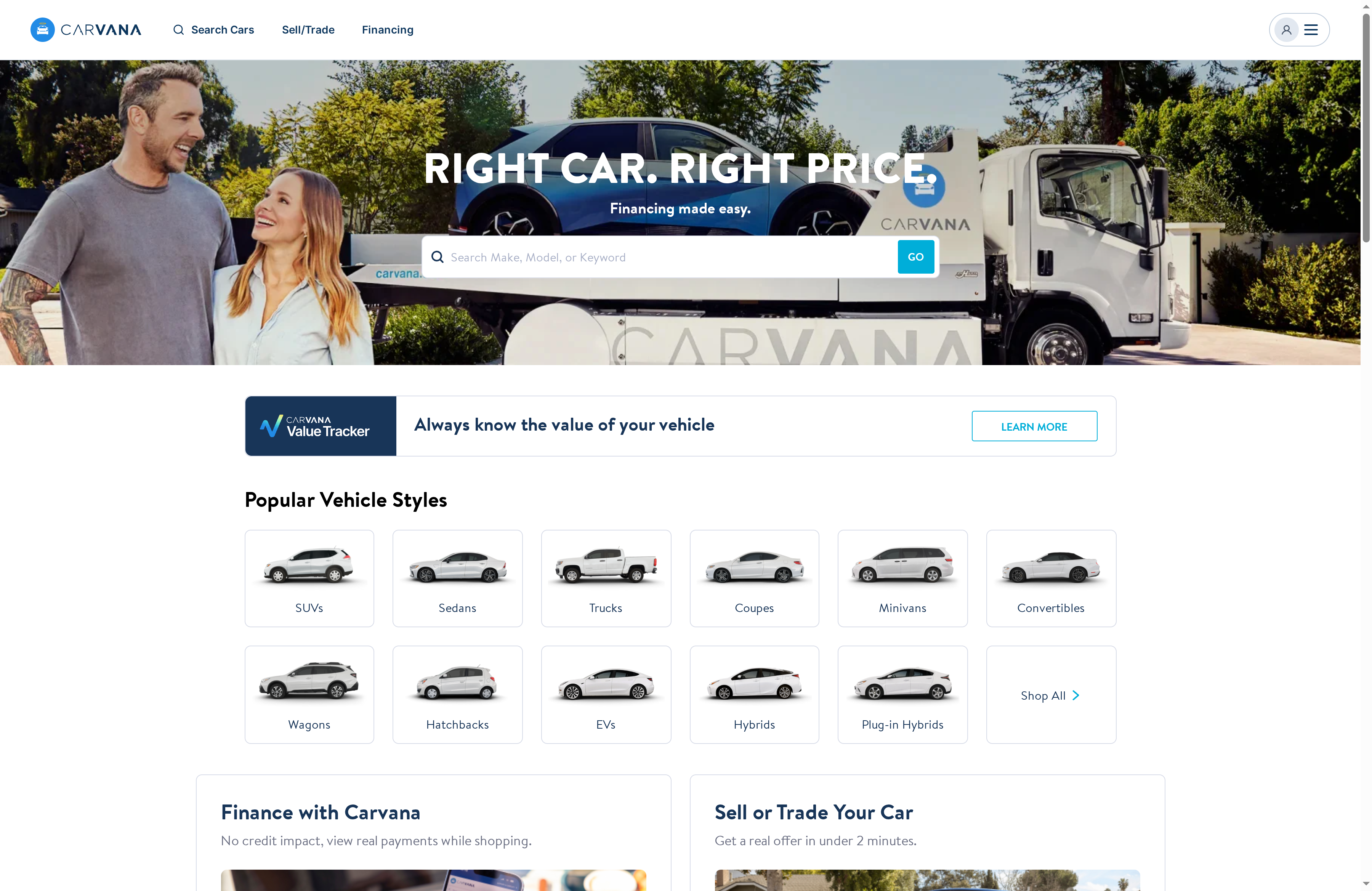
Carvana streamlines buying and selling vehicles online by combining a broad inventory with tools that make decisions faster and clearer. If you value convenience—searching by make, style, price, and location, then arranging delivery—Carvana shortens the typical car hunt into a few focused steps. It’s especially strong for budget-conscious buyers who want transparency and easy access to insurance during checkout.
Core Features
Carvana’s platform centers on a large selection of SUVs, sedans, trucks, and specialty styles paired with search filters that let you shop by make, model, style, and location. Notable features include price-drop alerts and a highlighted inventory of cars under $20,000, a four-day delivery option for many listings, a car value tracker that personalizes market insights, and Carvana Insurance to simplify coverage at purchase. Together these elements reduce friction between finding a car and driving it home.
Pros
- Large selection of vehicles and styles: Carvana lists many body types and trims, giving buyers a lot of choices without visiting multiple lots.
- Transparent pricing including deals and price drops: The platform highlights price movements and affordable options so you can spot value quickly.
- Convenient delivery options: Home delivery and centralized logistics mean you can complete most of the purchase without leaving your home.
- Multiple tools for vehicle valuation and insurance express purchase: Built-in valuation and insurance options help you estimate total cost and secure coverage in one flow.
- Browse and shop by make, model, style, and location: Robust filters make it easier to match specific needs—commute efficiency, family seating, or budget limits.
Cons
- Limited to online shopping—no physical stores for browsing: If you want to touch or test multiple cars in person before committing, Carvana requires you to rely on photos and descriptions.
- Potentially higher prices for some vehicles compared to local dealers: Some listings may not be the lowest available in every local market, so bargains aren’t guaranteed.
- Availability depends on location: Inventory and delivery timelines vary by region, which can limit choices or increase wait times.
Who It’s For
Carvana fits buyers who prioritize convenience, transparency, and time savings over in-person browsing. If you’re a student, busy parent, or first-time buyer who needs clear pricing and straightforward financing and insurance options, Carvana removes many traditional hassles of used car shopping.
Unique Value Proposition
Carvana packages inventory breadth with decision tools—price trackers, highlighted budget options, and insurance—so buyers can evaluate and complete purchases end-to-end online. The combination of searchable listings and delivery capability is the main draw: it turns a weekend car hunt into a streamlined digital experience.
Real World Use Case
Imagine a buyer in Atlanta searching for a used SUV under $20,000. They filter for the right model and features, monitor a price drop, schedule four-day home delivery, and add Carvana Insurance at checkout—completing the purchase without a dealership visit.
Pricing
Prices vary by vehicle type, make, model, and condition; Carvana highlights inventory under $20,000 as budget-friendly choices, but individual listings set final prices.
Website: https://carvana.com
Vroom
At a Glance
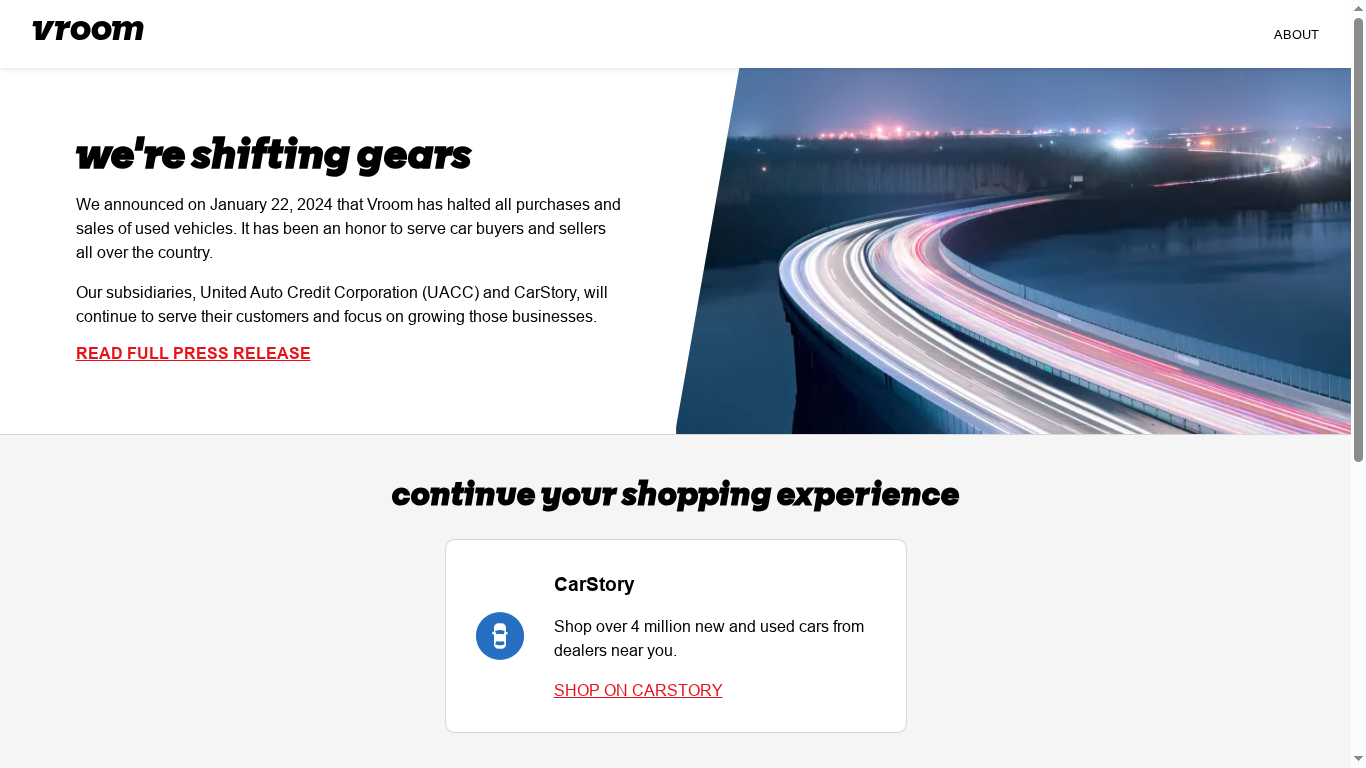
Vroom once operated as a direct marketplace for used cars but, as of January 22, 2024, has halted all purchases and sales of used vehicles. Rather than disappearing, the company now focuses through subsidiaries—like United Auto Credit Corporation and CarStory—on finance, automotive data services, and support for existing customers. Bottom line: if you wanted to buy or sell through Vroom itself, that option is no longer available; if you already own a Vroom vehicle or want a large dealer inventory via CarStory, Vroom’s ecosystem still offers tangible value.
Core Features
Vroom’s remaining capabilities center on three areas pulled from the company’s updated operations: access to a broad selection of cars via CarStory (advertised as over 4 million new and used vehicles from nearby dealers), continued customer resources for existing owners (gap claims, vehicle service plans or multi-coverage, and roadside assistance), and an extensive FAQ hub for straightforward self-service. Those features reflect a shift from direct retail to enabling services and data-driven tools for buyers, sellers, and finance partners.
Pros
- Large dealer-backed inventory through CarStory: Vroom links you to a wide selection of local dealer listings, increasing the odds of finding the specific model and trim you want.
- Ongoing customer support for existing clients: Even after stopping transactions, the company maintains support channels for warranty and claims work, which protects current owners.
- Multiple avenues for service and claims: The presence of resources like gap claims handling and roadside assistance gives existing customers practical, usable benefits without needing third-party coordination.
- Strategic focus on finance and data services: By growing subsidiaries in auto finance and data, Vroom preserves parts of its business that continue to help buyers and sellers in adjacent ways.
Cons
- No direct buying or selling through Vroom: Consumers can no longer complete vehicle transactions on Vroom’s platform, which eliminates the primary reason many customers came to the brand.
- Dependence on subsidiaries for core functionality: Capabilities now rely on third-party or sister platforms (CarStory, UACC), which can create friction or additional steps compared to a single, integrated marketplace.
- Unspecified pricing and transaction terms: With the shift away from direct sales, there’s no clear pricing structure or advertised fees for the services still offered, making cost comparisons difficult.
Who It’s For
Vroom now best serves two groups: existing Vroom vehicle owners who need support for claims, warranties, or roadside assistance, and shoppers who prefer to browse a vast dealer inventory via CarStory rather than buy directly from an online retailer. If you want to transact on a single marketplace, Vroom is not your solution today.
Unique Value Proposition
Vroom’s value is its pivot: it preserves customer-facing services while leveraging subsidiaries to provide a massive dealer inventory and financial services. The combination gives existing customers continuity and prospective buyers broad search reach without Vroom acting as the direct seller.
Real World Use Case
A Utah college student hunting for a reliable commuter can use CarStory through Vroom to compare thousands of local dealer listings, while a parent who purchased from Vroom last year can still file a gap-coverage claim or request roadside assistance through the company’s support channels.
Pricing
Not specified.
Website: https://vroom.com
CarMax
At a Glance
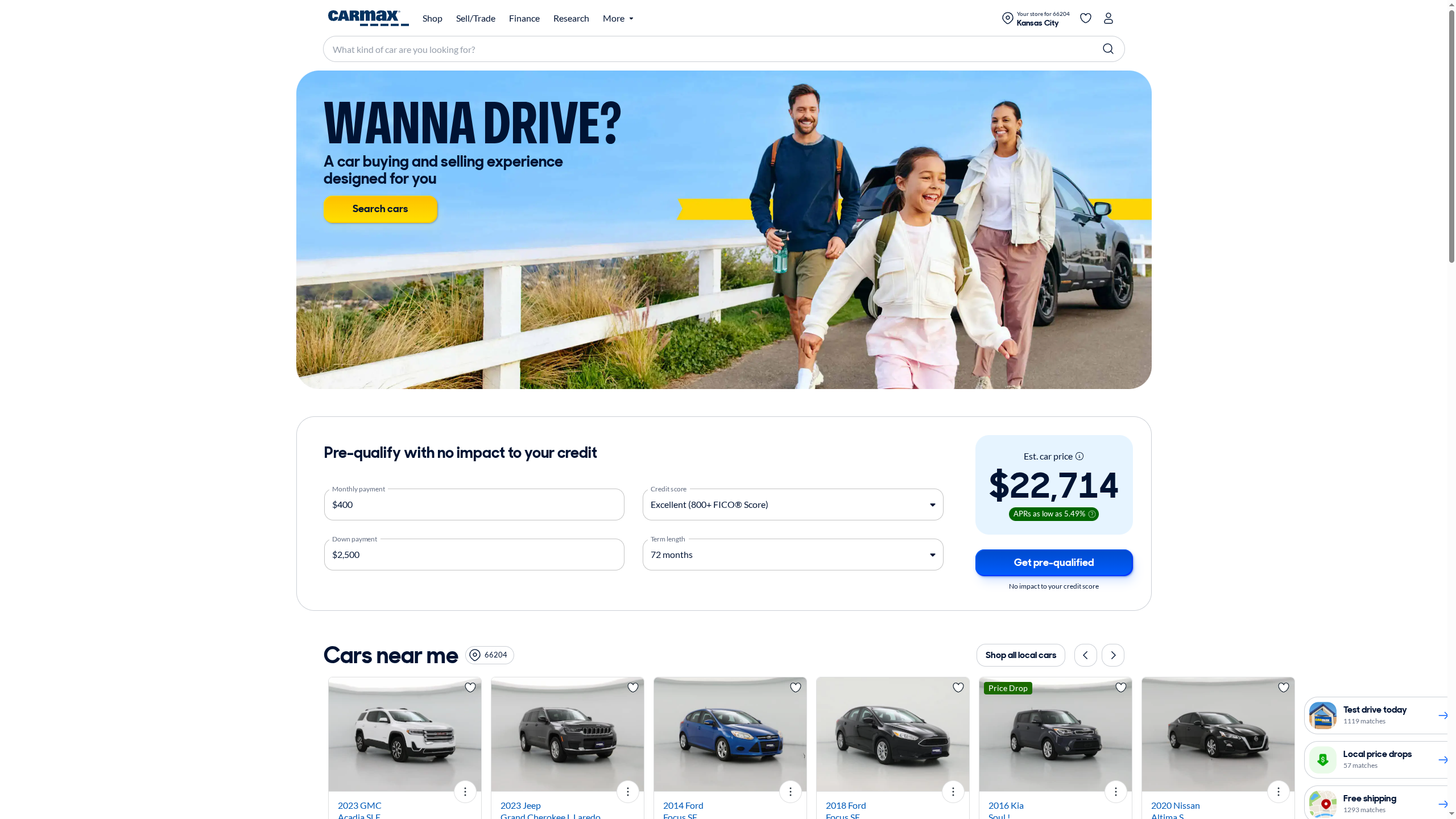
CarMax streamlines buying and selling used cars with upfront pricing, certified vehicle listings, and clear history reports so you know what you’re looking at before you commit. The company pairs a no-pressure buying environment with flexible online and in-store options, plus a 10-day return policy and a 90-day/4,000-mile limited warranty to help reduce buyer anxiety. If you want convenience, transparency, and certified inventory in one place, CarMax is a practical choice. It’s not always the cheapest route, but it’s reliably straightforward.
Core Features
CarMax’s core strengths are transparency and accessibility: every vehicle lists an upfront price and a detailed history report, and eligible cars carry a certified-quality designation. You can shop entirely online or visit a local store for a test drive, which makes the process fit your comfort level. Add in a 10-day return window and a 90-day/4,000-mile limited warranty on purchases, and you’ve got an experience designed to reduce buyer risk while preserving convenience.
Pros
- Wide selection of used vehicles across various brands and models makes it easier to comparison shop without bouncing between multiple sellers.
- Transparent pricing with detailed vehicle information helps you see fees and history up front so you can make a confident decision.
- Flexible shopping options let you complete most steps online or opt for an in-person visit when you need a test drive or hands-on inspection.
- Customer-friendly return and warranty policies give you short-term protection after purchase to catch unexpected issues.
- Specializes in used cars with certified quality standards, which simplifies vetting for buyers who value structured inspections.
Cons
- Limited to used cars mainly, so you may find less new inventory if you’re looking for a brand-new model.
- Pricing and availability vary by location and stock, meaning the best deals aren’t guaranteed in every market.
- Potentially higher prices compared to private sales depending on the vehicle, which can make CarMax less competitive for buyers who prioritize lowest possible upfront cost.
Who It’s For
CarMax fits buyers who want a straightforward, low-pressure experience when purchasing a reliable used vehicle—parents shopping for a dependable car for a teen, college students needing a trustworthy commute vehicle, or budget-conscious buyers who still want certification and a return window. If you value transparency, ease of trade-ins, and the option to complete transactions online or in person, CarMax is tailored to you.
Unique Value Proposition
CarMax’s unique value is packaging clear, certified used-car inventory with upfront pricing and flexible shopping into a single, recognizable brand. The mix of online convenience and physical stores, combined with a simple return policy and short-term warranty, reduces friction and uncertainty for buyers who want a safer, more predictable used-car purchase.
Real World Use Case
A buyer finds a certified used SUV online, reviews the detailed history report, and schedules a local test drive. They complete financing paperwork online, take advantage of the 10-day return policy after a week of family use, and feel protected by the 90-day/4,000-mile limited warranty while they settle into ownership.
Pricing
Pricing varies by vehicle, with used cars starting from approximately $10,998; exact prices are visible on each individual listing and depend on model, mileage, condition, and location.
Website: https://carmax.com
Shift Browser
At a Glance
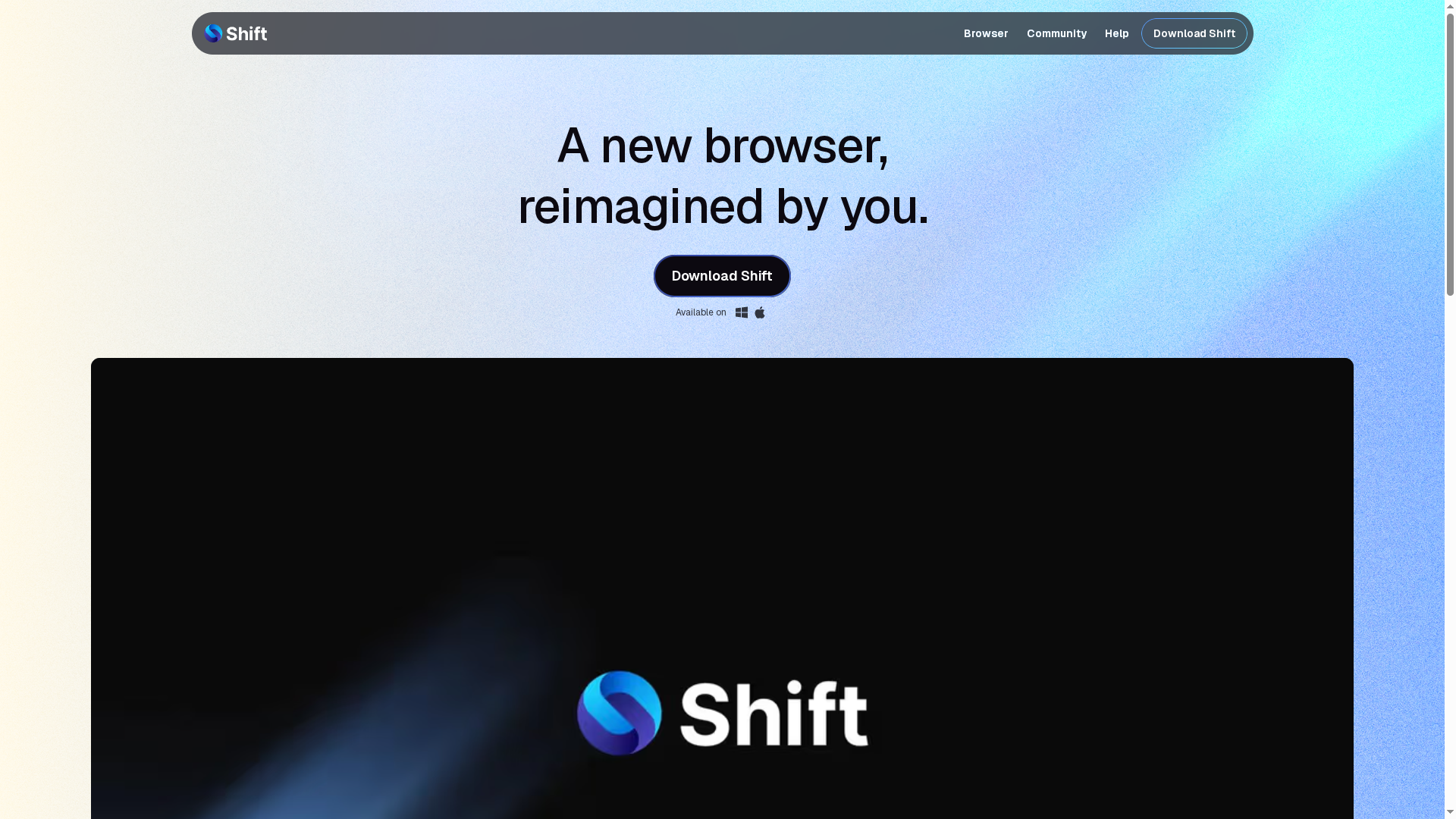
Shift Browser is a highly customizable browser designed to let you build a workspace around how you actually work and play. It separates activities into multiple spaces, runs integrated apps, and syncs data across devices—helpful for students, parents, and budget-conscious buyers who need order in a crowded digital life. The default carbon-neutral footprint is a nice touch, and the free tier gives a useful taste before deciding on the $149 per year upgrade.
Core Features
Shift’s core strength is modularity: you can assemble a browser from templates or configure it piece by piece. Create different spaces to keep work, hobbies, and passion projects distinct, and add integrated apps to run inside the browser rather than switching tabs. Pick color themes for a personalized look, and rely on secure login and sync to carry your setup across devices. The product centers on personalization and productivity while promising an environmentally conscious baseline.
Pros
- Highly customizable to fit individual workflows: Shift lets you build a setup that matches how you think, whether that’s project-based spaces or separate personal and school environments.
- Supports multiple spaces and apps for organization: By separating activities into spaces and hosting apps inside the browser, Shift reduces tab clutter and keeps tasks compartmentalized.
- Offers both free and paid premium options: The free version provides a functional starting point, while the paid plan unlocks unlimited apps and spaces for power users.
- Provides team management features with centralized billing and dashboard: Teams can manage members and billing centrally, easing administration for small organizations or family plans.
- Carbon-neutral browsing by default: Shift’s built-in carbon-neutral footprint is a clear value signal for users who care about sustainability.
Cons
- Limited to 5 apps per space in the free version: The free tier restricts how many apps you can run in each space, which may frustrate users who rely on many web apps.
- Paid plan required for unlimited apps and spaces: To unlock the full organizational power of Shift you must upgrade to the $149 per year advanced version.
- Some features may require a learning curve for new users: Because the product is highly configurable, new users might spend time learning how to structure spaces and integrate apps effectively.
Who It’s For
Shift is ideal for power users, developers, remote teams, and organized individuals who want a single place to run apps and manage separate browsing contexts. If you juggle school, work, and extracurriculars—or manage multiple family or team members—Shift helps you keep everything organized without switching between dozens of windows.
Unique Value Proposition
Shift’s unique value lies in turning the browser into a workspace platform: instead of being a passive window to the web, it becomes an actively organized place where apps, themes, and spaces reflect your priorities. That combination of modular setup, team controls, and carbon-neutral default sets it apart from standard browsers.
Real World Use Case
A remote team organizes project-specific spaces in Shift, adds necessary productivity apps to each space, and manages members and billing from a central dashboard—reducing context switching and keeping every project’s tools and tabs in one place.
Pricing
Free for the basic version; $149 per year for the advanced version with unlimited features.
Website: https://shift.com
Vehicle Marketplace Comparison
This table summarizes key features, pros, cons, and pricing of vehicle marketplaces from the article to help you make informed decisions.
| Platform | Core Features | Pros | Cons | Pricing |
|---|---|---|---|---|
| Revroom | Focused on rebuilt cars with centralized listings, detailed vehicle history, and educational resources. | Significant cost savings; Transparency in vehicle history; Centralized selection; Educational resources; Insurance and financing support. | Not specified. | Up to 50% less than clean-title cars. |
| Carvana | Large inventory with search filters, price-drop alerts, four-day delivery option, and insurance integration. | Large selection; Transparent pricing; Convenient delivery; Vehicle valuation and insurance options; Robust search filters. | No physical stores; Potentially higher prices; Availability varies by location. | Inventory under $20,000 highlighted; prices vary by vehicle. |
| Vroom | Offers finance and automotive data services through subsidiaries, large dealer inventory via CarStory, and support for existing customers. | Large dealer-backed inventory; Ongoing customer support; Service and claims resources; Focus on finance and data services. | No direct buying or selling through Vroom; Reliance on subsidiaries; Unspecified pricing. | Not specified. |
| CarMax | Upfront pricing, certified listings, history reports, flexible shopping, 10-day return policy, and 90-day warranty. | Wide selection; Transparent pricing; Flexible shopping; Return and warranty policies; Certified quality standards. | Mainly used cars; Pricing varies by location; Higher prices compared to private sales. | Prices from approx. $10,998; varies by model and condition. |
| Shift | Customizable workspaces, integrated apps, secure sync, and carbon-neutral browsing. | Highly customizable; Multiple spaces and apps; Free and paid options; Team management features; Carbon-neutral browsing. | Limited apps in free version; Paid plan needed for more features; Learning curve for new users. | Free basic version; $149 per year for advanced features. |
Find the Best Fuel Efficient Used Cars with Confidence at ReVroom
Shopping for the most fuel efficient used cars can feel like navigating a maze. You want to save on gas but also need to avoid costly surprises. The challenge is that rebuilt title vehicles, often overlooked, can offer up to 50 percent savings compared to same-model clean-title cars. However, buyers usually face time-consuming, costly investigations to verify vehicle history. This creates a tough trade-off between affordability and peace of mind.
At ReVroom, we remove the guesswork from buying fuel efficient used cars with rebuilt titles by providing unmatched transparency. Every listing includes detailed history and photos of pre-repair condition so you get the full story upfront. This means no extra fees for reports and no hidden risks. Our marketplace is designed for smart buyers who want to stretch their dollar further without sacrificing clarity. Alongside our educational guides and FAQs, you gain both knowledge and access to vehicles that make a smarter, more economical choice possible.
Start your journey toward an affordable, fuel-saving ride today.
Explore ReVroom now to unlock unbeatable value in fuel efficient used cars with rebuilt titles. Don’t wait to save money and drive smarter—our marketplace is your gateway to vehicles that go further for less. Visit us and find your next car with confidence.
Frequently Asked Questions
What are the most fuel-efficient used cars available in 2025?
The most fuel-efficient used cars in 2025 typically include hybrids and small sedans, which can achieve over 40 miles per gallon. Research fuel efficiency ratings from reliable sources to identify models that meet your specific budget and needs.
How do I compare fuel efficiency among different used cars?
To compare fuel efficiency, look for miles per gallon (MPG) ratings from trusted reviews and ensure you consider both city and highway ratings. Create a simple chart with the MPG figures to visualize differences and make an informed decision.
Are there specific years or models that are known for better fuel efficiency?
Yes, some models from recent years, such as hybrid vehicles from 2020 onward, tend to have better fuel efficiency ratings than their predecessors. Look specifically for vehicles from these ranges while researching consumer reviews and expert comparisons.
How can I improve gas mileage in a used car?
Improve gas mileage by maintaining tire pressure, keeping up with engine tune-ups, and driving conservatively—avoiding rapid accelerations and hard braking. Implement these practices regularly, and you may enhance your fuel efficiency by approximately 10-15%.
What factors should I consider when buying a fuel-efficient used car?
When buying a fuel-efficient used car, consider the vehicle’s maintenance history, engine type, and total cost of ownership, including insurance and repairs. Make a checklist based on these factors to ensure you evaluate each option thoroughly before purchasing.
How important is the vehicle’s weight in determining fuel efficiency?
The weight of a vehicle significantly affects fuel efficiency; lighter cars generally use less fuel compared to heavier models. Look for cars that combine a lightweight build with an efficient engine design to maximize your fuel savings.
Recommended
- 7 Best Good Gas Mileage Cars for Budget Buyers | ReVroom
- 7 Fuel Efficiency Tips Every Budget Car Buyer Should Know | ReVroom
- Best Cheap Reliable Cars – Expert Comparison 2025 | ReVroom
- Most Reliable Used Cars 2025 – Expert Comparison | ReVroom
- Diesel Engine vs Gasoline Engine: Key Differences Explained – My WordPress
