


Best Rebuilt Title Cars to Buy (2026): The 10 Models Buyers Choose Most, Savings by Make, and How to Shop by History
September 23, 2026
Short answer: the best rebuilt title cars to buy are the boring ones. Mainstream Hondas, Toyotas, Subarus and full-size trucks, with a light documented history and a clean repair file. They are cheap to fix, every mechanic knows them, and across 17,000+ rebuilt title sales they are exactly what buyers pick most. Below are the ten models people actually bought, what each make saved them, and how to choose a good one.
Key takeaways
- The ten most-bought rebuilt title models on ReVroom are led by the Honda Civic (663 sold), Toyota Tacoma (617) and Subaru Crosstrek (586).
- Every one of the 13 makes with 200+ sales sold below clean title market value. GMC buyers saved the most per car, a median $6,153.
- Rebuilt title cars typically sell 20% to 40% below clean-title market value. ReVroom's median saving is $4,590 per car.
- Pick the history before you pick the model. A hail car and a fire recovery wear the same two words on the title.
- On ReVroom you can filter by history type and in-house severity grade, so you can shop minor-only if that is your comfort zone.
What are the best rebuilt title cars to buy?
Short answer: the ones buyers already trust in clean-title form. Compact cars, midsize trucks and small SUVs dominate rebuilt title demand, and the top ten below come straight from the ReVroom market snapshot of most common models (updated October 1, 2026).
| Rank | Model | Rebuilt title cars sold on ReVroom | Why buyers pick it |
|---|---|---|---|
| 1 | Honda Civic | 663 | Cheap parts, easy to service, great on gas |
| 2 | Toyota Tacoma | 617 | Midsize truck that holds its value |
| 3 | Subaru Crosstrek | 586 | Small all-wheel-drive SUV at a sedan price |
| 4 | Ford F-150 | 404 | The most familiar full-size truck on the road |
| 5 | Subaru Outback | 355 | Wagon room with all-wheel drive |
| 6 | Toyota RAV4 | 343 | Compact SUV with a long dependability record |
| 7 | Subaru Forester | 336 | Tall, roomy, all-wheel drive |
| 8 | Chevrolet Silverado 1500 | 291 | Full-size truck, huge parts supply |
| 9 | Honda Odyssey | 281 | The family hauler |
| 10 | Honda Accord | 263 | Midsize sedan comfort for less |
Notice what is missing. No exotics, no rare imports. Popular cars make better rebuilt buys for the same reason popular shoes are easier to resole: every shop has the parts on the shelf. You can shop these directly with the rebuilt Civic, rebuilt Tacoma, rebuilt Subaru and rebuilt truck searches.
Which makes save you the most with a rebuilt title?
Short answer: trucks save the most dollars, compact imports have the lowest prices. Here is every make with at least 200 rebuilt title sales in the savings-by-make snapshot.
| Make | Vehicles sold | Median saved vs clean title | Median sold price |
|---|---|---|---|
| GMC | 284 | $6,153 | $27,448 |
| Ram | 303 | $5,492 | $26,800 |
| Chevrolet | 976 | $5,178 | $20,051 |
| Honda | 1,610 | $5,145 | $16,345 |
| Acura | 217 | $5,091 | $21,500 |
| Subaru | 1,554 | $4,866 | $15,995 |
| Toyota | 1,752 | $4,686 | $21,650 |
| Ford | 1,224 | $4,578 | $21,497 |
| Kia | 627 | $4,445 | $16,271 |
| Mazda | 399 | $3,829 | $15,995 |
| Nissan | 576 | $3,678 | $11,998 |
| Hyundai | 709 | $3,251 | $12,999 |
| Jeep | 283 | $3,012 | $13,500 |
Two ways to read this. If you want the biggest discount in dollars, look at GMC, Ram and Chevrolet. If you want the smallest monthly payment, Nissan, Hyundai and Jeep have the lowest median prices. Hondas sit in the sweet spot: the most sales of any make after Toyota and more than $5,000 saved per car.
What makes a rebuilt car a good buy?
Short answer: a light history, a documented repair, and a car that is cheap to keep running. The model matters less than those three.
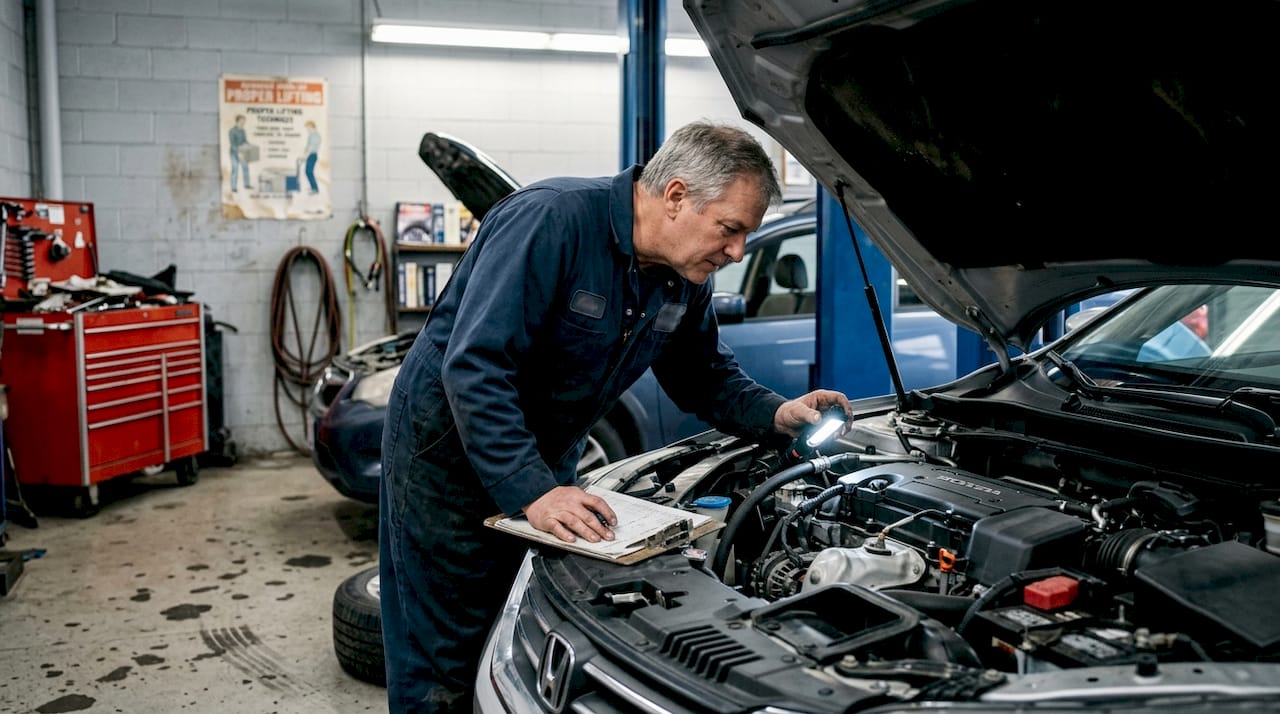
- History type. Hail, theft recovery, vandalism and cosmetic claims are the easy ones. On ReVroom, 81.9% of sold rebuilt cars with an analysed history had a collision history, 10.4% hail and 3.4% vandalism.
- Severity grade. 87% of rebuilt cars sold on ReVroom carried only a minor or moderate documented history. You can shop minor-only and skip the rest.
- The repair file. Who fixed it, what they replaced, and the state inspection certificate. A good seller hands this over without being asked.
- Parts and service. A car every shop in town knows costs less to maintain for the next ten years.
- Insurance quote first. Most insurers cover rebuilt cars. Get two or three quotes before you buy, not after.
Are rebuilt title cars reliable?
Short answer: as reliable as the repair and the car underneath. A 2020 Civic with a repaired hail roof is still a 2020 Civic. The title brand is a record of the car's past, not a prediction of its future. Maintenance records, mileage, a test drive and a pre-purchase inspection from a shop you trust tell you far more than the word "rebuilt" does. Every rebuilt car also had to pass a state inspection to get back on the road, which is a step a clean-title car with a quiet body-shop repair never faced.
Best rebuilt cars by budget and need
Short answer: start with how you drive, then match it to the models buyers already favor.
| If you need | Models buyers choose most | Where to shop |
|---|---|---|
| A cheap, efficient commuter | Honda Civic, Honda Accord | Rebuilt Hondas |
| All-wheel drive for weather | Subaru Crosstrek, Outback, Forester; Toyota RAV4 | Rebuilt SUVs |
| A work or towing truck | Toyota Tacoma, Ford F-150, Chevrolet Silverado 1500 | Rebuilt trucks |
| Room for the whole family | Honda Odyssey | All rebuilt inventory |
| The lowest possible price | Nissan, Hyundai, Jeep (lowest median prices) | Rebuilt cars under $10,000 |
| The easiest history to live with | Any of the above with a hail history | Hail-history cars |
How much cheaper are the best rebuilt cars?
Short answer: usually 20% to 40% below clean title, and a median $4,590 on ReVroom. A rebuilt title car is typically priced 20% to 40% below clean-title market value, and Kelley Blue Book's own values FAQ says a salvaged or reconstructed title has "a permanent negative effect on the value of a vehicle." ReVroom's own market snapshot of 17,000+ sales shows a median sold price of $17,499, a median model year of 2020, and about 1 in 3 cars selling for 25% or more below clean title value. Newer cars save more in dollars: 2024 models saved a median $7,023 against $3,283 for 2018 models.
I bought my own rebuilt car for 53% off, and that is the happy tail of the curve, not the middle. Plan on the middle and treat anything better as a bonus.
Where do you buy the best rebuilt title cars?
Short answer: somewhere that tells you what happened to the car before you drive across town. ReVroom is the only site where you can filter rebuilt and branded title inventory by history type, from hail and cosmetic paint chips all the way to fire recoveries, and by in-house severity grade. Listings show what was repaired, the title status, and pre-repair photos where they are available. When one car makes the shortlist, a ReVroom Report adds the severity grade, a detailed severity graphic, the estimated savings percentage, and where and when the car was auctioned. If you prefer to buy from a lot, the rebuilt title dealer directory lists verified dealers by state.
Which rebuilt cars are the easiest buys by history type?
Short answer: pick the history first and the model second. A Subaru Crosstrek with a minor hail history and a Crosstrek with a severe collision history are the same model and two very different purchases.
Think of it like buying a house. A replaced roof and a cracked foundation both show up as "repairs" on the disclosure, but nobody prices them the same. Here is how the rebuilt cars sold on ReVroom break down, from the history snapshot updated October 1, 2026 (71.5% of sales have a documented history analysis):
| History type or grade | Share of analysed sales | What it usually covers | Shop it |
|---|---|---|---|
| Hail | 10.4% (1,287 cars) | Dents and glass on the body panels. Hail-history cars sold about $4,090 or more below market. | Hail-history cars |
| Vandalism | 3.4% (424 cars) | Often panels, glass or interior work | Vandalism-history cars |
| Collision | 81.9% (10,112 cars) | Anything from a bumper to structural repair, which is why the grade matters | Minor collision only |
| Minor grade | 34.3% (4,229 cars) | The lightest in-house severity grade | Minor-history cars |
| Moderate grade | 53.1% (6,556 cars) | The middle of the market, where most buyers shop | Minor and moderate |
| Severe grade | 12.6% (1,555 cars) | Bigger repairs and usually the biggest discounts, for buyers who want them | Severe-history cars |
So the easiest buy on this page is a popular model from the top-ten list with a minor or hail history. If the budget is the limit, start with rebuilt cars under $10,000. If you need a bed, go straight to rebuilt trucks. ReVroom is the only marketplace where you can filter rebuilt inventory this way, so you can skip the cars you would never own before you fall for one.
Your five-step checklist before you buy
- Filter by history type and severity so you only see cars you would actually own.
- Ask for the repair file and the state inspection certificate.
- Get two or three insurance quotes on the exact VIN.
- Book a pre-purchase inspection with a mechanic you trust.
- Compare the asking price with the savings for that make in the table above. If you plan to borrow, ReVroom's financing page sends one application to a lender network (ReVroom is not a lender).
Frequently asked questions
What is the best rebuilt title car to buy?
A mainstream model with plentiful parts and a light documented history. Across 17,000+ rebuilt title sales tracked by ReVroom, buyers chose the Honda Civic, Toyota Tacoma, Subaru Crosstrek, Ford F-150, Subaru Outback, Toyota RAV4, Subaru Forester, Chevrolet Silverado 1500, Honda Odyssey and Honda Accord most.
Which car brand saves the most with a rebuilt title?
GMC, with a median $6,153 saved per car in the October 2026 snapshot, followed by Ram ($5,492), Chevrolet ($5,178) and Honda ($5,145). Every make with 200+ sales sold below clean title market value.
Are rebuilt title cars reliable?
They are as reliable as the repair and the car underneath. Maintenance records, mileage, a test drive and a pre-purchase inspection predict reliability far better than the title brand does.
How much cheaper is a rebuilt title car?
Rebuilt title cars are typically priced 20% to 40% below clean-title market value. ReVroom buyers saved a median $4,590 per car, and about 1 in 3 cars sold for 25% or more below clean title value.
Should I buy a rebuilt truck or a rebuilt sedan?
Buy the one that fits your life. Trucks save the most dollars per car, while compact Hondas, Hyundais and Nissans have the lowest median prices if the monthly budget is the limit.
How do I find out what happened to a rebuilt car before I buy?
Ask for the repair file and inspection certificate, check the title-brand history through NMVTIS, and on ReVroom read the history type and severity grade on the listing. A ReVroom Report adds the severity grade, a severity graphic, the estimated savings percentage, and where and when the car was auctioned.
Which rebuilt title cars have the lightest history?
On ReVroom, 34.3% of sold rebuilt cars with an analysed history carried a minor in-house severity grade, and hail (10.4%) and vandalism (3.4%) histories are often body panels and glass. You can filter the marketplace to minor-only or hail-only cars before you look at a single listing.
Is a hail-history rebuilt car a good buy?
For many budget buyers, yes. Hail-history cars sold on ReVroom about $4,090 or more below market in the October 2026 snapshot, and the repair is often dents and glass. Ask for the repair file and photos, as with any rebuilt car.
Related reading
- Is it worth buying a rebuilt title car?
- Top rebuilt title cars with the best value
- Top rebuildable cars for budget buyers
- How to buy a rebuilt car the smart way
- Where to buy rebuilt title cars
Ready to look? Start with minor-history rebuilt cars, browse hail-history cars, or see the full rebuilt and branded title inventory.
