


Damage Type Junk and Salvage: What Each Title Really Means
June 13, 2026
TL;DR:
- A junk title permanently brands a vehicle as non-repairable and illegal to drive on public roads.
- In contrast, a salvage title indicates a total loss vehicle that can potentially be repaired and re-titled as roadworthy.
- Proper research using NMVTIS reports is essential to understand a vehicle’s true history and legal standing before purchase.
“Damage type junk and salvage” refers to two official vehicle title designations that determine whether a damaged car is permanently retired or potentially repairable for future road use. These are not casual descriptions. They are legal brands assigned by state agencies and insurers, and confusing one for the other can cost you thousands of dollars or land you with a car you can never legally drive. The industry terms are “junk title” and “salvage title,” and the difference between them is not a matter of degree. It is a matter of finality. Understanding where a vehicle stands on this spectrum is the first step toward making a smart, informed purchase.
What is a junk title and what are its legal implications?
A junk title is a permanent vehicle brand indicating the car cannot be registered, driven on public roads, or re-titled under any circumstances. This is the end of the road, literally. No amount of repairs, inspections, or paperwork can reverse a junk designation once it is applied. The vehicle’s value is limited entirely to its parts and scrap metal.
States apply junk titles when an insurance company declares a total loss and the vehicle is deemed unsafe or uneconomical to repair. Junk titles often arise when the salvage value is so low that repair makes no financial or safety sense, which is common for older vehicles or those with catastrophic structural damage. The insurer reports the total loss to the state, the state brands the title, and that is that. You may also see this designation called “non-repairable” or “scrap” depending on the state, but the legal outcome is identical.
Massachusetts offers a clear example of how this plays out in practice. The state explicitly labels these records as JUNK, and that record can never be registered in Massachusetts after the junking designation is applied. There is no appeals process, no workaround, and no loophole. The car is done as a road vehicle.
Here is what junk titles mean practically for buyers:
- The vehicle cannot be re-registered or driven legally on public roads
- No state inspection or repair process can restore road-legal status
- Value is limited to parts, scrap metal, or collector use in private settings
- Purchasing a junked vehicle for parts is legitimate; purchasing one expecting to drive it is a costly mistake
- Title washing, where a junk brand is hidden by re-titling in a different state, is a real fraud risk
Pro Tip: Before buying any used vehicle at auction or through a private seller, run the VIN through the National Motor Vehicle Title Information System (NMVTIS). Federal law requires junk and salvage yards to report monthly to NMVTIS under the Anti-Car Theft Act, making it the most authoritative source for title brand history.
What is a salvage title and how does it differ from junk?
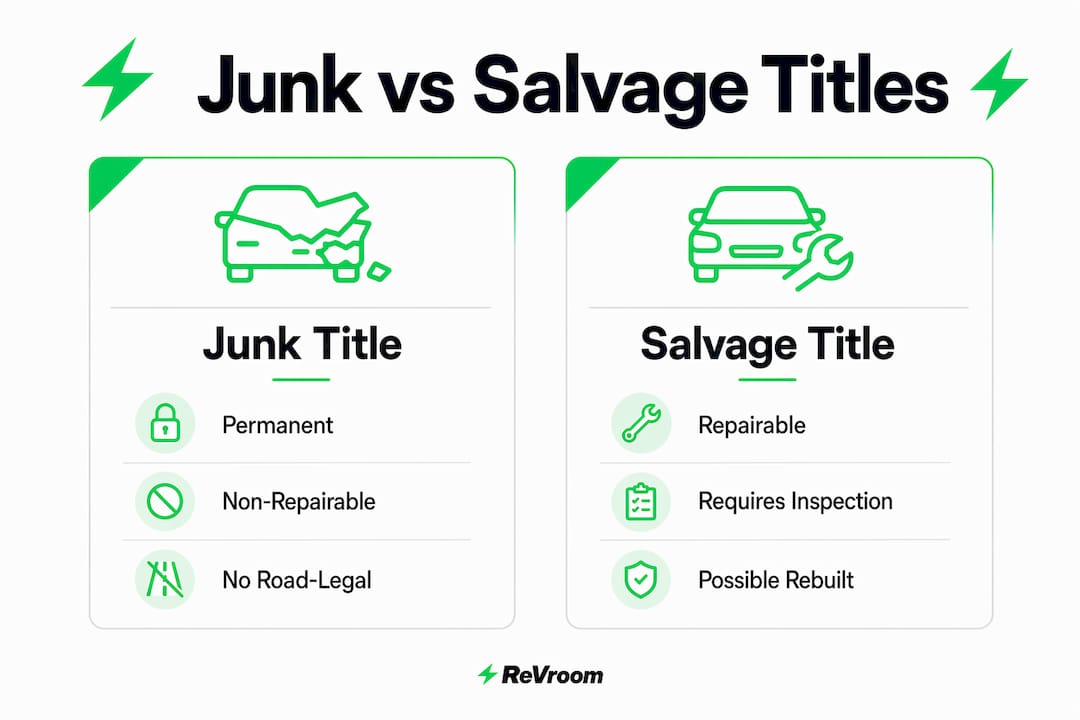
A salvage title indicates that a vehicle has been declared a total loss by an insurer but retains the potential for repair and return to legal road use. This is the critical distinction from a junk title. Where junk is a dead end, salvage is a fork in the road. One path leads to the scrapyard; the other leads to a rebuilt title and a second life on the road.
Kentucky’s Scott County Clerk office describes the process clearly: salvage titles are not initially road-legal, but owners can apply for a rebuilt title after completing professional repairs and passing a state inspection. That rebuilt designation is what makes the vehicle legally drivable again. This repair and inspection pathway is what separates salvage from junk at a fundamental level.
States also vary in how they classify salvage vehicles. Massachusetts, for instance, divides salvage into repairable and parts-only categories. A repairable salvage vehicle can go through the rebuilt title process. A parts-only salvage vehicle, much like a junk title, cannot be re-titled or registered. This is why reading the exact title brand matters more than relying on a seller’s verbal description.
Common vehicle histories that lead to a salvage title include:
- Collision damage exceeding a state-defined percentage of the vehicle’s value (typically 75 to 90 percent)
- Flood or water damage affecting structural or electrical systems
- Fire damage with repairable components
- Theft recovery where the vehicle was stripped or vandalized
- Hail damage causing significant body and glass loss
- Vandalism resulting in major cosmetic and mechanical harm
Pro Tip: A salvage title on its own tells you very little about the quality of the vehicle. What matters is what happened after the salvage designation. A professionally repaired and state-inspected vehicle with a rebuilt title is a very different proposition from one sitting in a yard with a salvage brand still attached. Always ask for the full vehicle history and, when possible, a quality repair shop’s documentation of the work completed.
How do junk and salvage titles impact buying and selling decisions?
The most expensive mistake buyers make is treating “junk” and “salvage” as interchangeable terms. They are not. The current VIN brand is the single most important piece of information in any used vehicle transaction, because it tells you whether the car can ever legally hit the road again. A vehicle described casually as “totaled” could carry a junk brand, a salvage brand, or even a rebuilt title. Each of those carries a completely different set of rights, risks, and values.
Title washing is a real and documented fraud. This is the practice of moving a vehicle across state lines to obscure a prior title brand, then re-selling it with a cleaner-looking history. NMVTIS-based vehicle history reports are the primary consumer tool for exposing these schemes, because branded title data travels with the VIN across state lines. NMVTIS acts as an anti-fraud backbone, making it much harder to hide a junk or salvage brand from an informed buyer.
Here is a comparison of the three title types you are most likely to encounter:
| Title type | Repairability | Road-legal status | Typical value impact |
|---|---|---|---|
| Junk / Non-repairable | None. Permanent designation. | Cannot be registered or driven legally. | Parts and scrap value only. |
| Salvage | Potentially repairable with inspection. | Not road-legal until rebuilt title is issued. | Significantly discounted; varies by damage. |
| Rebuilt | Repaired and state-inspected. | Fully road-legal with valid registration. | Up to 50% less than a comparable clean title vehicle. |
Pro Tip: Never rely on an auction listing or private seller’s description of a vehicle’s title status. Pull a NMVTIS report yourself. The report costs a few dollars and gives you the official title brand history, which is the only version that matters legally.
What are the common damage types related to junk and salvage titles?
Insurers and state agencies use damage severity and estimated repair costs relative to the vehicle’s actual cash value to determine whether a car receives a salvage or junk designation. The threshold varies by state, but the underlying logic is consistent: if repairs cost more than the car is worth, it is a total loss. Whether that total loss becomes a salvage or junk title depends on whether the vehicle is structurally repairable at all.
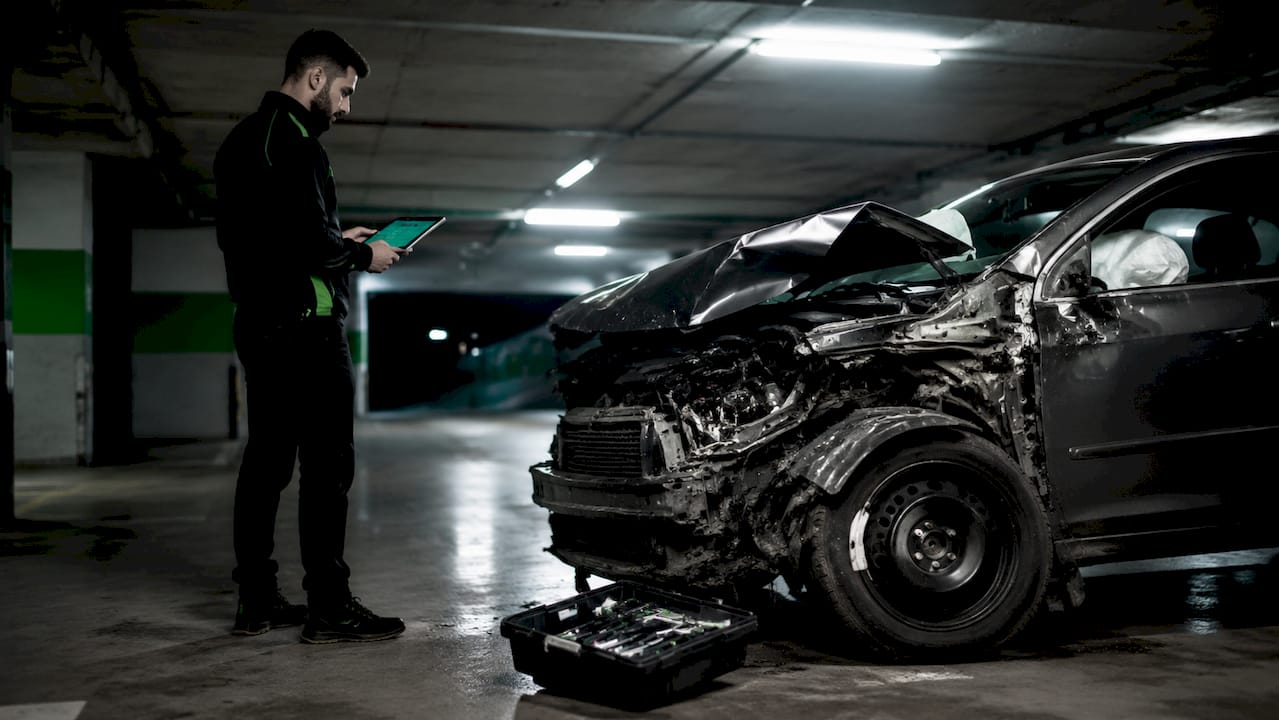
Collision damage is the most common trigger for both designations. A front-end collision that crumples the frame may be repairable by a skilled body shop, earning a salvage brand with a path to rebuilt status. A collision that compromises the vehicle’s core safety cage in ways that cannot be corrected to state standards results in a junk designation. The line between the two is drawn by engineers and adjusters, not by the casual observer.
Flood damage is particularly tricky because water intrusion into electrical systems, airbag modules, and structural components can be invisible to the naked eye. Fire damage follows similar logic: surface burns on upholstery are very different from a fire that reached the engine bay or fuel system. Theft recovery vehicles often receive salvage titles when they are recovered stripped but structurally sound. Hail damage, even when extensive, typically results in salvage rather than junk because the structural integrity of the vehicle is usually unaffected.
The junk damage assessment is defined by irreversibility. When a state or insurer determines that no repair process can return the vehicle to a safe, road-legal condition, the junk brand is applied. Salvage damage assessment, by contrast, involves a judgment that professional repairs and a state inspection could restore the vehicle to roadworthy status. That distinction is everything.
Key takeaways
A junk title is permanent and unrecoverable, while a salvage title carries a defined legal pathway to rebuilt status through professional repair and state inspection.
| Point | Details |
|---|---|
| Junk title is final | No repair, inspection, or re-titling process can restore a junk-branded vehicle to road-legal status. |
| Salvage allows rebuilding | A salvage vehicle can become a rebuilt title vehicle after professional repairs and a state inspection. |
| State rules vary significantly | Massachusetts separates salvage into repairable and parts-only categories, each with different legal outcomes. |
| NMVTIS is your best tool | Run every VIN through NMVTIS to expose prior title brands and protect against title washing fraud. |
| Rebuilt titles offer real value | Properly rebuilt vehicles are road-legal and can cost up to 50% less than comparable clean title cars. |
Our take on navigating junk and salvage title vehicles
Here at the Revroom Editorial Team, we have seen buyers make the same mistake repeatedly: they hear “totaled” and assume all totaled cars are created equal. They are not. A junk title and a salvage title are separated by a legal chasm, and crossing that chasm requires knowing exactly which side of it your prospective vehicle sits on.
The good news is that the information exists. NMVTIS reports, state DMV records, and official title documents give you the full picture. The problem is that most buyers never look. They trust a seller’s word, skip the history report, and end up with a car they cannot register or insure. That is not a risk problem. That is an information problem.
Where we get genuinely excited is at the rebuilt title end of this spectrum. A vehicle that started as a salvage designation, went through professional repairs, passed a state inspection, and earned a rebuilt title is a car with a verified second chapter. It is road-legal, insurable, and often priced at a significant discount compared to a clean title equivalent. That is real value, and it is the kind of opportunity that rewards buyers who do their homework. The difference between a salvage title and a rebuilt title is not just legal language. It is the difference between a car that goes nowhere and one that goes everywhere.
— Revroom Editorial Team
Find rebuilt title vehicles with full transparency on Revroom
Revroom is the only online marketplace built specifically for rebuilt title vehicles, and it was designed precisely for buyers who want to skip the guesswork.

Every listing on Revroom includes vehicle history information and photos of what the car looked like before it was repaired, so you can see exactly what you are buying before you ever contact a seller. Revroom does not list junk title vehicles or unrepaired vehicles. Every car on the platform has already made the journey from total loss to rebuilt title, which means it is road-legal, inspectable, and ready for its next chapter. Rebuilt title vehicles on Revroom are priced up to 50% below comparable clean title cars. If you are ready to explore rebuilt vehicles with the transparency you deserve, Revroom is where that search starts.
FAQ
What is the difference between a junk title and a salvage title?
A junk title is a permanent designation meaning the vehicle can never be registered or driven legally again. A salvage title indicates a total loss vehicle that may be repaired, inspected, and re-titled as rebuilt for legal road use.
Can a junk title vehicle ever be made road-legal?
No. Junk, non-repairable, and scrap titles are permanent. No repairs, state inspections, or re-titling processes can restore a junk-branded vehicle to legal road use in any state.
What damage types most commonly lead to a salvage title?
Collision, flood, fire, theft recovery, vandalism, and hail are the most common vehicle histories that result in a salvage title, according to state DMV definitions. The determining factor is whether the repair cost exceeds the vehicle’s actual cash value.
How do I verify a vehicle’s true title brand before buying?
Run the VIN through a NMVTIS-based report, which is the authoritative federal database for title brand history across all states. This protects you against title washing and undisclosed prior brands.
What is a rebuilt title and how is it different from salvage?
A rebuilt title is issued after a salvage vehicle has been professionally repaired and passed a state safety inspection, making it fully road-legal. Learn more about rebuilt vs. salvage title differences to understand what each designation means for buyers in 2026.
