


First Car Buying Process Explained for New Drivers
July 18, 2026
TL;DR:
- First-time car buyers should focus on the total ownership cost, including insurance, fuel, and maintenance, not just the sticker price.
- Securing pre-approved financing and negotiating the out-the-door price help prevent costly mistakes and hidden fees.
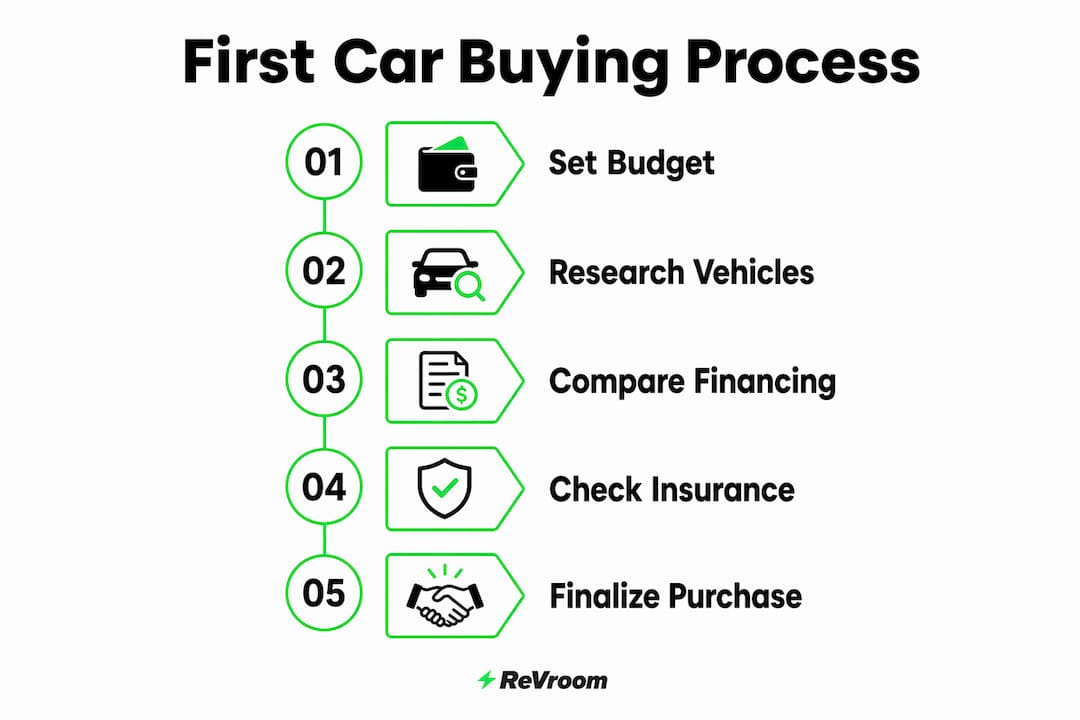
The first car buying process explained simply is this: a series of decisions, from setting a budget to signing paperwork, that determine whether your first car is a win or a financial headache. Most new drivers and their parents focus entirely on the sticker price and miss the bigger picture. Total cost of ownership is the real number that matters, and it includes insurance, fuel, maintenance, and loan interest on top of the purchase price. Get that number right from the start, and the rest of the process falls into place. This guide walks you through every step, with real numbers and practical tactics built for students and budget-focused buyers in 2026.
How to set a realistic budget for your first car
Budgeting for your first car means more than deciding what monthly payment feels comfortable. Ignoring total ownership costs is the single biggest mistake first-time buyers make, and it causes real financial strain within months of driving off the lot.

The standard financial guideline is the 15% rule: your total monthly car expenses, including your loan payment, insurance, fuel, and maintenance, should not exceed 15% of your gross monthly income. If you earn $3,000 a month before taxes, your all-in car costs should stay under $450. That number forces you to think about the whole picture, not just the car payment.
For down payments, aim for 20% of the purchase price to avoid going “underwater” on your loan, meaning you owe more than the car is worth. At minimum, your down payment should cover the first year of depreciation, which typically runs 15–20% of the vehicle’s value. For most used cars in the $12,000–$20,000 range, that means saving $2,400–$4,000 before you shop.
Here is what your budget needs to account for before you buy:
- Purchase price: The sticker or negotiated price of the vehicle
- Sales tax and fees: Typically 8–10% of the purchase price depending on your state
- Down payment: Ideally 20% of the total price
- Monthly loan payment: Based on your loan amount, term, and interest rate
- Insurance: Get quotes before you buy, not after
- Fuel: Estimate based on your commute and the car’s MPG rating
- Maintenance: Budget roughly $100 per month for oil changes, tires, and unexpected repairs
Pro Tip: Never negotiate around a monthly payment. Dealers can stretch a loan to 72 or 84 months to make an overpriced car look affordable. Always negotiate the out-the-door price first, then discuss financing.
How does financing work for first-time car buyers?
Securing financing before you walk into a dealership is one of the most powerful moves a first-time buyer can make. Pre-approved financing from credit unions averages 5.8% APR in 2026, compared to 7.1% at dealerships. On a $15,000 loan over 48 months, that difference saves you several hundred dollars in interest.
Follow these steps to get the best financing terms:
- Check your credit score first. Your score directly affects your interest rate. A score above 670 qualifies for standard rates. Below 600, consider waiting three to six months to build credit before buying.
- Apply to multiple lenders within 14 days. Credit bureaus treat multiple auto loan inquiries within a 14-day window as a single inquiry, so your score takes only one small hit.
- Start with your bank or a credit union. These institutions consistently offer lower rates than dealer financing.
- Get a pre-approval letter. Bring it to the dealership. It gives you a firm ceiling on what you will pay and removes the dealer’s leverage on financing.
- Compare the dealer’s offer against your pre-approval. Occasionally dealers beat outside rates through manufacturer incentives. Compare both before deciding.
Accepting dealer financing on the spot, without comparing options, is how buyers end up paying thousands more over the life of a loan. Dealer tactics often involve stretching loan terms to 72 or 84 months to lower the monthly payment while dramatically increasing total interest paid. A pre-approval letter in your hand changes that dynamic entirely.
What should you look for when researching your first car?
Choosing the right car starts with understanding what you actually need. A college student commuting 10 miles a day has different needs than a new driver hauling gear for a part-time job. Define your priorities before you browse listings.
Key factors to evaluate:
- Size and parking: Compact cars like sedans and hatchbacks are easier to park and cheaper to insure for new drivers
- Fuel efficiency: A car averaging 30+ MPG saves $600–$900 per year compared to one averaging 20 MPG at current fuel prices
- Safety ratings: Check the National Highway Traffic Safety Administration (NHTSA) and Insurance Institute for Highway Safety (IIHS) ratings for any model you consider
- Reliability history: Owner forums and reliability ratings from sources like Consumer Reports reveal real-world problem patterns
For pricing, use Kelley Blue Book and Edmunds to establish fair market value before you contact any seller. Knowing the actual market price prevents you from overpaying and gives you a credible number to reference in negotiations.
When evaluating a specific used car, maintenance records and accident history are stronger reliability predictors than mileage alone. A car with 90,000 miles and a full service history is a better buy than one with 60,000 miles and no records. Always pull a VIN report to check accident history before committing to any used vehicle.
Certified Pre-Owned vehicles from franchised dealers offer the best balance of price, warranty coverage, and verified condition for first-time buyers. They cost more than private-party used cars but come with inspections and limited warranties that reduce the risk of surprise repairs.
Pro Tip: Test-driving multiple vehicles on the same day gives you a far sharper comparison than spreading tests across a week. Your memory of how a car feels fades fast. Drive your top three choices back to back.
How do insurance and negotiation affect your total cost?
Insurance is a cost most first-time buyers underestimate until the first bill arrives. Premiums can vary by up to 40% between two similarly priced cars. A sporty coupe and a four-door sedan at the same price point can differ by $800 or more per year in insurance costs for a young driver.
Get insurance quotes on your top two or three vehicle choices before you buy. This takes 20 minutes online and can change which car makes financial sense for your budget.
For negotiation, these tactics protect your wallet:
- Negotiate the out-the-door price. This is the total you pay including taxes, fees, and dealer charges. Never anchor to a monthly payment.
- Get competing quotes from multiple dealerships. Email three dealers the same vehicle request and let them compete. This works especially well for common models.
- Do not reveal your trade-in early. Agree on the purchase price first. Introducing a trade-in too early gives dealers room to adjust numbers in ways that favor them.
- Say no to F&I office add-ons initially. Extended warranties and dealer add-ons in the finance and insurance office are often overpriced. Research any add-on independently before agreeing to it.
Pro Tip: When the finance manager presents a menu of add-ons, decline everything politely and say you need to research each item. You can always add a warranty later. You cannot un-sign a contract.
For more on navigating dealership visits with confidence, the used car dealership tips from Revroom cover the specific tactics that protect first-time buyers at every stage of the visit.
What happens when you finalize the purchase?
Finalizing your first car purchase requires the same attention you gave to finding it. Rushing through paperwork is where buyers make expensive mistakes.
- Review the purchase agreement line by line. Confirm the vehicle price, interest rate, loan term, and every fee matches what you negotiated verbally.
- Verify the title is clean. Ask to see the title before signing. Understand what type of title the vehicle carries and what that means for registration and insurance. A car title guide can help you understand what you are signing.
- Use a safe payment method. For private sales, a cashier’s check or bank transfer is safer than cash. Never wire money to a seller you have not met in person.
- Get the signed bill of sale. This document protects you if any dispute arises after the transaction.
- Register the vehicle and update your insurance immediately. Most states require registration within 30 days of purchase. Driving unregistered or underinsured creates legal and financial risk.
After you own the car, keep every maintenance record. Oil changes, tire rotations, and brake jobs documented in a folder increase resale value and help you spot patterns if problems develop. Understanding your warranty terms matters too. Most used car warranties exclude wear items like brakes and tires, so read the exclusions before assuming you are covered.
Key Takeaways
The first car buying process succeeds when you control your total budget, secure pre-approved financing, research vehicle history thoroughly, negotiate the out-the-door price, and review every document before signing.
| Point | Details |
|---|---|
| Use the 15% rule | Keep all monthly car costs under 15% of gross income to stay financially stable. |
| Get pre-approved financing | Credit union rates average 5.8% APR versus 7.1% at dealerships in 2026. |
| Check vehicle history, not just mileage | Maintenance records and accident history predict reliability better than odometer readings. |
| Negotiate the out-the-door price | Never anchor to monthly payments; negotiate the total price including all fees. |
| Research insurance before buying | Premiums vary by up to 40% between similarly priced cars, so get quotes first. |
What first-time buyers get wrong (and how to avoid it)
After working with buyers at every stage of the car search, the pattern I see most often is this: people spend weeks researching which car to buy and almost no time researching how to buy it. They walk into a dealership excited, and that excitement costs them.
The 15% rule sounds simple, but most first-time buyers never calculate it. They pick a monthly payment that feels manageable and work backward. That approach ignores insurance, which for a 17 or 18-year-old driver can easily run $200–$300 per month on its own. Add fuel and maintenance, and a “comfortable” $350 payment becomes a $700 monthly commitment nobody planned for.
The other mistake I see constantly is skipping the pre-approval step. Buyers assume the dealership will give them a fair rate because they are a customer. Dealers are in the business of maximizing profit on every transaction, including financing. Walking in with a credit union pre-approval letter is the single fastest way to level that playing field.
The good news is that the process is genuinely learnable. You do not need to be a car expert. You need a budget, a pre-approval, a VIN report, and the patience to walk away if the numbers do not work. Those four things protect you better than any amount of car knowledge.
— Revroom Editorial Team
Affordable first cars, without the guesswork
Budget-conscious first-time buyers have more options than most people realize. Revroom is the only online marketplace built specifically for rebuilt and branded title vehicles, where every listed car has passed state-required certification confirming it is repaired and road ready.
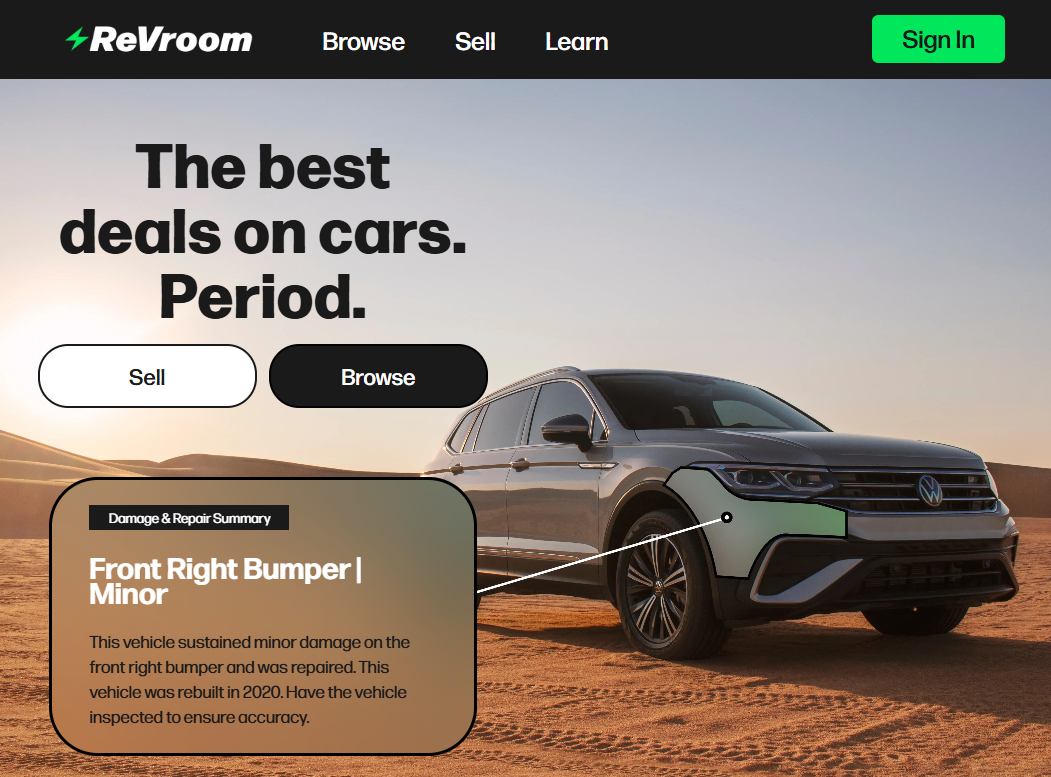
Rebuilt and branded title vehicles are up to 50% cheaper than clean-title equivalents, making them a practical choice for new drivers who want a dependable daily driver without overpaying. Every Revroom listing includes vehicle history information and pre-repair photos, so you see exactly what happened before the car was fixed. If you spot a rebuilt or branded title vehicle anywhere else online, a Revroom History Report gives you a full analysis for $15. Start your search with the transparency you deserve.
FAQ
What is the first car buying process?
The first car buying process is a series of steps covering budgeting, financing, vehicle research, insurance, negotiation, and paperwork. Following each step in order prevents the most common and costly mistakes new buyers make.
How much should a first-time buyer spend on a car?
Total monthly car costs, including payment, insurance, fuel, and maintenance, should not exceed 15% of gross monthly income. For most students and entry-level earners, that points toward used vehicles in the $10,000–$18,000 range.
Is it better to finance through a bank or a dealership?
Financing through a credit union or bank is almost always cheaper. Credit union rates average 5.8% APR in 2026 versus 7.1% at dealerships, and securing pre-approval before shopping gives you stronger negotiating leverage.
What documents do I need to buy a car?
You need a valid driver’s license, proof of insurance, proof of income or financing pre-approval, and payment for the down payment and fees. For private sales, also bring a bill of sale template to document the transaction.
Are rebuilt title cars a good option for first-time buyers?
Yes, rebuilt title cars can be an excellent fit for budget-focused first-time buyers. Every rebuilt title vehicle has passed a state-required safety inspection confirming it is road ready, and prices run significantly lower than comparable clean-title cars. Learn more about rebuilt title cars for first-time buyers to see if they fit your needs.
