


The Best Vehicles for Teenagers: A Parent's Safety Guide
August 7, 2026
The safest practical choices for teen drivers are mid-size sedans and compact crossovers with Electronic Stability Control (ESC) and automatic emergency braking (AEB) that earn IIHS “good” ratings and 4–5 stars from NHTSA. Before you look at a single listing, do three things: run the VIN through NHTSA’s recall tool, confirm AEB and ESC are standard on the specific trim, and stick to base-engine versions to keep horsepower modest and insurance costs lower.
Your starting shortlist for used searches: Mazda 3, Honda Civic, Toyota Camry, Hyundai Elantra, and Kia Soul. For compact crossovers, look at the Honda CR-V, Toyota RAV4, and Mazda CX-30. These aren’t the only good vehicles for teenagers, but they’re proven filters that cut through thousands of listings fast.
Key Takeaways
The safest, most affordable vehicles for teen drivers combine ESC, AEB, and strong IIHS/NHTSA ratings in a compact sedan or crossover, with a pre-purchase inspection and VIN recall check before any money changes hands.
| Point | Details |
|---|---|
| Prioritize ESC and AEB | Both features are required; ESC has been standard on all new U.S. vehicles since 2012. |
| Start with proven models | Mazda 3, Honda Civic, Hyundai Elantra, and Kia Soul are consistently rated safe and affordable for teens. |
| Insurance adds roughly $2,304/year | Adding a 16-year-old to a family policy costs significantly more; choose lower-repair-cost models to offset this. |
| Always run a VIN and recall check | Use NHTSA’s free tool before buying any vehicle, used or new, to confirm no open recalls. |
| Revroom for certified savings | Rebuilt/branded-title vehicles on Revroom are state-certified and up to 50% cheaper, with full vehicle history included. |
Table of Contents
- What are the best used vehicles for teen drivers?
- New and nearly-new models worth considering for teens
- What safety features should every teen’s car have?
- Which vehicle types should parents avoid for teen drivers?
- How does vehicle choice affect insurance costs for teens?
- How to vet a specific car before you buy it
- Parent rules and training that actually reduce crash risk
- Can a rebuilt or branded-title vehicle be a safe choice for a teen?
- Certified, affordable vehicles for teens are on Revroom
- Sources
- FAQ
What are the best used vehicles for teen drivers?
IIHS and Consumer Reports publish a joint annual list of recommended used vehicles for teens, balancing affordability with crash protection and crash-avoidance features. The list divides into two tiers.
Best choices: top safety plus affordability
These models consistently earn strong crashworthiness ratings and come with AEB standard across most trims. They’re the ones to prioritize when you can find them in budget:
- Mazda 3 (2019 and newer): One of the most consistently well-rated compact sedans for crash protection and headlight performance. Used examples from 2019–2021 often land in the $14,000–$18,000 range.
- Honda Civic (2017 and newer): Widely available used, with Honda Sensing (AEB, lane-keeping) standard from 2018 onward on most trims. Search the 2018–2021 range for under $20,000.
- Toyota Camry (2018 and newer): Toyota Safety Sense became standard in 2018, making it one of the easiest models to buy used with confidence that AEB is included. Prices for 2018–2020 models typically start around $18,000–$22,000.
- Hyundai Elantra (2017 and newer): A budget-friendly sedan with solid crash ratings and available AEB. Used 2017–2019 models frequently appear under $15,000.
- Kia Soul (2020 and newer): The boxy shape is actually a structural asset. The 2020 redesign brought standard AEB and improved crash performance. Used 2020–2022 models often sit in the $16,000–$20,000 range.
Good choices: solid protection at lower cost
These models offer dependable crash protection and standard ESC, though AEB availability may depend on trim level. Worth considering when budget is the binding constraint:
- Honda CR-V (2017 and newer): A compact crossover with good crash ratings and manageable size. Honda Sensing became standard on most trims from 2017. Used examples from 2017–2019 typically start around $18,000–$22,000.
- Toyota RAV4 (2016 and newer): Widely available and reliable. Toyota Safety Sense became standard in 2016 on most trims. Used 2016–2018 models often start around $18,000.
- Mazda CX-30 (2020 and newer): A newer entry with strong crash ratings and standard AEB. Used 2020–2022 models generally start around $20,000.
For a deeper look at budget-friendly used picks across these tiers, Revroom’s blog covers the top three options with current pricing context.
Pro Tip: Always choose the base or mid-level engine trim. High-output versions of the same model, like a Civic Si or Camry V6, carry meaningfully more horsepower and higher insurance premiums. The standard engine is the safer and cheaper choice for a new driver.
New and nearly-new models worth considering for teens
Buying new or nearly new (under two model years old) gives you one significant advantage: every safety feature is standard, not trim-dependent. You don’t have to cross-check whether a specific used example has AEB or good headlights. It’s all there.
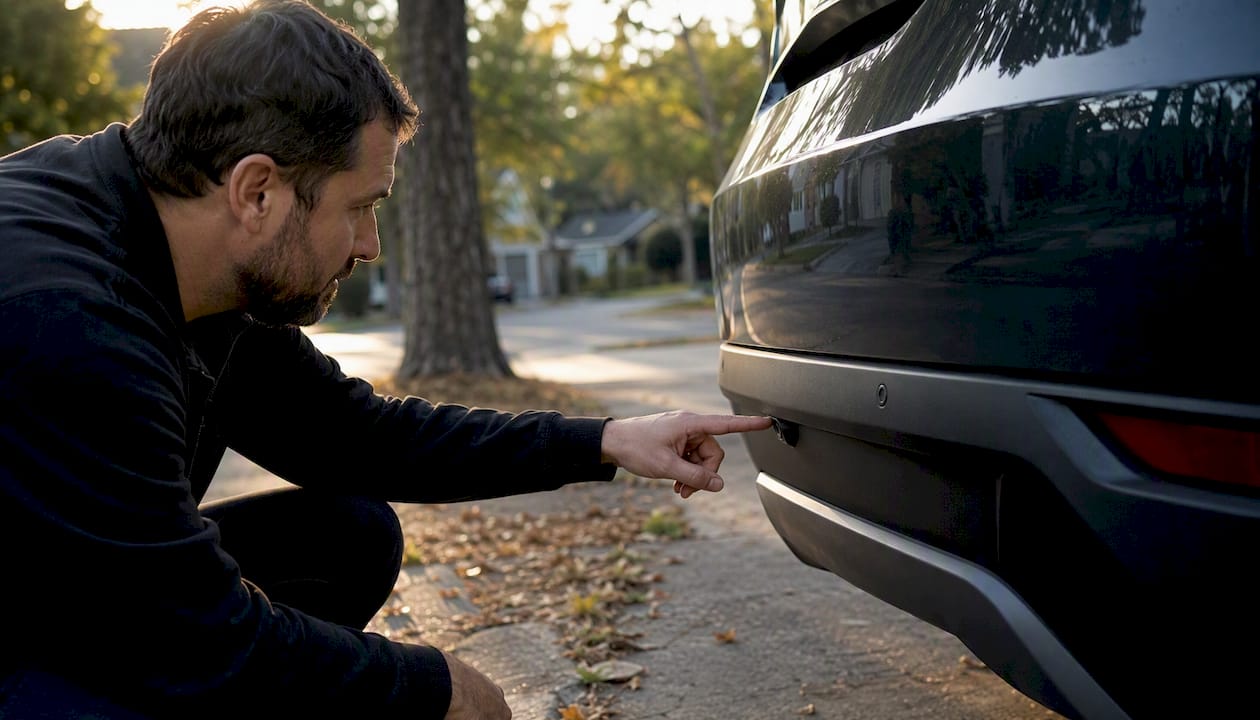
The IIHS criteria for teen-appropriate vehicles emphasize standard AEB, good headlights, and strong small-overlap crash ratings. New models in the compact sedan and crossover categories tend to check all three boxes without the guesswork of used-car shopping.
The Mazda 3 and Honda Civic both carry over their strong safety credentials into current model years, with updated crash structures and improved headlight ratings. The Toyota Prius is worth a serious look: its hybrid powertrain limits peak horsepower naturally, fuel costs are lower, and its crash ratings are consistently strong. The Mazda CX-30 rounds out the crossover options with a tight, predictable handling feel that suits newer drivers better than a larger SUV.
The trade-off is straightforward. New models cost more upfront and depreciate faster in the first two years. But you get standard safety tech, a manufacturer warranty, and no uncertainty about what the previous owner did to the car. For families who can absorb a higher monthly payment, the peace of mind is real. For those who can’t, the used-model tier above covers the same safety ground at a lower price.
What safety features should every teen’s car have?
Think of this as your rule-out checklist. If a car doesn’t meet these minimums, move on.
Required features before you buy
- Electronic Stability Control (ESC): Non-negotiable. ESC has been mandatory on all new U.S. vehicles since the 2012 model year, so any car built after 2011 should have it. Verify it’s present and functioning on older used vehicles.
- Automatic Emergency Braking (AEB): The single most important crash-avoidance feature for new drivers. Confirm it’s standard on the specific trim, not just available as an option.
- Side airbags and side curtain airbags: Protect occupants in side-impact crashes, which are disproportionately dangerous for teens.
- Anti-lock Brakes (ABS): Standard on virtually all modern vehicles, but worth confirming on older used cars.
- Seatbelt reminders: A small feature that matters. Teens are less likely to buckle up consistently; an audible reminder helps.
- Good headlights: IIHS rates headlights separately from crash tests. Poor headlights are a real crash risk, especially for night driving. Check the IIHS headlight rating for the specific model year.
How to read crash-test ratings
NHTSA’s 5-Star Safety Ratings evaluate frontal, side, and rollover crash performance. Aim for 4–5 stars across all categories. IIHS ratings use a different scale: “good” is the top score, followed by “acceptable,” “marginal,” and “poor.” For teen vehicles, target “good” in the small overlap front test and at least “acceptable” in side ratings.
Stat to know: ESC reduces the risk of fatal single-vehicle crashes by about 49% for cars and 67% for SUVs, according to IIHS research. It’s been standard on all new U.S. vehicles since 2012.
To verify ratings, go to nhtsa.gov/ratings and enter the year, make, and model. For IIHS scores, visit iihs.org and search by model. Both tools are free and take under two minutes.
Which vehicle types should parents avoid for teen drivers?
Some categories are worth skipping entirely, regardless of price or brand reputation.
Sports cars and high-horsepower trims are the most obvious ones to avoid. IIHS guidance is explicit: avoid high-horsepower models for teen drivers. More power increases the temptation to speed, and new drivers lack the experience to manage a car at its limits. The Subaru BRZ is a good example of a car that looks like a reasonable teen choice but isn’t. It’s lightweight, rear-wheel drive, and tuned for performance. That combination is a liability for a 16-year-old.

Large pickups and full-size SUVs carry a different set of risks. Their higher center of gravity increases rollover probability, and their longer stopping distances are harder to manage for inexperienced drivers. IIHS notes that while heavier vehicles offer occupant protection in crashes, the handling complexity and rollover risk of large trucks and SUVs can offset those advantages for new drivers.
Convertibles remove the structural protection of a roof, which matters most in rollover crashes. They’re also disproportionately associated with recreational driving, which tends to mean higher speeds and more distraction.
Ford Bronco Sport sits in an interesting middle ground. It’s a compact crossover with decent crash ratings, but its off-road positioning and sportier trims can encourage driving behavior that isn’t appropriate for new drivers. If you’re considering it, stick to the base trim and treat it as a crossover, not an adventure vehicle.
Pro Tip: If the model you’re considering comes in multiple trims, always check whether the base trim has a simpler infotainment screen. IIHS and Consumer Reports flag complex infotainment as a distraction risk for new drivers. Simpler is genuinely safer here.
How does vehicle choice affect insurance costs for teens?
Adding a teen to your family policy is expensive. MoneyGeek’s analysis puts the median annual increase at roughly $2,304 when a 16-year-old is added as a driver. That figure is the baseline before you factor in the vehicle itself.
Used vs. new: the cost trade-off
| Factor | Used vehicle | New vehicle |
|---|---|---|
| Purchase price | Lower upfront cost | Higher upfront cost |
| Safety tech | May require trim verification | Standard across all trims |
| Depreciation | Slower (already depreciated) | Faster in first 2 years |
| Repair costs | Can be higher on older models | Covered by warranty initially |
| Insurance premium | Generally lower (lower value) | Generally higher (higher value) |
How to lower what you pay
Vehicle choice directly affects insurance premiums. Sedans and compact crossovers with lower repair costs typically cost less to insure than sports cars, large SUVs, or trucks. Here’s what actually moves the number:
- Keep the teen on your family policy rather than a separate one.
- Ask about a good-student discount (typically requires a B average or better).
- Complete a state-approved driver education course, which many insurers recognize.
- Choose a model with lower repair costs. A Hyundai Elantra costs less to fix than a performance sedan.
- Ask your insurer about telematics or usage-based programs. These track driving behavior and can reduce premiums for safe drivers.
- Shop at least three quotes before committing. Rates vary significantly across insurers for the same driver and vehicle.
How to vet a specific car before you buy it
Run these steps in order before committing to any vehicle, used or new.
- Run the VIN through NHTSA’s recall database. Go to Nhtsa, enter the VIN, and check for open recalls. An open recall doesn’t automatically disqualify a car, but it needs to be resolved before purchase.
- Look up the model’s IIHS rating. Search iihs.org for the specific model year. Check the small overlap front rating, side rating, and headlight rating separately.
- Book a pre-purchase inspection. A qualified mechanic should inspect the brakes, suspension, tires, frame, and all safety systems. Budget $100–$150 for this. It’s the single best money you’ll spend in the buying process.
- Verify AEB and ESC are functional on the test drive. Ask the seller to demonstrate AEB activation (some vehicles have a test mode). Confirm ESC is not switched off. Check that all warning lights are off.
- Test the headlights at dusk or night if possible. Headlight quality is harder to assess in daylight. A quick evening drive reveals whether the lights illuminate the road adequately.
- Check seatbelt reminders and infotainment complexity. Buckle up and confirm the reminder activates. Scroll through the infotainment menus and assess whether a new driver could operate them without looking away from the road for extended periods.
For a full walkthrough of how to check VIN history before buying, Revroom’s step-by-step guide covers each tool and what the results mean.
Parent rules and training that actually reduce crash risk
The car is only part of the equation. Teen crash risk drops significantly when parents set clear behavioral rules and follow through on them.
Core rules to establish before the keys change hands
- No phone use while driving. Hands-free isn’t meaningfully safer for new drivers. The phone goes in the glove box or on Do Not Disturb.
- Passenger limits. Each additional teen passenger increases crash risk. Many states restrict teen passengers under graduated licensing laws, but enforce the rule even where the law doesn’t require it.
- Night-driving limits. Crash risk is highest between 9 PM and midnight for teen drivers. Set a curfew and stick to it.
- Seat belts every trip, every passenger. Make it a condition of driving, not a suggestion.
- Zero alcohol policy. Non-negotiable and worth stating explicitly in writing.
A parent-teen driving agreement
A written agreement signed by both parent and teen creates accountability. Include: the passenger limit, curfew time, phone policy, consequences for violations, and a graduated privilege system (more passengers and later curfew as the teen builds a clean record). Many state DMV websites offer template agreements you can adapt.
Training beyond the license
A driver’s license is a legal minimum, not a competency certification. Formal driver education, followed by supervised practice in varied conditions (rain, highway, night), builds the judgment that prevents crashes. Graduated exposure works: start with familiar routes, add complexity over months.
Pro Tip: Telematics apps from insurers like Progressive Snapshot or similar programs track acceleration, braking, and phone use. Frame it as a way for your teen to earn lower premiums and more driving privileges, not as surveillance. Teens who know they’re being tracked tend to drive more carefully, and the data gives you something concrete to discuss.
Can a rebuilt or branded-title vehicle be a safe choice for a teen?
Rebuilt and branded-title vehicles are cars that were declared a total loss by an insurance company, then repaired and certified by the state as road-ready. They’re not salvage vehicles. Salvage titles mean the car hasn’t been repaired or inspected. Rebuilt and branded titles mean it has.
Title types at a glance
| Title type | What it means | Road-ready? |
|---|---|---|
| Clean title | No total-loss history | Yes |
| Rebuilt/branded title | Total loss, repaired, state-certified | Yes, after passing inspection |
| Salvage title | Total loss, not yet repaired | No |
The practical difference for a parent: a rebuilt-title vehicle that has passed state certification has been inspected and confirmed roadworthy. The uncertainty isn’t whether it’s safe to drive. The uncertainty is what was repaired, how well, and whether the price reflects that history fairly.
What Revroom does differently
Revroom is built specifically for rebuilt and branded-title vehicles. Every listing includes repair photos showing what the car looked like before it was fixed, plus vehicle history information. That transparency replaces the guesswork that makes most buyers nervous about this category.
For any rebuilt or branded-title vehicle you find anywhere, a Revroom History Report costs $15 and tells you what happened to the car, how severe it was, and whether the asking price is fair compared to similar clean-title vehicles nearby. That’s the kind of context that turns an uncertain listing into a confident decision.
Buying checklist for rebuilt or branded-title vehicles
- Request full repair documentation, including parts replaced and shop records.
- Confirm state certification and inspection paperwork.
- Book an independent pre-purchase inspection with a mechanic who has experience with rebuilt-title vehicles.
- Verify that AEB, ESC, airbags, and all safety systems are functional.
- Check insurance implications before buying. Some insurers charge higher premiums or limit coverage on rebuilt-title vehicles. Get quotes first.
- Compare the asking price against similar clean-title vehicles using a Revroom History Report.
Rebuilt-title vehicles can be up to 50% cheaper than equivalent clean-title cars. For a budget-conscious family, that gap can mean affording a newer model year with better safety tech than a clean-title alternative at the same price.
The Revroom editorial team’s take on balancing safety and affordability
Here’s the honest version of what most buying guides won’t say: the safest car for a teen is the one you can actually afford to buy, insure, and maintain without financial stress. A stretched budget leads to deferred maintenance, skipped inspections, and keeping a car longer than you should. A rebuilt-title Mazda 3 from 2019, state-certified and professionally inspected, with AEB and ESC confirmed functional, is a smarter choice than a clean-title sports sedan that maxes out your budget and tempts your teen every time they sit behind the wheel.
Revroom’s mission is exactly this: give reliable cars a second chance at a full life, at a price that makes the right choice accessible. Certification and transparency are how that works. Not promises, not guesswork.
Certified, affordable vehicles for teens are on Revroom
Rebuilt and branded-title vehicles on Revroom are state-certified, repaired, and road-ready. Every listing includes repair photos and vehicle history so you can see exactly what you’re buying before you commit. For families who want a dependable daily driver without paying a clean-title premium, that combination of savings and transparency is hard to beat.
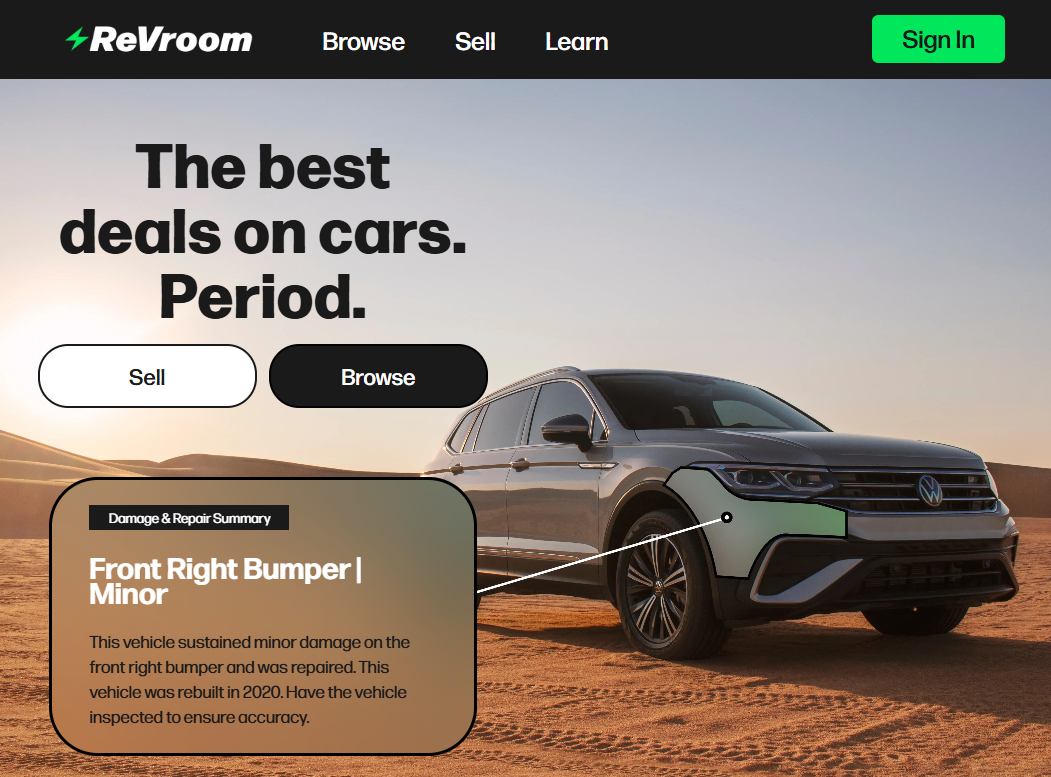
Revroom History Reports are $15 for any rebuilt or branded-title vehicle, anywhere. Enter a VIN and get a full picture: what happened, how severe it was, and whether the price is fair. Whether you’re browsing Revroom listings or evaluating a vehicle you found elsewhere, it’s the fastest way to buy with confidence. Browse certified teen-friendly listings on Revroom and run a history report on any vehicle that catches your eye.
Sources
Use these tools directly when evaluating any vehicle:
- Updated teen vehicle list spotlights good buys with solid safety credentials
- Teen driving
- Safe Car for Teenager | Teen Driver Source
- This year’s safest vehicles for teens
- Teenage car insurance average cost | MoneyGeek
- Teen car insurance costs and how to lower them
- Car insurance for teens | Progressive
Check at least two of these sources for every vehicle you seriously consider, and always follow up with a professional pre-purchase inspection.
FAQ
What is a good first vehicle for a teenager?
A mid-size sedan or compact crossover with ESC and AEB standard, like the Honda Civic, Mazda 3, or Hyundai Elantra, is the most practical starting point. Prioritize crash-test ratings over brand loyalty and stick to base-engine trims.
What is the safest vehicle for a 16-year-old?
IIHS and Consumer Reports recommend vehicles that earn “good” in small overlap front crash tests and come with standard AEB. The Mazda 3, Honda Civic, and Toyota Camry (2018 and newer) consistently appear on their annual teen-vehicle list as top-tier picks.
What is the best car to get for a 17-year-old?
The best car balances safety ratings, low horsepower, and affordable insurance. The Honda Civic and Hyundai Elantra are strong choices because they’re widely available used, carry solid crash ratings, and cost less to insure than performance-oriented alternatives.
What do Gen Z drivers tend to prefer in a car?
Gen Z drivers tend to favor compact, tech-equipped vehicles with good fuel economy, like the Toyota Prius and Honda Civic. For parents, the good news is that these preferences align well with the safety-first criteria: both models earn strong crash ratings and come with standard AEB on recent model years.
