


How Much Does It Cost to Get a Rebuilt Title? Fees, Repairs, Paperwork, and What the Car Is Worth After (2026)
September 19, 2026
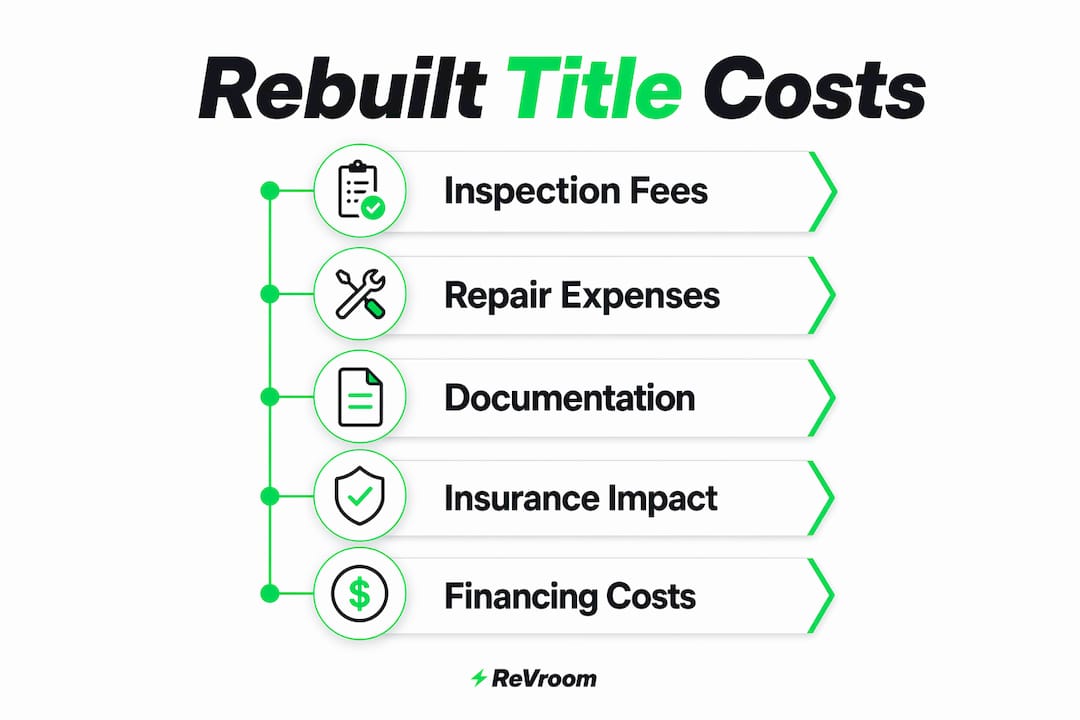
Short answer: the state's fee for a rebuilt title is the small part. As published, California charges $50 for the total-loss salvage inspection, New York charges $200 to $205 for its salvage examination, and Missouri sells the inspection form for $25 plus a $2.50 processing fee. The large part is the repair, and that depends entirely on what the auction record says happened. The part nobody budgets for is the paperwork: hours of receipts, photos and forms that decide whether you pass inspection the first time. And the number that decides whether any of it was worth doing is the one at the end: what the car is worth with a rebuilt title, and where you sell it.
Key takeaways
- State fees range from tens of dollars to a couple of hundred, depending on the state. They are the smallest line on the sheet.
- Repair cost is set by the history, not by a rule of thumb. The auction photos and notes are your estimate.
- Incomplete paperwork is the most common reason an application comes back. Start the folder on day one.
- Insurance and financing are both available on a rebuilt title car. Shop quotes like you would for any car.
- Once the title is issued, the car retails below its clean-title twin and above what most people guess. The median sold price in ReVroom's September 2026 data is $17,471.
- Rebuilders sell finished cars wholesale to dealers on RPM, free, or retail them on ReVroom.
What are the state fees and inspection costs for a rebuilt title?
Short answer: somewhere between a form fee and a few hundred dollars, and every state publishes its own number.
The inspection is the state confirming three things: the VIN matches, the car is roadworthy, and the parts used were not stolen. What it costs you is on your state's motor vehicle site. Here is what the states we read today publish:
| State | Published fee | What it covers, as published |
|---|---|---|
| California | $50 | Total loss salvage or dismantled vehicle inspection (DMV registration fee schedule) |
| New York | $200, or $205 if your proof of ownership is not a New York salvage certificate | The salvage vehicle examination; a missed appointment costs another $150 |
| Missouri | $25 plus a $2.50 processing fee for the inspection form (Form 551); $5 for a single-trip salvage permit | The form is requested from the Department of Revenue or a license office |
| Texas | Not stated on the TxDMV rebuilt page | A rebuilt vehicle must pass safety and anti-theft inspections and other state-mandated standards |
Two things the table shows. The fee itself will not make or break the project. And the states differ in how many separate appointments they want, which is where the calendar cost hides. Look your own state up before you buy the salvage car, not after, and note what the form is called so the seller's paperwork matches.
Pro tip: the state inspection checks the legal minimum. It does not tell you whether the frame was pulled straight or the airbags are original. That is your job, or your pre-purchase inspector's.
How much do repairs and documentation add to the cost?
Short answer: repairs are whatever the history demands. Documentation is a few hours you either spend up front or spend twice.

There is no honest national average for the repair, because a hail-history crossover that needs paintless dent work and a collision-history sedan that needs a quarter panel are different jobs on the same title. The auction record is your estimate: the arrival photos, the primary and secondary history notes, whether the airbags deployed. Experienced rebuilders price the repair from those photos before they bid, and then add a cushion, because cars reveal more once the panels come off.
The paperwork is the part everyone underestimates. To pass inspection and get the title issued you need a complete trail:
- Itemized receipts for every part, with the source. Many states check that used parts were not stolen.
- Labor invoices from the shop, or a log if you did the work.
- Photos of the car before, during and after repair.
- The repairer's name and contact details.
- The salvage title or certificate and any prior inspection paperwork.
Incomplete paperwork is the leading reason applications come back, and every resubmission is another appointment and sometimes another fee. Do it once.
Pro tip: start a folder the day the car arrives. Every receipt and every photo goes in immediately. The photos are worth keeping for a second reason: the buyer who pays the most for a rebuilt car is the one who can see what was fixed.
What impact does a rebuilt title have on insurance and financing?
Short answer: you can insure it and you can finance it. Both are normal.
Most major insurers write liability and full comprehensive-and-collision coverage on rebuilt title cars. A few ask for a photo inspection before writing full coverage, which is quick. Pricing varies by carrier, so get two or three quotes, exactly as you would with any car. Our guide to which insurers cover rebuilt title cars names names.
Financing is normal too. Banks and credit unions lend on rebuilt titles, credit unions are often the most flexible, and lender networks exist for exactly this category. ReVroom is not a lender, but our rebuilt title financing page explains how the myAutoloan network works and lists its published minimums.
What are the required steps to apply for a rebuilt title?
Short answer: finish the repair, build the file, pass the inspection, apply, wait. In that order.
- Complete all repairs. Partial repairs do not pass. Keep every receipt.
- Build the documentation file. Parts receipts, labor invoices, photos, the repairer's details, the salvage title. This is the application.
- Schedule and pass the state inspection. Depending on the state this is one appointment or several: VIN verification, safety, anti-theft, and sometimes emissions.
- Collect the inspection certificate. You need it in hand before you apply.
- Apply to the DMV. Title, certificates, documentation, form and fee.
- Wait for processing. Weeks, typically, and longer if anything is missing.
- Receive the rebuilt title. The car is now legal to register, insure, drive and sell.
Our page on how rebuilt cars are retitled walks through the same steps from the state's point of view.
What is the car worth once it has a rebuilt title?
Short answer: less than its clean-title twin, and more than most people guess. This is the number that tells you whether the whole exercise paid.
ReVroom tracks what rebuilt title vehicles actually sell for. As of the September 2026 market snapshot, across more than 16,000 vehicles, the median sold price is $17,471, the median model year is 2020, the median mileage is 55,456 and the median buyer saving against clean-title market value is $4,607. The saving grows with the model year, which is the same thing as saying newer cars carry a bigger dollar gap:
| Model year | Median saved vs clean title | Vehicles sold |
|---|---|---|
| 2016 | $2,127 | 569 |
| 2018 | $3,282 | 894 |
| 2020 | $4,972 | 1,031 |
| 2022 | $6,097 | 1,258 |
| 2024 | $7,095 | 1,252 |
| 2025 | $7,224 | 449 |
Read it as a rebuilder: the retail price you are aiming at is the clean-title number minus roughly that saving. Read it as a buyer: that saving is what you should expect to keep. Either way, the history grade moves the number. Of the vehicles with documented history analysis in our data, 88 percent were graded minor or moderate, and those retail closest to the clean-title price. Our rebuilt title value guide goes deeper on the percentage.
Where do rebuilders sell once the rebuilt title is issued?
Short answer: wholesale to a dealer on RPM, free, or retail to the public on ReVroom. Both take the car the week the title arrives.
| Exit | Who buys | Cost to you, as published | Best when |
|---|---|---|---|
| RPM, the ReVroom Private Market | Retail dealerships buying finished rebuilt cars wholesale | Free for rebuilders; no credit card to list or sell | You want a fast, certain sale and the next car is waiting |
| ReVroom dealer storefront | Retail buyers who searched for rebuilt title cars | Free; unlimited listings, no per-listing fees | You hold a dealer license and want the retail margin |
| ReVroom private-party listing | Retail buyers | See the sell page for the current listing fee | You rebuilt your own car and are selling one |
| Wholesale auction | Dealers and exporters | Auction fees | You need it gone this week and accept the wholesale number |
RPM is the one built for this exact moment. As published on the rebuilder page, you create a listing with your asking price, the VIN and the pre-repair images; dealers make offers, each of which has to beat the last; and you close with the buyer on shipping, documents and payment. If you are new to the wholesale side, what is an auto rebuilder explains how the trade works end to end.
How to budget for a rebuilt title, whichever side you are on
Short answer: work backwards from the retail number.
If you are rebuilding: start from what the finished car will sell for (the snapshot table above is a fair anchor), subtract the repair you priced from the auction photos, the state fee, your time on paperwork and a cushion for what the panels hide, and the remainder is the most you can pay for the salvage car. If the remainder is thin, buy a different car.
If you are buying a rebuilt car someone else finished: start from the clean-title twin's price, expect a saving in the range the snapshot shows for that model year, then check that the paperwork above exists. A seller who did the work properly has the folder. An independent pre-purchase inspection is the best few hundred dollars in the whole process, because the state inspection only checked the legal minimum.
| Line item | Rebuilder | Buyer |
|---|---|---|
| State inspection and title fees | Your state's published fee | Already paid; confirm the certificate exists |
| Repair | Priced from the auction record, plus a cushion | Reflected in the discount; verify with the invoices |
| Paperwork | Hours, or a fee if someone prepares it for you | Ask for the folder |
| Independent inspection | Optional before you bid | Worth it every time |
| Insurance | Normal; get quotes | Normal; get quotes |
| Exit or purchase price | The snapshot medians by model year | Clean-title price minus the expected saving |
Key takeaways
| Point | Details |
|---|---|
| State fees are the small part | California $50, New York $200 to $205, Missouri $25 plus processing for the form, as published today. Check your own state. |
| Repairs follow the history | The auction record is the estimate. There is no honest national average. |
| Paperwork decides the timeline | Incomplete files are the usual reason an application comes back. |
| Insurance and financing are available | Most major insurers write full coverage; banks, credit unions and lender networks finance rebuilt titles. |
| The car is worth real money after | Median sold price $17,471; median saving $4,607, rising with model year. |
| Rebuilders have a free exit | RPM sells finished cars to dealers at no cost to the rebuilder. |
What we have learned about rebuilt title costs after watching thousands of deals
The number people underestimate most is not the repair bill. It is the documentation. Everyone budgets for parts and shop time; nobody budgets for the evening spent organizing receipts into a package that will pass DMV review. That invisible line item becomes very visible when the application comes back and you start over.
The second thing we push back on is the idea that the state inspection is enough due diligence. It checks the legal minimum: the VIN matches, the lights work, the parts were not stolen. It does not tell you whether the frame was pulled straight. An independent inspection from a qualified mechanic is the single best spend in this entire process, on either side of the deal.
The third thing is newer. For years the rebuilder's exit was the lane or a handshake with a lot down the road. That is why we built RPM. A finished, retitled car should be able to find a dealer the week the title arrives, without a fee to the person who did the work.
ReVroom Editorial Team
Rebuilding to sell? Buying one someone else rebuilt? Start here
If you rebuild cars, list your finished vehicles on RPM and let dealers bid; it is free for rebuilders. If you hold a dealer license, open a free storefront. And if you are buying, browse rebuilt title cars on ReVroom, where every listing shows the title status, what was repaired and photos where they are available, and you can filter by history type and severity grade.

FAQ
How much does a rebuilt title cost in total?
The state's own fee is the small part: as published, California's total-loss salvage inspection is $50, New York's salvage examination is $200 to $205, and Missouri sells the inspection form for $25 plus a $2.50 processing fee. The large part is the repair, which depends entirely on what the auction record shows, plus the paperwork hours to pass inspection the first time.
How much should I pay for a rebuilt title car?
Price it against the clean-title twin. Across the 16,000-plus rebuilt title vehicles ReVroom has tracked, the median buyer saving is $4,607 and the median sold price is $17,471, with about one in three cars selling 25 percent or more below clean-title market value.
What documents do I need to apply for a rebuilt title?
The salvage title or certificate, itemized parts receipts, labor invoices, photos of the car before and during repair, the repairer's details, the passed inspection certificate and your state's application form. Incomplete paperwork is the usual reason an application comes back.
Is it hard to insure a rebuilt title vehicle?
No. Most major insurers write liability and full coverage on rebuilt title cars; a few ask for a photo inspection first. Get two or three quotes, the same as you would on any car.
How long does the rebuilt title process take?
It varies by state and by how complete your paperwork is. Plan on weeks, not days, from finished repair to the title in your hand, and longer where the state requires several separate inspections.
What is a car worth once it has a rebuilt title?
Less than its clean-title twin and more than you might guess. ReVroom's September 2026 snapshot shows a median sold price of $17,471 and median savings rising with model year, from $2,038 on a 2015 to $7,224 on a 2025.
Where do rebuilders sell cars once the rebuilt title is issued?
Wholesale to dealers through RPM, the ReVroom Private Market, which is free for rebuilders and needs no credit card; retail to the public on ReVroom; or through their own dealer storefront, which is also free to list.
