


How to Buy a Car on a Budget: A Practical Guide
July 9, 2026
TL;DR:
- Buying a car on a budget involves calculating total ownership costs and keeping them within 15% of your after-tax income. Securing pre-approved financing and negotiating the total out-the-door price are essential steps for affordability and value. Rebuilt title vehicles offer significant savings for budget buyers when inspected and verified through transparency tools.
Buying a car on a budget is defined as purchasing a vehicle while keeping your total ownership costs, including loan payments, insurance, fuel, and maintenance, within a sustainable portion of your monthly income. The industry benchmark is the 15% rule: total transportation costs should stay at or below 15% of your after-tax income. That single number separates buyers who feel good about their purchase six months later from those who feel squeezed. Whether you’re a parent shopping for your teen’s first car or a college student working with a tight budget, this guide walks you through every step, from setting your real number to driving off with a vehicle you can actually afford.
How to buy a car on a budget: setting your real number first
Most buyers make one critical mistake. They look at the sticker price and call it their budget. The sticker price is only one piece of the puzzle.
Your true monthly car cost includes five things:
- Loan payment: The amount you finance divided across your loan term
- Insurance: Premiums that vary by as much as 40% between similar-priced vehicles, so get quotes before you buy
- Fuel: Based on your commute and the vehicle’s MPG rating
- Maintenance: Oil changes, tires, brakes, and scheduled service
- Parking and tolls: Easy to forget, impossible to avoid
Add those five numbers together. If the total exceeds 15% of your monthly take-home pay, the car is too expensive, regardless of what the monthly payment looks like on paper.
A practical way to work backward: if you take home $3,000 per month, your total transportation budget is $450. Subtract $150 for insurance, $80 for fuel, and $50 for maintenance. That leaves roughly $170 for a loan payment. A $170 payment at a 6% interest rate over 48 months supports a loan of about $7,200. That is your real purchase ceiling, not the number on the window sticker.

Pro Tip: Use a free online auto loan calculator to test different loan amounts, rates, and terms before you ever set foot in a dealership. Knowing your ceiling makes you a much harder buyer to pressure.
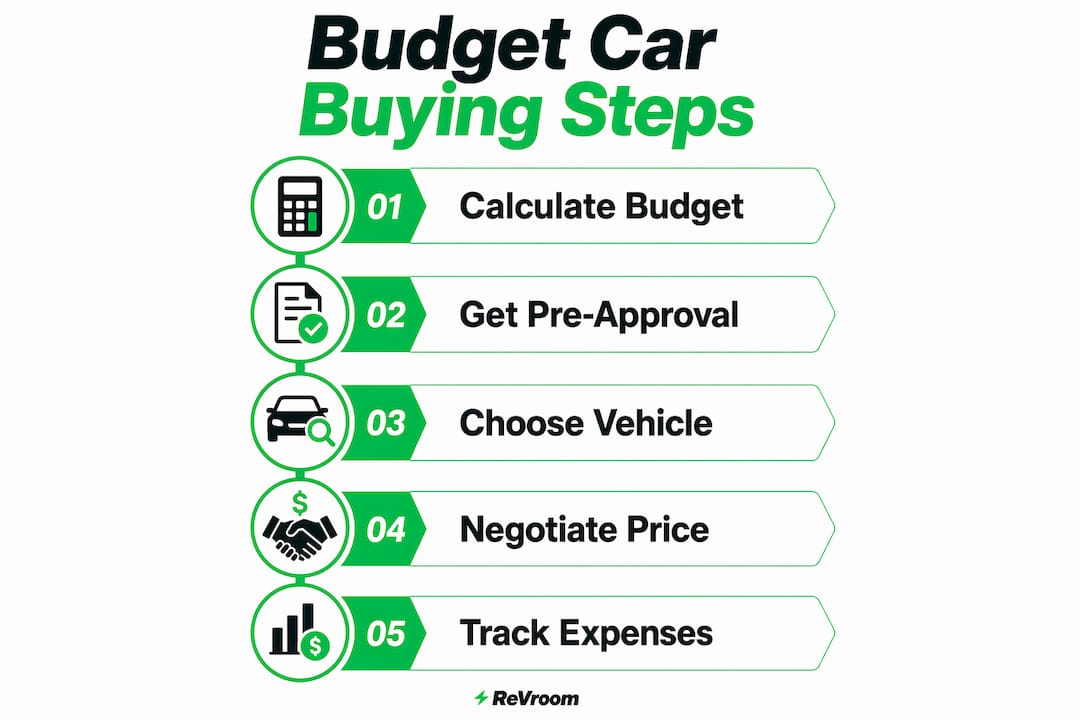
Affordability calculators from sources like Fidelity’s financial planning tools help you run these numbers in minutes. Spending 20 minutes on this math before you shop saves you years of financial stress.
What financing options actually save you money?
Pre-approval from a bank or credit union is the single most powerful tool a budget buyer has. Credit unions offer APRs around 5.8% versus a 7.1% average at dealerships for buyers with the same credit profile. That difference on a $10,000 loan over 48 months adds up to hundreds of dollars in extra interest paid to the dealer.
Getting pre-approved before you shop does two things. First, it tells you exactly how much you can borrow at a rate you already know is competitive. Second, it gives you real negotiating power because you walk in as a cash buyer in the dealer’s eyes.
Key financing principles for budget buyers:
- Get pre-approved first: Apply at your bank or a local credit union before visiting any dealership
- Put down at least 10%: A down payment of 15–20% on a used vehicle reduces your total interest paid and protects you from negative equity
- Keep your loan term short: A 48-month loan costs less in total interest than a 72-month loan, even if the monthly payment is higher
- Separate financing from the purchase price: Negotiate the car price first, then discuss financing
Pro Tip: Check your credit report at AnnualCreditReport.com before applying. A single error on your report can raise your interest rate by a full percentage point or more. Fixing it first costs nothing.
Revroom’s guide on loan pre-approval steps walks through the process in plain language if you want a step-by-step breakdown.
How do you choose the right vehicle for a tight budget?
The right budget car is not just the cheapest car. It is the car with the lowest total cost of ownership over three to five years.
Prioritizing safety, especially for teen drivers
Parents shopping for a teen driver should put safety features above everything else, including price. Late-model used cars with ADAS, which stands for active driver assistance systems, significantly reduce crash rates. Features like forward collision warning and automatic emergency braking are now available on many used vehicles from 2018 onward at affordable prices.
Consumer Reports identifies vehicles with proven crash-reduction technology as the top priority for teen buyers. A car that prevents one accident pays for itself many times over. Revroom’s guide to safe SUVs for teens lists specific models worth considering.
New vs. used: what the numbers say
| Category | New vehicle | Used vehicle (3–5 years old) |
|---|---|---|
| Purchase price | Higher | 30–50% less |
| Depreciation | Steepest in year 1–2 | Already absorbed |
| Warranty | Full manufacturer warranty | Limited or none |
| Insurance cost | Generally higher | Generally lower |
| Financing rate | Often lower | Slightly higher |
A used vehicle that is three to five years old hits the sweet spot. The original owner absorbed the steepest depreciation. You get modern safety features without paying the new-car premium.
Always research reliability ratings from sources like Consumer Reports before committing to a specific model. Some vehicles cost far more to maintain than others at the same price point. Getting insurance quotes for your top two or three choices before buying is non-negotiable. Insurance premiums vary widely between similar vehicles, and that difference compounds over years of ownership.
Revroom’s list of affordable student cars is a solid starting point for buyers who want reliable options without the research rabbit hole.
What negotiation tactics actually work at a dealership?
Nearly all parts of the car buying process are negotiable. Most buyers do not realize this and leave money on the table.
The most important tactic is to negotiate the out-the-door price, not the monthly payment. Dealers use monthly payments as an anchor because they can extend your loan term to make any price seem affordable. A $400 per month payment sounds reasonable until you realize it is spread across 84 months.
Follow this sequence:
- Agree on the vehicle price first. Get the out-the-door number in writing before any discussion of financing or trade-ins.
- Introduce your pre-approval. Show the dealer your pre-approved rate and ask them to beat it. Sometimes they can; often they cannot.
- Negotiate your trade-in separately. Bundling trade-in and purchase price gives the dealer room to give with one hand and take with the other.
- Decline dealer add-ons. GAP insurance costs $400–$900 at a dealership but as little as $20–$40 per year through your own insurer. Paint protection, fabric coating, and extended warranties sold in the finance office carry enormous markups.
- Get an independent inspection. A $100–$200 mechanic inspection reveals hidden issues that a vehicle history report misses. Never skip this step on a used car.
Pro Tip: Shop near the end of the month. Salespeople and dealerships have monthly quotas, and a buyer who shows up on the last few days of the month often gets a better deal than one who shops on the 5th.
Revroom’s deep dive on negotiating car prices covers online negotiation tactics that work even before you visit a lot.
How do you stay on budget after you buy the car?
Buying the car is the beginning, not the end, of your budget commitment. Ongoing costs catch many buyers off guard, especially first-time owners.
Build these into your monthly budget from day one:
- Routine maintenance: Oil changes every 5,000–7,500 miles, tire rotations, and annual inspections add up to several hundred dollars per year for most vehicles
- Emergency repair fund: Set aside $50–$100 per month into a dedicated car repair fund. Brakes, batteries, and tires fail without warning.
- Insurance reviews: Shop your insurance policy annually. Rates change, and loyalty rarely pays in the insurance market.
- Fuel tracking: Apps like GasBuddy help you find the lowest prices near you and track your monthly fuel spend against your budget
Tracking vehicle expenses with a simple spreadsheet or a budgeting app keeps you honest. Revroom’s guide on budgeting for car maintenance gives you a realistic breakdown of what to expect by vehicle type and age. For buyers managing multiple vehicles or watching fuel costs closely, resources like Moto Watchdog’s fleet tracking guide offer practical tools for monitoring ongoing expenses.
Key takeaways
Buying a car on a budget requires calculating your true total ownership cost, securing pre-approved financing, and negotiating the out-the-door price before discussing payments or trade-ins.
| Point | Details |
|---|---|
| Use the 15% rule | Keep total monthly transportation costs at or below 15% of your after-tax income. |
| Get pre-approved first | Credit unions offer lower APRs than dealerships; pre-approval gives you real negotiating power. |
| Factor in all ownership costs | Insurance, fuel, maintenance, and parking belong in your budget before you set a price ceiling. |
| Negotiate the total price | Always agree on the out-the-door price before discussing monthly payments or trade-ins. |
| Inspect before you buy | A $100–$200 independent mechanic inspection catches hidden issues that history reports miss. |
What I’ve learned from watching buyers get this wrong
The most common mistake I see budget buyers make is falling in love with a car before they know their number. They find the vehicle, then try to make the math work. That is the wrong order, and it almost always leads to a stretched budget or a loan term that drags on for six years.
The second mistake is treating the monthly payment as the measure of affordability. Dealers know this instinct and use it. A $350 payment on a 72-month loan is not a good deal. It is a long commitment to a depreciating asset with a lot of interest baked in.
What actually works is patience. The buyers who get the best deals are the ones who do their homework, get pre-approved, and are genuinely willing to walk away. That willingness is not a bluff. It is the natural result of knowing your number before you walk in.
There are real gems out there for budget buyers, including rebuilt title vehicles that have been professionally repaired and inspected. These cars can cost significantly less than comparable clean-title vehicles. The key is knowing what you are looking at, which is exactly where transparency tools make the difference.
— Revroom Editorial Team
Revroom helps budget buyers find real value
Budget car buying does not have to mean settling for the first affordable option you find. Revroom is the only online marketplace built specifically for rebuilt title vehicles, giving budget-conscious buyers access to professionally repaired cars at prices up to 50% below comparable clean-title vehicles.
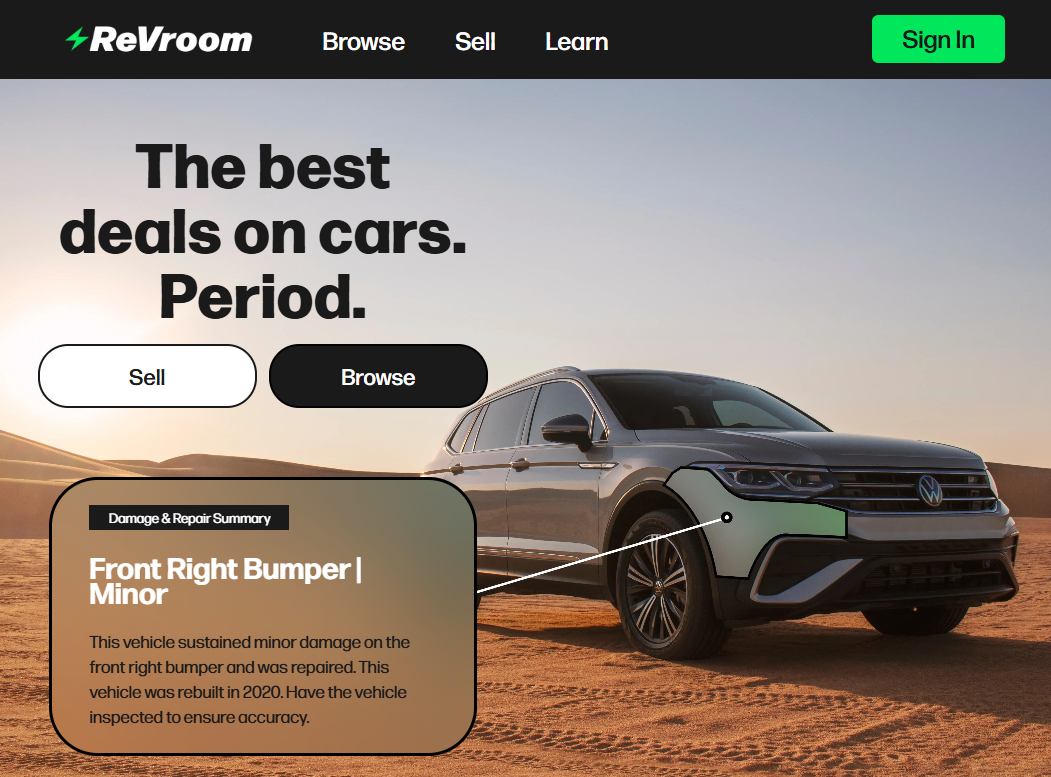
Every Revroom listing includes vehicle history information and photos of what the car looked like before repairs, so you see exactly what you are buying. For buyers shopping outside the Revroom marketplace, a Revroom History Report costs just $15 and tells you what happened to the vehicle, how severe it was, and whether the asking price is fair compared to similar vehicles in your area. That is real transparency for less than the cost of lunch.
FAQ
What is the 15% rule for buying a car?
The 15% rule means your total monthly transportation costs, including your loan payment, insurance, fuel, and maintenance, should stay at or below 15% of your monthly after-tax income. This benchmark helps buyers avoid overextending their budget on a vehicle.
Is it better to finance through a dealer or a bank?
Financing through a bank or credit union before visiting a dealership typically offers lower interest rates. Credit unions average around 5.8% APR versus 7.1% at dealerships for the same credit profile, which saves hundreds of dollars over the life of a loan.
How much should I put down on a used car?
A down payment of at least 10% is the minimum for a used vehicle, with 15–20% being the stronger target. A larger down payment reduces your total interest paid and protects you from owing more than the car is worth.
What should I negotiate when buying a car?
Negotiate the out-the-door price first, then financing, then your trade-in value separately. Nearly every part of the transaction is negotiable, including dealer add-ons, which are almost always overpriced.
Are rebuilt title cars a good option for budget buyers?
Rebuilt title vehicles can be an excellent option for budget buyers. They are up to 50% cheaper than comparable clean-title cars and have been repaired and inspected to meet roadworthy standards. Using a transparency tool like a Revroom History Report helps you evaluate the vehicle history and confirm the price is fair before you commit.
