


How to Read Car History Like a Pro Buyer
May 20, 2026
TL;DR:
- Reading a vehicle history report reveals past incidents, ownership, and title details but cannot determine the current mechanical condition.
- Verifying the VIN across multiple sources and combining report insights with a professional inspection increases confidence before purchasing a used car.
You pulled up a vehicle history report and now you’re staring at a wall of dates, codes, and ownership records that might as well be written in a foreign language. Sound familiar? Learning how to read car history is one of the most useful skills a buyer can develop, yet most people skim the green checkmarks and call it a day. That’s where costly surprises happen. This guide breaks down every major section of a vehicle history report, shows you what to look for beyond the obvious, and helps you walk into any used car purchase with confidence and clarity.
Table of Contents
- Key Takeaways
- What a vehicle history report actually contains
- Before you read: getting prepared the right way
- How to read and interpret each section of the report
- Common mistakes buyers make with vehicle reports
- Verifying beyond the report
- My honest take on reading vehicle history reports
- Find vehicles where the history is already done for you
- FAQ
Key Takeaways
| Point | Details |
|---|---|
| Reports tell a story, not a verdict | Read the full timeline, not just the summary icons at the top of the report. |
| Always verify the VIN first | Confirm the VIN matches on the dashboard, door jamb, title, and registration before trusting the report. |
| Cross-check multiple providers | Different report providers access unique datasets, so one report alone may not show the full picture. |
| Inspection is non-negotiable | History reports cannot detect unreported issues or current mechanical condition. |
| Rebuilt titles offer real transparency | Rebuilt title vehicles on platforms like ReVroom include vehicle history photos, giving you more context than a standard report. |
What a vehicle history report actually contains
A vehicle history report is a compiled record of a car’s past, pulled from sources like the DMV, insurance companies, auto auctions, service shops, and the National Motor Vehicle Title Information System (NMVTIS). You give the system a VIN (Vehicle Identification Number), and it spits back a timeline of everything that car has officially been through.
Here is what a standard report typically includes:
- Title history: Current title status, any title brands, and state of registration
- Ownership history: Number of previous owners and how long each held the vehicle
- Odometer readings: A timeline of recorded mileage at each transfer or service visit
- Accident and incident records: Reported collisions, airbag deployments, and structural damage
- Service and maintenance records: Oil changes, repairs, and inspections logged at participating shops
- Recall information: Open or closed safety recalls from the manufacturer
- Auction and listing history: Where and when the car appeared for sale
One thing reports cannot do is assess the car’s current condition. Reports show past events, not what is happening under the hood today. That distinction matters more than most buyers realize.
Pro Tip: Standard retail reports typically cost between $15 and $45, with some specialized reports available for as little as $5 through NMVTIS-approved providers. Shop around before paying full price.
| Provider type | Typical cost | Best for |
|---|---|---|
| Major retail (e.g., CARFAX) | ~$45 | Comprehensive single report |
| NMVTIS-approved services | $5 to $18 | Budget-friendly cross-check |
| Dealer-provided | Often free | Initial screening only |
Before you read: getting prepared the right way
Before you even open a report, you need the right VIN. A mismatch here means everything you read could apply to a completely different car.
- Locate the VIN on the dashboard. Look through the windshield on the driver’s side at the lower corner of the dashboard. This is the most tamper-evident location.
- Confirm it on the door jamb. Open the driver’s door and check the sticker inside the door frame. It should match exactly.
- Compare it to the title and registration. Any discrepancy is a serious red flag worth investigating before going further.
- Check the report date. A report older than 30 days may be missing recent accidents, title transfers, or service records. Always pull the most current version.
You should also know that free VIN checks and paid history reports are not the same thing. Free checks give you a basic snapshot, like title status and stolen vehicle flags. Paid reports give you the full timeline. Both have value, but neither replaces the other.
Pro Tip: Some services now offer license plate lookup as an alternative to entering a VIN. These databases contain over 600 million vehicle records and can be useful when you do not have direct access to the car yet.
Learn more about the differences between report types in this Carfax vs VIN check breakdown from ReVroom.
How to read and interpret each section of the report
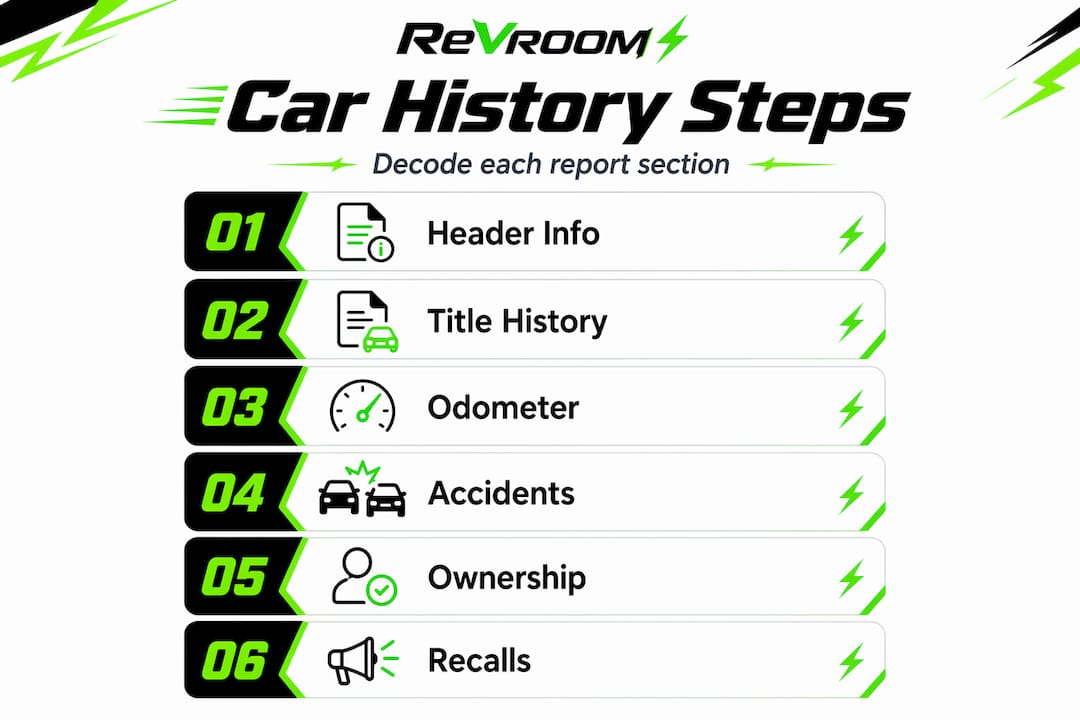
This is where most buyers get lost. Here is a section-by-section walkthrough so you know exactly what to look for and what questions to ask.
1. Header block
The top of the report shows the VIN, year, make, model, trim, and color. Verify these match the physical car in front of you. A report that matches a silver 2019 Honda Accord means nothing if the car you’re looking at is a 2018 or a different color than listed.
2. Title history
This section tells you what title brand the vehicle currently carries and what it may have carried in the past. Watch for brands like “rebuilt,” “flood,” “lemon law buyback,” or “odometer rollback.” A rebuilt title simply means the vehicle was previously deemed a total loss by an insurer and has since been repaired and re-inspected to meet roadworthiness standards. It is not inherently a bad thing. What matters is the quality of the repair.

Also watch for suspicious state-to-state title movements. Title washing involves moving a vehicle between states with different titling laws to obtain a cleaner-looking title. If you see rapid state transfers within a short window, read the rest of the report with extra scrutiny. ReVroom’s guide on spotting title washing goes deeper on this specific issue.
3. Odometer readings
A well-maintained car typically shows gradual, consistent mileage increases over time. What you want to flag:
- Large mileage gaps between two consecutive readings with no explanation
- Mileage that decreases between entries, which is a classic rollback sign
- Very low miles for age that seem inconsistent with the car’s condition or service history
A three-pass review of the mileage timeline helps reveal these patterns. First pass: verify specs. Second pass: trace mileage and state transfers. Third pass: look for clustering of events near sale dates.
4. Accident and incident records
Not all incidents are equal. A minor fender contact at low speed is very different from a structural collision with airbag deployment. When reviewing this section:
- Note the severity description and which part of the vehicle was affected
- Check if follow-up repairs were reported after the incident
- Look for any frame or structural damage notation, which has the biggest impact on long-term safety and value
A helpful resource if you want to go deeper: ReVroom’s step-by-step accident history guide.
5. Ownership and service history
The number of owners matters less than the pattern of ownership. One owner who kept a car for ten years is very different from a car that changed hands four times in eighteen months. The latter deserves a closer look.
Service records are gold. Regular oil changes, documented maintenance, and consistent shop visits all paint a picture of a well-cared-for vehicle. Gaps in service history are not necessarily alarming, but unexplained gaps right before a sale or right after a title change are worth noting.
Pro Tip: Auction listing histories can reveal how long a car sat unsold on a dealer lot, which often signals pricing concerns or known issues the seller is not volunteering.
6. Recalls
Open recalls mean the manufacturer has identified a safety issue and offered a free fix, but the owner never had it done. You can verify open recalls independently at the NHTSA recall database. Never assume a clean report means all recalls are closed.
Common mistakes buyers make with vehicle reports
Even experienced buyers fall into these traps. Knowing them in advance is half the battle.
- Trusting the summary icons blindly. Those green checkmarks at the top of many reports are summary views, not full verdicts. One “no accidents reported” icon does not mean the car has never had an incident. It means no incident was officially reported to a participating data source.
- Assuming a clean report means a perfect car. Reports only show what was documented. Unreported incidents, private repairs, and mechanical wear do not show up anywhere on paper.
- Missing the ownership pattern story. Buyers often count owners and stop there. The timing of those transfers matters just as much as the number.
- Skipping the auction and listing history. Dealer listing data can show how long a car sat before selling, which is a data point many buyers never think to check.
- Using only one report provider. Different services pull from different data networks. Running a second report from another provider can surface records the first one missed.
A vehicle history report is your starting point, not your finish line. The buyers who get burned are the ones who treat it as a final answer.
Pro Tip: When you check vehicle history online, cross-reference at least two providers before making a final decision. The cost of a second report is nothing compared to the cost of a surprise repair.
Verifying beyond the report
Here is where confident buyers separate themselves from hopeful ones. The report told you the paper story. Now confirm the physical story.
- Hire an independent mechanic for a pre-purchase inspection. A professional inspection typically costs $100 or more, but it can catch mechanical issues that no report will ever flag. It is money extremely well spent.
- Check for paint inconsistencies. Mismatched paint, overspray on rubber trim, or uneven panel gaps can indicate bodywork that was never reported to an insurer.
- Verify the VIN in additional locations. On many vehicles, the VIN also appears on the engine block, inside door panels, and on the firewall. Mismatches suggest tampering.
- Request documentation from the seller. Ask for receipts, repair records, or inspection certificates. Sellers with nothing to hide typically have paperwork to share.
- Compare the asking price to market value. Use pricing tools to benchmark the car against comparable vehicles. If the price is significantly below market with a clean report, ask why.
- Use NMVTIS directly. The National Motor Vehicle Title Information System is a federal database you can query independently for title and brand history as a cross-check.
My honest take on reading vehicle history reports
I have watched buyers spend forty minutes negotiating price and forty seconds reading a report. That ratio is backwards, and it costs people real money.
The single biggest mistake I see is treating the report as a pass or fail test. A rebuilt title with full repair documentation and auction photos tells me more about a car’s story than a clean title with three ownership gaps and a six-month dealer listing. One of them looks better on paper. The other one actually is better, once you know how to look.
ReVroom’s approach of including vehicle history photos directly in listings changed how I think about transparency in this space. Seeing what a car actually looked like before it was repaired is information that a standard text report simply cannot give you. Auction photos show things that written descriptions sanitize.
The uncomfortable truth about “clean” reports is that many of them cover cars with unreported histories, dealer lot inflation, and ownership gaps that nobody bothered to explain. Meanwhile, a fully documented rebuilt title vehicle with visible repair history and a current inspection can be an objectively better buy. The paper does not always tell the truth. Your eyes, your mechanic, and your willingness to ask hard questions do.
Trust the physical car more than the paper. Then use the paper to confirm what you already suspect.
— Cameron
Find vehicles where the history is already done for you
If all of this feels like a lot of work, you are not wrong. Properly vetting a used car through reports, inspections, and cross-checks takes time and money. ReVroom was built specifically to reduce that burden for buyers looking at rebuilt title vehicles.
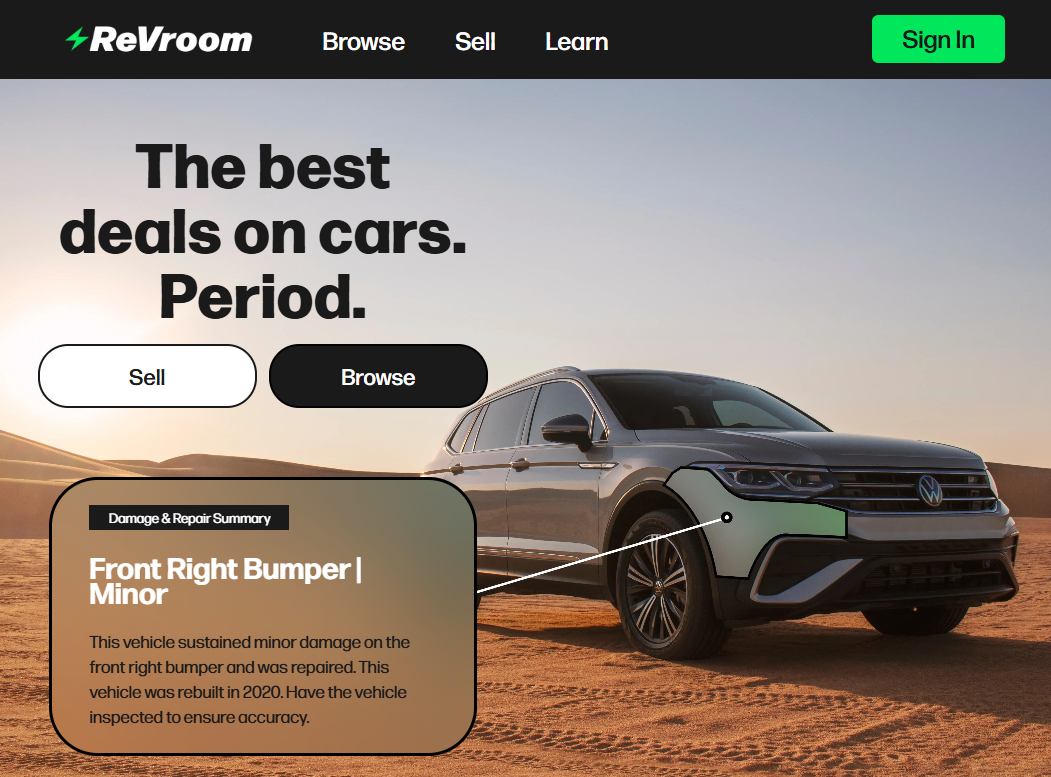
Every listing on ReVroom includes vehicle history information and photos of what the car looked like before it was repaired. That is context you will not find bundled into a standard marketplace listing anywhere else. Rebuilt title vehicles listed on ReVroom are up to 50% cheaper than comparable clean title options, and the transparency built into each listing means you can make smarter decisions faster. You still bring your own mechanic. You still do your due diligence. But you start the process already holding more cards. Explore ReVroom’s listings and see what a vehicle history-first marketplace actually looks like.
FAQ
What does a vehicle history report include?
A vehicle history report typically includes title history, ownership records, odometer readings, accident and incident records, service history, open recalls, and auction or listing data. The depth of information varies by provider.
How do I check a car’s history for free?
You can run a basic free VIN check through NMVTIS-approved services or the National Highway Traffic Safety Administration’s recall tool. Free checks show title status and recall information but lack the full timeline detail of a paid report.
How do you check a car’s history online?
Enter the 17-digit VIN into a vehicle history lookup service online. Paid providers give you a full report with ownership, mileage, and incident history, while free tools offer a limited snapshot of title and recall status.
What is title washing and how do I spot it?
Title washing is the practice of moving a vehicle through multiple states to obtain a cleaner-looking title. Watch for rapid state-to-state transfers within a short period in the title history section of the report.
Does a clean vehicle history report mean the car is problem-free?
No. A clean report means no incidents were officially reported to data sources the provider accesses. Unreported repairs, mechanical wear, and private transactions do not appear on any report, which is why a professional inspection remains critical before any purchase.
