


Salvage vs Reconstructed Title: What It Means for Utah Families
February 7, 2026
Every parent wants to keep their teenager safe while saving money on that first car, but picking a rebuilt title vehicle in Utah comes with important decisions. The difference between a salvage and reconstructed title can mean safer roads or big headaches. Understanding key issues like rigorous inspections, detailed repair documentation, and the impact on insurance helps Utah families find dependable transportation. This guide highlights smart steps and critical questions for confident, transparent buying.
Table of Contents
- Understanding Salvage and Reconstructed Titles
- How Titles Are Assigned and Changed
- Utah Laws on Reconstructed Vehicle Titles
- Impacts on Insurance, Registration, and Resale
- Transparency and Smart Buying Tips for Parents
Key Takeaways
| Point | Details |
|---|---|
| Salvage vs. Reconstructed Titles | Salvage titles indicate vehicles unfit for driving, while reconstructed titles signify repaired vehicles that have passed safety inspections. |
| Inspection and Documentation | Comprehensive inspections and thorough documentation are essential when transitioning from a salvage to a reconstructed title. |
| Impact on Insurance and Resale | Reconstructed vehicles may face higher insurance premiums and lower resale values compared to clean title vehicles. |
| Due Diligence is Crucial | Buyers should prioritize vehicle history checks and professional inspections to uncover potential issues before purchase. |
Understanding Salvage and Reconstructed Titles
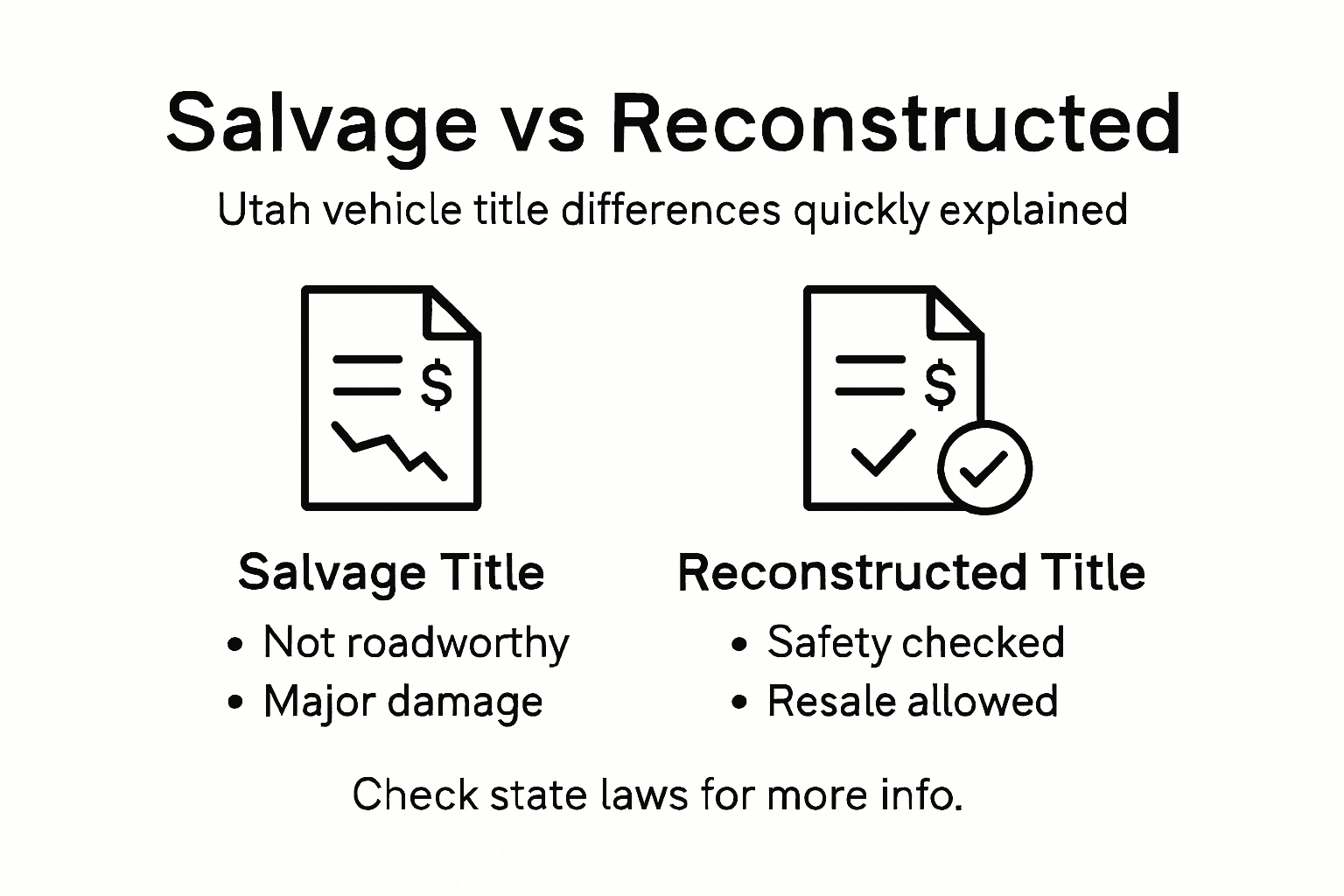
For Utah families navigating the used car market, understanding the nuanced differences between salvage and reconstructed titles is crucial. A salvage title indicates severe vehicle damage that renders the car essentially non-drivable, often resulting from major accidents or extreme weather events.
When a salvage vehicle undergoes comprehensive repairs and passes rigorous safety inspections, it can be reclassified as a reconstructed title vehicle. This transformation isn’t simple - it requires meticulous documentation and verification to ensure the car meets legal roadworthiness standards. The key distinctions between these titles impact several critical factors for potential buyers:
- Salvage titles represent vehicles considered total losses by insurance companies
- Reconstructed titles indicate vehicles that have been repaired and deemed safe to drive
- Reconstructed vehicles often have reduced market and resale value
- Insurance companies may have specific requirements for these vehicles
Understanding these differences helps Utah families make informed purchasing decisions. A reconstructed title doesn’t automatically mean an unreliable vehicle, but it does require extra due diligence. Potential buyers should always conduct thorough inspections, review repair documentation, and potentially consult independent mechanics before purchasing.
Here’s a summary table highlighting the major differences between clean, salvage, and reconstructed vehicle titles:
| Title Type | Typical Vehicle Condition | Inspection Requirements | Buyer Considerations |
|---|---|---|---|
| Clean Title | No serious damage history | Standard DMV inspection only | Easiest to insure and resell |
| Salvage Title | Major damage, not drivable | No roadworthiness required | Cannot be driven legally |
| Reconstructed Title | Repaired to roadworthy | Rigorous safety and repair checks | Lower value, more documentation |
Pro tip: Request a comprehensive vehicle history report and have a trusted mechanic perform a detailed pre-purchase inspection to understand the full context of a reconstructed title vehicle.
How Titles Are Assigned and Changed
Understanding the process of vehicle title assignment requires navigating a complex legal landscape. The traditional title change process begins when an insurance company declares a vehicle a total loss, initially issuing a salvage title. This designation means the vehicle has sustained significant damage exceeding its market value.
The transformation from salvage to reconstructed title involves several critical steps that vary across different states. Generally, the process requires comprehensive vehicle repair and a rigorous safety inspection to verify the car’s roadworthiness. Key stages in this transformation include:
- Initial salvage title declaration by insurance company
- Extensive vehicle repairs by certified mechanics
- Comprehensive safety and mechanical standard inspections
- Submission of detailed repair documentation to state DMV
- Final review and potential title reclassification
In Utah, the Department of Motor Vehicles maintains strict protocols for title reclassification. Owners must provide extensive documentation proving the vehicle has been professionally repaired and meets all state safety requirements. This typically involves submitting repair receipts, before-and-after photographs, and passing a thorough state-authorized inspection.
The goal of title reclassification is ensuring public safety while providing opportunities for vehicle restoration.
Insurance considerations also play a crucial role in this process. Most insurance companies have specific requirements for rebuilt vehicles, often mandating detailed inspection reports and repair records before offering coverage.
Pro tip: Maintain meticulous repair documentation and work with certified mechanics who understand state-specific rebuilt title requirements to streamline the title reclassification process.
Utah Laws on Reconstructed Vehicle Titles
Utah’s legal framework for reconstructed vehicle titles establishes rigorous standards designed to protect consumers and ensure vehicle safety. The state’s Department of Motor Vehicles (DMV) maintains strict protocols that transform a salvage title into a reconstructed title, requiring comprehensive documentation and thorough inspections.
The legal requirements for obtaining a reconstructed title in Utah are extensive and designed to provide transparency. Key legal mandates include:
- Mandatory comprehensive vehicle safety inspection
- Detailed repair documentation submission
- Verification of vehicle structural integrity
- Proof of professional repair work
- Full disclosure of vehicle’s damage history
Utah law specifically requires that any vehicle with a previous salvage title must undergo a meticulous examination to confirm it meets all safety standards. This process involves professional mechanics documenting every repair, replacement, and restoration effort. The goal is to ensure that reconstructed vehicles are not just drivable, but genuinely safe for Utah roadways.
Utah’s reconstructed title laws balance consumer protection with opportunities for vehicle restoration, creating a transparent pathway for salvaged vehicles to return to service.
Insurance and registration processes for reconstructed titles involve additional scrutiny. While these vehicles can be legally registered and insured, owners may face more complex requirements compared to vehicles with clean titles. Potential buyers should understand that these legal provisions are designed to provide clear information about a vehicle’s history.

Pro tip: Request a comprehensive inspection report and maintain all repair documentation to streamline the reconstructed title process and protect your investment.
Impacts on Insurance, Registration, and Resale
Vehicles with rebuilt titles face unique challenges in insurance, registration, and market value. Utah families must understand these complexities to make informed decisions about purchasing and owning a reconstructed vehicle.
Insurance considerations for rebuilt title vehicles are particularly nuanced. Key challenges include:
- Higher insurance premium rates
- Limited coverage options
- Potential requirement for specialized insurance policies
- More rigorous documentation requirements
- Potential need for additional vehicle inspections
Registration processes in Utah demand meticulous attention. While reconstructed vehicles can be legally registered, owners must complete comprehensive safety inspections and provide detailed repair documentation. The Department of Motor Vehicles maintains strict protocols to ensure these vehicles meet roadworthiness standards.
Rebuilt title vehicles represent an opportunity for budget-conscious buyers, but require careful financial and legal navigation.
Resale value presents another significant consideration. Reconstructed title vehicles typically depreciate faster and attract a smaller pool of potential buyers compared to clean title vehicles. This market dynamic means owners should anticipate lower selling prices and potentially longer sale periods.
Pro tip: Maintain comprehensive repair records and obtain professional inspection documentation to maximize your rebuilt title vehicle’s insurance and resale potential.
The following table outlines how insurance, registration, and resale considerations differ between reconstructed and clean title vehicles in Utah:
| Aspect | Reconstructed Title Vehicle | Clean Title Vehicle |
|---|---|---|
| Insurance | Higher rates, limited options | Standard policies, lower cost |
| Registration | Extra documentation, inspections | Routine DMV procedures |
| Resale Value | Lower market value, longer sale time | Higher value, quick resale |
Transparency and Smart Buying Tips for Parents
Parents must prioritize vehicle history transparency when considering a reconstructed title vehicle. Understanding the nuanced details behind a car’s past can protect families from potential safety risks and unexpected financial burdens.
Smart buying strategies for Utah parents include several critical steps:
- Request comprehensive vehicle history reports
- Obtain professional mechanical inspections
- Verify repair documentation and quality
- Compare prices with similar clean title vehicles
- Understand long-term ownership implications
Navigating the reconstructed vehicle market requires a strategic approach. Families should be cautious of deals that seem too good to be true, as unusually low prices might indicate hidden repair issues or potential future maintenance challenges. Detailed documentation and independent verification become paramount in making an informed decision.
Transparency isn’t just about price - it’s about understanding the complete story of a vehicle’s journey.
Buyers should also develop a comprehensive understanding of the vehicle’s repair history. This includes examining detailed repair records, understanding the extent of previous damage, and verifying the qualifications of mechanics who performed the restoration work. Professional inspections can reveal subtle issues that might not be immediately apparent.
Pro tip: Bring a trusted, independent mechanic to conduct a thorough pre-purchase inspection of any reconstructed title vehicle to uncover potential hidden issues.
Unlock Confidence When Buying Reconstructed Title Vehicles in Utah
Understanding the difference between salvage and reconstructed titles can feel overwhelming, especially when safety, insurance, and resale concerns are on the line. You want to make a smart choice for your family without spending hundreds on scattered reports and investigations. That’s where ReVroom comes in. We bring transparency to rebuilt title cars by providing detailed vehicle history and pre-repair photos in every listing so you can clearly see the full story behind a car’s journey.

Stop guessing and start saving with transparent information that helps you avoid the worst vehicles and find options that fit your budget and needs. Explore our unique marketplace built just for rebuilt title vehicles that offers safer, smarter buying for Utah families. Visit ReVroom’s homepage now to find your next car with confidence and check out how we help buyers go further in a market full of unknowns. Ready to skip the hassles and get the facts upfront? Your better rebuilt vehicle experience starts today.
Frequently Asked Questions
What is the difference between a salvage title and a reconstructed title?
A salvage title indicates a vehicle has sustained significant damage and is deemed a total loss by an insurance company, while a reconstructed title signifies that the vehicle has been repaired and passes safety inspections, making it legally drivable.
What are the inspection requirements for a vehicle with a reconstructed title?
Vehicles with reconstructed titles must undergo rigorous safety inspections to verify they meet roadworthiness standards. This includes checks on structural integrity and comprehensive mechanical assessments.
How do salvage and reconstructed titles affect insurance rates?
Reconstructed title vehicles often face higher insurance premiums and limited coverage options compared to vehicles with clean titles. Insurance companies may require additional documentation or inspections for these vehicles.
What factors should I consider when buying a vehicle with a reconstructed title?
When purchasing a reconstructed title vehicle, it’s crucial to request a detailed vehicle history report, obtain professional mechanical inspections, and verify repair documentation to ensure that the vehicle is safe and well-repaired.
Recommended
- What Does Rebuilt Salvage Mean for Utah Families | ReVroom
- ReVroom
- Salvage Title Meaning – What It Means for Buyers | ReVroom
- State Laws for Rebuilt Titles: What Utah Buyers Need to Know | ReVroom
- Stamp Duty Abolished for SA Homes | Elite Wealth Creators
- Renovation Certifications: Why They Matter for Homeowners - J. A. Kelly Contracting Services
