


Should I Buy a Branded Title Car? Complete Guide
November 5, 2025
Terms like branded and rebuilt titles trip up a lot of used-car shoppers — and that confusion is the only thing standing between many buyers and a reliable car for meaningfully less. Whether you’re trying to save money or just shop smart, understanding the real difference between branded, rebuilt, and clean titles lets you navigate the market with confidence. Here’s the straight answer to “should I buy a branded title car?”
Table of Contents
- Understanding Branded And Rebuilt Titles
- Key Differences: Rebuilt Vs. Clean Title Cars
- How ReVroom Ensures Marketplace Transparency
- Financial Benefits And Insurance Insights
- What To Check Before You Buy
Key Takeaways
| Point | Details |
|---|---|
| Branded vs. Rebuilt Titles | Branded is the umbrella term for any non-clean title; rebuilt is a branded car that’s been repaired and passed a state inspection. |
| Financial Advantages | Rebuilt title vehicles are typically 20-40% cheaper than clean title cars — real savings for budget-conscious buyers. |
| Insurance & Financing | Both are available: most insurers cover rebuilt titles (full coverage included), and banks and credit unions finance them. Compare quotes. |
| How to Buy Well | Read the vehicle history and repair records and get an inspection — the transparency is the whole advantage. |
Understanding Branded and Rebuilt Titles
When you’re shopping used cars, branded titles and rebuilt titles cause a lot of unnecessary confusion. According to Chase, a branded title discloses a notable event in a vehicle’s history — like a salvage, flood, or lemon designation — so buyers know the car’s past.
The distinction is about the vehicle’s history and legal designation. Vehicle title branding is a permanent note on a title indicating a car’s history. That branding stays with the car even after repairs, which is exactly what makes it a transparency tool for future buyers.
The key difference:
- Branded Title: The umbrella term for any title that isn’t “clean” — salvage, flood, lemon, rebuilt, and more
- Rebuilt Title: A specific branded title — a previously salvaged vehicle that has been repaired and passed a state inspection to be road-legal again
These terms sound intimidating, but they don’t mean a car is unreliable. Many rebuilt vehicles have been carefully restored and offer exceptional value. The move is to read the specific details of the vehicle’s history.
When considering a branded or rebuilt title car, smart buyers:
- Request the full vehicle history report
- Get a professional mechanical inspection
- Grab a couple of insurance and financing quotes (both are available)
- Compare the price against similar clean-title options
Not all branded titles are the same — some reflect minor events like hail, others a more significant history. Reading the details is how you decide whether a particular car fits your needs and budget.
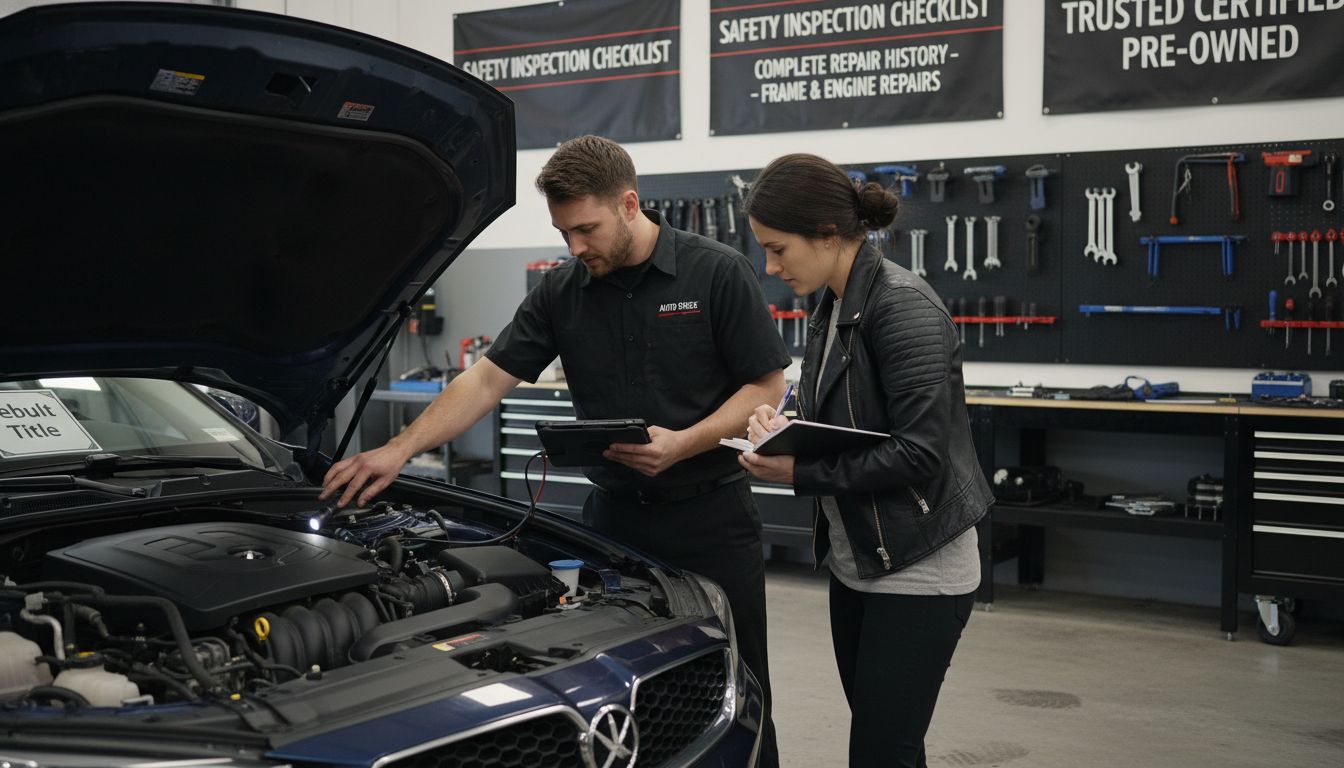
Key Differences: Rebuilt vs. Clean Title Cars
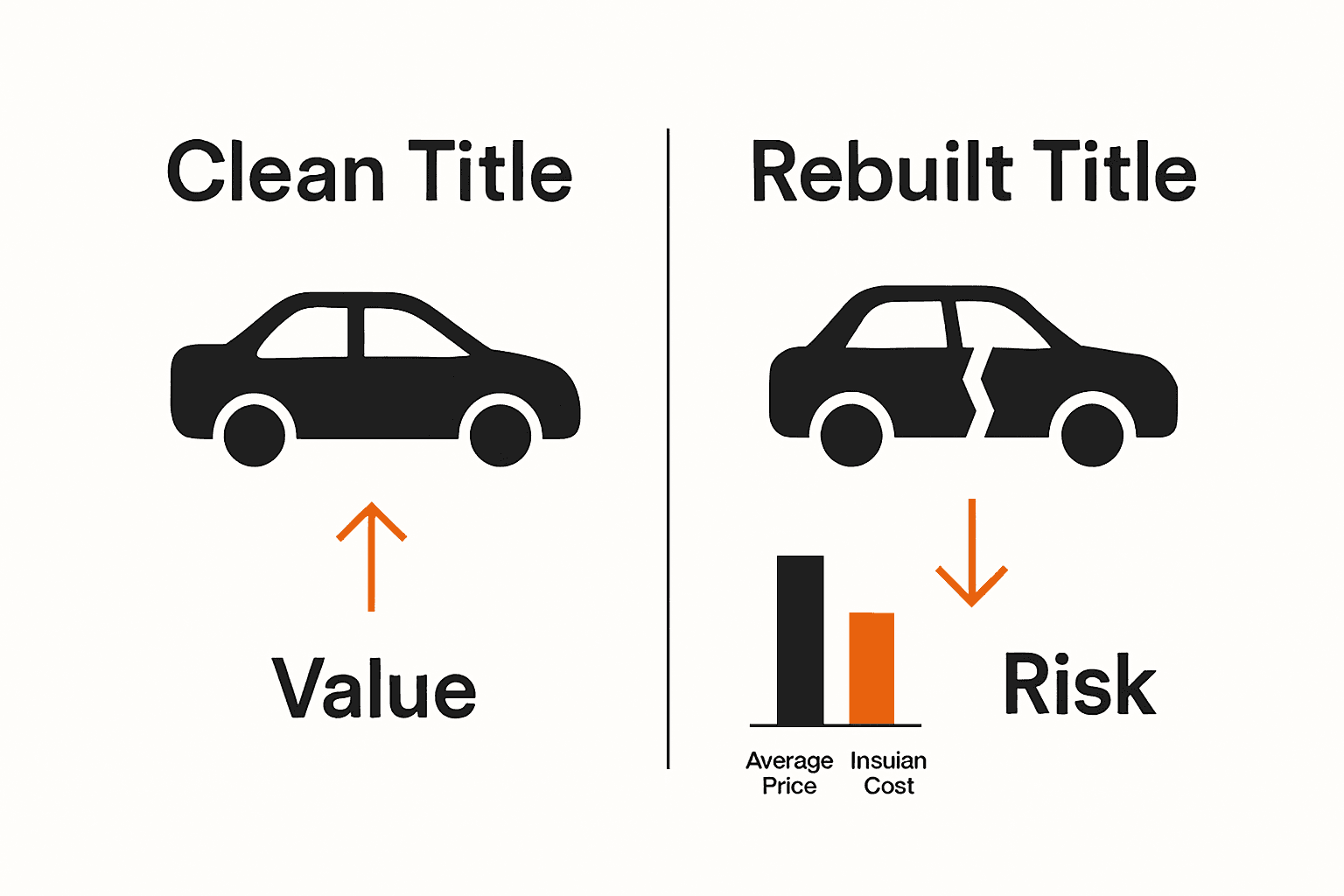
Rebuilt and clean title cars take two different paths through the market. Car Insurance notes the core economic difference: rebuilt title vehicles typically carry a market value 20-40% lower than clean title cars — which is the saving you capture as a buyer.
The primary distinction is documentation and history. A clean title car has no total-loss event on record. A rebuilt title car was declared a total loss, then repaired and re-certified through a state inspection to meet roadworthy standards.
Here’s a comparison:
| Attribute | Clean Title Car | Rebuilt Title Car |
|---|---|---|
| Damage History | No total-loss event reported | Previously totaled, repaired & inspected |
| Price | Full market value | 20-40% lower |
| Insurance | Widely available | Available, full coverage too; compare quotes |
| Financing | Widely available | Banks & credit unions lend; shop terms |
| Resale Value | Higher | Lower — the flip side of the discount |
| Inspection | Standard | Mandatory state safety inspection |
| Transparency | Minor history may be unreported | Major event disclosed up front |
For budget-conscious buyers, a well-inspected, professionally repaired rebuilt title car offers substantial savings without compromising on the daily driving that matters. The approach:
- Get a professional mechanical inspection
- Request the repair and history documentation
- Compare total ownership cost, not just sticker price
- Match the car’s specific history to your needs
The decision between rebuilt and clean comes down to budget and how you read the history. Rebuilt titles offer real savings and full disclosure; do the due diligence and the value is genuine.
How ReVroom Ensures Marketplace Transparency
Marketplace transparency isn’t just a buzzword at ReVroom — it’s the core mission behind every part of the platform. By reimagining how rebuilt title vehicles are bought and sold, we put information directly into buyers’ hands. What is ReVroom lays out the commitment: transforming the rebuilt vehicle market through openness and trust.
Our transparency goes beyond typical marketplace practices. Every listing includes:
- Detailed history and repair information
- Original photos showing the pre-repair condition
- Comprehensive vehicle background
- Clear pricing against market values
Every listing on ReVroom is designed to demystify the rebuilt title buying process — from accident history to restoration details, buyers get complete visibility into a vehicle’s journey. We’re reshaping perceptions of rebuilt title vehicles, proving that transparency turns what some consider a risky purchase into an intelligent, value-driven one — so every buyer can confidently go further. Want the safe-buying playbook? See how to buy a rebuilt car safely.
Financial Benefits and Insurance Insights
Budget-conscious car buyers have a compelling option in rebuilt title vehicles. USF Blogs notes these vehicles are often 20-40% cheaper than clean title cars, putting higher-end models within reach at substantially lower prices.
On insurance: you can insure a rebuilt title car, and full coverage is available from most major insurers. Rates can run somewhat higher and a few carriers ask for a photo inspection, which is exactly why it pays to compare a couple of quotes. On financing: banks and credit unions both lend on rebuilt titles — credit unions are often the most flexible — so shop terms.
Key financial points for rebuilt title vehicles:
- Upfront savings: Significantly lower purchase price — the headline benefit
- Insurance: Available, full coverage included; compare quotes for the best rate
- Financing: Available from banks and credit unions; shop terms
- Resale: Lower than a clean title — the other side of the discount you got
To get the most out of the savings:
- Get a couple of insurance quotes
- Line up a lender or two
- Do a solid pre-purchase inspection
- Think in total ownership cost, not just sticker price
For more, see our guides on insuring and financing a rebuilt title car. The key is balancing the upfront savings with the ownership math — and for a well-repaired car, that math is strong.
What to Check Before You Buy
The one thing that varies from one rebuilt title car to the next is the specific history and the quality of the repairs — which is exactly why reading the history matters. It’s not a reason to avoid rebuilt titles; it’s the reason transparency is so valuable.
Focus your checks here:
- Structure: Confirm frame and structural repairs were done properly
- Mechanical & electrical: Verify systems work and repairs are complete
- Repair records: Review the documentation and the state inspection report
- History report: Pull the full vehicle history and confirm the VIN matches
How to cover those bases:
- Hire an independent, certified mechanic for a pre-purchase inspection
- Request complete repair and history documentation
- Pull a detailed vehicle history report
- Confirm the repair quality and the inspection certificate
Reading the history the way ReVroom lays it out turns unknowns into knowns. The goal isn’t to avoid rebuilt titles — it’s to choose the right one on purpose. See buying cars with accident history for more.
Buy a Branded Title Car with Confidence and Clarity
Buying a branded or rebuilt title car should mean transparency instead of surprises — clear, upfront information on history and pricing so you can shop smart. The usual challenge is sifting through complicated reports without losing sight of the value.
At ReVroom, we put all the vital information right in front of you. Every listing includes detailed vehicle history and original pre-repair photos so you can quickly spot the best deals — no wasted time, no $150 investigation fees, and a lot less uncertainty. Our mission is to help you go further with confidence, saving money while finding a well-restored vehicle ready for the road.

Ready to explore a marketplace built for real transparency and fair value? Browse the selection at ReVroom and take the guesswork out of branded title car shopping.
Frequently Asked Questions
What is a branded title car?
A branded title car has a documented event in its history — like a salvage, flood, or lemon designation — disclosed on the title so buyers know the car’s past. “Branded” is the umbrella term for any non-clean title.
How does a rebuilt title differ from a branded title?
Rebuilt is a specific type of branded title: a previously salvaged vehicle that has been repaired and passed a state inspection to be road-legal again. So every rebuilt title is branded, but not every branded title is rebuilt.
Can you insure and finance a branded title car?
Yes to both. Most major insurers cover branded and rebuilt titles (full coverage included; compare quotes), and banks and credit unions finance them — credit unions are often the most flexible.
What should I check before buying a branded or rebuilt title car?
Pull the full vehicle history report, get a professional mechanical inspection, review the repair records and state inspection certificate, and compare the price against similar clean-title options.
