


Where to buy salvage title cars: a 2026 budget buyer's guide
March 15, 2026
Finding an affordable car in 2026 feels impossible. Prices keep climbing, and your budget isn’t keeping pace. But here’s a secret many smart buyers already know: salvage title cars can save you thousands without sacrificing quality. These vehicles have histories, sure, but with the right approach, you can find a reliable ride at a fraction of typical costs. This guide walks you through where to buy, what to check, and how to protect your investment so you drive away confident and cash ahead.
Table of Contents
- Understanding Salvage Title Cars And Their Benefits
- Where To Find Salvage Title Cars For Sale
- How To Evaluate And Inspect Salvage Title Cars Before Buying
- Tips For Financing And Legal Considerations When Buying Salvage Title Cars
- Find The Best Salvage Title Vehicles With Confidence At ReVroom
Key takeaways
| Point | Details |
|---|---|
| Massive savings potential | Salvage title cars cost 20-40% less than clean title vehicles, saving you $5,000 to $15,000. |
| Safety depends on inspection | Proper evaluation and certified mechanic inspections ensure you avoid hidden issues and buy a roadworthy vehicle. |
| Reputable sources matter | Buying from trusted dealers and transparent online platforms reduces risk and increases your confidence. |
| Financing is accessible | Loans for salvage and rebuilt cars often come with rates comparable to clean title financing options. |
| Legal steps protect you | Understanding state inspection requirements and title clearance processes safeguards your ownership rights. |
Understanding salvage title cars and their benefits
Let’s clear up what we’re actually talking about here. A salvage title gets slapped on a vehicle when an insurance company decides the repair costs exceed a certain percentage of the car’s value, usually around 75%. That doesn’t automatically mean the car is trash. Sometimes it’s hail damage, theft recovery, or even minor incidents that just happened to cross that magic threshold.
Once repaired and inspected by state authorities, that salvage title transforms into a rebuilt title. Think of it as a second chance, a redemption arc for cars. The vehicle passes safety standards, gets cleared for the road, and becomes available to buyers like you at prices that make your wallet smile.
Here’s where it gets interesting. Branded title vehicles save you $5,000 to $15,000 compared to their clean title cousins. We’re talking about 20-40% discounts on comparable models. That’s not pocket change. That’s a vacation fund, an emergency cushion, or simply breathing room in your monthly budget.
The trade-offs exist, no sugarcoating here. Resale value takes a hit because future buyers will see that rebuilt title. Insurance can get trickier, though not impossible like some folks claim. But here’s the flip side: you get access to newer models, better features, and vehicles that would otherwise sit way outside your price range.
Common reasons vehicles receive salvage titles:
- Collision incidents requiring extensive bodywork
- Theft recovery with minimal actual vehicle history
- Flood exposure affecting electrical systems
- Hail causing cosmetic panels to need replacement
- Minor structural issues that crossed the total loss threshold
“The key isn’t avoiding salvage title cars. It’s knowing which ones to avoid and which ones represent genuine value. That distinction makes all the difference between a smart purchase and a costly mistake.”
You’re not buying damaged goods. You’re buying vehicles with transparent histories that have been restored to safe, drivable condition. The branded title vehicles guide breaks down exactly what each designation means, but the bottom line stays simple: these cars work, they’re legal, and they cost way less.
Where to find salvage title cars for sale
Knowing what salvage titles mean is one thing. Finding the right place to actually buy one? That’s where rubber meets road. You’ve got options, and each comes with its own advantages and potential pitfalls.
Start with specialized dealerships. These aren’t your typical used car lots. We’re talking about dealers who focus specifically on rebuilt and branded title vehicles. Reputable dealerships perform inspections before putting cars on their lots, which means someone with expertise has already vetted the vehicle’s safety and reliability. You pay a bit more than auction prices, but you gain peace of mind and often some form of limited warranty.
Online marketplaces have exploded in recent years. Platforms dedicated to rebuilt title vehicles let you browse hundreds of options from your couch. The transparency factor matters here. Good platforms show you detailed vehicle histories, repair documentation, and sometimes even photos of the car before restoration. Bad platforms? They hide information and leave you guessing.

Auctions represent the wild west of salvage car buying. You can score incredible deals, but you’re also bidding against dealers and flippers who know exactly what they’re looking at. Most auction vehicles sell as-is with zero recourse if problems surface later. About 20-25% of total loss vehicles end up resold, and auctions move a huge chunk of that inventory.
Questions to ask any seller before buying:
- Can I see detailed repair documentation?
- Has the vehicle passed state inspection for rebuilt title status?
- What’s included in your vehicle history report?
- Can I have my mechanic inspect it before purchase?
- Are there any known issues not disclosed in the listing?
Pro Tip: Always verify the vehicle identification number matches across all documents, listings, and the actual car. VIN tampering is rare but devastating when it happens, and five minutes of checking saves months of legal headaches.
The best approach combines multiple sources. Start your search on trusted platforms for finding salvage title vehicles, then expand to specialized dealers who focus on where to buy rebuilt cars. Cast a wide net, but keep your standards high. A great deal on a problematic car isn’t a deal at all.
How to evaluate and inspect salvage title cars before buying
You found a car that looks perfect. The price makes you giddy. Now comes the part that separates smart buyers from regretful ones: the inspection. Skip this step and you’re gambling with thousands of dollars. Follow it properly and you’ll know exactly what you’re buying.
Start with the frame and structural components. This isn’t about kicking tires and nodding knowingly. You need to check frame alignment, look for signs of improper welding, and verify that structural repairs meet safety standards. Misaligned frames cause handling issues, premature tire wear, and potential safety failures. Get under the car if possible, or pay a professional to do it.
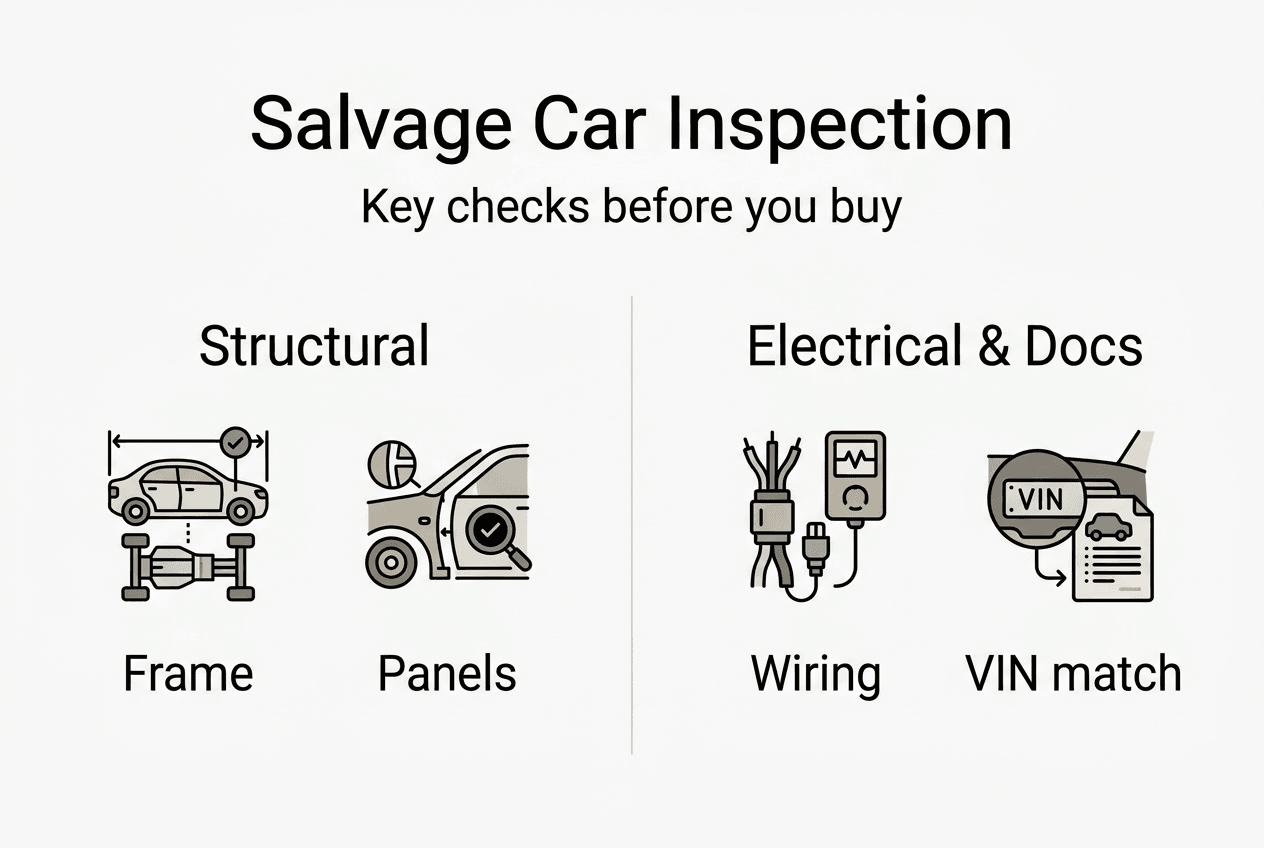
Electrical systems deserve serious attention, especially if there’s any hint of water exposure. Flood salvage titles carry the highest risk of catastrophic long-term failure because corrosion attacks wiring, computers, and sensors gradually over time. Test every electrical component: windows, locks, lights, infotainment, climate control, and especially safety systems like airbags and ABS.
Corrosion tells stories that sellers might not share. Check inside door panels, under carpets, in the trunk, and around the battery. Surface rust is normal on older vehicles, but extensive corrosion or rust in unusual places signals water intrusion or improper storage during repairs.
Critical inspection checklist:
- Verify all VINs match on the door jamb, dashboard, and title
- Test drive at various speeds and listen for unusual noises
- Check for paint overspray on windows, trim, or rubber seals
- Inspect tire wear patterns for alignment issues
- Scan for airbag and check engine lights that won’t clear
- Review all available service and repair records
Pro Tip: Bring a magnet to check body panels. Bondo and plastic filler won’t attract magnets like metal does, revealing hidden repair work that might indicate more extensive vehicle history than disclosed.
A professional pre-purchase inspection costs $100 to $200 but saves you from $10,000 mistakes. Find a mechanic experienced with rebuilt vehicles who knows what red flags matter most. A rebuilt title indicates proper repair and inspection, but independent verification confirms the work quality meets your standards.
| Damage Type | Primary Risk | Inspection Priority | Long-term Concern |
|---|---|---|---|
| Front-end collision | Frame alignment, airbag deployment | Structural integrity, safety systems | Handling, premature wear |
| Flood exposure | Electrical corrosion, mold | All electronics, interior moisture | Gradual system failures |
| Hail impact | Cosmetic panels only | Paint quality, water sealing | Minimal if repaired properly |
| Theft recovery | Ignition, missing parts | Security systems, completeness | Usually low risk |
| Side impact | Door structure, B-pillar | Frame straightness, door operation | Potential alignment issues |
Understanding salvage vs rebuilt title differences helps you know what inspection standards apply. Salvage means not yet roadworthy. Rebuilt means inspected and cleared. Your job is confirming that clearance reflects reality.
Tips for financing and legal considerations when buying salvage title cars
You’ve found the right car and confirmed it’s solid. Now let’s talk money and paperwork, the unglamorous stuff that makes or breaks deals.
Financing rebuilt title vehicles is absolutely possible, despite myths claiming otherwise. Rates often match clean title financing, especially when you work with lenders experienced in this market. Traditional banks might hesitate, but credit unions and specialized auto lenders understand rebuilt titles and price loans accordingly. Expect to provide extra documentation: detailed inspection reports, repair records, and proof of current market value.
Insurance deserves its own conversation because misinformation runs wild here. Yes, you can insure rebuilt title cars. Most major carriers offer coverage, though some limit you to liability-only policies initially. Once you prove the vehicle’s condition through inspection reports and driving history, comprehensive and collision coverage becomes available. Shop around because rates vary significantly between insurers.
Essential legal steps for rebuilt title ownership:
- Obtain certified copies of all repair documentation
- Verify the vehicle passed your state’s rebuilt title inspection
- Register the car with your DMV using proper rebuilt title forms
- Secure insurance before driving (some states require proof for registration)
- Keep all paperwork organized for future resale or claims
State requirements differ dramatically. Some states require extensive inspections with photos documenting every repair. Others simply verify the car runs and passes emissions. The legal process for clearing salvage titles varies by location, so research your specific state’s rules before committing to a purchase.
Extended warranties and service contracts offer extra protection for rebuilt vehicles. Third-party warranty companies provide coverage, though expect higher premiums and more exclusions than clean title policies. Read the fine print carefully because many warranties exclude pre-existing conditions, and defining what qualifies as pre-existing gets murky with rebuilt titles.
Resale considerations matter even if you plan to drive this car forever. Future buyers will scrutinize your rebuilt title vehicle heavily. Maintaining immaculate service records, keeping all repair documentation, and addressing issues promptly preserves resale value. You won’t get clean title prices, but you can maximize what rebuilt title buyers will pay.
Understanding financing options for rebuilt cars before you shop strengthens your negotiating position. Sellers respect buyers who arrive pre-approved because it signals seriousness and speeds up transactions. The difference between salvage and rebuilt titles affects financing terms, so confirm which designation applies to your target vehicle.
Find the best salvage title vehicles with confidence at ReVroom
Buying a rebuilt title car shouldn’t feel like navigating a minefield. You deserve transparency, safety, and value without the guesswork. That’s exactly why ReVroom exists.

ReVroom specializes exclusively in rebuilt title vehicles, making us the only marketplace built specifically for buyers like you. Every listing includes detailed vehicle history information and photos showing what the car looked like before repairs. No surprises, no hidden issues, just honest information that helps you make smart decisions. We’ve eliminated the $150 per vehicle investigation cost that typically comes with vetting rebuilt cars because transparency shouldn’t carry a price tag.
Whether you’re searching for your next vehicle, exploring financing options, or simply learning about this market, ReVroom gives you the tools and information to buy confidently. Your dollar goes further here, and so does your car.
How much can I save buying a salvage title car compared to a clean title car?
How much can I save buying a salvage title car compared to a clean title car?
You’ll typically save 20-40% compared to clean title vehicles, which translates to $5,000 to $15,000 on most cars. Actual savings depend on the vehicle’s make, model, age, and the extent of its history. Luxury and newer models often show larger dollar amount discounts, while economy cars might save you a smaller absolute number but still represent significant percentage savings.
Is it safe to buy a salvage title vehicle?
Is it safe to buy a salvage title vehicle?
Safety depends entirely on the quality of repairs and your inspection diligence. Proper restoration and inspection ensure reliability when done correctly. Always hire a certified mechanic to perform a comprehensive pre-purchase inspection focusing on structural integrity, safety systems, and potential hidden issues. A rebuilt title means the state verified the car meets safety standards, but independent verification confirms the work quality.
Where can I find trustworthy sellers of salvage title cars?
Where can I find trustworthy sellers of salvage title cars?
Look for specialized dealers who focus exclusively on rebuilt vehicles and provide detailed vehicle histories with every listing. Online platforms with transparent damage disclosure and verified seller ratings offer additional protection. Finding salvage title vehicles through reputable marketplaces ensures you see complete information before committing. Check reviews, verify business credentials, and confirm they encourage rather than discourage independent inspections.
Can I finance a salvage or rebuilt title car?
Can I finance a salvage or rebuilt title car?
Absolutely. Financing rates for branded title vehicles often match clean title loans when you work with experienced lenders. Credit unions and specialized auto finance companies understand rebuilt titles and evaluate applications based on the vehicle’s current condition and your creditworthiness. Expect to provide inspection reports and repair documentation, but approval rates remain strong for quality rebuilt vehicles. Learn more about financing rebuilt cars to understand your options before shopping.
Recommended
- How to Find the Best Salvage Title Vehicles for Sale | ReVroom
- How to Buy Salvage Title Cars: Step-by-Step Guide | ReVroom
- What Is a Salvage Title? Utah Car Buyers Guide 2025 | ReVroom
- Understanding Should You Buy Salvage Cars: An In-Depth Guide | ReVroom
- What to Do When Buying a New Company Vehicle | Capital For Business
