


Where to Sell Cars Near Me: Top Local Options
May 22, 2026
TL;DR:
- Selling your car locally offers higher potential prices through private sales, but involves time-consuming negotiations and payment verification. Dealerships and instant offer platforms provide quick, secure transactions with less effort, though often at slightly lower values. Proper preparation, transparency, and understanding your vehicle’s market are essential for maximizing your sale outcome.
Figuring out where to sell cars near me sounds simple until you actually start looking. Private buyers, dealerships, instant offer apps, specialty platforms — the car selling options near me seem to multiply the moment you start researching. Each option promises the best deal, the fastest sale, or the easiest process. Not all of them deliver. This guide cuts through the noise and gives you a clear, honest breakdown of the best places to sell cars locally, what each option actually costs you in time and money, and how to walk away with the best outcome for your specific vehicle.
Table of Contents
- Key takeaways
- 1. What to look for when evaluating local selling options
- 2. Selling to private buyers locally
- 3. Selling to local dealerships
- 4. Online instant offer services with local pickup
- 5. Comparing local selling options at a glance
- 6. How to prepare and navigate selling your car locally
- My honest take on selling locally vs. going online
- ReVroom makes rebuilt title selling transparent and fair
- FAQ
Key takeaways
| Point | Details |
|---|---|
| Match option to your priority | Speed, price, and convenience trade off against each other — know which matters most before choosing. |
| Prep your paperwork first | Having your title, odometer disclosure, and payoff letter ready speeds up every selling option. |
| Private sales pay more, slowly | Sellers on platforms like Facebook Marketplace average 3.1% above market but wait nearly a week on average. |
| Rebuilt title vehicles have options | Specialty marketplaces like ReVroom connect rebuilt title sellers with informed, ready buyers transparently. |
| Verify payment before signing | Never hand over a title until funds have fully cleared, especially in private party transactions. |
1. What to look for when evaluating local selling options
Not every option fits every car or every seller. Before you pick a route, get clear on what you actually need. These are the factors that separate a good selling experience from a frustrating one.
- Price competitiveness: Does the option give you at or above market value, or are you trading dollars for convenience?
- Speed of transaction: Some options close in hours. Others take weeks. Be honest about your timeline.
- Vehicle eligibility: Some buyers and services will not accept vehicles with loans, certain mileage thresholds, or specific title types.
- Payment method and security: Cash, bank transfer, and certified check all carry different risks. Know what you are accepting before you agree.
- Paperwork support: Does the buyer handle title transfer, or are you on your own at the DMV?
- Transparency and trust: Working with a buyer who is upfront about their offer process is worth more than a slightly higher number from someone running you in circles.
For sellers with rebuilt title vehicles, the considerations go one layer deeper. Many dealerships discount rebuilt title cars heavily or decline to purchase them altogether. That is not a reflection of the car’s actual condition or value. It is a reflection of what that dealership can sell easily on their lot. Finding buyers who understand rebuilt title value is worth the extra search time.
Pro Tip: Before you contact a single buyer or dealership, pull your car’s estimated value from at least two sources. It gives you a floor to negotiate from and saves you from accepting a low offer out of ignorance.
2. Selling to private buyers locally
This is the highest-ceiling option for most sellers. When you find the right private buyer, you can pocket more than any dealer or instant offer service will give you. Sellers on Facebook Marketplace, for example, average about 3.1% above market with a median sale time around six days. That is real money on a $20,000 car.
The tradeoff is real too. Private sales require you to manage everything: listing photos, inquiries, test drives, negotiation, and payment verification. Tire kickers are part of the deal. So is waiting.
The local car selling websites that work best for private sales include Facebook Marketplace, Craigslist, and local community boards. Each reaches a slightly different demographic, so listing on two or three increases your exposure without much extra effort.
The biggest risk with private sales is payment fraud. Never sign over your title until bank funds have fully cleared. Counterfeit cashier’s checks are more common than most sellers expect, and once the car is gone, recovering it is nearly impossible. Meet in a public place, preferably a police station parking lot or a busy commercial area. Many local police departments actively encourage it.
Pro Tip: Write a bill of sale for every private transaction, even in states that do not require one. It protects you from liability after the car changes hands.
3. Selling to local dealerships
Dealers are the convenience play. Walk in, get an offer, drive away in an Uber with a check. That simplicity is genuinely valuable when your timeline is tight. Dealers base their offers on local demand, auction data, and what it will cost them to recondition the vehicle for resale. Dealers that specialize in your model or vehicle type routinely offer more than general used-car lots.
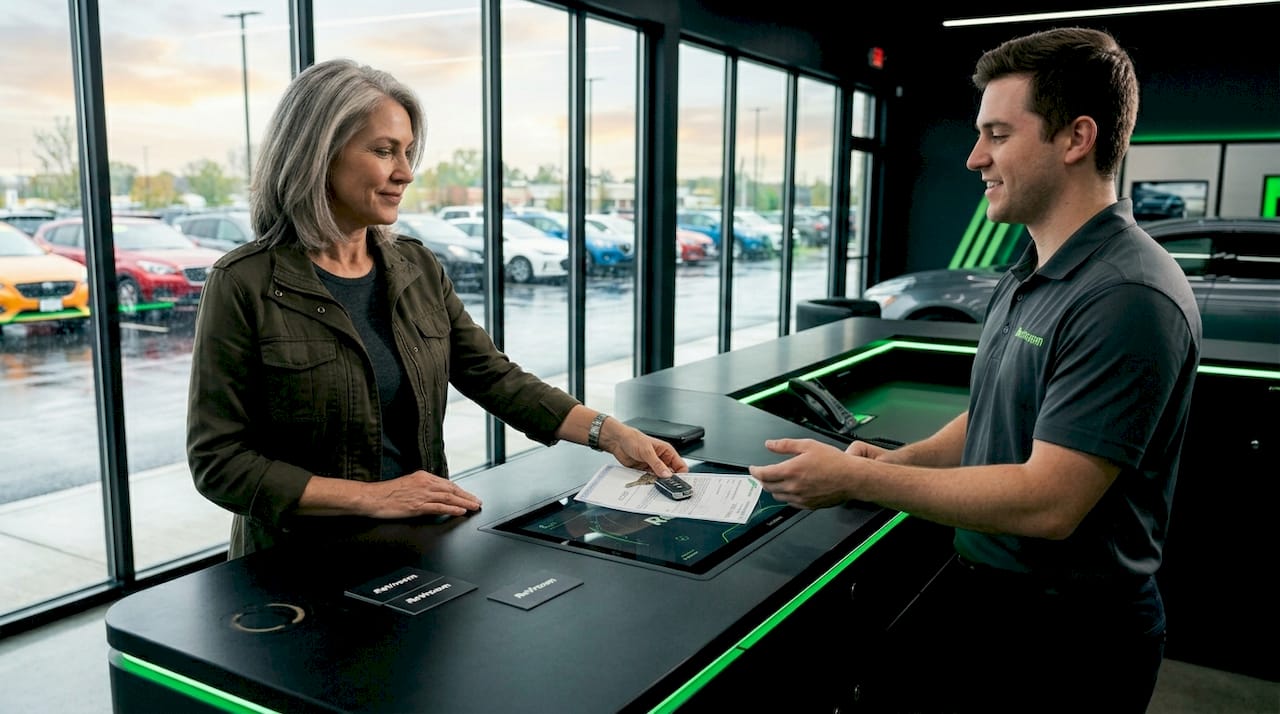
The phrase “top car dealerships nearby” means something specific in this context. You want dealers who are actively buying inventory, not just doing you a favor. Call ahead and ask if they are purchasing vehicles outright. Many will say yes. Some will only take trade-ins.
CarMax offers guaranteed same-day payment but prices about 2.4% below market on average. You give up a little money for zero fall-through risk and a transaction that takes about an hour. For many sellers, that math works fine.
The key insight most sellers miss is that dealers prioritize vehicles that match local demand and move quickly off their lots. A truck sells better at a dealer in a rural area. A hybrid moves faster near a city. Understanding what your local market actually wants helps you target the right dealership instead of getting turned down or lowballed at the wrong one.
4. Online instant offer services with local pickup
Services like Carvana operate somewhere between private sale and dealership. You get an instant online offer, and if you accept it, they complete pickup within 2 to 7 business days with payment arriving 1 to 3 business days after inspection. No negotiation, no strangers in your driveway, no DMV lines.
The offer you see online is real but conditional. The in-person inspection can adjust the number if the car’s condition does not match what you described. Keep that in mind when you fill out the online form. Be accurate, not optimistic.
These services work best for sellers who want speed and simplicity and are willing to accept a slight discount from private-sale pricing in exchange. If your car is in strong condition and you have a clean title, the offer tends to be competitive. If your vehicle has a rebuilt title, availability varies by platform, which is exactly why specialty marketplaces exist.
5. Comparing local selling options at a glance
Here is a side-by-side look at how these options stack up so you can match the right route to your situation quickly.
| Option | Price vs. market | Typical time to sale | Paperwork complexity | Payment security | Best for |
|---|---|---|---|---|---|
| Private buyer (local) | Up to 3.1% above | 3 to 14 days | High (seller manages all) | Medium (verify funds) | Sellers who want max return |
| Local dealership | 5 to 15% below | Same day to 3 days | Low (dealer handles most) | High (certified funds) | Sellers who need speed and simplicity |
| Instant offer service | Near market or slight discount | 2 to 7 days pickup | Low (platform handles) | High (direct transfer) | Sellers with clean-title cars and tight timelines |
| Specialty marketplace (rebuilt title) | Closer to fair market | 7 to 21 days | Medium (platform-assisted) | Varies | Sellers with rebuilt title vehicles |
The right column is the one to read first. Start with your situation and work backwards to the option that fits.
6. How to prepare and navigate selling your car locally
Selling fast and selling well both require the same foundation: being ready before the buyer shows up. Here is a practical sequence that works for every local selling option.
-
Get your title in order. If you have lost it, most state DMVs issue duplicate titles for under $25 within 5 to 10 business days. Do not wait until a buyer is ready to hand you money.
-
If you have a loan, get a per-diem payoff letter. When selling to a dealer with an outstanding loan, bring a payoff letter dated to the sale day. Interest accumulates daily, and an outdated letter will create a gap between what the dealer pays off and what you actually owe.
-
Disclose the odometer accurately. Federal law requires accurate odometer disclosure for vehicles under 20 years old. Misstatements carry serious legal consequences, not just the risk of a failed sale.
-
Price with local comparables. Search the same make, model, year, mileage, and title type within 50 miles of you. Your local market is the benchmark, not national averages.
-
Detail the car before showing it. First impressions drive offer prices more than most sellers realize. A professional detailing appointment before listing can recoup its cost several times over in better offers.
-
Verify payment before handing over the title. For private sales, wait for funds to fully clear before signing anything over. For dealer transactions, a bank check or wire transfer is the standard.
-
For rebuilt title vehicles, disclose transparently. Share your vehicle’s history upfront. Buyers who understand rebuilt titles and are looking for value will appreciate the honesty. Buyers who do not want that history were never your buyer anyway. Specialty platforms like ReVroom give you access to how-to-best-sell-a-rebuilt-title-car guides designed specifically for sellers in your position.
Pro Tip: If your state requires a smog or safety inspection before transfer, schedule it before you list the car. Showing a current, passing inspection removes one of the most common buyer objections on the spot.
My honest take on selling locally vs. going online
I’ve watched sellers leave real money on the table in both directions, taking the first dealership offer out of impatience and waiting nine months for a private buyer because they priced the car like a trophy. Here is what I’ve actually learned.
Local is underrated. When you list your car in your own market, you get buyers who can drive to it, inspect it, and close quickly. There is less of the ghosting and cross-state logistics that make online-only platforms exhausting. For most sellers, how to sell my car locally is the right question to start with.
What I’ve found with rebuilt title vehicles, specifically, is that the market is better than people expect. The problem is usually where the car is listed, not what the car is. A rebuilt title vehicle posted on a general marketplace gets lumped in with everything else and buyers without context get spooked. Posted on a platform built for this type of vehicle, with clear history information front and center, those same buyers become confident buyers. That shift in context changes the sale.
My advice is to resist the urge to rush to the first offer that shows up. Do the prep work, price it right, and pick the channel that matches both your timeline and your vehicle. Patience plus preparation is not a guarantee, but it is the closest thing to one.
— Cameron
ReVroom makes rebuilt title selling transparent and fair
Selling a rebuilt title vehicle through a general marketplace can feel like defending yourself before the buyer even sees the car. ReVroom was built specifically to change that. Every listing on ReVroom includes vehicle history information and photos of what the car looked like before repairs, so buyers come in informed instead of anxious.
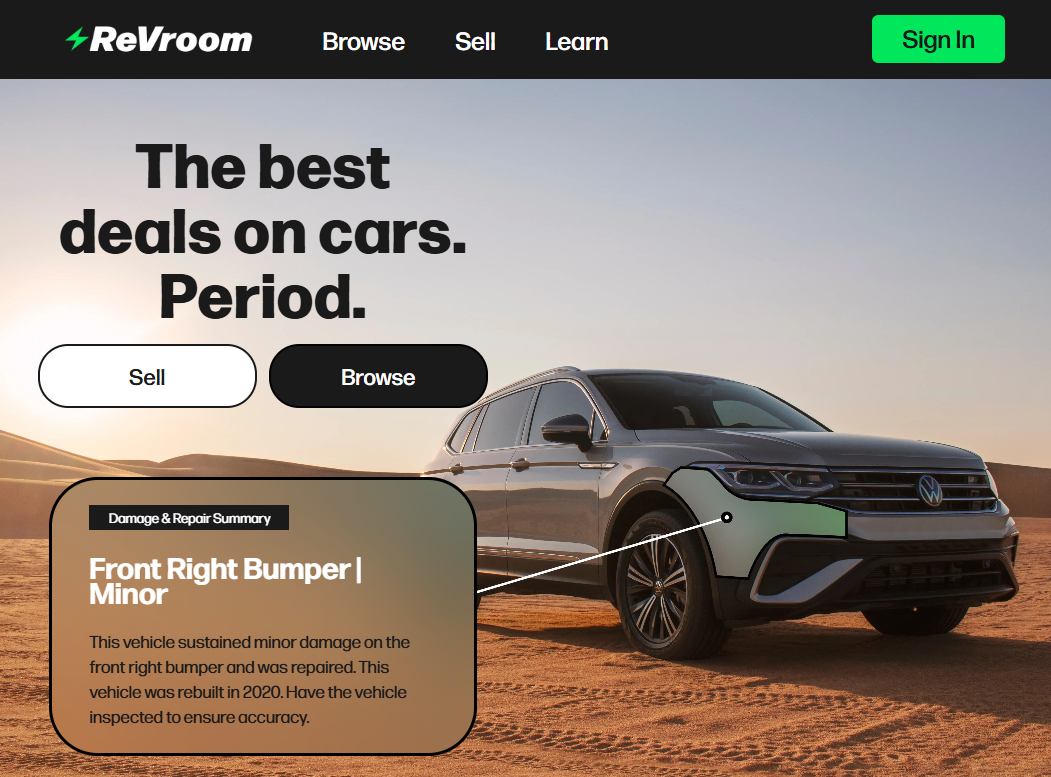
For sellers, that transparency is not just a feature. It is your strongest selling point. When buyers can see the full picture upfront, the conversation moves from suspicion to value. ReVroom is the only marketplace designed specifically for this vehicle category, giving sellers access to buyers who are already looking for exactly what you have. If you are ready to list your rebuilt vehicle with the confidence of full transparency behind you, ReVroom is where that starts.
FAQ
What are the best places to sell cars locally?
Private buyers, local dealerships, instant offer services, and specialty marketplaces each serve a different priority. Private sales typically return the highest price, while dealerships and instant offer services trade some value for speed and convenience.
How do I sell my car locally with a rebuilt title?
Transparency is your best tool. Disclose vehicle history upfront and consider a specialty marketplace like ReVroom, which connects rebuilt title sellers with buyers who understand and seek out this vehicle category. You can also review strategies in this rebuilt title selling guide.
How fast can I sell my car near me for cash?
Dealerships and instant offer services can close a sale in one day to one week. Private sales average around six days on platforms like Facebook Marketplace but can run longer depending on pricing and demand.
Do I need my title ready before selling?
Yes. Every selling option requires a clear title. If yours is lost, most state DMVs replace it for under $25 within 5 to 10 business days, so start that process early.
Is it safe to accept cash from a private buyer?
Cash is secure, but large amounts are logistically difficult. A verified bank wire transfer or cashier’s check is more practical. Just confirm funds have fully cleared before signing the title over, since counterfeit cashier’s checks are a documented fraud method in private car sales.
