


Where to Sell Vehicles Online: Your 2026 Guide
July 3, 2026
TL;DR:
- Choosing the right online vehicle selling platform depends on your speed, effort, and price priorities.
- Instant offer platforms offer quick cash within 24–48 hours but may provide lower final prices after inspection.
Knowing where to sell vehicles online is the difference between a fast, fair deal and weeks of frustration. The best options fall into three categories: instant offer platforms that pay within 24–48 hours, private party marketplaces where you control the price, and multi-dealer bidding platforms that pit buyers against each other for your benefit. Each path has real tradeoffs. The right one depends on how fast you need to move, how much effort you want to put in, and how much money you want to walk away with. This guide breaks all three down so you can choose with confidence.
1. What are instant offer platforms and how do they work?
Instant offer platforms are dealer-backed services that give you a cash quote online, often within minutes. You enter your vehicle’s details, receive an estimate, and schedule an in-person inspection to finalize the number. Payment typically arrives within 24–48 hours of accepting the final offer. That speed is the main draw.

The process is straightforward. You submit your VIN, mileage, and condition details online. The platform generates an estimate. You bring the car in, a dealer inspects it, and the final offer is confirmed or adjusted. Most offers stay valid for seven days, giving you time to compare.
The tradeoff is price. Online estimates are starting points, not guarantees. Tire wear, body condition, and mechanical issues all affect the final number at inspection. You may walk in expecting one figure and leave with a lower one.
Key features to look for in an instant offer platform:
- Offer validity period: Seven days is standard. Shorter windows pressure you into fast decisions.
- Inspection policy: Understand whether the inspection is mandatory and where it takes place.
- Dealer network size: Larger networks mean more competition and potentially better offers.
- Payment method: Confirm whether payment is a check, direct deposit, or dealer draft.
Pro Tip: Never accept the first instant offer you receive. Use it as a floor, then check at least one other platform before committing.
2. How do private party marketplaces work for selling vehicles online?
Private party marketplaces let you list your vehicle directly to individual buyers. You set the price, handle communication, and manage the full process from photos to paperwork. The upside is real: private sales yield higher prices than dealer-based options in most cases. The downside is that you earn every dollar of that premium.
Your responsibilities as a seller include writing an accurate description, taking quality photos, responding to inquiries, scheduling test drives, and collecting payment securely. Transparency about vehicle history increases buyer trust and is legally required for a clean title transfer. Skipping this step creates liability.
Listing costs vary widely across platforms. Some are completely free to list, while others charge fees ranging from a flat upfront cost to a success fee paid after the sale. Certain platforms charge up to $79 upfront plus additional success fees on top of that. Factor those costs into your target price before you list.
Fraud is the biggest risk in private sales. Counterfeit check scams are common. Technology-driven secure payment platforms reduce this risk significantly by verifying funds before the transaction completes. Always use a platform with integrated payment protection, and never hand over keys before funds are confirmed.
- Photography: Use natural light, clean the car thoroughly, and shoot from multiple angles.
- Pricing: Research comparable listings to set a competitive but realistic asking price.
- Communication: Respond quickly. Serious buyers move on fast.
- Test drives: Meet in public places and verify the buyer’s license before handing over the keys.
Pro Tip: Platforms that offer e-sign tools and integrated secure payments cut your fraud risk dramatically compared to cash or personal check transactions.
3. What are multi-dealer bidding platforms and their advantages?
Multi-dealer bidding platforms let you submit your vehicle information once and receive competing offers from multiple dealers. You fill out one form, and the platform does the shopping for you. Competitive bidding produces more transparent market pricing than a single dealer appraisal ever could.
The practical benefit is leverage. When dealers know they are competing, they price more aggressively. Dealer instant offer programs beat traditional trade-in values in about 83% of cases when multiple bids are used. That is a meaningful difference on a vehicle worth thousands of dollars.
The process typically works like this:
- Submit your VIN, mileage, photos, and condition details once.
- Receive multiple offers, usually within hours.
- Compare bids side by side and select the best one.
- Deliver the vehicle for a final inspection and collect payment.
Viewing offers on most multi-dealer platforms costs nothing. The catch is that final offers still depend on in-person inspection results, just like single-dealer instant offers. Treat the online bids as strong estimates, not locked-in prices.
Pro Tip: Use multi-dealer bids to benchmark any single instant offer you receive. If one platform’s best bid is significantly lower than the field, you have clear evidence to negotiate or walk away.
4. What factors should sellers consider when choosing a platform?
The right platform depends on four variables: how fast you need to sell, how much effort you can invest, your vehicle’s condition, and your price target. Matching those priorities to the right platform type saves time and money.
Speed vs. price
Instant offer and multi-dealer platforms close sales in days. Private listings can take anywhere from days to several weeks depending on demand, pricing, and your vehicle’s appeal. If you need cash fast, dealer-based platforms win. If you can wait, private listings typically return more.
Costs and fees
| Platform type | Typical listing cost | Success fee | Inspection required |
|---|---|---|---|
| Instant offer | Free | None | Yes, in person |
| Private marketplace | Free to $79 | Varies by platform | Buyer-arranged |
| Multi-dealer bidding | Free | None | Yes, at delivery |
Payment security
Payment security is non-negotiable. Verified payment systems, escrow services, and e-sign tools all reduce fraud risk. Never complete a private sale with a personal check or wire transfer to an unverified account.
Vehicle condition and liens
Condition affects every platform’s final offer. A vehicle in excellent shape performs well everywhere. A vehicle with significant wear performs best in private listings, where you can explain its history directly to a motivated buyer.
Selling a vehicle with a lien requires a payoff letter from your lender and coordination with the buyer or dealer. Many dealer platforms handle the payoff process for you, but you must have your documents ready. Delays in lien payoff can stall or kill a deal.
5. What are common pitfalls in online vehicle selling and how to avoid them?
The most expensive mistake sellers make is treating an online estimate as a final price. Final offers depend on in-person inspection results, which frequently come in lower than the initial quote. Go into every inspection knowing the number may move.
The second most common mistake is underestimating the hidden costs of private selling. Your time has value. Responding to dozens of inquiries, scheduling test drives, and managing no-shows adds up fast. Factor that cost into your decision before choosing the private route.
Practical steps to protect yourself:
- Use verified payment only. Cashier’s checks can be forged. Escrow or platform-verified payments cannot.
- Disclose vehicle history fully. Accurate disclosure is both a legal requirement and a trust builder.
- Vet buyers before test drives. Confirm identity, check a valid license, and meet in a public location.
- Prepare your lien documents early. A payoff letter from your lender prevents last-minute delays at closing.
- Price realistically. Overpriced listings sit. Research comparable vehicles before you set your number.
Honest vehicle history disclosure also matters for compliance with ownership transfer regulations. Buyers who discover undisclosed issues after the sale have legal recourse. Transparency protects you as much as it protects them.
Pro Tip: Take professional-quality photos before listing anywhere. Better photos attract more serious buyers and reduce the back-and-forth that wastes your time.
Key takeaways
The best platform for selling your vehicle online matches your speed, effort, and price priorities to the right channel.
| Point | Details |
|---|---|
| Instant offers close fast | Dealer-backed platforms pay within 24–48 hours but may adjust offers after inspection. |
| Private listings pay more | Sellers earn higher prices privately but must manage photos, inquiries, and secure payment. |
| Multi-dealer bids beat single appraisals | Competitive bidding produces more transparent pricing than any single dealer offer. |
| Fees vary significantly | Costs range from free listings to $79 upfront plus success fees depending on the platform. |
| Lien prep prevents delays | Have your payoff letter ready before listing to avoid stalling a deal at the finish line. |
What I’ve learned from watching sellers get this wrong
The sellers who walk away happiest are the ones who decide their priority before they list. Not after. The ones who struggle are the ones who want the speed of an instant offer and the price of a private sale at the same time. Those two things rarely live in the same place.
The transparency piece is where I see the most avoidable problems. Sellers who disclose vehicle history upfront close deals faster than sellers who try to minimize it. Buyers are not naive. They will find what you did not tell them, and when they do, the deal falls apart. Honest listings attract serious buyers. Serious buyers close.
The other thing worth saying plainly: online estimates are marketing tools as much as they are appraisals. They are designed to get you in the door. The real number comes after the inspection. Go in with that expectation and you will never feel blindsided.
If you are selling a rebuilt title vehicle specifically, the platform you choose matters even more. General marketplaces do not give rebuilt title cars the context they deserve. Buyers see the title designation and hesitate, even when the vehicle is in excellent condition with a clean repair history. A platform built for that specific market changes the dynamic entirely.
— Revroom Editorial Team
Revroom: a smarter place to sell rebuilt title vehicles
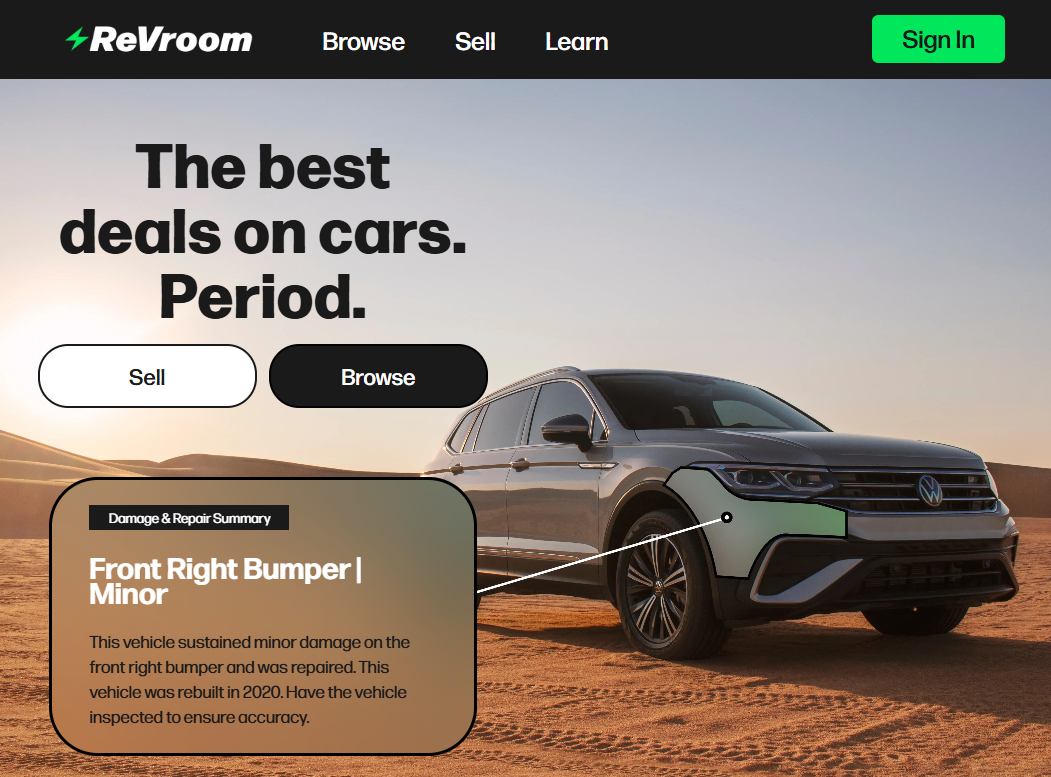
Revroom is the only online marketplace built specifically for rebuilt title vehicles. If your car carries a rebuilt title, listing it on a general platform means competing against clean title cars without the context that makes your vehicle’s story compelling. Revroom changes that by including vehicle history information and pre-repair photos directly in every listing, so buyers arrive informed and ready to make a decision.
Sellers on Revroom reach buyers who already understand rebuilt titles and are actively looking for the value they offer. That means fewer skeptical inquiries and more serious conversations. List your rebuilt title vehicle on Revroom and put your car in front of the right audience from day one.
FAQ
How fast can I sell my car online?
Instant offer platforms complete sales within 24–48 hours. Private listings typically take longer, ranging from a few days to several weeks depending on demand and pricing.
What is the best website to sell a car by owner?
The best private party platform depends on your vehicle type and location. Look for platforms with integrated secure payment, e-sign tools, and strong buyer verification to reduce fraud risk.
Do online car selling platforms buy cars for cash?
Yes. Most instant offer and multi-dealer bidding platforms pay cash, typically via dealer draft or direct deposit, after a final in-person inspection confirms the vehicle’s condition.
How do I sell a car online if I still owe money on it?
Selling a vehicle with a lien requires a payoff letter from your lender. Many dealer-based platforms coordinate the lien payoff directly, but you need your documents ready before the transaction closes.
Where can I sell a rebuilt title car online?
Revroom is the dedicated marketplace for rebuilt title vehicles. It includes vehicle history information and pre-repair photos in every listing, giving buyers the transparency they need to buy with confidence.
