


Affordable Electric Cars for Utah Students: Save Big
April 18, 2026
TL;DR:
- Used electric cars like Nissan Leaf, Chevy Bolt, and Tesla Model 3 are budget-friendly options for Utah students.
- Local incentives, campus charging, and time-of-use rates can significantly lower ownership costs.
- Utah winters reduce EV range by 20 to 40%, requiring careful planning for cold months.
Finding a car that is both affordable and dependable for college life in Utah feels like solving a puzzle with half the pieces missing. You want something eco-friendly, easy on the wallet, and reliable enough to handle snowy winters and long campus commutes. Then you add Utah’s unique incentive programs and EV charging landscape into the mix, and the choices get even more complicated. This guide cuts through the noise. We’ll walk you through exactly how to evaluate your options, highlight the top three most budget-friendly electric cars for Utah students, compare them side by side, and show you how to stack local incentives to keep your costs as low as possible.
Table of Contents
- How to choose the right electric car for students in Utah
- Top 3 most affordable electric cars for students in Utah
- Head-to-head comparison: Features and value at a glance
- Maximize your savings: Utah EV incentives, campus charging, and operating costs
- A realistic perspective: What most students and parents overlook about student EVs in Utah
- Get started: Find your affordable electric car now
- Frequently asked questions
Key Takeaways
| Point | Details |
|---|---|
| Best value models | The used Nissan Leaf and Chevy Bolt EV offer the lowest total ownership costs for students in Utah. |
| Local incentives | Utah’s EVRAP program can save qualifying families up to $10,000 on a student EV. |
| Campus charging matters | College campuses in Utah have dedicated charging stations, often at lower rates. |
| Account for winter | EV range drops 20–40% in Utah cold, so choose a model with sufficient range for winter. |
How to choose the right electric car for students in Utah
Now that we’ve set the stage, let’s focus on what actually matters most when shopping for a student EV in Utah. Not every metric on a spec sheet translates to real value in a student’s daily life. The goal is to find a car that fits your actual routine, not just one that looks good on paper.
Here are the key criteria every Utah student or parent should evaluate:
- Price and upfront cost: Look for used models under $22,000. Rebuilt title EVs can stretch your budget even further, sometimes by up to 50% compared to clean title equivalents.
- Range: Utah winters are real. Winter range loss of 20 to 40% means a car rated at 150 miles in summer might deliver closer to 90 miles in January. Plan accordingly.
- Campus charging access: Does your school have Level 2 chargers? Can you charge at your apartment overnight? These answers shape which car makes sense.
- Total cost of ownership (TCO): EVs run on electricity at roughly $0.03 to $0.05 per mile compared to gas, making them ideal for the typical student driving around 10,000 miles per year.
- Insurance costs: Models like the Nissan Leaf and Chevy Bolt tend to carry lower insurance premiums than pricier EVs, which matters when you’re on a tight student budget.
- HOV lane access: Utah grants EV drivers access to HOV lanes, which can cut commute times on busy corridors like I-15.
Utah also has time-of-use (TOU) electricity rates from major utilities. Charging overnight during off-peak hours can cut your charging costs significantly compared to daytime rates. If you want a broader framework before you shop, check out this guide to buying a car specific to Utah buyers.
Pro Tip: Before you finalize any EV purchase, map out your daily driving route and add 25% to account for weather and detours. If your chosen model’s winter range covers that number comfortably, you’re in good shape.
Top 3 most affordable electric cars for students in Utah
With clear criteria in mind, let’s look at the best electric cars that actually meet a Utah student’s needs and budget. These three models consistently rise to the top for students who need reliability without the sticker shock.
1. Used Nissan Leaf
The Leaf is the most accessible entry point into EV ownership. You can find used models priced between $10,000 and $18,000 with a range of 149 to 226 miles depending on the model year. It’s practical, widely available, and has a strong reputation for low maintenance costs. The trade-off is that older Leaf models use a CHAdeMO fast-charging port, which is becoming less common at public stations.
- Best for: Students living close to campus or charging at home overnight
- Watch out for: Battery degradation on older models; always check battery health before buying
2. Chevrolet Bolt EV
The Bolt is arguably the sweet spot for Utah students. Priced between $12,000 and $22,000 used, it offers 230 to 259 miles of range, CCS fast charging, and a comfortable interior for longer drives to Salt Lake City or Provo. Insurance is typically affordable, and parts are easy to find.
- Best for: Students with longer commutes or who drive home on weekends
- Watch out for: Earlier models had a battery recall; verify recall status before purchasing
3. Used Tesla Model 3
For students with a slightly larger budget, a used Model 3 runs between $22,000 and $30,000 and delivers exceptional range and the convenience of Tesla’s Supercharger network across Utah. It’s a premium experience at a used-car price.
- Best for: Students who travel frequently between cities or need extra confidence in range
- Watch out for: Higher insurance premiums and repair costs compared to Leaf or Bolt
Looking for more options beyond these three? Browse affordable student car options or explore cheap used autos in Utah to see what’s currently available in your price range.
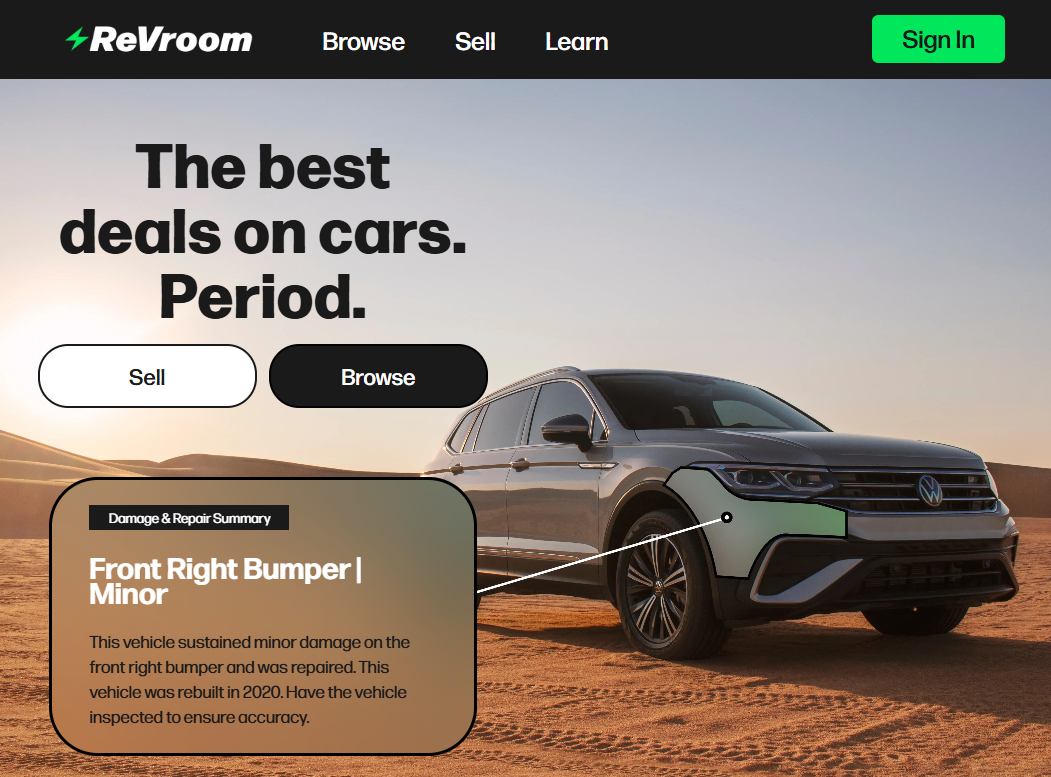
Pro Tip: A rebuilt title version of any of these models can drop the price by thousands. ReVroom’s listings include vehicle history photos so you can evaluate each car’s background before ever reaching out to a seller.
Head-to-head comparison: Features and value at a glance
To make the decision process simpler, here’s a side-by-side look at the top choices for Utah students. Used pricing ranges reflect what you’ll realistically find in the current market.
| Feature | Nissan Leaf | Chevy Bolt EV | Tesla Model 3 |
|---|---|---|---|
| Used price range | $10,000 to $18,000 | $12,000 to $22,000 | $22,000 to $30,000 |
| Rated range | 149 to 226 miles | 230 to 259 miles | 272 to 358 miles |
| Est. winter range | 90 to 160 miles | 140 to 200 miles | 165 to 275 miles |
| Fast charging | CHAdeMO (limited) | CCS (widely available) | Tesla Supercharger |
| Typical insurance | Low | Low to moderate | Moderate to high |
| Maintenance costs | Very low | Very low | Low to moderate |
| Best scenario | Short campus commute | Balanced commute + trips | Frequent long-distance |
| Main drawback | Older charger standard | Early recall history | Higher overall cost |
The Bolt earns the top spot for most Utah students because it balances range, price, and charging flexibility well. The Leaf wins on upfront cost, while the Model 3 wins on range and charging infrastructure. If you’re still working out what fits your situation, this resource on finding a good budget car in Utah is worth a read before you commit.
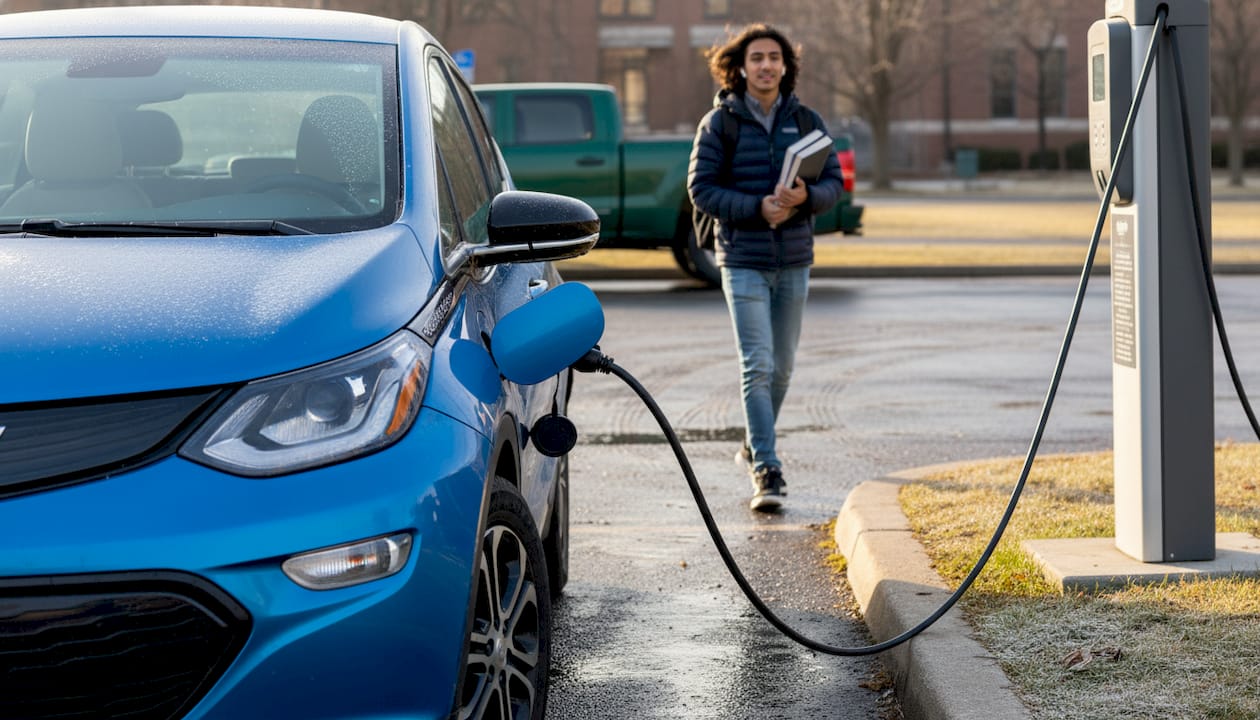
One thing worth noting: the Equinox EV is also entering the conversation for newer buyers. At around $26,000 after available credits, it could be a competitive option for families purchasing new rather than used.
Maximize your savings: Utah EV incentives, campus charging, and operating costs
With the main options on the table, here’s how smart Utah students can cut costs and take advantage of local incentives and infrastructure.
Key Utah savings opportunities:
- Utah EVRAP program: Income-qualified buyers can receive up to $10,000 toward the purchase of a qualifying EV priced at $48,125 or less. Applications go through local health departments, and funding is limited, so apply early.
- Campus charging: UVU operates 15 EV charging stations with 29 spots, charging $0.10 per kWh plus fees with a three-hour time limit. SLCC and the University of Utah also have charging available on campus.
- Time-of-use rates: Utah utilities offer TOU pricing, meaning overnight charging can cost significantly less than charging during peak daytime hours.
- HOV lane access: EV drivers in Utah can use HOV lanes regardless of passenger count, saving real time on congested stretches of I-15 and I-215.
Operating cost snapshot:
| Cost category | Gas vehicle | Electric vehicle |
|---|---|---|
| Fuel/energy per mile | ~$0.12 to $0.16 | ~$0.03 to $0.05 |
| Annual fuel cost (10k mi) | ~$1,200 to $1,600 | ~$300 to $500 |
| Typical maintenance/year | $700 to $1,200 | $300 to $600 |
Stat to know: At Utah’s campus charging rate of $0.10/kWh, fully charging a Chevy Bolt’s 65 kWh battery costs about $6.50, giving you over 200 miles of rated range.
For families navigating online vehicle purchases, this online car buying guide walks through the process step by step. And if you’re debating between a car and public transit, this Utah transit savings comparison lays out the real numbers.
A realistic perspective: What most students and parents overlook about student EVs in Utah
Beyond the data and deals, here’s what families often miss when it comes to real student EV ownership in Utah.
Everyone focuses on the sticker price, and we get it. Price is the first filter. But the students and families who end up truly happy with their EV purchase are the ones who thought past the dealership moment.
Winter range loss of 20 to 40% is not just a footnote. In Utah, that’s a January morning when your Leaf shows 85 miles of range and your campus is 30 miles away with errands on the way back. That math gets tight fast. The car that looked perfect in October can feel stressful in February.
Local incentives like EVRAP are genuinely life-changing for income-qualified families, but they require planning and documentation. Many buyers miss out simply because they didn’t apply until the funding window closed. Start that process early, not after you’ve already picked a car.
Charging convenience is the other wildcard. A lot of students assume they’ll just plug in at campus, but station availability varies, and time limits mean you can’t always count on a full charge between classes. We’d strongly encourage you to visit the actual charging stations at your campus before you buy. Make sure the connector standard matches your car. It sounds obvious, but it’s a step most people skip. For guidance on safe car choices for students, thoughtful due diligence before you sign is always the smartest move.
Get started: Find your affordable electric car now
Ready to put this information to work? Here’s how to start your search today.
Shopping for a budget-friendly electric car as a student or parent doesn’t have to feel overwhelming. ReVroom makes it easier by giving you full transparency on vehicle history right inside each listing, so you can evaluate your options confidently without spending hundreds of dollars on outside reports. Whether you’re eyeing a used Nissan Leaf or hunting for a Bolt EV that fits your price range, the right car is out there.
Find your electric car on ReVroom and browse listings with upfront vehicle history information already included. If you’re still weighing your options, check out our full guide to more affordable student cars to keep your search moving in the right direction. Your budget-friendly EV adventure starts here.
Frequently asked questions
Are electric cars really affordable for students in Utah?
Yes, with used Leaf and Bolt pricing starting under $22,000 and Utah’s EVRAP program offering up to $10,000 in incentives for qualifying buyers, EVs can cost less to own than older gas cars for typical student driving patterns.
How much does it cost to charge an EV on campus in Utah?
Campus stations at UVU charge around $0.10 per kWh plus fees, and using off-peak home charging through a utility TOU plan can bring your per-mile energy cost down to as little as $0.03.
What are the drawbacks of owning an EV as a student during Utah winters?
Cold weather causes range to drop 20 to 40% on most EVs, which means you may need to charge more frequently during winter months or choose a model with extra range as a buffer.
Can students use Utah’s EVRAP program to buy an electric car?
Eligible students and families can receive up to $10,000 toward a qualifying EV priced at $48,125 or less by applying through Utah’s EVRAP program at their local health department.
