


How to Buy a Car As Is and Actually Win
July 25, 2026
TL;DR:
- Buying a car as is means accepting it in its current condition with no dealer warranty, but honest disclosure still applies.
- Rebuilt and branded titles indicate the vehicle has passed safety inspection after repairs; salvage titles are unprocessed or unsalvaged vehicles.
- A rebuilt title typically reduces a car’s value by 20-40%, and long-term ownership is recommended due to resale challenges.
When you buy a car as is, you’re accepting the vehicle in its current condition with no dealer warranty attached. For rebuilt and branded title cars, that means a vehicle that has already passed state-required certification confirming it’s repaired and road ready. The “as is” label isn’t a trap. It’s just a signal that the legal safety net looks different, and knowing how it works puts you in the driver’s seat.
Table of Contents
- What does “as is” really mean when buying a car?
- Rebuilt, branded, and salvage titles: what’s the difference?
- Your legal protections when buying as is
- Weighing the pros and cons of buying a rebuilt title car
- How to confidently buy a rebuilt or branded title car
- How Revroom makes buying a rebuilt title car easier
- Pre-purchase inspection checklist for rebuilt title vehicles
- What warranty coverage actually looks like on an as is vehicle
- Revroom: the smarter way to shop rebuilt title cars
- Key Takeaways
- FAQ
What does “as is” really mean when buying a car?
“As is” means no dealer warranty. Whatever breaks after you sign is yours to fix. The FTC’s Used Car Rule (16 CFR Part 455) requires dealers to post a Buyer’s Guide on every used vehicle disclosing exactly this, and that Guide legally becomes part of your sales contract. But here’s what surprises most buyers: “as is” does not mean the dealer can lie to you.
Dealers who sell vehicles as is still cannot hide known defects, misrepresent vehicle history, or falsify mileage. Fraud claims hold regardless of what the Buyer’s Guide says. The “as is” label disclaims warranties, not honesty.
- No dealer warranty: All post-sale repairs are your financial responsibility.
- Rebuilt and branded titles: These vehicles were declared total losses, repaired, and passed a state safety inspection before receiving a new title.
- Salvage titles are different: A salvage title means the car has not yet been repaired or inspected. Revroom works exclusively with rebuilt and branded title vehicles, not salvage.
- State law variations: Eight states, including Connecticut, Massachusetts, and New York, restrict or override as is sales under certain conditions, so your state’s rules may give you more protection than the federal baseline.
- Implied warranties: These are waived in a true as is sale, unless you purchase a service contract within 90 days, which triggers federal Magnuson-Moss protections automatically.
Pro Tip: Read both sides of the Buyer’s Guide before signing anything. The back-side systems checklist is a conversation starter. Ask the dealer about each major system and get any verbal promises written on the Guide itself.
Rebuilt, branded, and salvage titles: what’s the difference?
The title type tells you where a vehicle is in its repair journey, and the distinction matters a lot for how you buy, insure, and finance it.
- Salvage title: The insurance company declared the car a total loss. It cannot be legally registered or driven on public roads. Buying salvage means buying a project.
- Rebuilt title: The salvage vehicle was repaired and passed a state safety inspection. It can be registered, insured, and driven. This is what Revroom lists.
- Branded title: A broader term covering any vehicle with a permanent history notation, including rebuilt, flood, fire, or theft recovery designations.
- Pricing impact: Rebuilt title vehicles typically sell for 20–40% less than clean-title equivalents, and that discount is permanent.
- Resale reality: The brand follows the car forever. Every future buyer sees it, and every dealer trade-in factors it in.
Your legal protections when buying as is
Buying as is doesn’t mean buying blind. Several layers of law still protect you.
- FTC Used Car Rule: Dealers selling more than five used cars per year must post a Buyer’s Guide. If it’s missing or incomplete, that’s an independent violation worth up to $53,088 per occurrence.
- Fraud prohibition: “As is” never waives the dealer’s duty to disclose known defects honestly. Hiding a cracked frame or flood history is fraud, full stop.
- Odometer law: Federal law imposes mandatory minimum damages of $10,000 per violation for odometer rollback, regardless of any as is disclaimer.
- Magnuson-Moss exception: If a dealer sells you a service contract within 90 days of an as is sale, implied warranties are restored automatically on the systems that contract covers.
- State overrides: States like Massachusetts and New York impose mandatory implied warranties on dealers for vehicles under certain age or mileage thresholds, making the as is box effectively decorative in those cases.
- Title disclosure: Dealers must disclose rebuilt or branded title status. Selling a branded title car as clean is title-washing fraud.
Weighing the pros and cons of buying a rebuilt title car
The upside is real. A substantial price discount on a well-repaired vehicle can represent genuine savings, especially if you plan to keep the car for years. Think of it like buying from the clearance section: the item is fully functional, just marked down because of its history.
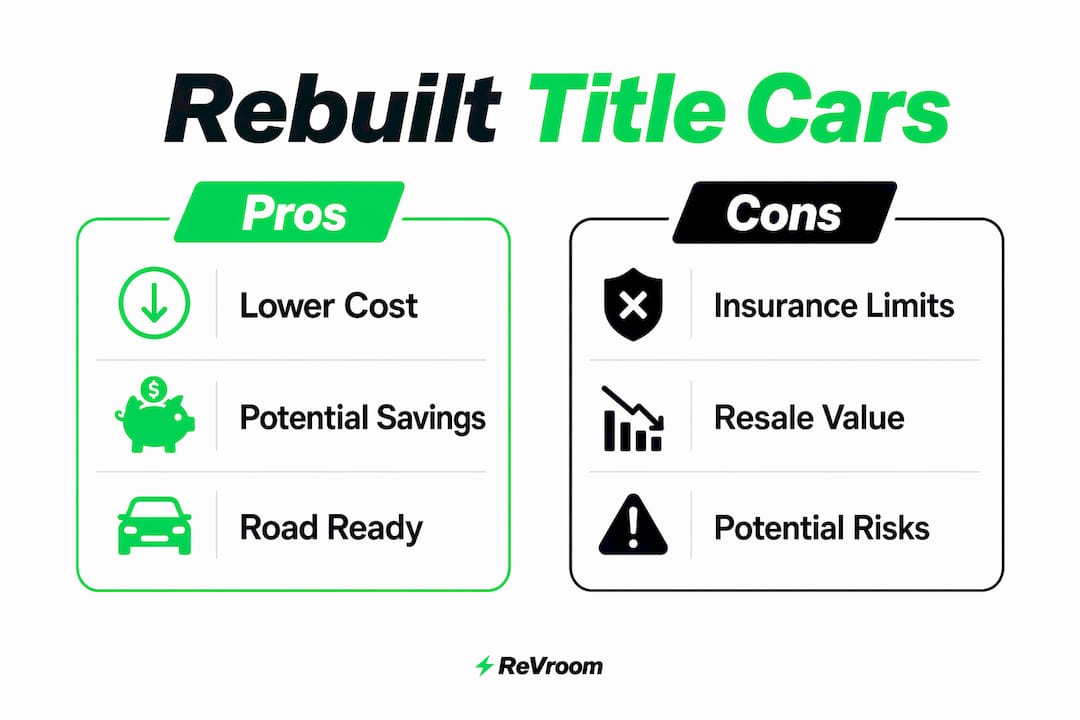
The tradeoffs deserve equal honesty. Insurance can be harder to get and more expensive, with some carriers offering liability-only coverage or declining rebuilt titles entirely. Financing is similarly challenging, as many banks and credit unions won’t issue auto loans for branded title vehicles, and those that do typically charge higher interest rates. Resale is limited too. Plan to keep the car long-term, because trade-in offers are often low and dealers frequently send rebuilt titles straight to auction.
Not all rebuilt titles carry equal risk. A car totaled for economic reasons after hail damage, where the repair cost simply exceeded the car’s market value, is a very different proposition than one rebuilt after a flood or fire. Damage type matters enormously: hail and minor collisions tend to be safer histories, while flood, fire, and major structural damage can hide problems that surface months later.
Pro Tip: Before committing to any rebuilt title car, get an actual insurance quote for full coverage on that specific VIN. A quote that comes back liability-only, or dramatically more expensive than expected, tells you exactly how the market values that vehicle.
How to confidently buy a rebuilt or branded title car
Follow these steps and you’ll avoid the pitfalls that catch most buyers off guard.
- Run a full VIN history report first. Services like Carfax or AutoCheck show when and where the car was branded, what caused the total loss, and whether the title history is consistent. Discrepancies between the report and what the seller says are fraud evidence.
- Hire an independent, ASE-certified mechanic. A pre-purchase inspection costs $150–$300 and focuses specifically on frame integrity, airbag systems, and electrical diagnostics. Use your own shop, never one the seller recommends.
- Confirm state certification and repair documentation. A legitimate rebuilt title comes with a paper trail. If the seller can’t produce repair records and inspection certificates, walk away.
- Negotiate based on verified damage. The right discount is 20–40% below clean-title value. Look up the clean-title price on Kelley Blue Book, then subtract based on damage type. Lean toward 20% for verified hail, 40% for anything structural.
- Secure insurance before you commit. Shop multiple carriers. Coverage terms for rebuilt titles vary more between insurers than they do for clean-title cars.
- Watch for red flags. A dealer who refuses an independent inspection is telling you something important. Walk away. Same goes for missing title documentation or a suspiciously recent out-of-state title, which can signal title washing.
How Revroom makes buying a rebuilt title car easier
Revroom is the only online marketplace built specifically for rebuilt and branded title vehicles, and the difference from buying through a general listing site is substantial.
- Every vehicle is state-certified. All cars listed on Revroom have passed the required state inspection confirming they’re repaired and road ready.
- Vehicle history is included upfront. Each listing includes accident history information and photos of what the car looked like before repairs, so you can evaluate condition before you ever contact a seller.
- Revroom History Reports for any car, anywhere. For $15, Revroom’s report tells you what happened to a specific rebuilt or branded title vehicle, how severe it was, and whether the asking price is fair compared to similar clean-title vehicles nearby. If you’re shopping on Facebook Marketplace or Craigslist, that’s less than the cost of lunch for real peace of mind.
- No $150 vetting burden. Properly researching a rebuilt title vehicle on your own typically costs around $150 per car in reports and checks. Revroom builds that transparency into every listing.
- Built for daily drivers, not projects. Revroom’s inventory suits ordinary buyers who want a dependable car for less, not mechanics or flippers.
Pre-purchase inspection checklist for rebuilt title vehicles
A standard used car inspection misses the things that matter most on a rebuilt title. Use this checklist with your ASE-certified mechanic.
| Inspection Area | What to Check |
|---|---|
| Frame and unibody | Measure for straightness; look for fresh welds, misaligned panels, or overspray |
| Airbag system (SRS) | OBD-II scan of airbag module; confirm no fault codes; check for factory stitching on wheel, dash, seats, and headliner |
| Electrical system | Full diagnostic scan; check for corrosion in connectors, especially if flood history is possible |
| Flood evidence | Musty odor, water lines inside door panels, rust under carpets, sediment in spare tire well |
| Structural repairs | Inspect welds and seams for quality; confirm replacement parts match OEM specifications |
| Suspension and steering | Check for alignment issues and worn components that suggest unrepaired collision damage |
| Engine and transmission | Look for leaks, listen for unusual sounds, confirm fluid condition and service history |
| Title and documentation | Verify VIN matches title, confirm state inspection certificate, review repair receipts |
What warranty coverage actually looks like on an as is vehicle
An as is sale eliminates the dealer’s express and implied warranties. That’s the baseline. But a few exceptions can restore coverage, and knowing them is worth real money.
The Magnuson-Moss Warranty Act creates the biggest exception: if you purchase a service contract from the dealer within 90 days of the sale, implied warranties are automatically restored on the systems that contract covers, even on an as is vehicle. Save both contracts. That 90-day rule is your leverage if something fails in the first weeks.
Third-party extended warranties are available for some rebuilt title vehicles, though coverage terms vary and some providers exclude branded titles entirely. Get the exclusions list in writing before paying for any service plan. A warranty that excludes the systems most likely to have been affected by the original damage isn’t worth much.
Revroom: the smarter way to shop rebuilt title cars
Rebuilt and branded title cars are typically 20–40% cheaper than clean-title vehicles, and Revroom is where you find the good ones without the guesswork.
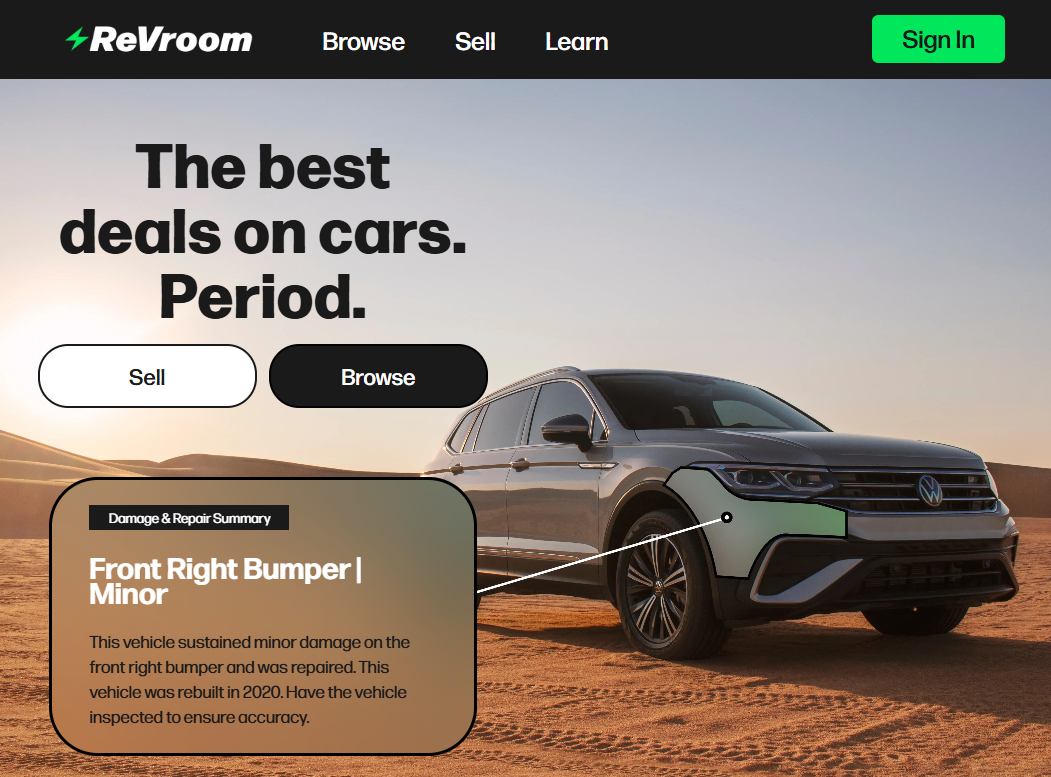
Every car on Revroom is state-certified, road ready, and listed with full vehicle history and pre-repair photos already included. You’re not starting from scratch with a $150 research bill. You’re browsing a marketplace built specifically for buyers like you, with the transparency baked in from the start. And if you spot a rebuilt title car anywhere else online, a Revroom History Report for $15 tells you exactly what you’re looking at before you waste a trip or make an offer. Browse certified rebuilt and branded title vehicles at Revroom today.
Key Takeaways
Buying a certified rebuilt or branded title car as is can save you 20–40% compared to a clean-title equivalent, provided you verify the vehicle history, get an independent inspection, and plan to own the car long-term.
| Point | Details |
|---|---|
| “As is” limits warranties, not honesty | Dealers must still disclose known defects; fraud claims hold regardless of the Buyer’s Guide. |
| Rebuilt titles are road-legal | State-certified rebuilt title cars have passed inspection and can be registered, insured, and driven. |
| Price discount is 20–40% | Rebuilt title vehicles typically sell for 20–40% less than clean-title equivalents, permanently. |
| Independent inspection is non-negotiable | An ASE-certified mechanic inspection costs $150–$300 and focuses on frame, airbags, and electrical systems. |
| Revroom simplifies the process | Every Revroom listing includes vehicle history and pre-repair photos; History Reports are available for $15. |
FAQ
What does it mean to buy a car as is?
Buying a car as is means no dealer warranty. You accept the vehicle in its current condition, and any repairs after the sale are your responsibility. Dealers still cannot hide known defects or misrepresent the vehicle’s history.
Are rebuilt title cars safe to drive?
A rebuilt title car has passed a state safety inspection confirming it meets roadworthiness standards. Safety depends on the quality of the repairs and the original damage type; an independent mechanic inspection before purchase is the best way to verify condition.
How much cheaper are rebuilt title cars?
Rebuilt title vehicles typically sell for 20–40% less than comparable clean-title cars, and that discount is permanent because the title brand never clears.
Can you get insurance on a rebuilt title car?
Yes, though options vary by insurer. Liability coverage is widely available; comprehensive and collision coverage can be harder to find and may cost more. Get a quote on the specific VIN before committing to a purchase.
What is a Revroom History Report?
A Revroom History Report is a $15 vehicle analysis for any rebuilt or branded title car. It covers what happened to the vehicle, how severe the history was, and whether the asking price is fair compared to similar clean-title vehicles in your area.
