


Can You Insure a Car With a Salvage Title?
July 16, 2026
TL;DR:
- You cannot insure a salvage title car for regular road use until it is repaired and receives a rebuilt title. Liability coverage is widely available once the vehicle passes inspection, but full coverage options are limited due to reduced market value and potential repair issues. Proper documentation and working with specialty insurers can improve the chances of obtaining insurance and maintaining affordable premiums.
You cannot insure a car with a salvage title for standard road use. A salvage title means an insurance company declared the vehicle a total loss, and no standard insurer will cover it until it has been repaired and passed a state inspection to receive a rebuilt title. Once that rebuilt title is in hand, liability coverage becomes widely available, and full coverage options open up depending on the insurer, the vehicle’s repair quality, and your documentation. If you are shopping for a budget-friendly car and wondering what insurance looks like on the other side of that process, here is exactly what to expect.
Can you insure a salvage title car without converting it first?
The short answer is no. A salvage title vehicle is legally unroadworthy and uninsurable for standard liability coverage. The only policies that may apply are limited storage or transport policies, which do not let you drive the car on public roads.
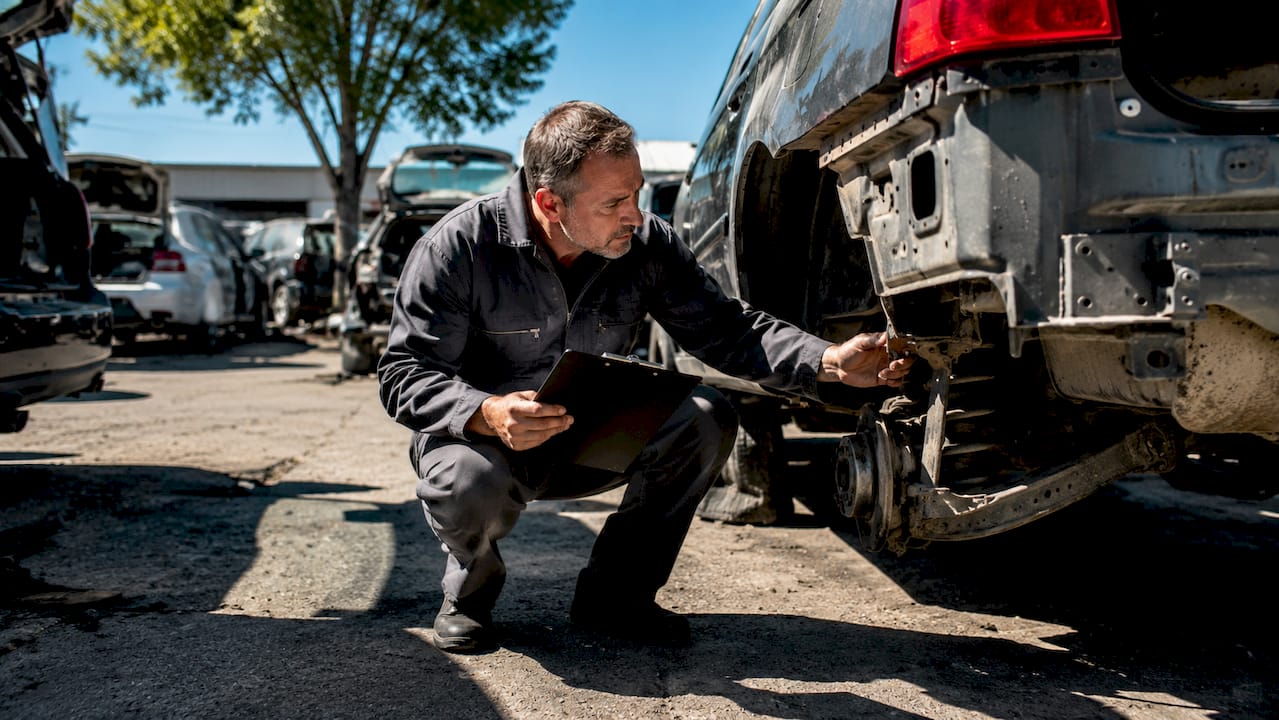
The path to insurable status runs through a rebuilt title. States require that a salvage vehicle be professionally repaired, then inspected by a DMV-authorized examiner who confirms the repairs meet roadworthiness standards. Once the vehicle passes, the state issues a rebuilt title, also called a reconstructed title or branded title depending on the state. That document is what unlocks insurance eligibility.
Repair costs must exceed 70%–95% of a vehicle’s actual cash value before an insurer brands it salvage. That threshold varies by state. The higher the threshold, the more severe the damage typically is before the salvage label applies.
What paperwork do insurers require?
Before an insurer will quote you on a rebuilt title vehicle, expect to provide:
- The rebuilt title document issued by your state DMV
- A state inspection report confirming the vehicle passed roadworthiness review
- Repair receipts and invoices from the shop that did the work
- Photos of the vehicle before and after repairs, when available
- A professional appraisal if you are seeking full coverage
Insurance firms reject salvage vehicles primarily due to road safety concerns and difficulty valuing the car after a loss. A clean paper trail of professional repairs directly addresses both of those objections.
Pro Tip: Keep every repair receipt, inspection report, and photo in a dedicated folder. Insurers are increasingly separating well-documented rebuilds from poorly documented ones, and your paperwork is the difference between a quote and a rejection.
What insurance coverage is available for rebuilt title vehicles?
Liability insurance is the most accessible coverage for rebuilt title cars. Most insurers that write standard auto policies will offer liability coverage once you present a valid rebuilt title and state inspection report. This meets the minimum legal requirement in every state.
Comprehensive and collision coverage are a different story. Rebuilt titles typically reduce market value by 20%–40%, which creates a valuation problem for insurers. If the car is totaled again, the insurer has to pay out based on a market value that is already discounted, and disputes over that number are common. Many major national carriers simply decline to offer full coverage on rebuilt titles to avoid that headache.
Coverage types and what to realistically expect
| Coverage type | Availability on rebuilt titles | Key consideration |
|---|---|---|
| Liability only | Widely available | Meets state minimums; easiest to obtain |
| Comprehensive | Limited; insurer-dependent | Harder to get; requires documentation |
| Collision | Limited; insurer-dependent | Often denied by major carriers |
| Stated value policy | Available through specialty insurers | You and insurer agree on a set value upfront |
| Agreed value policy | Available through specialty insurers | Costs more but eliminates post-loss valuation disputes |

Flood-branded salvage vehicles face the toughest restrictions of all. Liability coverage may be the only realistic option on rebuilt flood-damaged vehicles because latent electrical and structural issues make insurers especially reluctant to take on comprehensive or collision risk.
Pro Tip: If you want full coverage on a rebuilt title car, ask about stated value or agreed value policies. These specialty options let you lock in a vehicle value before a loss occurs, which removes the biggest source of insurer hesitation.
How to find and secure insurance for a rebuilt title car
Getting insured on a rebuilt title takes more legwork than a clean title purchase, but it is absolutely doable. Here is a practical sequence that works.
-
Gather your documentation first. Before you call a single insurer, have your rebuilt title, state inspection report, repair receipts, and vehicle photos ready. Insurers who ask for these upfront are the ones most likely to write you a policy.
-
Skip the online quote tools for full coverage. Major carriers often use automated systems that reject rebuilt titles outright before a human ever reviews your file. Call directly or work through an agent.
-
Contact an independent insurance broker. Independent agents can access niche and regional carriers that major insurers cannot reach through their standard networks. These specialty insurers are often more flexible on rebuilt titles.
-
Get at least five quotes. Coverage availability and pricing vary widely across insurers. One carrier may offer liability only while a regional insurer offers full coverage at a reasonable rate. Casting a wide net pays off.
-
Ask specifically about stated value or agreed value policies. These are not always advertised. You may need to request them directly from an underwriter.
-
Build your record over time. A clean driving history after purchase strengthens your case for better coverage at renewal. Some insurers who initially offer only liability will add comprehensive and collision after a year of clean history.
Regional and specialty insurers are more open to full coverage on rebuilt titles than national carriers. Knowing which category of insurer to target saves you hours of wasted calls.
What does it cost to insure a rebuilt title car?
Premiums for rebuilt title cars run 20%–40% higher than clean title equivalents. That premium increase reflects the insurer’s perception of higher risk and the difficulty of settling claims when the vehicle’s market value is already reduced.
The cost picture has a few moving parts worth understanding:
- Vehicle type matters. A rebuilt title on a common sedan is easier to value and insure than a rebuilt title on a luxury SUV or a specialty vehicle. Mainstream models get better rates.
- Repair quality affects your premium. Professionally repaired vehicles with documented work from licensed shops get better rates than vehicles with unclear repair histories.
- Diminished value affects payouts. If your rebuilt title car is totaled, the payout reflects the reduced market value, not what you paid. That gap can be significant on a vehicle that was already discounted 20%–40% from clean title pricing.
- Full coverage math changes. On a vehicle you bought at a steep discount, the cost of full coverage premiums may exceed the financial benefit. Run the numbers before committing to comprehensive and collision.
- Flood damage history raises rates further. Flood-branded vehicles carry the highest insurer skepticism and typically command the steepest premiums or the most restricted coverage.
The good news is that rebuilt title cars are up to 50% cheaper than clean title equivalents to begin with. Even with a premium increase of 20%–40% on insurance, the total cost of ownership often comes out well ahead of buying a comparable clean title vehicle. The math still works in your favor when you buy smart.
Pro Tip: Before purchasing a rebuilt title car, get an insurance quote on that specific vehicle and VIN. Do not assume coverage is available or affordable until you have a real number in hand.
Key Takeaways
Insuring a rebuilt title car is possible and often cost-effective, but it requires the right documentation, the right insurer, and realistic expectations about coverage limits.
| Point | Details |
|---|---|
| Salvage titles are uninsurable | A car must pass a state inspection and receive a rebuilt title before any standard insurer will write a policy. |
| Liability coverage is accessible | Once a rebuilt title is issued, liability insurance is widely available and meets state minimums. |
| Full coverage requires extra work | Comprehensive and collision coverage are limited; specialty insurers and stated value policies are the best path. |
| Premiums run higher | Expect to pay 20%–40% more than a clean title equivalent, but the lower purchase price often offsets this. |
| Documentation is your best tool | Repair receipts, inspection reports, and photos directly improve your chances of getting better coverage at a lower rate. |
The real talk on rebuilt title insurance
Here is what I have seen over and over: buyers get excited about the savings on a rebuilt title car, then get cold feet when they hear “insurance might be harder to get.” That hesitation is understandable, but it is also a little overblown.
The insurance process for a rebuilt title is not a wall. It is more like a longer checkout line. You need more paperwork, more phone calls, and a willingness to work with an independent broker instead of just clicking through an online form. That is genuinely the bulk of the extra effort.
What I think buyers miss is that the financial case for rebuilt titles holds up even after you factor in the insurance premium increase. You are buying a vehicle that is up to 50% cheaper than its clean title equivalent. A 30% bump in your insurance premium on a car that cost you half as much is still a net win. The numbers are on your side.
The one area where I would urge real care is documentation. Insurers are getting sharper at distinguishing professionally repaired vehicles from sloppy rebuilds. A car with a clean inspection report, professional repair receipts, and a transparent vehicle history gets treated very differently than one with gaps in the paper trail. That transparency is exactly why platforms like Revroom exist. When you can see the vehicle history, the before-and-after photos, and the certification status upfront, you walk into the insurance conversation with everything you need.
Rebuilt title cars are not a compromise. They are a clearance rack find that just needs a slightly longer checkout process.
— Revroom Editorial Team
Rebuilt title cars on Revroom: transparent listings, ready to insure
Every vehicle listed on Revroom has passed state-required certification confirming it is repaired and road ready. That matters for insurance because the documentation insurers want most, including vehicle history and repair transparency, is built into every listing.
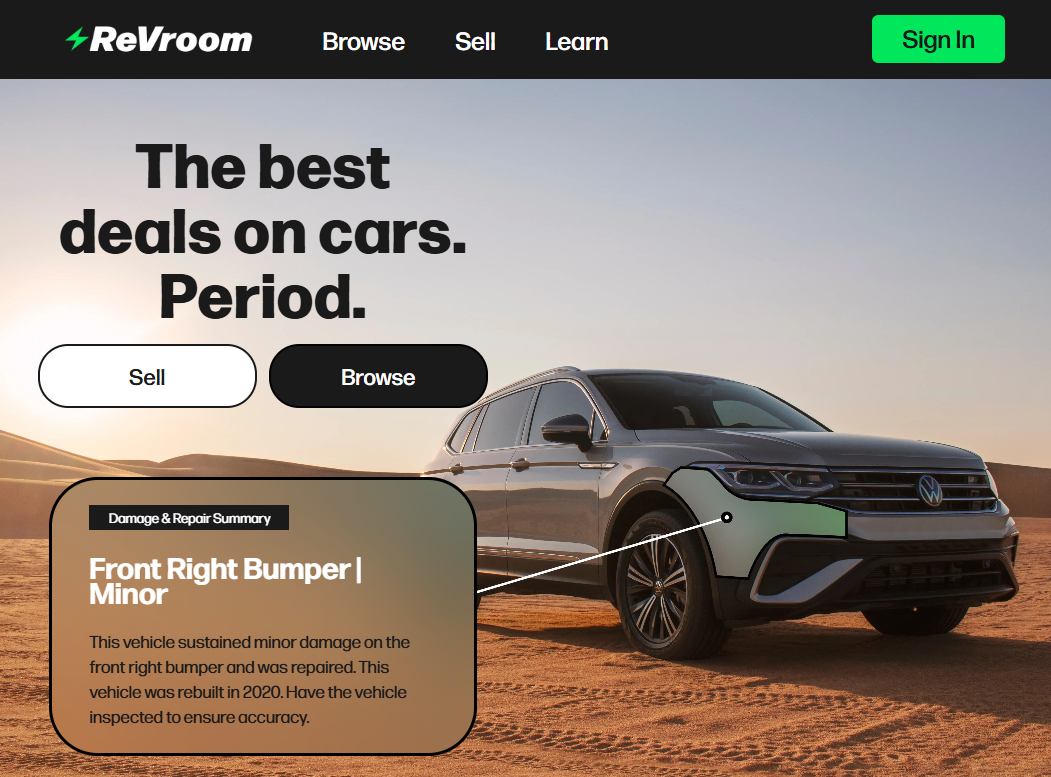
Revroom includes accident history information and before-and-after photos in each listing, so you arrive at the insurance conversation already prepared. You are not hunting down paperwork after the fact. Browse the Revroom rebuilt title marketplace to find state-certified vehicles with the transparency that makes insuring a rebuilt title car straightforward. If you want to dig deeper into a specific VIN before you buy, a Revroom History Report gives you a full vehicle analysis for $15, less than the cost of a meal.
FAQ
Can you get insurance on a salvage title car?
No. A salvage title vehicle is legally uninsurable for road use until it passes a state inspection and receives a rebuilt title. Only then can you obtain standard liability coverage.
What insurance covers rebuilt titles?
Liability insurance is widely available for rebuilt title vehicles. Comprehensive and collision coverage are harder to obtain and typically require specialty insurers, detailed repair documentation, and sometimes a stated or agreed value policy.
How much does it cost to insure a rebuilt title car?
Premiums for rebuilt title cars run 20%–40% higher than clean title equivalents. The lower purchase price of a rebuilt title vehicle, often up to 50% less than a clean title car, usually offsets the higher insurance cost.
Can I get full coverage insurance on a rebuilt title?
Full coverage is possible but not guaranteed. Major national carriers often deny it, but regional and specialty insurers may offer comprehensive and collision coverage when you provide thorough repair documentation and a professional appraisal.
Does a rebuilt title affect insurance payouts?
Yes. Rebuilt titles reduce a vehicle’s market value by 20%–40%, which directly lowers the payout if the car is totaled. Agreed value policies lock in a set payout amount upfront and eliminate post-loss valuation disputes.
