


Car Sales by Owners Near Me: Rebuilt Title Buyer's Guide
July 24, 2026
What are the key steps to buy rebuilt or branded title cars from private owners nearby?
Buying rebuilt or branded title cars from private owners near you is one of the smartest moves a budget-conscious buyer can make. These vehicles can cost up to 50% less than clean-title equivalents, and they’re road-ready after passing state-required certification. The catch? Private sales put the due diligence squarely on you.
Here’s what every buyer needs to do:
- Get the VIN before you visit. Running it through NMVTIS screens for title brands, odometer issues, and total-loss history before you waste a trip.
- Verify title status and lien releases. Confirm the seller’s name matches the title and that no lender holds an active claim.
- Book an independent pre-purchase inspection. A mechanic’s check runs $100–$150 and can save you thousands.
- Pay securely. A cashier’s check at a bank protects you from wire fraud and fake escrow scams.
- Complete title transfer on time. Most states require registration within 10–30 days of purchase or you’ll face penalties.
Table of Contents
- How do you verify vehicle title and history using NMVTIS?
- How do you spot and vet rebuilt or branded title cars?
- How should you test drive and inspect the car yourself?
- What questions should you ask the seller about the vehicle’s history?
- Revroom makes finding certified rebuilt title cars near you easier
- FAQ
- Key Takeaways
How do you verify vehicle title and history using NMVTIS?
Start at vehiclehistory.gov, the federal database built to expose title brands like salvage, flood, junk, and total loss. Enter the VIN through any NMVTIS-approved provider to get branding history and the latest odometer reading. This also flags “title washing,” where a branded vehicle gets retitled in a lenient state to hide its history.
After NMVTIS, go one step further. Your state’s motor vehicle agency portal can confirm current lien status and official ownership records. A payoff letter from a seller isn’t enough. Verify lien releases directly with state records, especially in states using electronic titling systems where no paper title exists until the loan is cleared.
Pro Tip: Ask for the VIN over text before you ever schedule a visit. A seller who refuses is a red flag worth heeding.
How do you spot and vet rebuilt or branded title cars?
A rebuilt title means the car was declared a total loss by an insurer, then repaired and certified by the state as road-ready. That’s a very different thing from a salvage title, which means the car hasn’t been repaired yet. Revroom only lists rebuilt and branded title vehicles, never salvage.
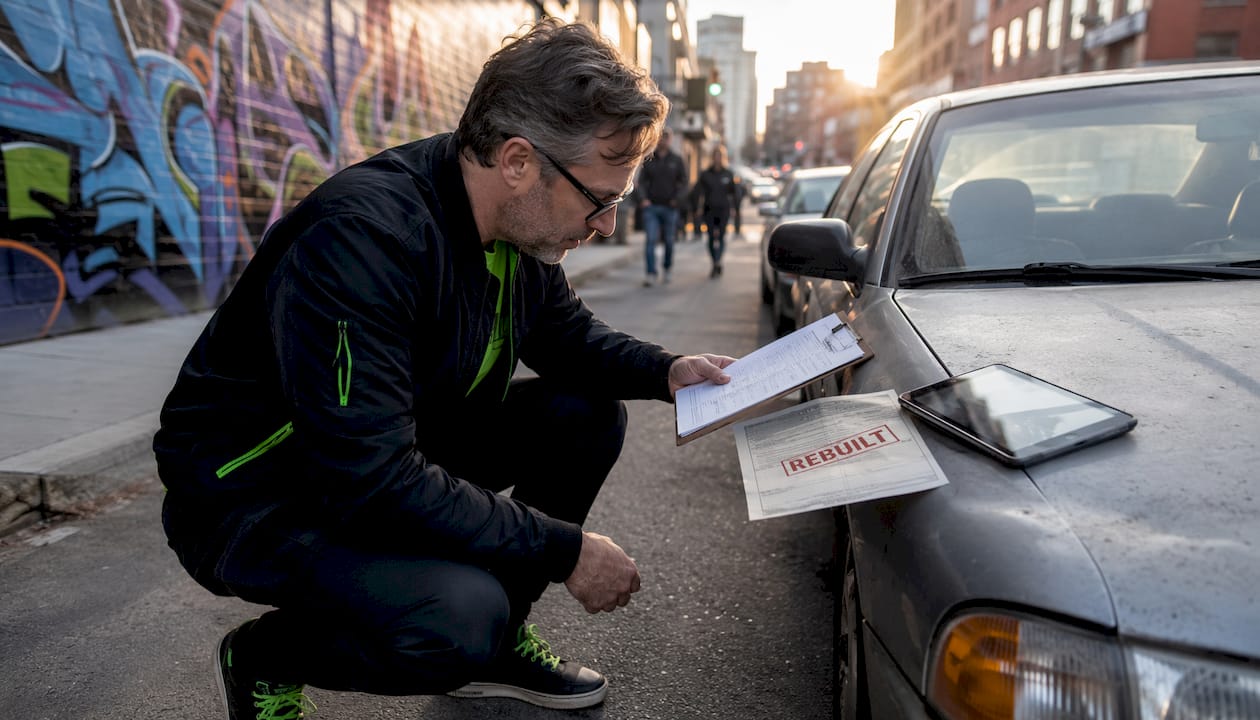
When vetting a private listing, check the title document itself for any “REBUILT,” “FLOOD,” or “JUNK” stamp. Then look for mismatched paint, uneven panel gaps, and irregular tire wear. These visual clues often point to structural repairs that didn’t show up in the paperwork. Cross-check the VIN on the dashboard, the driver-side door jamb sticker, and the title. All three must match exactly.
Private sales are as-is by default, so there’s no warranty safety net. Your inspection is your protection.
How should you test drive and inspect the car yourself?
Drive it on both city streets and a highway stretch. Listen for knocking, grinding, or vibrations at speed. Test every feature: AC, heat, windows, lights, and the infotainment system. Brakes should feel firm, not spongy.
Park and look underneath for fresh undercoating (a common flood-damage cover-up), uneven welds, or mismatched frame sections. A musty smell inside the cabin is another flood warning. If anything feels off, trust that instinct and bring in a mechanic before you commit.
What questions should you ask the seller about the vehicle’s history?
Good questions cut through vague answers fast. Ask these directly:
- “Why does the car have a rebuilt title, and what was repaired?”
- “Do you have repair receipts or photos from before and after the work?”
- “Has the car been in any incidents since the title was rebranded?”
- “Are there any open recalls or known mechanical issues?”
- “Is the title in your name, and can I see your ID to confirm?”
A seller with nothing to hide answers these without hesitation. Vague replies, missing paperwork, or pressure to decide fast are all reasons to walk.
Revroom makes finding certified rebuilt title cars near you easier
Searching local car listings for rebuilt or branded title vehicles usually means piecing together vehicle history yourself, at an average cost of $150 per car you research. Revroom cuts that entirely.
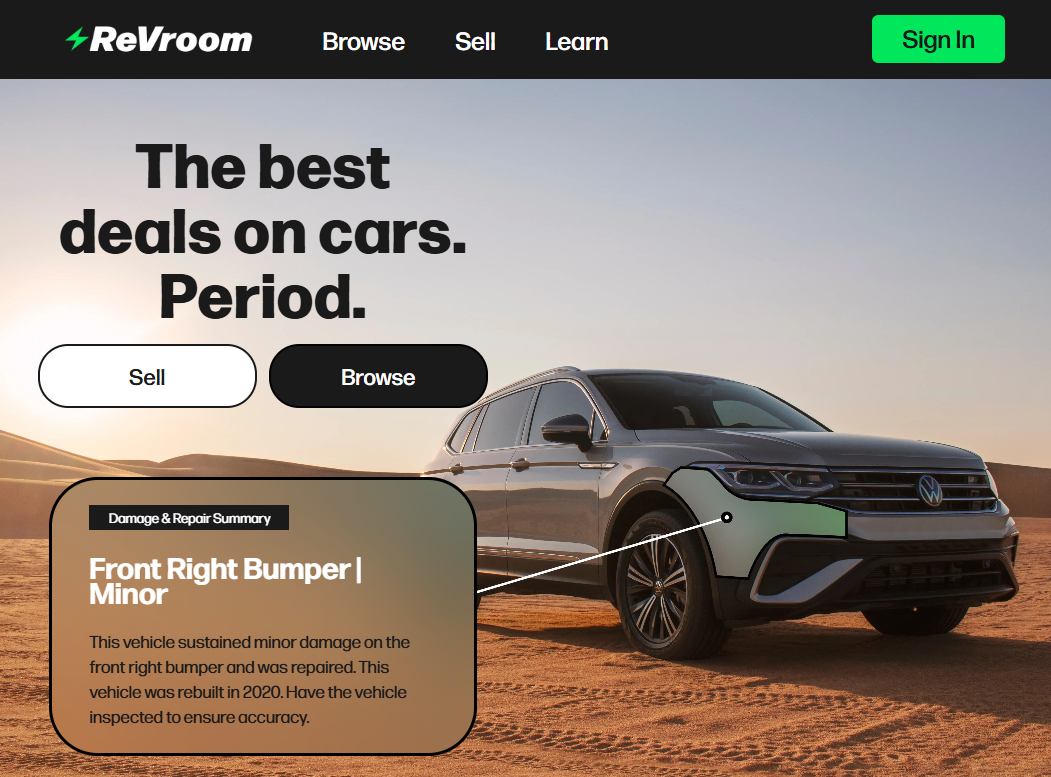
Every listing on Revroom includes pre-repair photos and vehicle history upfront, so you see exactly what happened before you ask a single question. All vehicles are state-certified, repaired, and road-ready. And if you spot a rebuilt or branded title car anywhere else online, a Revroom History Report gives you the full picture for $15. That’s less than a takeout order for the confidence to buy or walk away. Browse rebuilt title vehicles on Revroom today.
FAQ
What is a rebuilt title car?
A rebuilt title means the vehicle was declared a total loss by an insurer, then professionally repaired and certified by the state as road-ready. It’s not a salvage car; it’s a repaired one cleared for normal daily use.
Are rebuilt title cars safe to buy from private owners?
Yes, when you verify the title through NMVTIS, get an independent inspection, and confirm state certification. The title brand tells you the history; your due diligence confirms the current condition.
How do I handle payment safely in a private car sale?
Use a cashier’s check and complete the transaction at a bank. Avoid wire transfers or electronic payments until you have the signed title in hand.
How soon do I need to transfer the title after buying?
Most states require you to register the vehicle within 10–30 days of purchase. Missing that window typically triggers financial penalties.
What does Revroom offer that general listings don’t?
Revroom lists only state-certified rebuilt and branded title vehicles, with pre-repair photos and vehicle history included in every listing, so buyers skip the $150 research cost and buy with confidence.
Key Takeaways
Rebuilt and branded title cars bought from private owners near you can cost up to 50% less than clean-title vehicles, but safe buying requires verifying history, inspecting independently, and completing paperwork on time.
| Point | Details |
|---|---|
| Get the VIN first | Run it through NMVTIS before visiting to screen for title brands and odometer fraud. |
| Verify liens with the state | A payoff letter alone isn’t enough; confirm lien releases directly with your state’s motor vehicle records. |
| Budget for an inspection | An independent pre-purchase inspection costs $100–$150 and is your best protection in an as-is sale. |
| Transfer title promptly | Most states require registration within 10–30 days of purchase to avoid penalties. |
| Use Revroom for transparency | Revroom listings include pre-repair photos and vehicle history upfront, replacing $150 in research for free. |
