


Rebuilt Cars for Sale Near Me: A Smart Buyer's Guide
May 25, 2026
TL;DR:
- Finding rebuilt cars nearby requires verifying documentation, safety inspections, and understanding title histories to ensure value and safety.
- Rebuilt vehicles can be 20% to 40% cheaper than clean-title cars, but thorough vetting and patience are essential for a confident purchase.
Searching for rebuilt cars for sale near me sounds simple until you realize how much variation exists from one listing to the next. Some are gems. Some are headaches. The difference almost always comes down to documentation, transparency, and knowing exactly what to look for before you show up to a seller’s driveway. Rebuilt title vehicles can cost 20% to 40% less than comparable clean-title cars, and that gap is real money. This guide walks you through how to find them, evaluate them, and buy them with confidence.
Table of Contents
- Key takeaways
- 1. What to look for when finding rebuilt cars for sale near you
- 2. Where to find rebuilt vehicles nearby
- 3. Comparing rebuilt vehicle types by repair profile
- 4. Step-by-step process for buying rebuilt cars from local sellers
- My honest take on buying rebuilt cars locally
- Find your next rebuilt vehicle on ReVroom
- FAQ
Key takeaways
| Point | Details |
|---|---|
| Documentation is non-negotiable | Always request vehicle history reports and repair invoices before committing to any rebuilt vehicle. |
| Rebuilt titles stay on record | The rebuilt title history is permanent and shows up in resale, so price accordingly. |
| Inspection proof is a legal gate | In many states, a passed safety inspection is required before a rebuilt vehicle can be legally registered. |
| Local search needs a filter | When searching rebuilt vehicles nearby, confirm rebuilt title status before visiting to avoid wasted trips. |
| ReVroom simplifies the process | ReVroom provides upfront vehicle history and pre-repair photos so you can evaluate listings before ever leaving home. |
1. What to look for when finding rebuilt cars for sale near you
Not all rebuilt title vehicles are created equal. Before you start scrolling listings or driving across town, get clear on what separates a solid opportunity from one you should walk away from.
Understand what “rebuilt title” actually means. A rebuilt title means a vehicle was previously declared a total loss by an insurance company, repaired, and then passed a state inspection to return to the road. It is not the same as a vehicle that is still in disrepair. The difference between these titles matters enormously when evaluating what you are buying.
Request the vehicle history report. A VIN-based history report shows the timeline of the car’s ownership, reported incidents, and title changes. Checking VIN-based history and requesting repair invoices before purchase is one of the most reliable ways to reduce uncertainty when buying used rebuilt cars.

Ask for repair documentation. Verbal assurances mean nothing here. You want itemized repair invoices showing what was replaced, what was repaired, and what parts were used. Missing repair records should be treated as deal breakers. A seller who cannot produce paperwork is telling you something important without saying a word.
Here are the key red flags to watch for in any rebuilt vehicle listing:
- Vehicle history that mentions flooding, fire involvement, or frame damage with no documentation of professional correction
- No state-issued safety inspection certificate from an approved station
- Sellers who describe repairs vaguely without invoices or part receipts
- Listings where the title brand is not clearly disclosed upfront
Pro Tip: Before you visit a seller in person, ask them to send photos of the repair documentation and the safety inspection certificate. If they hesitate, that tells you more than the photos of the car ever could.
Insurance is worth planning for before you buy, and it’s easier than the myths suggest. Most insurers offer full coverage on rebuilt title vehicles, with rates often comparable to a clean-title car. Payouts on a total loss are based on the rebuilt title market value, so knowing the real price differences between titles helps you buy at a fair price.
2. Where to find rebuilt vehicles nearby
Once you know what to look for, the next question is where to actually find cheap rebuilt cars for sale in your area. You have more options than you might think.
- Online marketplaces with location filters. ReVroom is built specifically for rebuilt title vehicles, with listings you can filter by location and browse with pre-repair vehicle history included. It is the only marketplace designed around this specific buying experience.
- Local auction platforms. Auction houses like Copart list rebuilt vehicle candidates across the country. You can filter by geographic region and preview listings online before bidding.
- Facebook Marketplace with keyword searches. Searching terms like “rebuilt title” or “branded title” in your metro area often surfaces individual sellers. The quality varies widely, so this channel rewards buyers who know how to vet listings quickly.
- Regional dealerships specializing in rebuilt vehicles. Some local dealers focus specifically on the rebuilt title segment. These sellers tend to have more documentation on hand and are accustomed to buyers who ask detailed questions.
- General listing sites with manual filtering. Sites like Craigslist or AutoTrader sometimes carry rebuilt title listings mixed in with clean-title inventory. You will need to confirm rebuilt status before visiting, since online listings do not always make the title type obvious.
Pro Tip: When you type “rebuilt cars for sale near me” into any search engine, the results mix platforms, dealers, and auctions. Before visiting a single listing, confirm three things: rebuilt title is explicitly disclosed, an inspection certificate exists, and the seller can provide repair invoices. This pre-screen saves you significant time.
Many rebuilt cars sold locally originate from auction channels, which means prioritizing documentation and inspection status over seller-supplied photos is smart practice. A good photo of a repaired car tells you very little. A signed-off safety inspection report tells you a lot.
3. Comparing rebuilt vehicle types by repair profile
Not all rebuilt vehicles carry the same level of complexity. The nature of the vehicle’s history plays a large role in how it drives, what it costs to insure, and how it holds its value over time.
| Vehicle Category | Typical History Type | Price Discount vs. Clean Title | Key Consideration |
|---|---|---|---|
| Hail-damaged vehicles | Cosmetic (body panels, glass) | 20% to 35% | Structural integrity typically unaffected |
| Theft recovery vehicles | Electrical, interior components | 25% to 40% | Verify all electronics and ignition systems work |
| Collision-repaired vehicles | Body and frame (varies widely) | 30% to 50% | Request frame inspection documentation specifically |
| Flood-history vehicles | Electrical, mechanical systems | Avoid unless thoroughly documented | Long-term electrical issues are common |
| Paint and cosmetic defect vehicles | Surface only | 15% to 25% | Among the lowest-risk rebuilt titles available |
A few things to keep in mind when reading this comparison:
- Cosmetic history vehicles are generally the most straightforward to evaluate. What you see is largely what you get.
- Theft recovery vehicles warrant extra attention to electrical systems and the ignition. These components are often disturbed during the recovery process.
- Collision-repaired vehicles require the most thorough documentation review. Frame work done incorrectly has real implications for handling and safety.
- Flood history is a category where extra caution is warranted regardless of how well the repairs appear on the surface.
Rebuilt title vehicles cost roughly 20% to 40% less than their clean-title counterparts. That discount is real, and for buyers willing to do the homework, it represents genuine value. You can learn more about what rebuilt titles are worth and how to factor that into your budget before you start shopping.
4. Step-by-step process for buying rebuilt cars from local sellers
Finding the car is step one. Closing the deal safely is a different skill set entirely. Here is how to move from interested to confident.
- Get an independent mechanical inspection. Before you commit to anything, hire a mechanic who has no relationship with the seller to inspect the vehicle. A full vehicle safety inspection covers far more than a visual walkthrough. You want eyes on the engine, suspension, frame geometry, and all electronic systems.
- Verify the safety inspection certificate. In California, for example, the Bureau of Automotive Repair requires that rebuilt vehicles pass a vehicle safety systems inspection from a state-approved station before they can be legally registered. The seller must provide proof of this. Most states have a version of this requirement, so check your state’s specific rules before purchasing.
- Confirm the title brand is accurate. The rebuilt title brand is permanent and cannot be erased from a vehicle’s history. Run a VIN check to confirm the title status matches what the seller is representing.
- Negotiate with documentation in hand. Price negotiations go better when you arrive prepared. Know the clean-title market value for the same make, model, and mileage, and work from the documented repair quality and the realistic discount range for the vehicle’s history type.
- Handle paperwork carefully. Confirm the title is in the seller’s name, that there are no open liens, and that the rebuilt brand appears correctly on the title document itself. Sellers are required to provide evidence of a passed safety inspection before transferring ownership.
Questions to ask every local seller before you buy:
- Can you show me the itemized repair invoices?
- Has this vehicle passed the state safety inspection? Can I see the certificate?
- What was the original vehicle history event that triggered the title change?
- Are there any components that were repaired but not replaced?
Pro Tip: Ask the seller to walk you through each repair invoice line by line. Sellers who did the work properly are almost always happy to do this. Sellers who are evasive about specifics are giving you a red flag before you even see the car.
My honest take on buying rebuilt cars locally
We’ve spent a lot of time studying the rebuilt title market, and the pattern we keep seeing is this: buyers who get burned are not the ones who bought rebuilt title vehicles. They are the ones who bought rebuilt title vehicles without proper documentation.
The cars themselves are not the problem. The opacity around them is. When we see a buyer pass over a solid vehicle because the title said “rebuilt,” we want to ask what they think a clean title actually guarantees. Spoiler: it guarantees nothing about condition. Many clean title vehicles have unreported incident histories that never show up on a report.
What we’ve learned is that the due diligence process for rebuilt title vehicles is actually a feature, not a burden. Because you are required to ask for more documentation, you end up knowing more about that car than you would about most clean-title vehicles at a dealership. Knowing is always better than assuming.
The buyers we’ve seen succeed in this market share one trait. They are patient. They do not rush to the nearest listing. They research local inspection requirements, they read repair records carefully, and they walk away from anything that feels incomplete. That patience pays off in a car that delivers real value at a price that is genuinely hard to match anywhere else.
— ReVroom Editorial Team
Find your next rebuilt vehicle on ReVroom
If you are serious about finding quality rebuilt cars for sale near you without spending hours vetting listings individually, ReVroom was built for exactly this purpose.
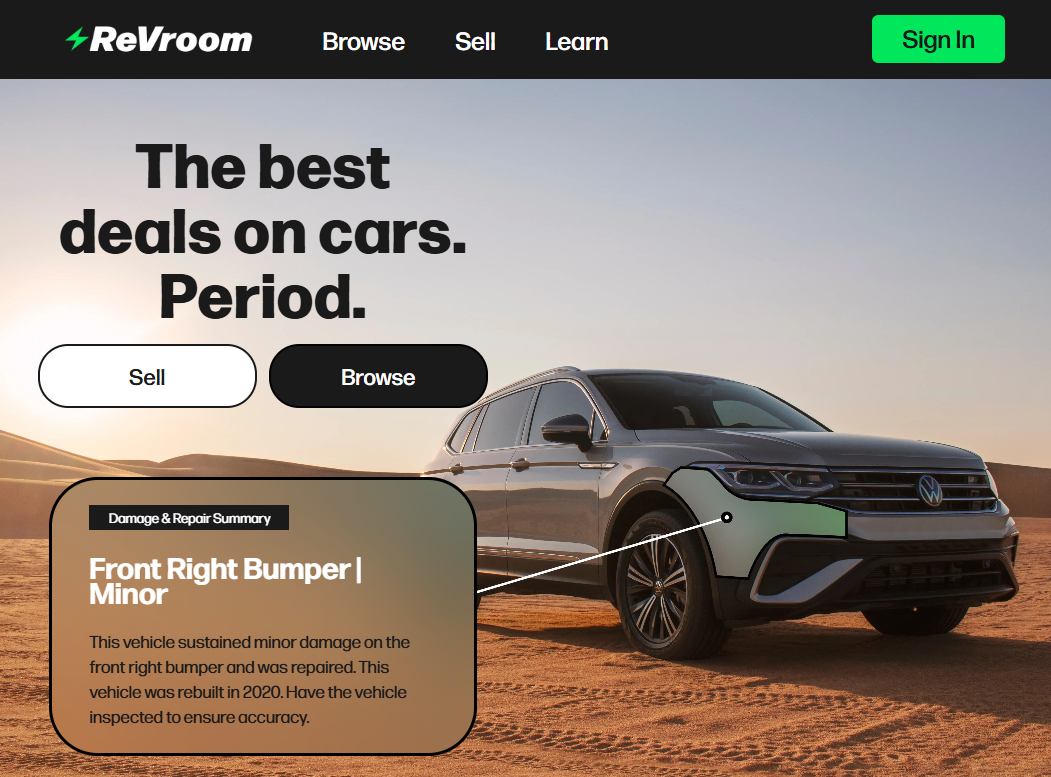
ReVroom is the only online marketplace dedicated to rebuilt title vehicles, and every listing includes vehicle history information and pre-repair photos so you can evaluate what the car looked like before it was restored. No guessing. No $150 per-vehicle investigation costs. The transparency you need to make a confident decision is already in the listing. Browse rebuilt vehicles near you on ReVroom and filter by location, make, model, and price to find the right car for your budget. The deal you are looking for is already out there.
FAQ
What does rebuilt title mean for a car?
A rebuilt title means the vehicle was previously declared a total loss, professionally repaired, and cleared a state safety inspection to return to legal road use. It is a permanent designation that stays on the vehicle’s history record.
Are rebuilt title cars hard to insure?
No. Most insurers offer full coverage on rebuilt title vehicles, with rates often comparable to a clean-title car. Payouts on a total loss are based on rebuilt title market value, so understanding the realistic price discount helps you buy at a fair price.
What documents should I request when buying a rebuilt car locally?
Request the vehicle history report, itemized repair invoices, and the state-issued safety inspection certificate. These three documents together give you a clear picture of what was repaired and how well it was done.
How much cheaper are rebuilt title cars than clean title cars?
Rebuilt title vehicles typically cost 20% to 40% less than comparable clean-title vehicles, depending on the vehicle type and the nature of its history.
How do I verify a rebuilt title listing is legitimate before visiting?
Confirm the title status by running a VIN check, ask the seller for inspection documentation before you visit, and verify rebuilt status against your state’s registration requirements. This pre-screening step eliminates wasted trips and surfaces the listings worth your time.
