


Car Titles Explained: What College Buyers Must Know
July 11, 2026
TL;DR:
- A car title is the legal document that proves vehicle ownership and is essential for registration and insurance. Rebuilt titles are a cost-effective option for students if verified properly, but salvage titles are not road-legal, and title history checks prevent scams. Verifying the title, running reports, and inspecting the vehicle ensure a confident purchase and protect against future legal or financial issues.
A car title is the government-issued legal document that proves who owns a vehicle. For college buyers researching what car title means, this single document controls whether you can register, insure, or legally drive a car you purchase. Understanding car titles is not optional for a first-time buyer. It is the foundation of every smart used car decision you will make.
What does a car title mean for college buyers?
A car title is mandatory proof of legal ownership, required by every state before you can register a vehicle or get insurance. Without a clean title transfer in your name, you do not legally own the car, even if you paid cash for it. Think of it like the deed to a house. The person named on the title is the legal owner, full stop.
The title also links directly to your registration and insurance. Lenders, insurers, and the DMV all check the title before doing business with you. If the title has problems, such as an undisclosed lien or a missing signature, those problems become your problems the moment money changes hands.
Car ownership for students starts with one non-negotiable rule: always see the physical title before you pay. Sellers who offer photocopies or excuses are a red flag. Students often underestimate the risk of accepting anything other than the original document, and that mistake can cost far more than the car itself.

What are the different types of car titles?
Car title meanings vary significantly depending on a vehicle’s history. The three types you will encounter most often are clean, salvage, and rebuilt.
Clean title means the vehicle has never been declared a total loss by an insurance company. It is the standard for most used cars and the easiest to finance and insure. Clean title cars carry the highest resale value.

Salvage title means an insurance company declared the car a total loss, typically after a collision, flood, or theft recovery. A salvage title vehicle is not road-legal. You cannot register or insure it for daily driving in its current state. ReVroom does not list salvage title vehicles for this exact reason.
Rebuilt title (also called a branded title or reconstructed title) means the vehicle was previously salvage but has since been repaired and passed a state-required safety inspection. It is road-legal, insurable, and ready for daily use. The key difference between salvage and rebuilt is that rebuilt vehicles have cleared the legal bar to be back on the road.
Here is a quick comparison of the three title types:
| Title type | Road-legal? | Financeable? | Resale value impact |
|---|---|---|---|
| Clean | Yes | Yes | None |
| Salvage | No | No (not road-legal) | Not applicable |
| Rebuilt | Yes | Yes (banks & credit unions lend) | 20%–40% lower |
Branded titles reduce resale value by 20%–40% compared to clean title equivalents. That reduction is exactly what makes them attractive for college buyers on a budget. You get a road-ready car for meaningfully less money, as long as you do your homework first.
Pro Tip: Learn the full breakdown of salvage vs. rebuilt titles before you shop. Knowing the difference protects you from paying a rebuilt price for a car that is still legally salvage.
How do you verify a car’s title history and avoid scams?
Verifying a vehicle’s title history is one of the most practical tips for buying a car, and it costs less than most people expect. The best starting point is an NMVTIS-approved data provider. NMVTIS is a federal database that aggregates title history from all participating states, revealing title brands, odometer discrepancies, and theft records. A report from an NMVTIS-authorized provider typically costs under $15.
The most common scam to watch for is title washing. This is when a seller registers a branded title vehicle in a state with looser title laws to get a cleaner-looking title issued. The good news is that title brands follow the VIN across state lines, so a proper NMVTIS check will still surface the original brand regardless of where the car was re-titled.
Here is a step-by-step process for verifying any used car title before you buy:
- Get the VIN from the seller before you visit in person or send any money.
- Run an NMVTIS report through an authorized provider to check title brands, odometer history, and theft records.
- Check for liens through the NMVTIS report or your state DMV. An undisclosed lien means a lender can repossess the car even after you buy it.
- Inspect the physical title in person. Verify the VIN matches the car, the seller’s name matches the title, and there are no alterations.
- Get an independent pre-purchase inspection from a trusted mechanic. Title brands are administrative labels, not full condition reports. A mechanic can catch what paperwork cannot.
- Contact your local DMV to confirm the title is clear and ask about transfer requirements in your state.
Pro Tip: Title transfer deadlines are usually 10–30 days after purchase depending on your state. Missing that window triggers late fees and potential legal liability. Contact your DMV the same week you buy.
What does title type mean for your first car purchase as a student?
Understanding car titles becomes very practical when you are working with a student budget. Here is how title type affects the real decisions you face.
Financing. Banks and credit unions finance rebuilt title cars, with credit unions often the most flexible. Terms vary by lender, so get pre-approved before you fall in love with a specific car—that way you know your rate going in. The idea that you must pay cash for a rebuilt title is a myth.
Insurance. Full coverage for rebuilt title cars is available from most major insurers, and rates are often comparable to a clean-title version of the same car. A few carriers ask for a quick photo inspection first, so call your insurer with the VIN before you commit to confirm your rate.
Resale value. A rebuilt title car will sell for less than a clean title equivalent when you eventually move on. If you plan to keep the car for four or more years of college and beyond, that reduced resale matters less. If you plan to flip it in a year, factor in the lower exit price.
Savings potential. Rebuilt and branded title vehicles can be up to 50% cheaper than clean title equivalents. For a student choosing between an $8,000 clean title sedan and a $4,500 rebuilt title version of the same model with a solid inspection report, the math is worth taking seriously.
Watch for these red flags that signal you should walk away:
- Seller cannot produce the original physical title
- VIN on the title does not match the VIN on the car’s dashboard or door jamb
- Title shows a name different from the person selling the car
- Seller pressures you to skip the inspection or title check
- Title has visible alterations, corrections, or smudged ink
A rebuilt title can be a smart buy for long-term keepers who get an independent inspection and accept the lower resale value. The key is going in with full information, not assumptions.
Key Takeaways
A car title is the single most important document in any used car purchase. Skipping title verification is the most expensive mistake a first-time college buyer can make.
| Point | Details |
|---|---|
| Title is legal proof of ownership | Without a valid title in your name, you cannot register, insure, or legally drive the car. |
| Three title types matter most | Clean titles are standard; salvage titles are not road-legal; rebuilt titles are repaired and state-certified. |
| NMVTIS reports cost under $15 | An NMVTIS-authorized report reveals title brands, liens, and odometer history before you pay. |
| Rebuilt titles offer real savings | Branded title vehicles can be up to 50% cheaper, and you can insure and finance them—worth considering for budget-conscious students. |
| Transfer deadlines are strict | Most states require title transfer within 10–30 days of purchase to avoid fees and legal issues. |
Why most students get this backwards
Here is what we see over and over: students spend hours comparing fuel economy and Bluetooth features, then spend zero minutes on the title. They treat the title as paperwork to deal with after the deal is done. That is exactly backwards.
The title tells you the car’s legal status before you hand over a dollar. A great-looking car with a lien on it can be repossessed out of your driveway. A car with a washed title can leave you uninsurable. These are not edge cases. They happen to real buyers who skipped the due diligence step.
The other thing we want to push back on is the stigma around rebuilt titles. A rebuilt title does not mean a bad car. It means the car had a documented history, was repaired, and passed a state inspection to get back on the road. That is more transparency than most used cars with clean titles offer. The full picture on branded titles is more nuanced than the stigma suggests. If the repairs were done right and an independent mechanic confirms it, a rebuilt title vehicle can be one of the best deals a college student finds—and yes, you can insure and finance it.
The students who get burned are the ones who either skip verification entirely or avoid rebuilt titles out of fear without understanding what the label actually means. Both extremes cost money. The middle path is simple: check the title, run the report, get the inspection, and buy with confidence.
— ReVroom Editorial Team
Certified rebuilt title cars worth considering
College buyers who want the savings of a branded title vehicle without the research burden have a real option now.
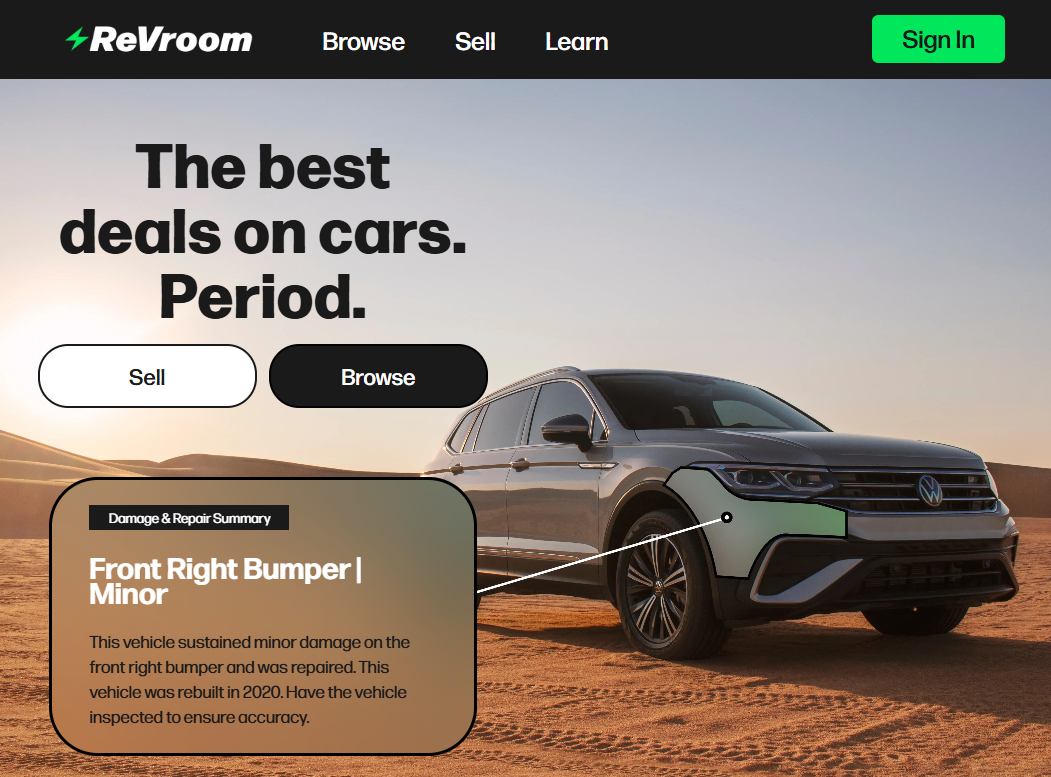
ReVroom is the only online marketplace built specifically for rebuilt and branded title vehicles. Every car listed on ReVroom has passed state-required certification confirming it is repaired and road ready. Each listing includes vehicle history information and photos of what the car looked like before repairs, so you can see exactly what you are getting. No $150 investigation stack. No guessing. If you are looking at a rebuilt or branded title car anywhere online, a ReVroom History Report gives you a full vehicle analysis for $15, including whether the price is fair compared to similar clean-title vehicles in your area. That is less than a tank of gas and worth every cent.
FAQ
What is a car title and why do I need one?
A car title is the government-issued document that proves legal vehicle ownership. You need it to register the car, get insurance, and legally drive it in any state.
What is the difference between a salvage and a rebuilt title?
A salvage title means the car was declared a total loss and is not road-legal. A rebuilt title means the car was repaired and passed a state inspection, making it road-legal and insurable again.
Can I get a loan for a car with a rebuilt title?
Yes. Banks and credit unions finance rebuilt title vehicles, with credit unions often the most flexible. Terms vary by lender, so it pays to compare a couple of lenders, but the idea that you must pay cash is a myth.
How do I check if a car has a lien on it?
Run a report through an NMVTIS-authorized provider or contact your state DMV. An undisclosed lien means the lender can repossess the car even after you buy it, so checking before payment is non-negotiable.
How long do I have to transfer a car title after buying it?
Most states require title transfer within 10–30 days of purchase. Missing that deadline triggers late fees and can create legal liability, so contact your local DMV promptly after the sale.
