


Checking Car Recalls: Your Free Safety Guide
May 21, 2026
TL;DR:
- Millions of Americans drive vehicles with unresolved safety recalls because they are unaware of how to check. Using the VIN, official databases, and checking every six months can help ensure timely, free repairs that protect lives and vehicle value. Regular recall verification is essential for safe, transparent vehicle ownership and informed car shopping decisions.
Millions of Americans are driving around right now with unresolved safety recalls on their vehicles. Not because they don’t care, but because they simply don’t know. Checking car recalls takes less time than brewing a cup of coffee, it costs nothing, and it could genuinely save your life. Whether you’ve owned your car for a decade or you’re shopping for your next one, this guide walks you through exactly what recalls are, how to find them using the most trusted tools available, and what to do if you discover your vehicle has an open one.
Table of Contents
- Key Takeaways
- What vehicle recalls are and why they matter
- Before you search: what you need to check recalls
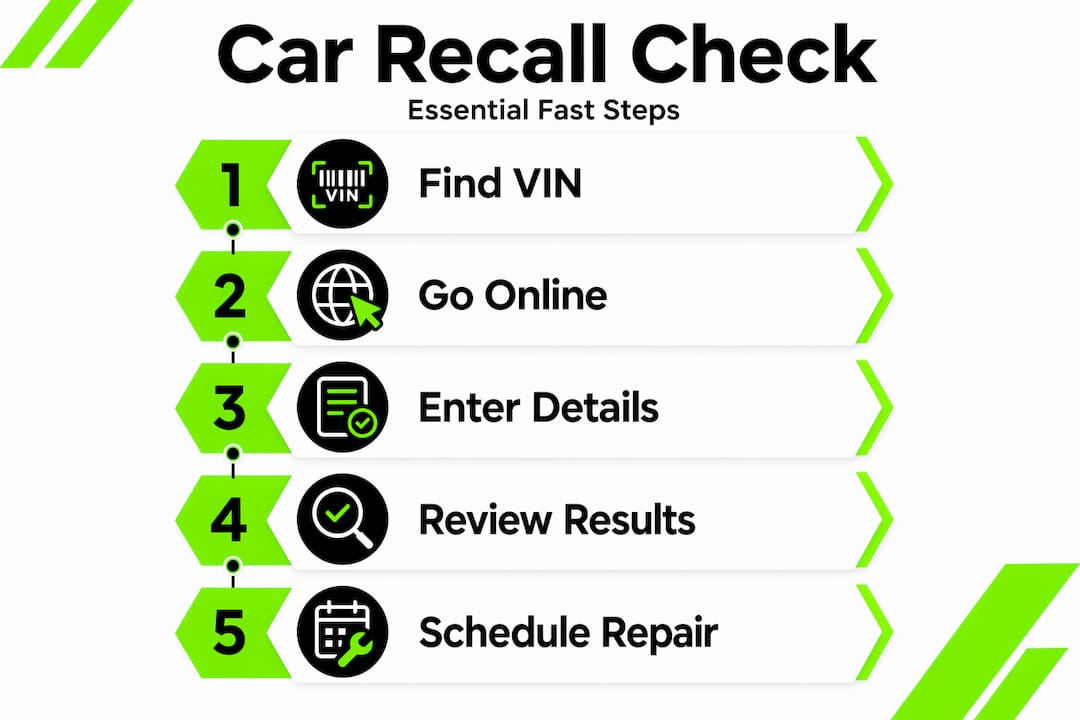
- How to check car recalls step by step
- What to do when you find an open recall
- Common mistakes when checking for recalls
- My take on why this matters more than most people realize
- Find your next vehicle with full transparency
- FAQ
Key Takeaways
| Point | Details |
|---|---|
| Recalls are free to fix | By federal law, authorized dealerships must repair all safety recalls at no cost to you, regardless of vehicle age. |
| VIN is your starting point | Your 17-digit Vehicle Identification Number is the only reliable way to confirm whether your specific car has an open recall. |
| Official sources are best | Use the NHTSA database and your manufacturer’s website together for the most complete recall status lookup. |
| Recalls don’t expire | Your right to a free repair lasts for the life of the vehicle, no matter how many owners it has had. |
| Check every six months | New recalls are issued continuously, so a periodic calendar reminder keeps you ahead of emerging safety risks. |
What vehicle recalls are and why they matter
A vehicle safety recall is not a suggestion. It’s an official finding by the National Highway Traffic Safety Administration, better known as NHTSA, that a specific vehicle or component poses an unreasonable risk to safety. When that threshold is crossed, the manufacturer is legally required to notify owners and fix the problem at no charge.
That’s a very different thing from a consumer complaint. Complaints filed by owners can trigger an investigation that eventually leads to a recall, but a complaint alone carries no legal weight. An official recall does. The distinction matters because some drivers assume they’re covered when they’ve simply reported an issue, when in reality nothing has been formally addressed yet.
Here’s why ignoring recall notices is genuinely dangerous. Common recalls have covered defective airbags that deployed with metal shrapnel, fuel systems prone to fire, and brake components that failed without warning. These aren’t cosmetic fixes. They’re serious safety defects with documented injury and fatality histories.
What separates recalls from typical repair notices or service bulletins:
- Recalls cover safety-related defects and are repaired free of charge by law.
- Technical service bulletins (TSBs) address common mechanical issues but are not mandated repairs. You may be charged.
- Owner notifications from manufacturers about software updates or minor adjustments carry no legal obligation to repair for free.
Pro Tip: If you receive any notice from your manufacturer in the mail, don’t assume it’s a recall. Look up the notice number on the NHTSA website to confirm whether it carries a legal repair mandate.
Before you search: what you need to check recalls
The single most important piece of information for a recall search is your VIN. The Vehicle Identification Number is a 17-character code unique to your specific car. Recall tools use VIN rather than just make and model because recalls often apply only to vehicles built during a specific window, not entire model years. Two identical-looking cars off the same lot might have different recall statuses.
Here’s where to find your VIN:
- Driver’s side dashboard: Look through the windshield at the lower corner. The VIN is on a small metal plate.
- Driver’s side door jamb: Open the door and check the sticker on the door edge or frame.
- Vehicle title and registration documents: Both list the full VIN.
- Insurance card or policy: Most carriers include it.
- Under the hood: Often stamped on the engine block or firewall.
Beyond the VIN, it helps to have your license plate number, the vehicle’s make, model, and year, and your current mileage on hand. These won’t replace VIN-based searches, but they help if you’re evaluating a car you don’t yet own.
| Info Type | Use Case | Reliability for Recalls |
|---|---|---|
| VIN (17 digits) | Full individual recall lookup | Highest. Car-specific results. |
| Make, model, and year | General recall browsing | Moderate. May miss VIN-specific results. |
| License plate | Some state-level lookup tools | Varies by state and database. |
Pro Tip: Save your VIN in your phone’s notes app right now. When you’re at a dealership or browsing listings, you’ll want it instantly without digging through your glove box.
Experts recommend checking recall status every six months because new recalls are issued on a rolling basis throughout the year. Put a recurring reminder in your calendar. It takes two minutes and costs nothing.
How to check car recalls step by step
Checking your recall status takes under two minutes using official tools and is completely free. Here’s the most reliable process:
- Go to NHTSA’s official recall database. Visit recalls.nhtsa.dot.gov. This is the government’s own auto recall database and your most authoritative source.
- Enter your VIN in the search bar. The tool accepts the full 17-digit VIN. Hit search and wait a few seconds.
- Review your results. You’ll see a list of any recalls associated with that specific vehicle, including ones that have already been repaired and any still open.
- Check your manufacturer’s recall page separately. NHTSA and manufacturer tools are complementary. Manufacturer databases sometimes list newer recalls before NHTSA’s system has been updated.
- Interpret the status clearly. Each recall result will show the recall campaign number, the component affected, a description of the risk, and whether a remedy is currently available.
Here’s how the two main lookup methods compare:
| Method | Speed | Coverage | Best For |
|---|---|---|---|
| NHTSA VIN lookup | Under 2 minutes | Official federal database | Confirming legal recall status |
| Manufacturer recall tool | Under 2 minutes | May include newer recalls | Catching recently issued recalls |
If your VIN search returns no results but you suspect an issue, double-check that you entered all 17 characters correctly. The letter “O” and the number “0” are a common mix-up, as are “I” and “1.” Also, some recalls take a few weeks to be fully entered into the system after they’re announced. Checking back in a few weeks is a reasonable step if you’ve seen news coverage of a recall affecting your model.
Pro Tip: If you’re buying a used vehicle, run the VIN recall check before you sign anything. A VIN history check gives you a complete picture, not just recalls but a broader view of that vehicle’s background.
What to do when you find an open recall
Finding an open recall is not cause for panic. It’s cause for a phone call. Here’s how to handle it:
- Contact an authorized dealership for your vehicle’s brand. They are the only entities legally permitted to perform the recall repair at no cost to you. An independent shop cannot close out a recall on your behalf.
- Call ahead to confirm parts availability. High-volume recalls can create parts delays, especially in the weeks immediately following a major recall announcement. A quick call to the dealer’s service department saves you a wasted trip.
- Understand your legal rights fully. Recall repairs are free regardless of whether your warranty has expired, how many owners the vehicle has had, or how old the car is. There is no asterisk on this.
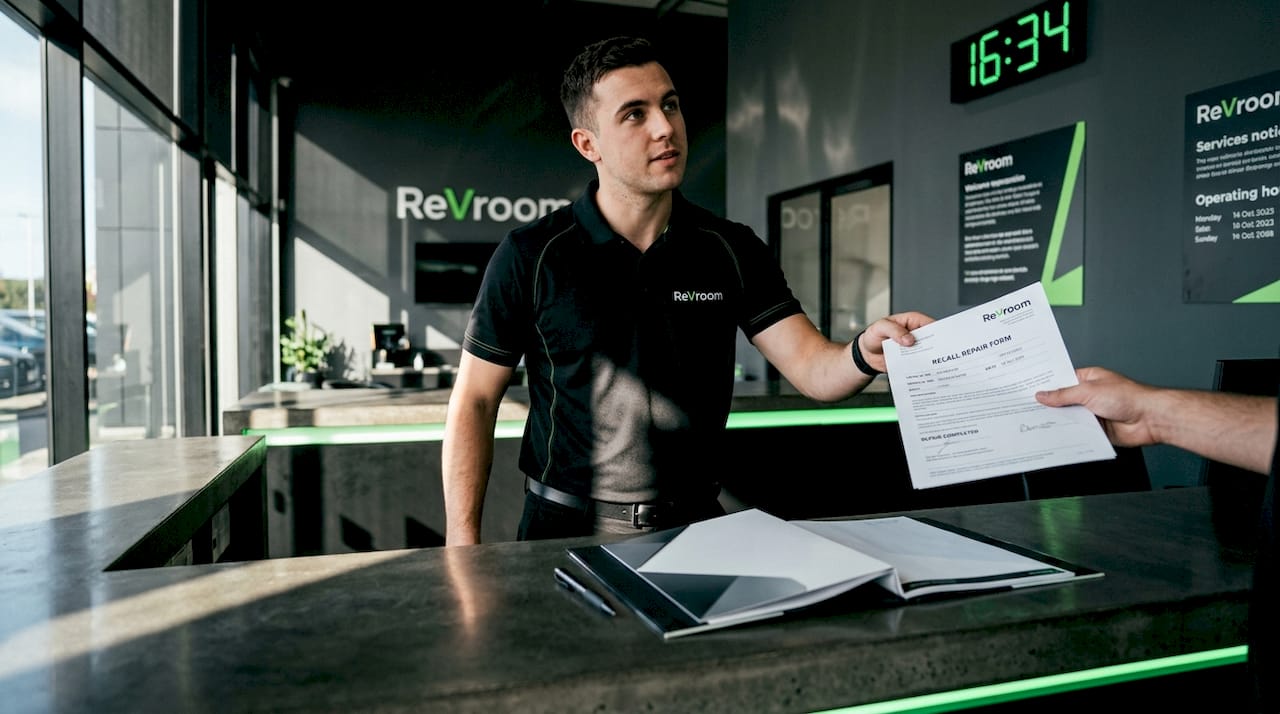
- Keep your repair documentation. After the repair, recall status updates can take several weeks to reflect in NHTSA’s database. Your dealer-provided paperwork is proof the work was done. Keep it with your vehicle records.
- Recalls do not expire. Your right to a free repair lasts for the lifetime of the vehicle. Even if the recall was issued five years ago and you just found out, you’re still entitled to the fix.
If a dealer tries to charge you for a recall repair, that’s a violation of federal law. Report it immediately to NHTSA at 1-888-327-4236. You should never pay a single dollar for a mandated safety recall repair.
One more thing worth knowing: proper recall repair documentation supports your vehicle’s resale value. When you go to sell, a future buyer can verify that your car’s safety issues were addressed professionally and on record. That’s the kind of transparency that builds confidence in any transaction.
Pro Tip: Ask the dealership to provide written confirmation of the recall repair on official letterhead, not just a service receipt. Some title transfer situations and vehicle history reports reference recall completion records.
Common mistakes when checking for recalls
A few very avoidable errors trip people up when it comes to managing their vehicle recall information. Here’s what to watch out for.
Waiting for a recall letter. This is the biggest mistake most people make. Recall letters frequently go to previous owners or get lost in the mail. If you bought a used vehicle, the manufacturer may still have the prior owner on record. Proactive VIN checks are the only way to know for certain.
Confusing complaints with recalls. An owner complaint filed with NHTSA means someone reported a problem. It does not mean a recall has been issued. Complaints can initiate investigations, but until NHTSA formally mandates a recall, no free repair obligation exists. Always confirm through the official recall database.
Assuming recalls eventually expire. They don’t. There’s no statute of limitations on your right to a free recall repair. Whether the recall was issued last month or seven years ago, the obligation on the manufacturer’s side remains intact.
Checking only once. New recalls are announced throughout the year. A car that had no open recalls in January might have one by July. Setting a six-month reminder to check takes thirty seconds to set up and protects you year-round.
Only checking by model, not VIN. Two cars of the same make, model, and year can have different recall statuses depending on when and where they were manufactured. The VIN is the only identifier precise enough to give you a definitive answer because recalls apply to individual vehicles, not entire model lines.
My take on why this matters more than most people realize
I’ve spent a lot of time thinking about vehicle transparency, and checking car recalls is honestly one of the most underappreciated safety habits out there. People spend hours researching a car’s fuel economy or cargo space, and then skip a two-minute free search that could reveal an unresolved brake defect. That disconnect still surprises me.
What I’ve found working in the rebuilt vehicle space is that recall history is often more revealing than people expect. A car with a resolved recall and documentation is, in many ways, more trustworthy than a car with no recall history at all but questionable maintenance records. The repair happened. It was mandated by the federal government. It was done free of charge. That’s accountability built right into the system.
My honest advice: run a recall check every time you’re seriously considering a purchase. Run it on your current car twice a year. And if you find something, don’t stress. The system exists precisely to fix it, and it won’t cost you a cent. Knowledge here is a straight-up advantage. Use it.
The buyers I’ve seen feel most confident in their vehicle decisions are the ones who verified everything upfront and checked car accident history alongside recall status. It’s not about fear. It’s about being the smartest person in the room when it counts.
— Cameron
Find your next vehicle with full transparency
When you know how to check recalls, you’ve already taken one of the most important steps toward smarter, safer car buying. ReVroom was built for exactly this kind of informed buyer.
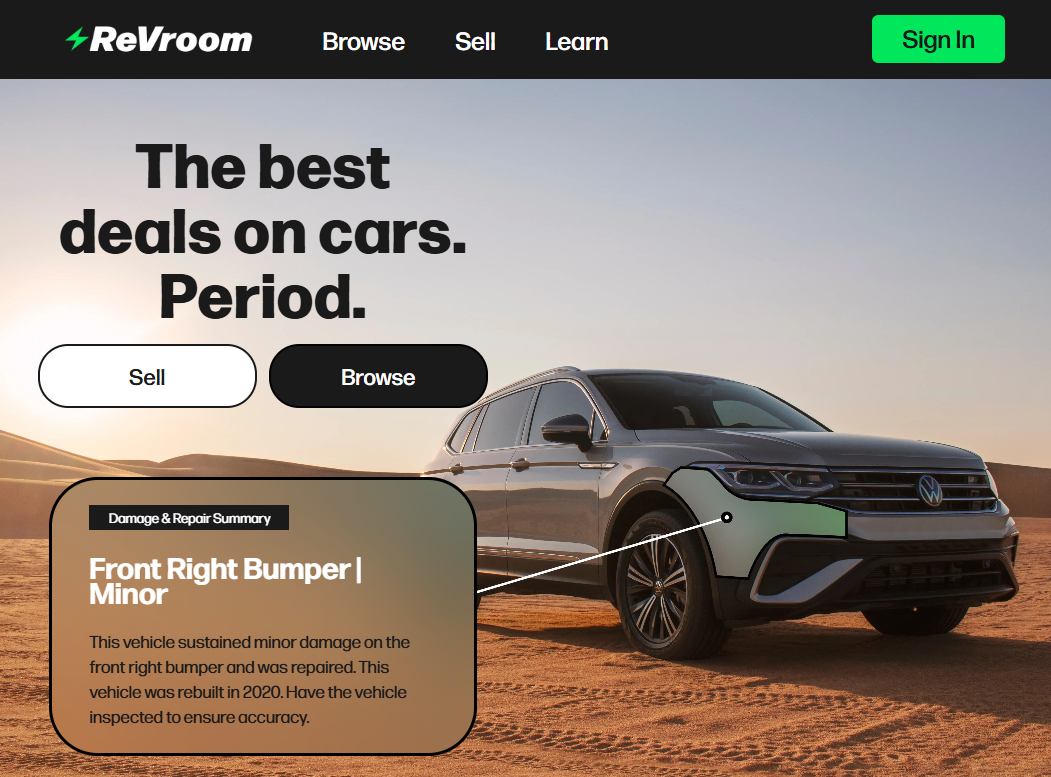
At ReVroom, every listing for rebuilt title vehicles comes with vehicle history information and photos built right in, so you’re never guessing about what you’re looking at. Rebuilt title vehicles can cost up to 50% less than comparable clean title options, and with ReVroom’s upfront transparency, you have the context to evaluate each one with confidence. Think of it as the clearance section of a car marketplace, except you actually know what you’re getting. Browse listings, do your due diligence, and find a vehicle whose history you can see clearly. That’s the ReVroom way.
FAQ
How do I check if my car has an open recall?
Visit recalls.nhtsa.dot.gov and enter your 17-digit VIN. The search is free, takes under two minutes, and shows both open and previously repaired recalls tied to your specific vehicle.
Do car recalls expire?
No. Recall repairs remain free for the lifetime of the vehicle regardless of age or ownership history. Even if the recall was issued years ago, you’re still entitled to a no-cost fix at an authorized dealership.
Can I be charged for a recall repair?
No. Federal law requires that all safety recall repairs be performed at no cost to the vehicle owner. If a dealer attempts to charge you, report it to NHTSA at 1-888-327-4236.
Is checking by make and model enough for finding recalls?
Not reliably. Recalls apply to specific vehicles based on VIN, not entire model lines. Two cars of the same year and model can have different recall statuses, so always use your VIN for an accurate recall status lookup.
How often should I check my vehicle for recalls?
Check at minimum every six months. New recalls are issued throughout the year, and waiting for a mailed notice is not a reliable strategy since letters often go to previous owners or get lost before reaching you.
