


How Do I Know If My Car Is Salvage?
July 4, 2026
TL;DR:
- A salvage title indicates a vehicle declared a total loss by an insurer when repair costs exceed around 75% of its value.
- Verifying salvage status requires a VIN check through an NMVTIS-approved provider, which provides a reliable vehicle history.
- Buyers should inspect the VIN across multiple locations, be aware of title washing risks, and understand how salvage titles impact vehicle value, insurance, and financing.
A salvage title is a legal designation issued by an insurance company or state agency when a vehicle’s repair costs exceed a set threshold of its market value, typically around 75%, declaring it a total loss. If you’re asking how do I know if my car is salvage, the most reliable answer starts with a VIN lookup through an NMVTIS-approved provider. The National Motor Vehicle Title Information System, administered by the U.S. Department of Justice, aggregates title data from state DMVs, insurance carriers, and salvage yards across every U.S. state. That federal reach makes it the gold standard for verifying vehicle history before you hand over a single dollar.
How do I know if my car is salvage using VIN checks?
Your Vehicle Identification Number is the fingerprint of your car. Every vehicle manufactured for the U.S. market carries a unique 17-character VIN, and that number ties directly to every title brand, insurance claim, and total loss declaration ever recorded against it.

Running a VIN check through an NMVTIS-approved provider is the most authoritative way to confirm salvage status. NMVTIS pulls data directly from state motor vehicle agencies, insurance carriers, and salvage yards, which makes it far more reliable than a single-state DMV check. A typical report costs between $10 and $15 and takes less than an hour to complete.
Free tools like NICB’s VINCheck exist, but they cover only theft and limited salvage records. They are a starting point, not a finish line. For a complete picture, you need a paid NMVTIS report.
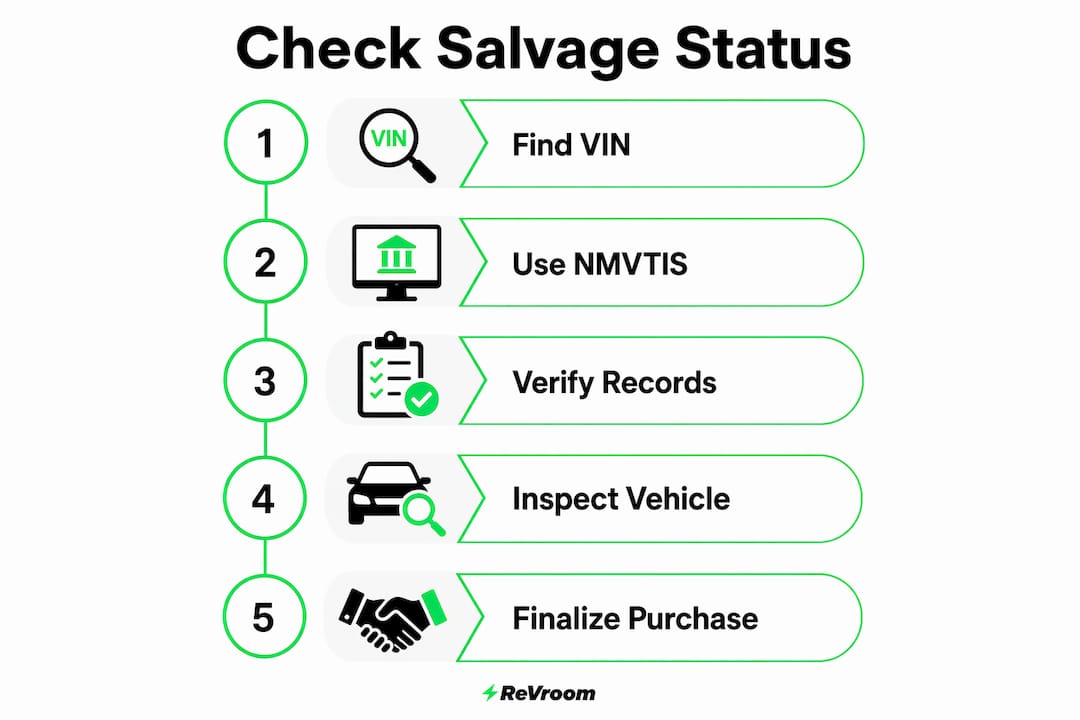
Here is the step-by-step process:
- Locate the VIN. Find it on the dashboard (visible through the windshield on the driver’s side), the driver’s side door jamb, and the printed title document.
- Verify all three match. Mismatched VINs across these locations are a serious red flag for fraud or a vehicle assembled from multiple wrecked cars.
- Run the VIN through an NMVTIS-approved provider. The report will confirm any total loss branding, including salvage, flood, or theft recovery designations.
- Review the title document itself. A salvage brand should appear printed directly on the title. A clean-looking title on a car with a troubled VIN history is a warning sign worth investigating.
Pro Tip: Never rely on a VIN the seller provides verbally. Write it down yourself from the physical dashboard plate. Sellers who discourage this step are worth walking away from.
What are salvage title branding variations and title washing risks?
Not every state uses the same language. States differ in terminology, with some using “Salvage,” others using “Flood Damage,” “Totaled,” or “Total Loss.” There is no federal law requiring uniform branding. That inconsistency creates real gaps in what buyers can see at a glance.
The distinction between a salvage title and a rebuilt title matters a lot. A salvage title means the car has been declared a total loss and is not currently legal for road use. A rebuilt title means the car was repaired, passed a state safety inspection, and has been returned to legal road use. These are two very different situations, and confusing them leads to bad buying decisions.
Title washing is the practice of moving a vehicle across state lines to a state with less strict branding laws, effectively erasing its salvage history from the visible title. It is a real fraud tactic, and it catches buyers off guard more often than most people realize.
Watch for these warning signs:
- The title is from a different state than where the car was supposedly owned and driven.
- The VIN on the dashboard does not match the VIN on the door jamb or title.
- The seller is vague about where the car came from or why it was sold out of state.
- The price is significantly below market value with no clear explanation.
- The seller refuses to share the VIN before you meet in person.
Relying solely on a state DMV record is not enough. NMVTIS data comes from multiple sources simultaneously, which is why it catches title washing cases that a single-state check would miss entirely.
Practical steps to verify salvage status before you buy
Checking a car’s title status is not complicated, but it does require doing a few things in the right order. Skipping steps is where buyers get burned.
- Get the VIN before you go anywhere. Ask for it upfront. Sellers who refuse to provide a VIN, price cars well below market value, or offer out-of-state titles are showing you red flags before you even see the car.
- Run an NMVTIS report. A comprehensive vehicle history report from an NMVTIS-approved source costs $10–$15. That is a small price compared to the cost of buying a car with hidden history.
- Physically inspect the VIN in three locations. Check the dashboard, the driver’s side door jamb, and the title document. All three must match exactly. Any discrepancy means you are potentially looking at a “Frankenstein car” assembled from multiple wrecked vehicles.
- Check for liens. A clean title with no outstanding liens is the baseline. A lien on a salvage vehicle adds a layer of financial risk that most buyers do not anticipate.
- Hire a trusted mechanic for a pre-purchase inspection. NMVTIS reports confirm title brands, but they do not cover repair quality or accident severity. A mechanic’s eyes on the car fill that gap.
Pro Tip: If you are looking at a rebuilt title vehicle specifically, a Revroom History Report gives you accident history, severity, and a fair price comparison for $15. That is less than most restaurant meals and far cheaper than a bad purchase.
How do salvage titles affect value, insurance, and financing?
A salvage title is primarily a financial and legal label, not an automatic verdict on mechanical condition. That said, the financial consequences are real and worth understanding before you commit.
- Resale value drops significantly. Salvage title cars carry lower resale values because future buyers face the same title history you are looking at now. That discount can be attractive upfront but painful when you try to sell.
- Insurance options are limited. Insurance companies typically restrict salvage vehicles to liability-only coverage. Comprehensive and collision coverage is often unavailable, which means you absorb the full cost of any future damage.
- Financing is difficult to secure. Most lenders will not finance a salvage title vehicle. If they do, the terms are usually unfavorable. Plan to pay cash or find a specialized lender.
- Rebuilt titles offer better options. Rebuilt title vehicles have passed state inspections and often qualify for more insurance coverage than straight salvage cars. They are not identical to clean-title cars, but the gap is smaller.
Factor all of these realities into your purchase math. A car priced 40% below market sounds like a deal until you add up the insurance limitations, financing hurdles, and resale discount on the back end.
Key Takeaways
A salvage title is confirmed through a VIN lookup via an NMVTIS-approved provider, and buyers who skip this step risk purchasing vehicles with hidden histories, limited insurance, and restricted financing.
| Point | Details |
|---|---|
| NMVTIS is the gold standard | Run a VIN through an NMVTIS-approved provider to get the most reliable title history. |
| VIN matching prevents fraud | Check the VIN in three locations: dashboard, door jamb, and title document. |
| Title washing is a real risk | Out-of-state titles and mismatched VINs are the clearest signs of attempted fraud. |
| Salvage vs. rebuilt matters | A salvage title means not road-legal; a rebuilt title means inspected and restored to legal use. |
| Financial impact is significant | Salvage vehicles face limited insurance, restricted financing, and lower resale value. |
The honest truth about buying a car with a complicated history
We have seen a lot of buyers come to the table with one of two attitudes: either they are terrified of anything with a title brand, or they are so excited about the price that they skip every step of due diligence. Neither approach serves you well.
The truth is that vehicle history is information, not a verdict. A salvage brand tells you something happened. It does not tell you how bad it was, how well it was fixed, or whether the car is a gem or a money pit. That is exactly why the verification steps in this article exist. NMVTIS gives you the title history. A mechanic gives you the mechanical reality. Together, they give you the full picture.
What we have learned from working in this space is that the buyers who get burned are almost always the ones who trusted a seller’s word over documented evidence. The car looked great. The seller seemed honest. The price was too good to pass up. Those three things together should actually make you more cautious, not less.
If you are looking at a rebuilt title vehicle specifically, the opportunity is real. Rebuilt titles are up to 50% cheaper than comparable clean-title cars, and many of them have been professionally repaired to a high standard. The key is transparency. You want to see the accident history, the repair photos, and a fair price comparison before you decide. That is not paranoia. That is just good buying.
— Revroom Editorial Team
Transparent vehicle history for rebuilt title buyers
Revroom was built specifically for buyers who want the full picture before they commit. Every listing on the Revroom marketplace includes accident history information and photos of what the car looked like before repairs, so you are never guessing about what you are buying.
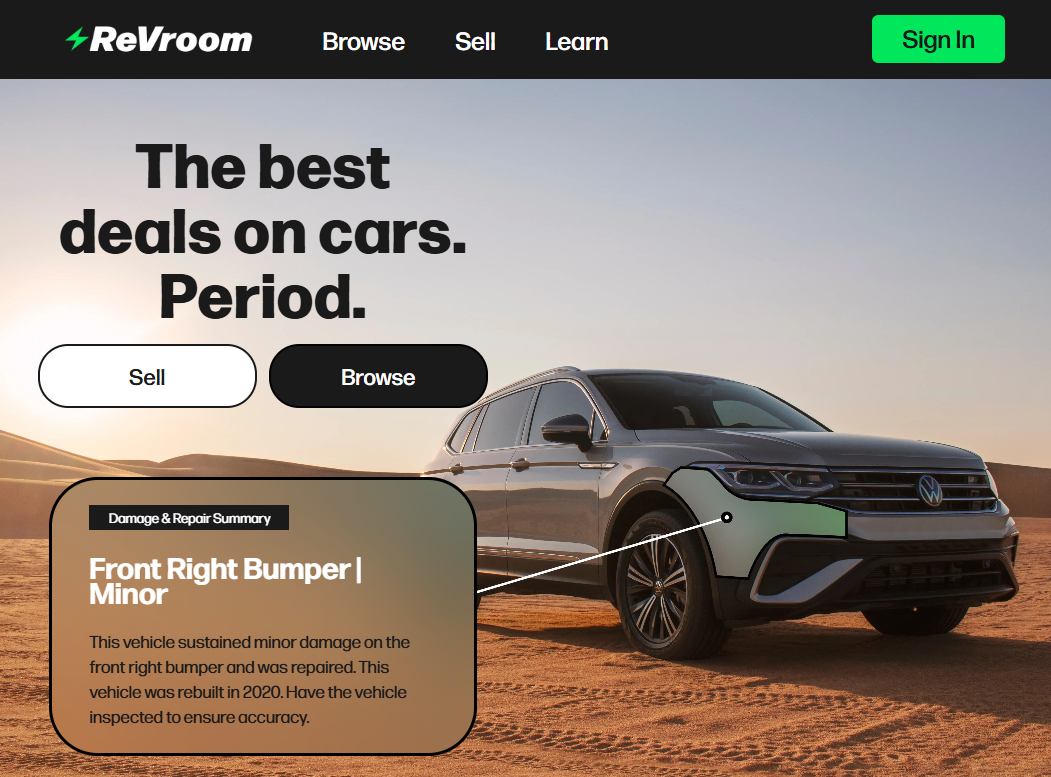
For buyers researching a rebuilt title vehicle anywhere online, a Revroom History Report gives you the accident history, damage severity, and a local price comparison for just $15. Whether you found the car on Facebook Marketplace, Craigslist, or anywhere else, that report tells you what happened and whether the price is fair. Revroom makes the rebuilt title market safe, transparent, and worth your time.
FAQ
What is a salvage car, exactly?
A salvage car is a vehicle declared a total loss by an insurance company because repair costs exceeded a set percentage of its value, typically around 75%. The salvage designation appears as a brand on the vehicle’s title.
How do I check a car’s salvage title status?
Run the VIN through an NMVTIS-approved provider, which aggregates data from state DMVs, insurance carriers, and salvage yards nationwide. Reports typically cost $10–$15 and take less than an hour to return results.
What is the difference between a salvage title and a rebuilt title?
A salvage title means the vehicle is not currently legal for road use. A rebuilt title means the car was repaired, passed a state safety inspection, and has been returned to legal driving status.
What are the signs of a salvage vehicle I should look for in person?
Check for mismatched VINs across the dashboard, door jamb, and title document. Also watch for uneven panel gaps, mismatched paint, and signs of major structural repair, which can indicate significant prior damage.
Can I get insurance on a salvage title car?
Insurance options for salvage vehicles are typically limited to liability coverage only. Comprehensive and collision coverage is usually unavailable, which means you bear the full cost of any future damage to the vehicle.
