


Salvage History Cars: What Buyers Need to Know in 2026
June 12, 2026
TL;DR:
- A salvage history indicates an insurance total loss with a permanent title brand that follows the vehicle’s VIN. Rebuilt titles mean the car has passed safety inspections after repairs, making it road legal and more insurable. Smart buyers use comprehensive history reports and documentation to assess value, transparency, and risk before purchasing these vehicles.
A salvage history car is defined as a vehicle that an insurance company has declared a total loss, triggering a permanent brand on its title that follows the VIN forever. That brand does not disappear when the car gets repaired. It does not fade when ownership changes hands. Understanding what that history means, and what it does not mean, is the difference between scoring a genuinely great deal and buying a headache you did not see coming. The good news? With the right information, you can tell the difference every time.
What does salvage history mean on a car and how does it affect value?
Salvage history on a car means the vehicle reached a point where an insurer calculated that repair costs exceeded a state-mandated percentage of its pre-incident value. That calculation triggers a title brand, and the car is officially labeled a total loss. State thresholds vary widely, ranging from 50% to 95% of a vehicle’s pre-incident value depending on where you live. A car totaled in Florida under a 70% threshold might have been fully repairable in a state with a 90% threshold. The threshold is a financial line, not a safety verdict.

Here is something most buyers do not realize: insurers declare total losses primarily based on expensive OEM parts and labor costs, not on whether the vehicle’s structure is fundamentally compromised. A car can cross the total loss threshold because of costly airbag replacements or specialty panel work, even when the frame is perfectly intact. That context matters enormously when you are evaluating a vehicle’s actual condition versus its paper history.
Once a car carries salvage history, its market value drops. Rebuilt title vehicles sell for 20% to 40% less than identical clean-title vehicles as of mid-2026. That discount is the opportunity. It is also the reason you need to do your homework, because not every vehicle with a branded history deserves the same discount, and not every seller prices them fairly.
The type of history on the vehicle also shapes buyer perception and resale value:
- Hail or weather events: Often cosmetic in nature, these vehicles tend to carry less stigma and can represent strong value.
- Theft recovery: A car recovered after theft may have minimal mechanical issues and can be an excellent find.
- Collision history: Requires the most scrutiny, particularly around structural components and airbag systems.
- Flood events: Carry the highest long-term risk due to electrical and corrosion concerns that can surface years later.
Salvage title vs rebuilt title: what buyers actually need to know
These two terms get used interchangeably online, and that is a costly mistake. They describe two very different legal statuses, and confusing them can lead you to make the wrong call on a purchase.
A vehicle with a current title brand indicating it has not yet been repaired and inspected is not road legal in most states. It cannot be registered or driven on public roads. A rebuilt title, by contrast, is issued after a vehicle has been repaired and passed a state-mandated safety inspection. That inspection certifies the car is roadworthy. The rebuilding process and certification varies by state, but the rebuilt designation is a meaningful milestone. It means someone put real work and real money into bringing that car back.
Here is a side-by-side look at how the three title types compare:
| Title type | Road legal | Insurance availability | Resale value | Buyer risk level |
|---|---|---|---|---|
| Clean title | Yes | Full coverage available | Highest | Lowest |
| Rebuilt title | Yes | Liability widely available; comprehensive varies | 20%–40% below clean | Moderate with due diligence |
| Unrepaired branded title | No | Very limited | Lowest | Highest |
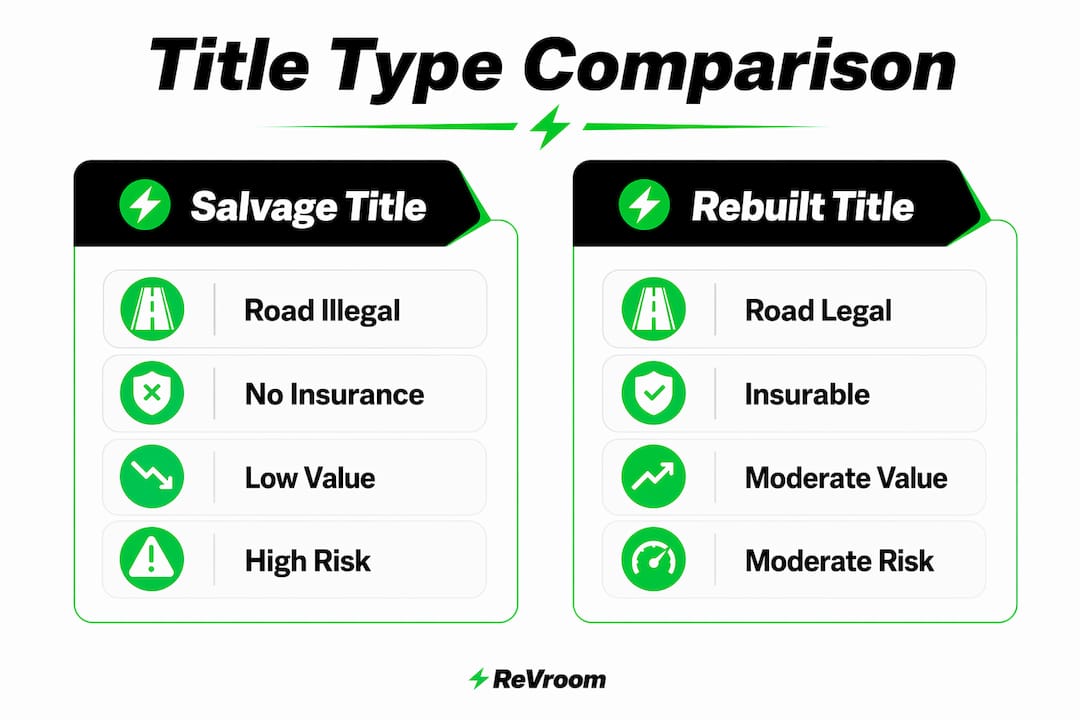
The rebuilt title is where the real opportunity lives. These are cars that have been through a state inspection, repaired by professionals, and cleared for the road. Revroom focuses exclusively on this category because it is the one where transparency and smart buying actually pay off.
Pro Tip: Always confirm which specific title brand a vehicle carries before you negotiate price. “Rebuilt” and “unrepaired branded” are not the same thing, and the difference is worth thousands of dollars in both value and risk.
Financing a rebuilt title vehicle through a traditional lender is harder than financing a clean-title car. Many banks and credit unions decline these loans outright. Personal loans, credit unions with flexible underwriting, or home equity lines of credit are the most common alternatives buyers use successfully.
How to check a car’s salvage history and verify title authenticity
Verifying a vehicle’s full history is not optional. It is the single most important step you take before handing over money. Here is how to do it right:
- Pull a full NMVTIS-based vehicle history report. The National Motor Vehicle Title Information System (NMVTIS) aggregates title data from all 50 states. History reports based on NMVTIS data are more reliable than physical titles alone because titles can be manipulated through a scheme called title washing.
- Understand title washing. This fraud exploits differences in state title laws to move a vehicle across state lines and re-register it with a clean title, erasing its branded history. Virginia DMV investigated 453 incidents of title washing and odometer fraud in 2024 alone. That number represents only one state. The federal NMVTIS database is your best defense.
- Request pre-repair photos. Pre-repair photos from auctions provide irrefutable evidence of what the vehicle looked like before it was fixed. They reveal structural or mechanical issues that a polished, assembled car will never show you. If a seller cannot produce these, ask why.
- Review repair invoices and parts documentation. A legitimate rebuild comes with paperwork. OEM versus aftermarket parts, labor records, and alignment reports all tell a story about the quality of the repair.
- Get an independent pre-purchase inspection. A trusted mechanic who has no stake in the sale is your last line of defense. This step applies to any used vehicle, but it is especially valuable here.
Pro Tip: Cross-reference the VIN across at least two separate history report services. Different databases pull from different sources, and one report alone can miss incidents that another catches.
Insurance, financing, and legal considerations
Insurance for rebuilt title vehicles is more accessible than most online articles suggest. Most insurers provide liability coverage for rebuilt title cars. Comprehensive and collision coverage is where things get more nuanced, as some carriers limit or decline it because distinguishing pre-existing history from new incidents is harder for their adjusters. That said, many major insurers write full coverage policies on rebuilt titles without issue. You can read more about insurance options for rebuilt title cars to understand what to expect before you shop.
A few other practical considerations worth knowing:
- Factory warranties are void. Original factory warranties do not transfer to vehicles with branded title histories. Aftermarket warranties exist but tend to be more limited and more expensive than standard used-car coverage.
- State inspection requirements vary. Some states require a detailed inspection before issuing a rebuilt title. Others have minimal requirements. Knowing your state’s process tells you how much confidence to place in the rebuilt designation.
- Resale will reflect the history permanently. The branded history stays with the VIN forever. When you eventually sell, buyers will see it. Price accordingly and be upfront. Transparency protects you as much as it protects them.
- Registration fees may differ. Some states charge additional fees or apply different tax rates to branded title vehicles. Check your local DMV requirements before you finalize a purchase.
Benefits and risks of buying a car with vehicle history: who should consider it?
The 20% to 40% price discount on rebuilt title vehicles is real, and for the right buyer, it opens doors that clean-title pricing keeps firmly shut. A buyer who wants a late-model luxury SUV but cannot justify the clean-title price tag may find exactly what they need in a well-repaired rebuilt title version of the same vehicle.
The buyers who tend to get the most out of these purchases share a few traits:
- Knowledgeable about cars or connected to a trusted mechanic. You do not need to be a technician, but having someone who is in your corner matters.
- Cash buyers or flexible financing. Traditional auto loans are harder to secure, so buyers who can pay cash or arrange alternative financing have a real advantage.
- Focused on personal use, not resale. If you plan to drive the car for years, the permanent title brand affects you less than it would a buyer planning to flip it in 18 months.
- Comfortable with due diligence. The post-repair usage timeline matters. A rebuilt vehicle that has been driven consistently for several years after its repair carries meaningfully less uncertainty than one that was just completed last month.
The situations where extra caution is warranted include flood-history vehicles, cars with incomplete or missing repair documentation, and any vehicle where the seller is reluctant to share pre-repair photos or inspection records. Those are not automatic disqualifiers, but they are signals to slow down and look harder.
Pro Tip: A thorough pre-purchase inspection checklist designed for recently restored vehicles covers structural, mechanical, and electrical systems in a way that a standard used-car inspection may not. Use one.
Key takeaways
Rebuilt title vehicles offer genuine value for informed buyers who prioritize transparency, thorough inspection, and realistic expectations about resale and insurance.
| Point | Details |
|---|---|
| Salvage history is permanent | The title brand stays with the VIN forever, even after a rebuilt title is issued post-inspection. |
| Rebuilt titles mean road-legal | A rebuilt title confirms state inspection approval; an unrepaired branded title does not. |
| Discount is real but earned | Rebuilt title cars sell 20%–40% below clean-title equivalents, rewarding buyers who do their homework. |
| NMVTIS reports are non-negotiable | Physical titles can be washed; a full NMVTIS-based history report is your most reliable verification tool. |
| Insurance is more accessible than myths suggest | Most insurers cover rebuilt title cars for liability; comprehensive coverage varies by carrier and vehicle. |
What we have learned from years in this market
Honestly, the biggest mistake buyers make with vehicle history cars is letting the title brand do all the thinking for them. A title brand is a financial label, not a safety verdict. We have seen clean-title vehicles with undisclosed histories that were far worse investments than well-documented rebuilt title cars with years of consistent post-repair driving behind them.
The vehicles that give us confidence are the ones with a paper trail. Pre-repair photos, repair invoices, state inspection records, and a history report that matches what the seller is telling you. When those pieces align, the title brand becomes context rather than a warning. When they do not align, that is your real red flag, regardless of what the title says.
We also want to be straight with you: not every rebuilt title vehicle is a gem, and not every seller is forthcoming. That is exactly why we believe in giving buyers the information they need upfront rather than making them dig for it. Patience pays off here. A vehicle with two or three years of post-repair driving and a clean paper trail is a fundamentally different proposition than one that rolled out of a shop last week with no documentation. Take your time. The right car is worth waiting for.
— Revroom Editorial Team
Find your next vehicle with Revroom
If you are ready to explore rebuilt title vehicles with full transparency baked in from the start, Revroom is built for exactly that.

Revroom is the only marketplace dedicated exclusively to rebuilt title vehicles, and every listing includes vehicle history information and pre-repair photos so you can see exactly what you are considering before you ever reach out to a seller. No hunting down reports. No guessing about what happened before the car was repaired. The information is right there in the listing. Browse the Revroom marketplace and find rebuilt title vehicles priced fairly, presented honestly, and ready for their next chapter. Your next great car might be closer than you think.
FAQ
What does salvage history mean on a car?
Salvage history means an insurance company declared the vehicle a total loss after its repair costs exceeded a state-mandated threshold, typically between 50% and 95% of its pre-incident value. The designation is permanently recorded on the vehicle’s title and VIN history.
What is the difference between a salvage title and a rebuilt title?
A salvage versus rebuilt title distinction comes down to road legality. A vehicle with an unrepaired branded title cannot be legally driven or registered. A rebuilt title is issued after the vehicle has been repaired and passed a state safety inspection, making it road legal again.
How do I check a car’s salvage history?
Pull a vehicle history report through an NMVTIS-connected service using the car’s VIN. Physical titles alone are not sufficient because title washing fraud can erase branded history when a vehicle crosses state lines.
Can you get insurance on a rebuilt title car?
Yes. Most insurers offer liability coverage for rebuilt title vehicles without issue. Comprehensive and collision coverage varies by carrier, but it is available through many major providers. The myth that rebuilt title cars are uninsurable is not accurate.
Does salvage history permanently lower a car’s value?
Yes. The title brand stays with the VIN permanently and typically reduces resale value by 20% to 40% compared to a clean-title equivalent. For buyers focused on personal use rather than resale, that discount is often the most compelling reason to consider a rebuilt title vehicle.
