


How to spot properly repaired vehicles: smart buyer's guide
April 13, 2026
TL;DR:
- Properly repaired rebuilt vehicles require thorough structural assessment, OEM parts, and complete documentation.
- Risks vary based on the vehicle’s history, with collision and flood repairs needing extra scrutiny.
- Transparency through inspection certificates, receipts, photos, and history reports is essential for safe purchases.
Most people hear “rebuilt title” and picture a car held together with duct tape and wishful thinking. That reputation isn’t entirely fair. The real question was never about the title itself — it’s always been about the quality of the repair. No large-scale reliability data exists proving rebuilt vehicles are inherently less reliable than clean title cars. The actual risk lives in repair quality variability, not the label on the paperwork. This guide will show you exactly what to look for, what to demand, and how to tell a well-repaired gem from a vehicle that deserves a hard pass.
Table of Contents
- What does it mean for a car to be ‘properly repaired’?
- Common types of rebuilt vehicles and what risks to watch for
- How to verify repairs, documentation, and transparency
- Is a properly repaired vehicle right for you? Balancing value, safety, and long-term ROI
- A fresh look: What most guides get wrong about properly repaired vehicles
- Find transparently repaired vehicles with confidence
- Frequently asked questions
Key Takeaways
| Point | Details |
|---|---|
| Focus on repair quality | A vehicle’s safety depends more on the repair process and documentation than on its title alone. |
| Know the damage source | Collision and flood vehicles carry higher long-term risks than well-documented hail or theft recoveries. |
| Verify all records | Always demand inspections, photos, and part receipts to make an informed rebuilt car purchase. |
| Balance value and risk | Rebuilt cars can offer big savings if chosen with diligence, transparency, and expert input. |
What does it mean for a car to be ‘properly repaired’?
Think of “properly repaired” as the gold standard that separates a confident purchase from a gamble. It’s not just about a car looking good on the outside. It’s about what happened underneath, who did the work, and whether there’s a paper trail to prove it.
According to restoration experts, properly repaired rebuilt vehicles require a thorough structural assessment, OEM or certified parts for safety systems, detailed documentation including receipts, photos, and VINs, and passing state-mandated safety inspections covering brakes, lights, frame integrity, and electronics. That’s a high bar. And that’s exactly the point.
Here’s what a properly repaired vehicle should have going for it:
- Structural integrity verified: A licensed shop assessed the frame and unibody for damage, and repairs were made to manufacturer specifications.
- OEM or certified safety parts used: Brakes, airbags, seatbelts, and lighting were replaced with original equipment manufacturer parts, not discount aftermarket alternatives.
- Complete documentation: Itemized repair receipts with part numbers, dates, and technician signatures are on file.
- Before-and-after photos: Visual proof of the vehicle’s condition prior to repair and after completion.
- State inspection passed: The car cleared a state DMV inspection before being retitled as rebuilt.
“The difference between a smart rebuilt title buy and a risky one almost always comes down to documentation. If a seller can’t show you the receipts, that silence is telling you something.”
Pro Tip: When it comes to safety-critical systems like airbags and brakes, insist on OEM parts over aftermarket. Aftermarket parts are fine for cosmetic repairs, but safety systems deserve original components built to the manufacturer’s exact tolerances. Learn more about what the rebuilt title inspection process actually involves so you know what questions to ask.
Surface-level repairs — fresh paint, new bumpers, clean interiors — are easy to spot and easy to fake. In-depth repairs address the skeleton of the car: the frame, the crumple zones, the electronic systems. A car can look showroom-ready while hiding structural compromises underneath. That’s why documentation isn’t just helpful. It’s essential. For a deeper look at what this means for buyers, the rebuilt title car safety guide is worth your time.
Common types of rebuilt vehicles and what risks to watch for
Not all rebuilt titles tell the same story. A car rebuilt after a minor theft recovery is a very different animal from one rebuilt after a major collision. Understanding the vehicle’s history shapes how you evaluate it and what you need to inspect most closely.
Here’s a quick comparison of the most common rebuilt vehicle types and their associated risk profiles:
| Vehicle history type | Primary risks | Typical repair focus | Risk level |
|---|---|---|---|
| Collision | Frame stress, airbag deployment, electronics | Structural, safety systems | Higher |
| Flood | Hidden corrosion, electrical failures over time | Wiring, interior, mechanical | Higher |
| Hail | Cosmetic dents, paint | Body panels, paint | Lower |
| Theft recovery | Minor cosmetic, possible ignition/electronics | Cosmetic, locks, electronics | Lower to moderate |
As repair experts note, collision and flood histories carry the most complex risk profiles. Collision vehicles can have residual frame stress that affects crash performance. Flood vehicles are notorious for electrical gremlins that surface months after purchase. Hail and theft recovery vehicles, by contrast, are often cosmetic in nature and carry lower risk when properly documented.
Regardless of history type, here are the must-inspect elements for any rebuilt vehicle:
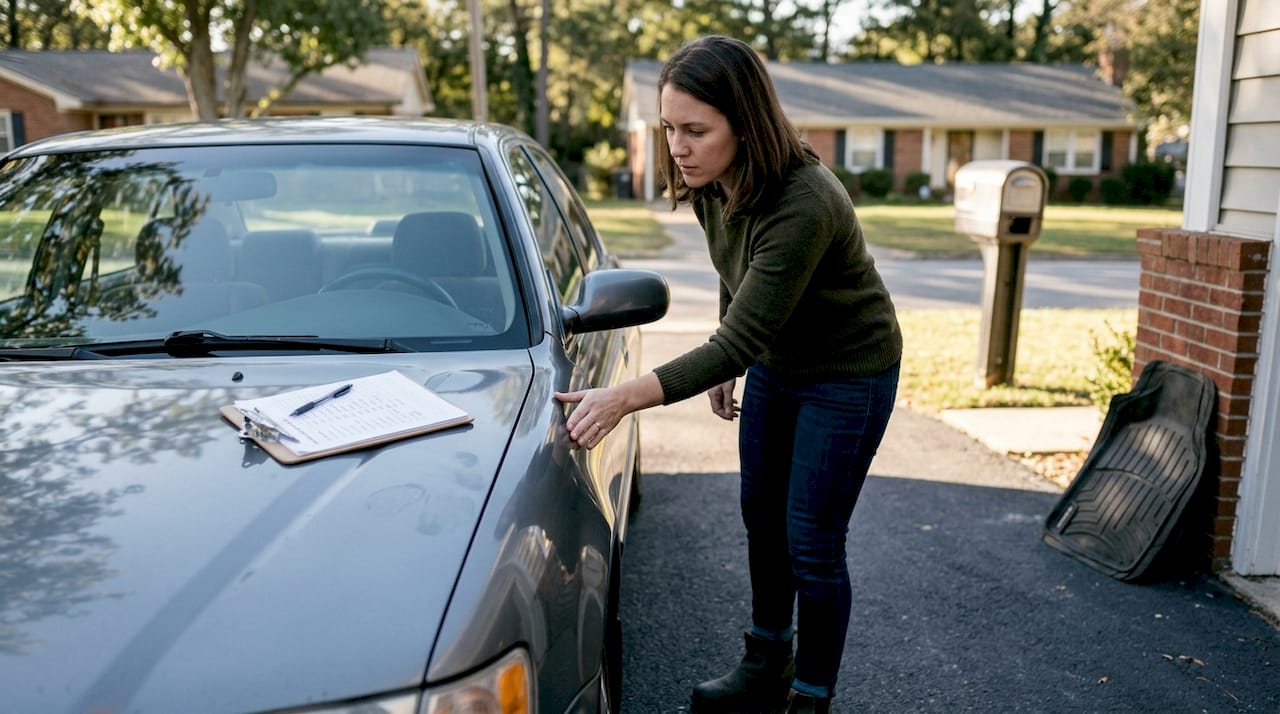
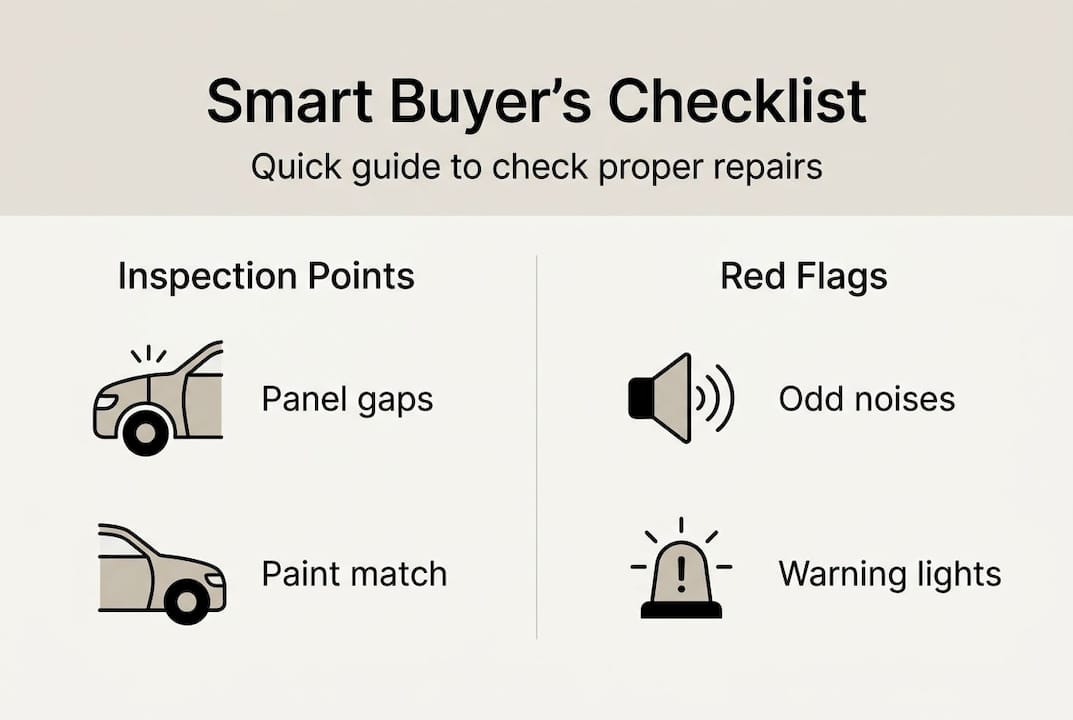
- Collision history: Check frame rails for welds, look for uneven panel gaps, and verify airbag replacement with OEM parts.
- Flood history: Inspect under carpets and seats for rust or waterline marks, smell for mildew, and test every electrical component thoroughly.
- Hail history: Confirm all dents are addressed and paint is consistent across panels.
- Theft recovery: Verify ignition components and door locks were properly restored.
Pro Tip: On flood vehicles specifically, electrical issues often don’t show up right away. Corrosion works slowly. A car that passes inspection today might develop mysterious electrical failures six months down the road. If you’re considering a flood history vehicle, factor in a more thorough pre-purchase inspection and budget for potential surprises. Explore the full breakdown of rebuilt title vehicle risks to go deeper on each category.
Cosmetic-only histories, like hail or minor theft recovery, can genuinely be low-risk buys if the documentation is clean and the repairs are verifiable. That’s where some of the best value in the rebuilt title market lives. For more on what to weigh before buying, check out rebuilt title car cons buyers should know.
How to verify repairs, documentation, and transparency
Knowing what to look for is half the battle. The other half is knowing how to actually verify it. Here’s a step-by-step process to follow before committing to any rebuilt title vehicle.
- Request the state inspection certificate. Every rebuilt vehicle must pass a state-mandated safety inspection before being retitled. Ask for the official certificate and verify it with your state DMV.
- Demand before-and-after repair photos. A reputable seller will have photos showing the vehicle’s condition prior to repair. No photos? That’s a red flag.
- Review itemized repair receipts. Receipts should include part numbers, VINs, dates of service, and the repairing shop’s information. Vague invoices don’t cut it.
- Run a vehicle history report. Use NMVTIS, Carfax, or your state DMV to pull the full vehicle history and confirm the title designation is accurate.
- Insist on a signed mechanic statement for safety systems. A written declaration from the repairing technician confirming safety system restoration adds a meaningful layer of accountability.
Here’s a quick reference for the main transparency tools available to buyers:
| Tool | What it provides | Key red flags |
|---|---|---|
| NMVTIS | Title history, total loss records | Missing records, multiple title changes |
| Carfax | Ownership history, reported incidents | Gaps in service history |
| State DMV records | Inspection results, title status | Failed inspections, retitle irregularities |
| Repair receipts | Parts used, labor performed | Missing VINs, vague descriptions |
As transparency experts emphasize, NMVTIS, Carfax, and state DMV records are essential tools, and mechanics consistently stress OEM parts for safety-critical systems over aftermarket alternatives for anything beyond cosmetics.
Pro Tip: Ask the seller for a signed written statement from the mechanic specifically confirming that safety systems including brakes, airbags, and frame were restored to manufacturer standards. It’s a small ask that separates serious sellers from the rest.
Full disclosure isn’t just good ethics. It directly affects the car’s rebuilt title value and your ability to sell it later. A well-documented rebuilt vehicle holds its value better and is far easier to sell than one with a murky paper trail. Consumer Reports rebuilt title advice consistently reinforces that documentation is the single biggest factor in evaluating these purchases. For a practical walkthrough of the buying process, the guide on safe rebuilt car buying covers it step by step.
Is a properly repaired vehicle right for you? Balancing value, safety, and long-term ROI
Here’s the honest answer: a properly repaired rebuilt vehicle is a smart buy for some buyers, and a poor fit for others. Knowing which category you fall into saves time and money.
Rebuilt vehicles tend to make sense when:
- The vehicle history is cosmetic in nature, like hail or theft recovery, with complete documentation.
- Repairs were performed by a licensed shop using OEM safety parts.
- The car passed a rigorous state inspection and the certificate is on file.
- You’re a budget-focused buyer who has done your due diligence and had the car inspected in person.
- You understand that resale value will be lower, but so was your purchase price.
Situations to steer clear of:
- Flood history vehicles with incomplete electrical documentation.
- Any vehicle where repair receipts are missing or vague.
- Cars where the seller is reluctant to share before photos or inspection records.
- Vehicles with signs of improper frame repair or mismatched panels.
Stat to know: Consumer Reports notes that while they generally advise caution with rebuilt titles, they acknowledge that minor history events like hail can represent genuinely viable options for diligent buyers. No large-scale data exists proving properly repaired vehicles are categorically less safe.
On the resale side, rebuilt title cars do carry a predictable value discount compared to clean title equivalents. That’s not a secret. But it’s also baked into the purchase price, which is why rebuilt car value can be so compelling for buyers who plan to hold the vehicle long-term rather than flip it quickly. Understanding how rebuilt title cars are priced helps you negotiate smarter and set realistic expectations from day one.
The bottom line is that this market rewards prepared buyers. Walk in with your checklist, ask the hard questions, and the value potential is real.
A fresh look: What most guides get wrong about properly repaired vehicles
Here’s something most car buying guides won’t tell you: they’re focused on the wrong thing. The debate isn’t really “rebuilt title vs. clean title.” It’s “transparent repair vs. opaque repair.”
A clean title car can have a significant accident history that was never reported. A rebuilt title car, by definition, has a disclosed history and a documented repair process. The transparency is built into the system. That’s actually an advantage, not a liability.
Most guides tell you to avoid all rebuilt titles. We’d push back on that. The smarter principle is to seek the well-documented subset of rebuilt vehicles that went through rigorous, verifiable repairs. That’s where the outsized value lives. Trust process and proof, not assumptions.
The real risk isn’t the title. It’s buying from someone who can’t show their work. When a seller hands you photos, receipts, inspection certificates, and a signed mechanic statement without hesitation, that’s a seller worth talking to. For buyers who want to go even deeper on this approach, the budget-savvy buyer guide is a great next read.
Find transparently repaired vehicles with confidence
You’ve done the reading. You know what to ask, what to inspect, and what documentation to demand. Now it’s time to put that knowledge to work somewhere it actually pays off.

ReVroom is the only marketplace built specifically for rebuilt title vehicles, with vehicle history information and pre-repair photos included directly in each listing. No extra reports to chase down. No guessing games. The transparency you just learned to demand is already standard here. Browse listings, use the rebuilt car value guide to sharpen your negotiating eye, and explore rebuilt title resources designed to help you buy smarter. The right car at the right price is out there. Let’s go find it.
Frequently asked questions
What are the key documents to check for a properly repaired vehicle?
Check for state inspection certificates, itemized receipts for critical parts with VINs and part numbers, before-and-after repair photos, and a vehicle history report from NMVTIS or Carfax. Complete documentation is the clearest indicator of a trustworthy repair.
Which types of rebuilt vehicles are least risky to buy?
Hail or theft recovery vehicles with clear cosmetic histories and full records are generally lower risk than flood or collision vehicles. Hail and theft recovery histories tend to involve surface-level repairs that are easier to verify and less likely to hide deeper structural issues.
How much less should you pay for a rebuilt title car?
Rebuilt title cars typically cost 20% to 40% less than comparable clean title vehicles, though actual savings depend on repair quality, documentation, and the specific vehicle. The better the paper trail, the more confidently you can negotiate.
Can properly repaired cars be as safe as clean title vehicles?
If repaired to OEM standards and cleared through a strict state inspection, a rebuilt vehicle can meet established safety benchmarks. OEM parts and documented repairs are the key factors, and a thorough in-person inspection before purchase always adds an important layer of assurance.
