


How to Value Your Car Trade In and Get More Money
June 14, 2026
TL;DR:
- Trade-in value is usually lower than private sale value because dealers account for reconditioning costs and profit margins. Using multiple VIN-based tools like Kelley Blue Book, Black Book, and CarMax helps establish an accurate value range for negotiation. Timing your trade-in during rising wholesale prices can improve offers, and thorough preparation and separate negotiations maximize your return.
Trade-in value is the amount a dealership offers to purchase your current vehicle as part of a new car deal, and it is almost always lower than what you could get selling privately. That gap exists because dealers factor in reconditioning costs, auction risk, and their own profit margin before making an offer. Kelley Blue Book updates trade-in and private party values weekly using real transaction data and regional market conditions, making it one of the most reliable starting points available. Understanding how to accurately value your car trade in puts you in the driver’s seat before you ever step onto a dealer lot.
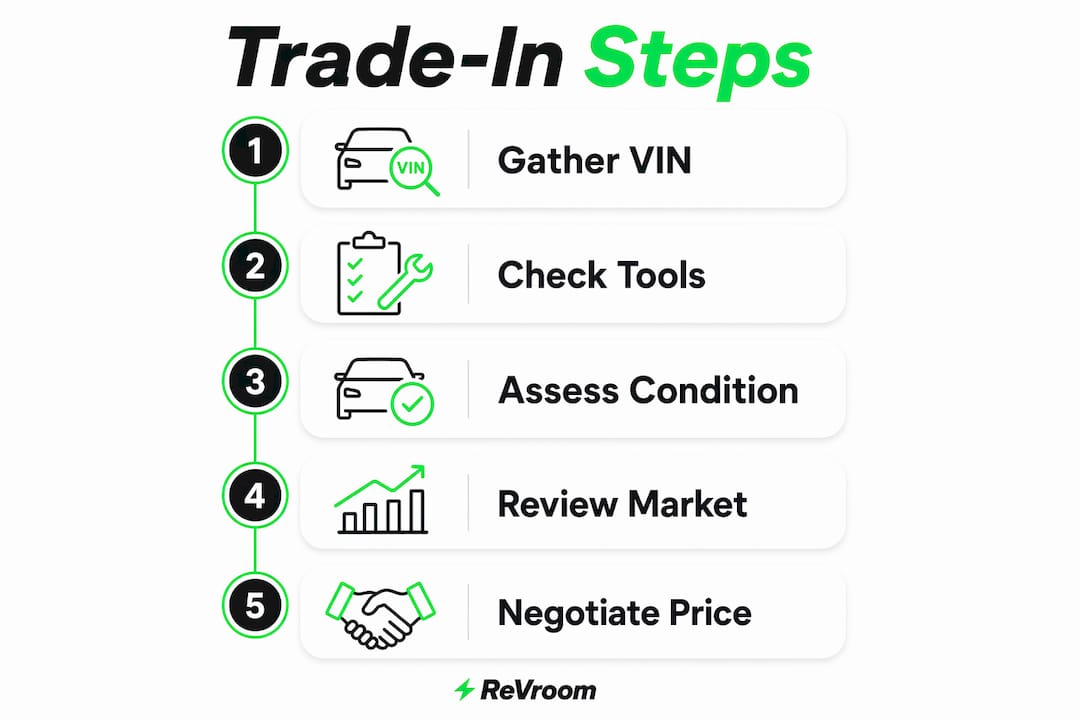
How to check your car’s trade-in value with the right tools
The most precise way to check your car’s value starts with your VIN. Your Vehicle Identification Number unlocks specific data about your exact trim level, factory options, and vehicle history, all of which shift the car valuation price up or down. Tools like Kelley Blue Book and Carfax use VIN lookups to pull this detail automatically, so you get a number tied to your actual car rather than a generic estimate.

Not every car value tool uses the same data, and that matters more than most people realize. Black Book explains that many consumer-facing valuation tools are powered by Black Book wholesale data but apply different real-time weighting, which is why two tools can return different numbers for the same vehicle. Kelley Blue Book leans on retail transaction data and regional trends. Manheim, the largest wholesale auto auction in the country, tracks what dealers actually pay for cars at auction. These are three distinct lenses on the same car, and each one tells you something different.
Here is a quick comparison of the major tools and what they actually measure:
| Tool | Data Source | Best Used For |
|---|---|---|
| Kelley Blue Book | Retail transactions, regional data | Consumer trade-in and private party estimates |
| Black Book | Wholesale auction data | Dealer-side pricing benchmarks |
| Manheim Index | Live auction results | Wholesale market trends and timing |
| Carfax | Vehicle history reports | Condition and history-adjusted valuations |
| CarMax / Carvana | Real purchase offers | Firm competing offers for negotiation |
Condition, mileage, and regional demand all move the needle significantly. A well-maintained SUV in Denver will fetch a different number than the same model with 20,000 more miles in a market flooded with that trim. Online values should be treated as negotiation baselines, not guaranteed offers. Actual dealer or buyer quotes are the highest-confidence numbers you can get.
Pro Tip: Run your VIN through at least three tools, Kelley Blue Book, Black Book, and one live offer platform like CarMax or Carvana, and compare the results side by side. The spread between them tells you exactly how much room you have to negotiate.
Does market timing affect your trade-in offer?
Yes, and most car owners never think about it. The wholesale used car market moves in cycles, and those cycles directly influence what dealers are willing to pay for your trade. The Manheim Used Vehicle Value Index rose 3.6% year-over-year in May 2026, reflecting rising wholesale prices that give sellers more leverage. When wholesale prices climb, dealers pay more to restock their lots, and that pressure trickles into better trade-in offers.
The flip side is equally real. Black Book’s market insights from early June 2026 show softening wholesale prices for cars and trucks following Memorial Day, with declining auction conversion rates across several segments. Declining conversion rates mean fewer cars are selling at auction, which signals weaker demand and gives dealers reason to tighten their trade-in budgets.
Segment demand matters too. SUVs and trucks consistently command stronger wholesale prices than sedans in most U.S. markets. If you are trading in a pickup or crossover, you are working with a more favorable market than someone trading in a compact car. Wholesale market indices anticipate retail market changes, so timing your trade-in with rising wholesale prices can meaningfully improve the offer you receive.
| Market Condition | Effect on Trade-In Offer | What to Do |
|---|---|---|
| Rising Manheim Index | Dealers pay more at auction, offers improve | Good time to trade in |
| Post-holiday softening | Wholesale demand dips, offers tighten | Consider waiting or negotiating harder |
| High SUV/truck demand | Strong segment pricing boosts offers | Trade in while demand holds |
| Oversupply of your model | Dealer has less incentive to pay up | Use competing offers as leverage |
Pro Tip: Check the Manheim Used Vehicle Value Index and Black Book’s weekly market insights before you visit any dealership. Five minutes of research tells you whether the market is working for you or against you that week.
How to maximize your trade-in through preparation and negotiation
Preparation is the single most controllable factor in your trade-in outcome. A clean, well-presented car signals to an appraiser that it has been cared for, which reduces their perceived reconditioning cost and raises their offer. You do not need to spend $2,000 on repairs. A thorough detail, fresh wiper blades, and a tire pressure check go a long way toward a better first impression.
Consumer Reports recommends securing online offers from CarMax, Carvana, Driveway, and TrueCar before visiting any dealership. These offers are real, time-stamped, and portable. Walking in with a written offer from CarMax changes the entire conversation because the dealer now has a floor they must beat or match to earn your business.
Here are the negotiation moves that actually work:
- Separate the transactions. Negotiate your new car price first, then introduce the trade-in. Dealers bundle the two to obscure where the money moves.
- Bring written competing offers. A firm offer from Carvana or CarMax is not a bluff. It is a number the dealer has to reckon with.
- Know your car’s condition honestly. Overstating condition leads to a lower revised offer after the physical inspection, which weakens your position.
- Do not mention your trade-in until the new car price is agreed. This prevents the dealer from adjusting one number to offset the other.
- Ask for the appraisal in writing before any deal discussion. A written appraisal is harder to walk back than a verbal one.
For deeper tactics on negotiating at the dealership, the specifics of how to handle counteroffers and bundled deal structures are worth reviewing before you go in. Dealers anchor trade-in discussions to wholesale economics, while you are thinking in retail terms. Competing offers close that gap.
What is trade-in equity and why does it matter?
Trade-in equity is the difference between what your car is worth and what you still owe on it. Positive equity means your car’s trade-in value exceeds your loan payoff amount. Negative equity means you owe more than the car is worth, and that gap does not disappear when you trade in. It gets rolled into your next loan, which raises your monthly payment and total cost.
Here is how to think through the numbers before you walk into a dealership:
- Get your exact payoff amount. Call your lender or check your online account for the current payoff figure, not the remaining balance. These are often different numbers.
- Get your trade-in value from at least two sources. Use Kelley Blue Book and one live offer platform to establish a realistic range.
- Calculate your equity position. Subtract the payoff amount from the trade-in value. A positive result is equity you can apply to your next purchase.
- Factor equity into your budget. Positive equity reduces your down payment need. Negative equity increases it.
- Negotiate the trade-in offer independently. A higher trade-in offer directly reduces negative equity, so push for every dollar.
Knowing your payoff vs. trade-in value before negotiating helps you avoid surprises that could negate the benefit of a higher trade-in offer. This is especially important when financing is involved. A dealer who offers $2,000 more on your trade-in while quietly adding $2,500 to the new car price has not done you any favors.
Pro Tip: Verify your exact payoff amount the day before your dealership visit. Payoff figures change daily as interest accrues, and an outdated number can throw off your entire equity calculation.
Key takeaways
Accurately valuing your car trade in requires combining multiple data sources, understanding wholesale market timing, and entering negotiations with competing written offers in hand.
| Point | Details |
|---|---|
| Trade-in vs. private sale | Trade-in value is always lower than private party value due to dealer reconditioning costs and profit margin. |
| Use multiple tools | Run your VIN through Kelley Blue Book, Black Book, and a live offer platform to establish a reliable range. |
| Time the market | Rising Manheim Index values signal better trade-in offers; post-holiday softening signals the opposite. |
| Negotiate separately | Always settle the new car price before introducing your trade-in to prevent bundled deal manipulation. |
| Know your equity | Calculate payoff vs. trade-in value before any dealership visit to avoid rolled-in negative equity surprises. |
The number most sellers leave on the table
Here is something we have seen play out repeatedly: sellers spend hours researching the car they want to buy and almost no time researching the car they are giving up. That imbalance costs real money. Trade-in value is not a fixed number. It fluctuates with market conditions, vehicle specifics, and regional pricing, and a dealer who senses you do not know that will offer you the floor.
The conventional wisdom says “just get a few quotes.” That is true but incomplete. The real move is understanding why those quotes differ. A CarMax offer and a dealership offer can vary by $1,500 or more on the same car, and the reason is almost always the dealer’s current inventory need and their read on your urgency. Walk in informed, and that read changes.
We also think the timing angle is genuinely underused. Most people trade in when they are ready to buy, not when the market is favorable. Those two moments do not always align, but when they do, the difference in your offer can be substantial. Watching the Manheim Index for even one month before trading in gives you context that most sellers simply do not have.
The bottom line is that patience and preparation together are worth more than any single negotiation tactic. Know your numbers, know the market, and let the competing offers do the talking.
— Revroom Editorial Team
See what your car is really worth before you commit
If you are exploring your options beyond a standard trade-in, Revroom is worth a look. Revroom is the only online marketplace built specifically for rebuilt title vehicles, and the transparency built into every listing gives you a real sense of how vehicle history affects market value. Whether you are buying your next car or just trying to understand how current car values are shaped by history and condition, Revroom puts that information front and center.
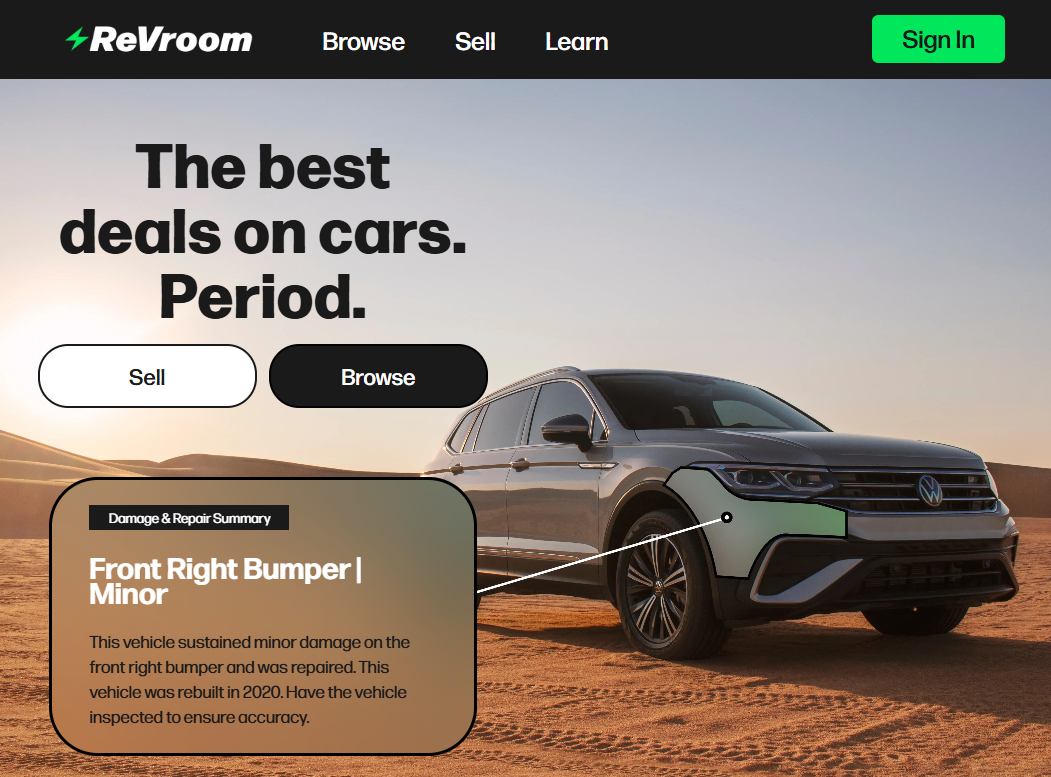
Every Revroom listing includes vehicle history information and photos so you can see exactly what you are evaluating. No guesswork, no buried surprises. If you want to explore the marketplace and see what well-priced, thoroughly documented vehicles actually look like, start there. Knowing what good value looks like on the buying side makes you a sharper negotiator on the selling side too.
FAQ
What is trade-in value vs. private party value?
Trade-in value is the amount a dealer offers for your car as part of a purchase deal, and it is typically lower than private party value. The difference reflects dealer reconditioning costs, inventory risk, and profit margin.
How do i value my car with a VIN?
Enter your VIN into Kelley Blue Book, Carfax, or Black Book to get a valuation tied to your specific trim, options, and vehicle history. VIN-based estimates are more accurate than make-and-model-only lookups.
Why do different car value tools give different numbers?
Each tool uses different data sources and weighting methods. Kelley Blue Book draws on retail transactions, while Black Book and Manheim track wholesale auction prices, so the numbers reflect different points in the market.
When is the best time to trade in a car?
Trading in when the Manheim Used Vehicle Value Index is rising gives you the best leverage, since dealers are paying more at auction and are more willing to offer competitive trade-in prices.
Does negative equity affect my trade-in deal?
Yes. Negative equity, meaning you owe more than your car is worth, gets rolled into your next loan if not paid separately. Knowing your exact payoff amount before negotiating prevents this from catching you off guard.
