


R Title Cars for Sale: Your Budget Buyer's Guide
May 19, 2026
TL;DR:
- Rebuilt title vehicles, which have passed safety inspections after significant repairs, often sell for 20% to 50% less than clean title cars. Their history varies from minor cosmetic damage to theft recovery, so thorough inspection and documentation are essential before purchase. Insurance and financing are both readily available, and a smaller buyer pool can give informed buyers real negotiating room.
If you’ve been eyeing r title cars for sale and wondering whether the savings are real or just a trap, you’re not alone. Rebuilt title vehicles carry a reputation that’s bigger and scarier than it deserves, and that gap between perception and reality is exactly where smart buyers find incredible deals. We’re talking about cars that have passed state-mandated inspections, been professionally repaired, and are ready to drive again, often for 20% to 50% less than their clean title counterparts. For parents buying a first car, students working with a tight budget, or anyone who just wants solid transportation without the premium price tag, this market is worth knowing.
Table of Contents
- Key takeaways
- 1. What r title cars for sale actually means
- 2. What to look for when evaluating rebuilt title vehicles
- 3. Top rebuilt title car types worth considering
- 4. Rebuilt title vehicles vs. clean title: side by side
- 5. When buying rebuilt title vehicles makes the most sense
- My honest take on buying rebuilt title cars
- Find your next car on ReVroom
- FAQ
Key takeaways
| Point | Details |
|---|---|
| Significant price savings | Rebuilt title vehicles typically sell at a 20% to 40% discount compared to equivalent clean title vehicles. |
| Inspections are mandatory but limited | State inspections confirm roadworthiness and verify parts, but do not guarantee complete mechanical or structural integrity. |
| Vehicle history varies widely | Rebuilt titles can stem from minor cosmetic events, hail damage, or theft recovery, not always severe incidents. |
| Insurance & financing are available | Full coverage from most major insurers and loans from banks and credit unions. A smaller buyer pool gives informed buyers negotiating room. |
| Transparency is your best tool | Reviewing full vehicle history reports and getting an in-person inspection before buying is non-negotiable. |
1. What r title cars for sale actually means
Let’s start at the beginning, because the term gets misused constantly. A rebuilt title is issued when a vehicle that was previously declared a total loss by an insurance company has since been repaired and passed a state safety inspection. Rebuilt title vehicles must pass mandatory inspections before the title is officially converted, covering roadworthiness and parts verification.
The vehicle histories that lead to a rebuilt title vary more than most people realize. Some cars earn it after a multi-car collision. Others get it after hail damage pocked the hood and roof. Some were stolen, recovered, and classified as total losses for logistical reasons rather than mechanical ones. The rebuilt title tells you a car has a history. It does not tell you the story was catastrophic.
2. What to look for when evaluating rebuilt title vehicles
Not every rebuilt title vehicle is equal, and that’s where buyers have to do their homework. The type of vehicle history involved matters enormously. Think of it on a spectrum.
- Cosmetic history (hail, paint defects, minor panel damage): Lower risk, often the best-value rebuilt titles on the market. Repairs are straightforward and well-documented.
- Collision history (moderate structural or frame involvement): Higher risk. Repair quality and documentation become critical. A professional pre-purchase inspection is a must.
- Flood history: The category that deserves the most caution. Flood damage carries hidden risks including progressive corrosion and electrical problems that can surface months after purchase. Avoid flood-history vehicles without thorough, verified documentation of every repair made.
On the documentation front, always ask for repair receipts. Documented repairs using OEM parts from qualified facilities meaningfully reduce risk and actually improve the car’s value perception. A history report covering the full title chain, damage cause, and mileage is another non-negotiable. A verified VIN report helps confirm the legitimacy of the rebuilt designation and flag anything the seller hasn’t mentioned. Our guide to buying a rebuilt car safely walks through the whole checklist.
Pro Tip: State inspections for rebuilt titles focus on safety and theft prevention. They do not fully evaluate mechanical or structural quality. Budget for an independent pre-purchase inspection from a trusted mechanic before any purchase.
3. Top rebuilt title car types worth considering
Certain vehicles consistently show up as strong options among r title cars for sale, especially for budget buyers who need reliability above all else.
- Toyota Camry and Corolla: The kings of the budget rebuilt title market. Their parts are widely available, repair costs are predictable, and their mechanical reputation is well-earned. Great picks for students and daily commuters.
- Honda Civic and Accord: Similar story. High parts availability, strong mechanic familiarity, and a resale floor that holds better than most. Civic especially suits first-time buyers.
- Ford F-150: Trucks with rebuilt titles can be exceptional work vehicles. A hail-history F-150 with a clean interior and solid mechanicals is exactly the kind of gem that gets overlooked at a fraction of the price.
- Hyundai Elantra and Sonata: Often underestimated, these models offer modern features at very accessible rebuilt title prices. Well-suited for parents shopping for a dependable commuter.
- Chevrolet Malibu and Equinox: Common, well-supported vehicles with active mechanic networks. Rebuilt title versions frequently appear in the 20% to 40% discount range.
- Subaru Outback and Forester: Popular with families and outdoor-minded buyers. Hail-history versions of these are particularly good finds because the all-wheel-drive mechanicals often go completely untouched.
- Lexus ES or Toyota Avalon: For buyers who want a premium experience on a budget, these luxury-adjacent sedans in rebuilt title form can deliver genuine value. Just budget extra for parts if anything mechanical ever needs attention.
For parents buying a first car for a teenager, the Corolla and Elantra offer reliability at accessible prices. For students, the Civic and Malibu hit the sweet spot of low cost and low drama. For buyers who need a workhorse, the F-150 with a cosmetic history is hard to beat.
4. Rebuilt title vehicles vs. clean title: side by side
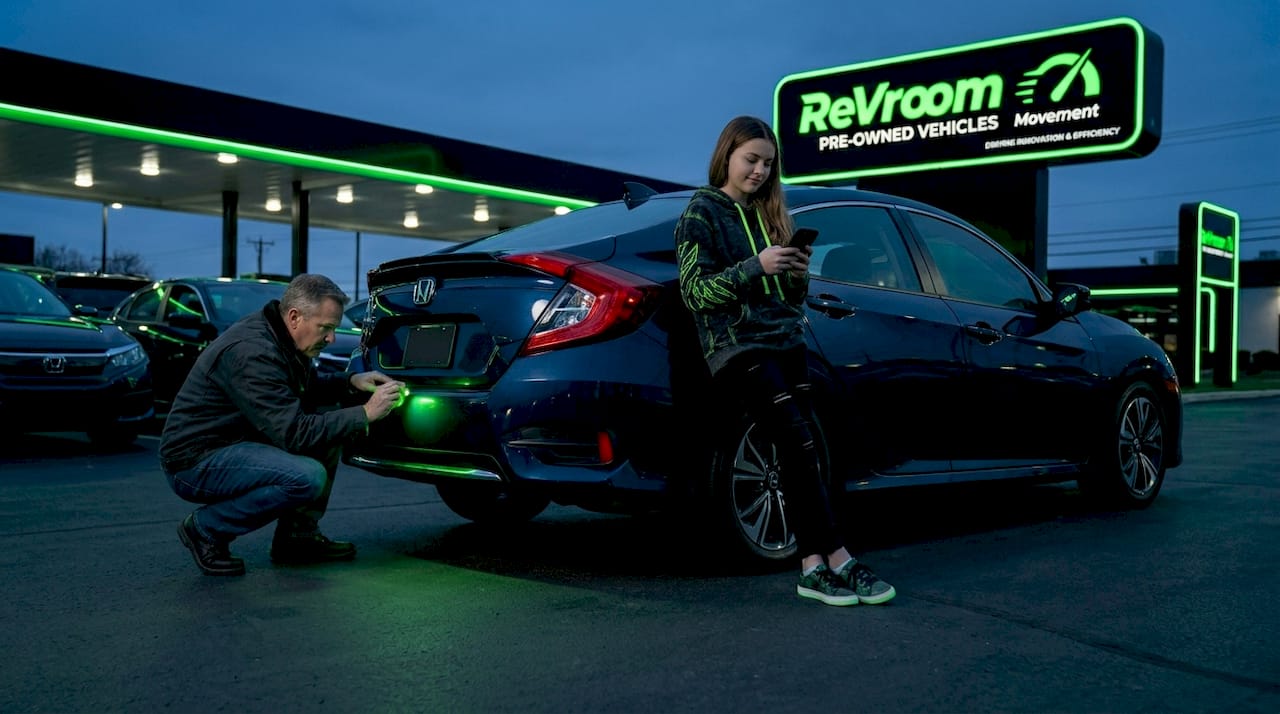
Before you decide, it helps to see the trade-offs laid out plainly.
| Factor | Rebuilt title | Clean title |
|---|---|---|
| Purchase price | 20% to 40% lower on average | Full market rate |
| Insurance availability | Full coverage from most major insurers | Broadly available |
| Insurance cost | Often comparable to clean title; compare quotes | Standard rates |
| Financing access | Available; banks and credit unions lend | Standard bank financing available |
| Resale value | Lower; mirrors the purchase discount | Standard market value |
| Competition from other buyers | Lower, due to a smaller buyer pool | High |
| Vehicle history visibility | Varies by seller; platforms like ReVroom show pre-repair photos | Often opaque unless you pay for a report |
Because rebuilt titles have a smaller buyer pool—many shoppers still avoid them out of outdated fear—there’s often less competition, which creates a surprisingly good situation for prepared buyers. Whether you pay cash or get pre-approved through a bank or credit union, less competition means more room to negotiate a price that simply isn’t possible in the clean title market.
On insurance, the landscape is better than most people believe. The narrative that rebuilt title cars are uninsurable is a myth. Most major insurers offer full coverage with no issue, and rates are often comparable to a clean-title car—a few carriers ask for a quick photo inspection, so compare a couple of quotes. Payouts on a total-loss claim reflect the rebuilt title market value, so understanding the actual discount on a vehicle before you buy helps you buy at a fair price. Our guide to insurance for rebuilt title cars covers it in detail.
Pro Tip: Before purchasing, ask the seller for documentation of the estimated market value discount on the vehicle. Platforms that surface this data transparently help you buy with confidence and insure appropriately.
One real factor to plan for: rebuilt titles carry a lower resale value, typically by the same 20% to 40% margin—the flip side of the discount you got buying. If you plan to drive a vehicle for years and resale isn’t your priority, this matters far less.
5. When buying rebuilt title vehicles makes the most sense
Rebuilt titles are not a fit for every buyer or every situation. Here’s a practical framework to guide your decision.
- You’re paying cash or pre-approved. A smaller buyer pool means less competition, so a prepared buyer—cash in hand or pre-approved through a bank or credit union—has more negotiating room.
- You need transportation, not an investment. If you’re buying a car to drive rather than to flip in two years, the resale value reduction is far less relevant.
- The vehicle history is minor. Hail repairs, cosmetic work, and theft recovery vehicles with full documentation are the sweet spots. Avoid flood-history vehicles without complete, verified repair documentation every time.
- You’ve gotten an independent inspection. Never buy a rebuilt title vehicle without having a qualified mechanic inspect it in person. Pay particular attention to the airbag system. Airbag replacements post-repair can be substandard or even disabled, which poses a real safety risk and must be specifically verified.
- You’ve reviewed the vehicle history report. Cross-reference the seller’s claims with an independent full vehicle history report before committing.
- You’ve lined up insurance for your specific vehicle. Call your insurer before you close the deal and get the coverage terms in writing. Most providers write full coverage on rebuilt titles with no issue, but confirming in advance removes any surprises.
When should you prioritize a clean title instead? If the vehicle history is unclear or missing documentation, or if you’re buying for a use case that demands resale liquidity in the short term, a clean title vehicle may serve you better. Also, passing a state inspection does not assure freedom from hidden frame damage or faulty safety-system repairs, so buyers who cannot or will not arrange an independent inspection should think carefully before proceeding.
My honest take on buying rebuilt title cars
We’ve spent a lot of time looking at this market, and the thing that keeps jumping out is how much of the fear around rebuilt titles comes from conflating two very different scenarios: a car with a serious undisclosed history problem and a car with a documented, minor, fully repaired history that happens to carry a specific title designation. Those are not the same thing, but they get lumped together constantly.
The buyers who get burned usually skipped something. They skipped the inspection. They skipped the documentation review. They bought on price alone and assumed the title designation was the only due diligence they needed. That’s where things go sideways, and those bad outcomes are not inherent to rebuilt title vehicles. They’re outcomes of skipping steps.
What we’ve come to genuinely appreciate is how the rebuilt title market rewards preparation. If you show up informed, with financing lined up or cash in hand, a mechanic ready, and a clear picture of what the vehicle history actually involves, you have real leverage that doesn’t exist anywhere else in the used car market. You can walk away from anything that doesn’t meet your standard, because the supply of good options keeps growing.
The perception of rebuilt titles is shifting. More buyers are recognizing that a car with a documented cosmetic history, properly repaired and inspected, is a smarter buy than a clean title car hiding undisclosed issues under a prettier label. That’s not a fringe opinion anymore. It’s where the smart money is going.
— ReVroom Editorial Team
Find your next car on ReVroom
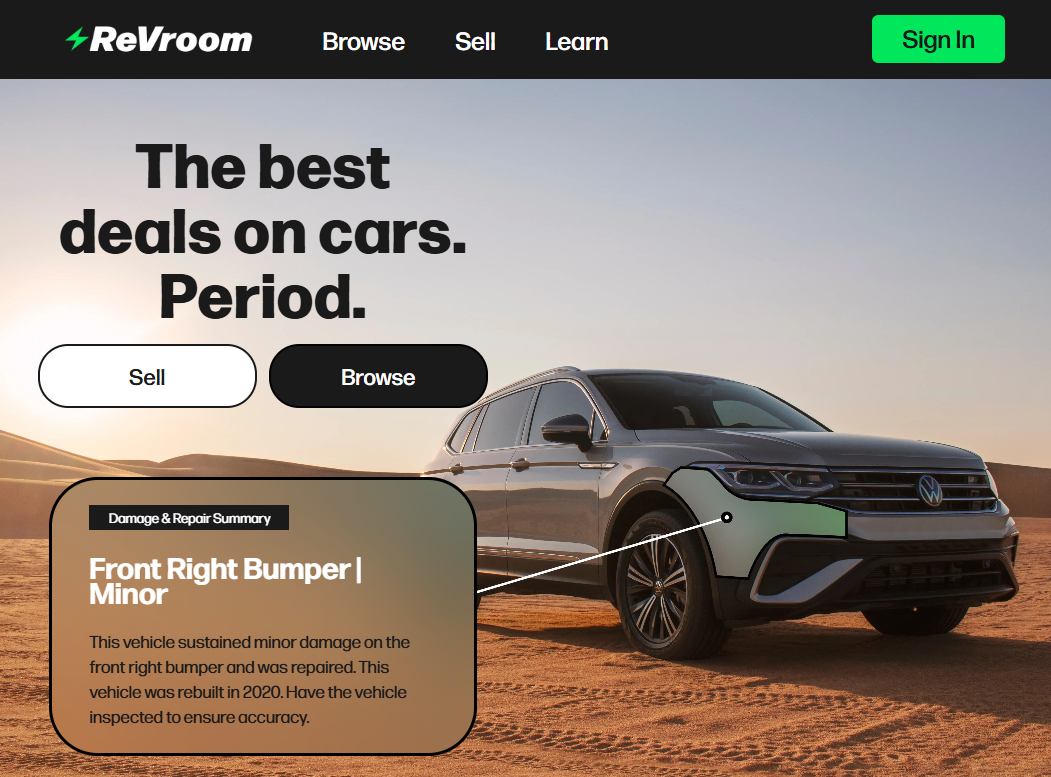
ReVroom is the only marketplace built specifically for r title cars for sale, and the difference shows the moment you start browsing. Every listing includes vehicle history information and photos of what the car looked like before it was repaired, so you can evaluate what actually happened without paying out of pocket for reports. That kind of transparency used to cost buyers an average of $150 per vehicle just to get started. On ReVroom, it comes with every listing. If you’re ready to stop guessing and start finding rebuilt title vehicles that are worth your time and money, browse rebuilt title cars on ReVroom today, or keep learning in our guides.
FAQ
What does r title mean on a car?
R title, or rebuilt title, means the vehicle was previously declared a total loss by an insurance company, has since been repaired, and passed a mandatory state safety inspection. It is now legally registered and drivable.
Are r title cars hard to insure?
No. Most major insurers offer full coverage on rebuilt title vehicles, and rates are often comparable to a clean-title car. A few carriers ask for a photo inspection, so confirming coverage terms before purchase is always a smart step.
How much cheaper are rebuilt title cars?
Rebuilt title cars typically sell at a 20% to 40% discount compared to equivalent clean title vehicles, depending on the type and extent of their vehicle history.
Should I get an inspection before buying a rebuilt title car?
Yes, always. A state inspection confirms roadworthiness but does not guarantee mechanical or structural integrity. An independent pre-purchase inspection from a qualified mechanic, with specific attention to the airbag system and frame, gives you the full picture.
Can I finance a rebuilt title car?
Yes. Banks and credit unions finance rebuilt title cars, with credit unions often the most flexible. Terms vary by lender, so it pays to compare. A smaller buyer pool can also give cash or pre-approved buyers extra negotiating room.
