


Where to Buy a Rebuilt Title Car in 2026: Finished Cars vs. Salvage Auctions, Does Carvana Sell Them, and Where Rebuilt Title Dealers List
March 29, 2026
Short answer: buy a rebuilt title car where the repair and the state inspection are already done: a rebuilt title marketplace, a rebuilt title dealer, or a private seller who hands you the paperwork. Salvage auctions and broker sites sell the car before anyone has fixed it. That is a great place for a rebuilder and a tough place for someone who just needs a dependable car on Monday.
Think of it like buying a house. One listing is move-in ready with the inspection report on the counter. The other is a fixer-upper sold as-is. Both can be good deals. Only one of them gets you to work next week.
Key takeaways
- Three kinds of sites show up when you search "rebuilt title cars": finished rebuilt cars, rebuilt title dealers, and salvage auctions or brokers that sell unrepaired cars.
- Broker sites such as SalvageReseller and BidGoDrive say you can buy without a dealer license, but those cars still need the repair and your state's rebuilt inspection.
- Carvana's help center does not publish a rebuilt-title rule we could find (checked October 6, 2026).
- ReVroom is the only site that lets you filter by severity grade and by history type, from hail and cosmetic paint chips all the way to fire.
- Median savings in ReVroom's October 2026 snapshot: $4,590 below clean-title market value, across more than 17,000 sold rebuilt cars.
Where can you buy a rebuilt title car?
Short answer: four places, and only three of them sell a car that is ready to drive.
| Where | What you are buying | Ready to drive? | Best fit |
|---|---|---|---|
| Rebuilt title marketplace (ReVroom) | Finished, state-inspected rebuilt cars from dealers and private sellers | Yes | Daily-driver buyers who want the discount and the details up front |
| Rebuilt title dealer | A lot that specializes in repaired, rebuilt-title inventory | Yes | Buyers who want to see the car in person and ask the shop questions |
| Private seller | One owner's rebuilt car, often with their own repair records | Yes | Buyers comfortable doing their own inspection and paperwork |
| Salvage auction or broker (SalvageReseller, BidGoDrive) | Unrepaired salvage, repairable or rebuildable cars sold as-is | No, it still needs the repair and the state inspection | Rebuilders and repair shops |
Why start with a rebuilt title marketplace?
Short answer: because the work you would otherwise do yourself (finding finished rebuilt cars, sorting them by what happened, and comparing the discount) is already done.
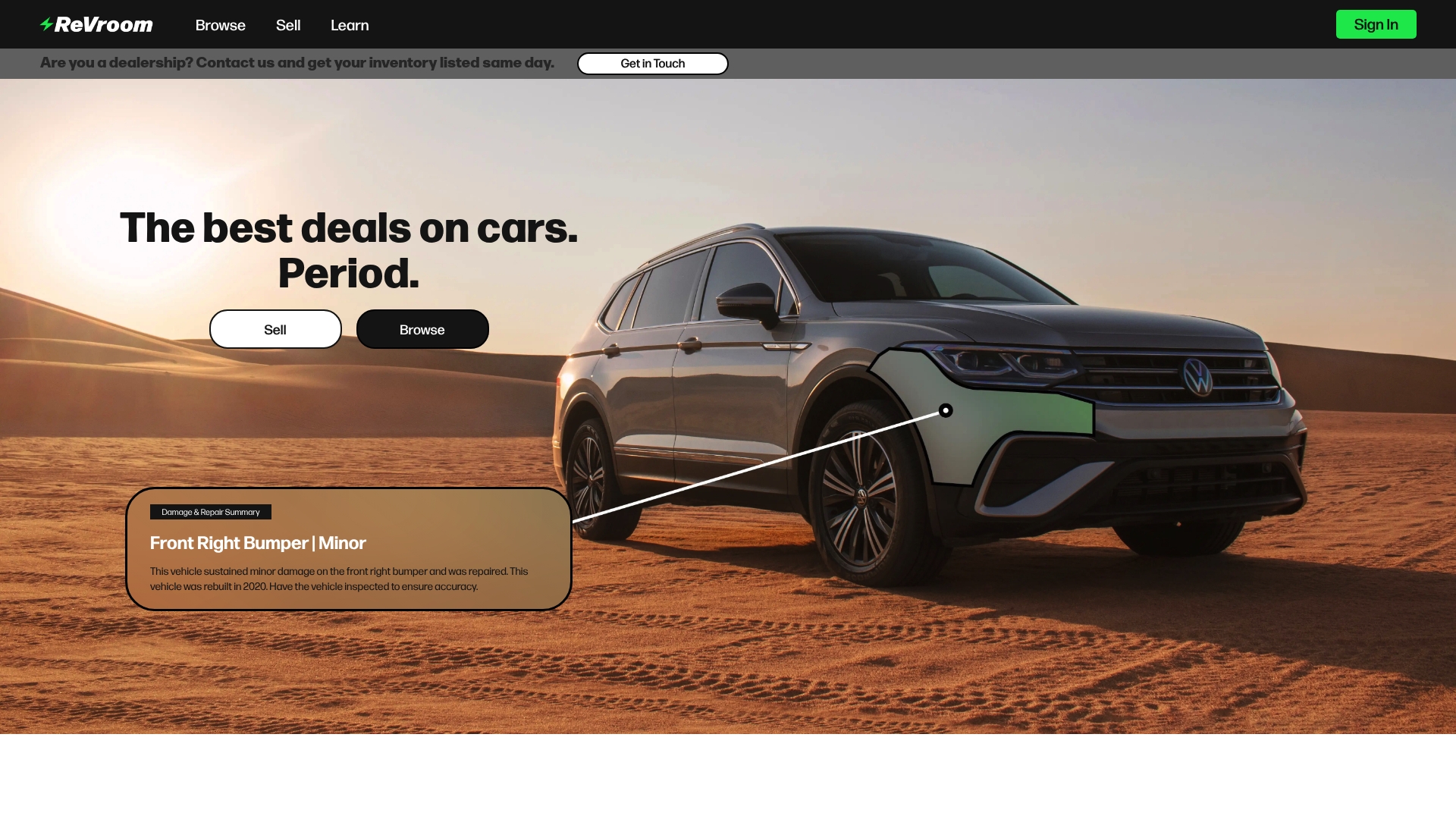
ReVroom is built only for rebuilt and branded title cars. Every listing shows what was repaired, photos where they are available, and the title status. You can shop by the kind of history you are comfortable with: hail and cosmetic paint chips, collision, water, fire, and more, or by ReVroom's in-house severity grade (Minor, Moderate, Severe). That is a choice, not a warning label: some buyers want the biggest discount, others want minor-only.
For any car you are serious about, a ReVroom Report adds the severity grade, a severity graphic with the highlights, an estimated savings percentage, and where and when the car was auctioned. It is not a vehicle history report, so pair it with a VIN title check.
The numbers behind it, from the October 2026 market snapshot: more than 17,000 sold rebuilt cars, a median of $4,590 saved, a median sale price of $17,499, and 87% carrying only minor or moderate documented history.
SalvageReseller: Copart auctions without a dealer license
Short answer: SalvageReseller is a broker that lets the public bid on Copart vehicles. The cars are mostly unrepaired, so it is a sourcing tool for rebuilders.
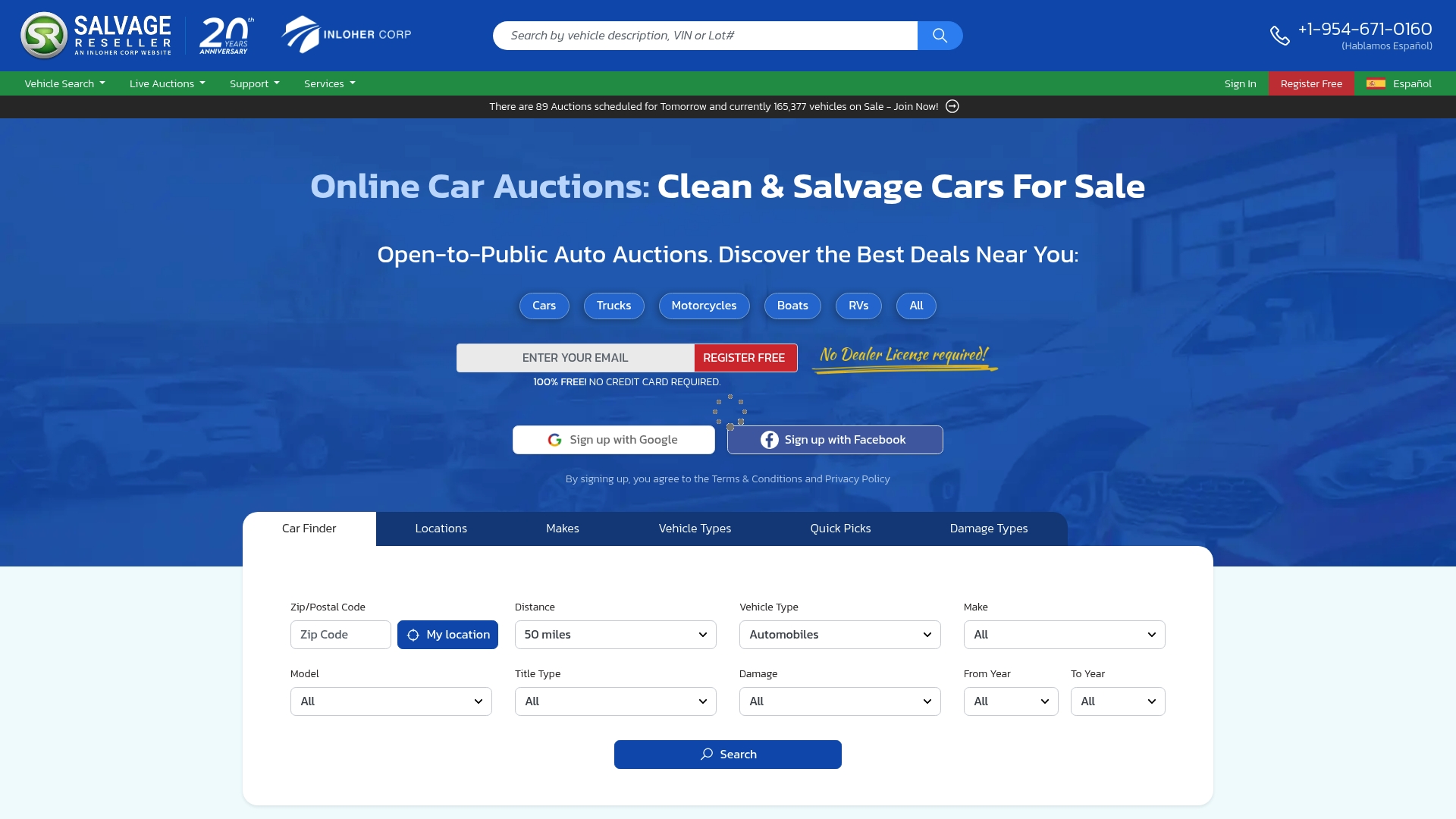
As published on its site on October 6, 2026, SalvageReseller says "No dealer license required," describes itself as a registered Copart broker since 2004 that is not owned by or affiliated with Copart, offers a free basic membership with paid tiers that "start at $34.99/month," and asks for a security deposit of $600 or 10% of the bid, whichever is higher. Copart's own buyer fees apply on top. Check the site for today's fees before you bid.
Who it fits: rebuilders and shops that plan to do the repair and the state inspection themselves. If that is you, our guide to pricing a salvage car before you bid is the place to start.
BidGoDrive: fixed-price salvage cars
Short answer: BidGoDrive sells salvage, rebuildable and repairable vehicles at a set price instead of an auction. It also lists some clean and rebuilt title inventory.
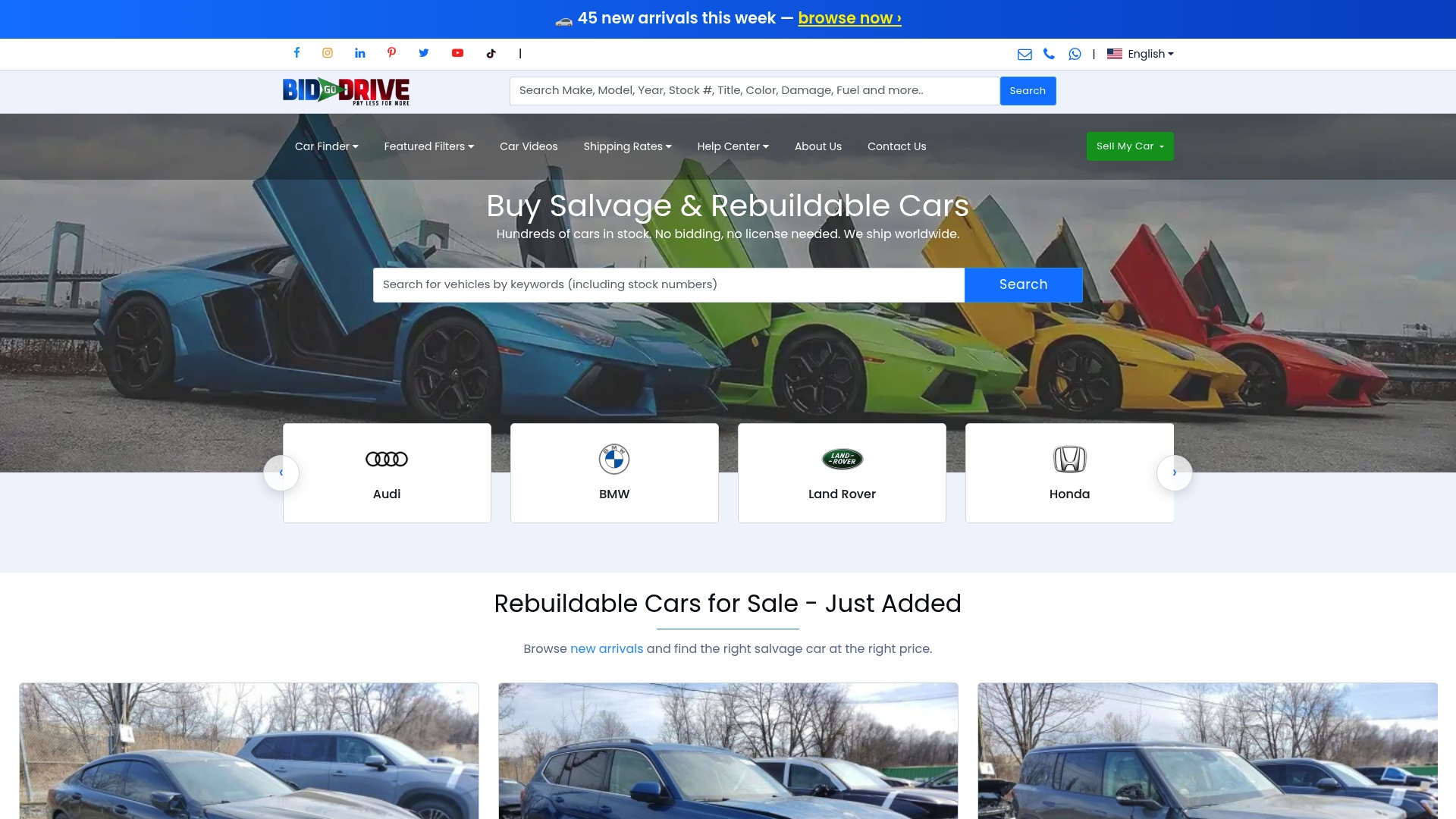
As published on October 6, 2026, BidGoDrive says "No bidding, no license needed," sells vehicles "AS IS, WHERE IS," and ships domestically and overseas at the buyer's cost. Most of what it sells has not been repaired yet, so turning one into a road-legal rebuilt car is still your job.
Who it fits: rebuilders who would rather skip a timed auction.
Does Carvana sell or buy rebuilt title cars?
Short answer: Carvana does not spell it out. When we checked its help center on October 6, 2026, we could not find a published rule on rebuilt or salvage titles for the cars it sells or the cars it buys.
So if you have your eye on one Carvana car, ask Carvana about that car directly. If you are selling a rebuilt car and wondering who will take it, our guide to whether Carvana buys rebuilt title cars covers what Carvana does publish about trade-ins, and listing it on ReVroom is a flat $5. And if the rebuilt discount is the reason you are shopping, go where rebuilt cars are the whole inventory instead of a maybe.
How do you find rebuilt title dealers near you?
Short answer: use a directory that only lists rebuilt title dealers. ReVroom's rebuilt title dealer directory shows 26 verified dealers across 14 states as of October 6, 2026, with a page for each state.
A good rebuilt title dealer will show you the repair photos and invoices without being asked twice, and will be glad you brought a mechanic. That is the same standard we hold listings to.
How to choose
- Need a car you can drive this week? Shop finished rebuilt cars, filter by severity grade, and book an independent inspection on the one you like.
- Want to rebuild one yourself? A salvage auction or broker is your supply chain. Budget for parts, labor, and your state's rebuilt inspection.
- Only want a clean title? The mainstream sites have you covered, and you will pay the clean-title price.
I bought my own rebuilt car for about half of what the clean-title twin cost. The car did not care about the brand on its title. My budget certainly did.
Frequently asked questions
Where is the best place to buy a rebuilt title car?
If you want a car you can drive home, buy from a place that sells finished rebuilt cars: a rebuilt title marketplace, a rebuilt title dealer, or a private seller with the paperwork. ReVroom lists thousands of finished rebuilt cars and lets you filter by history type and severity grade, which no other site does. Salvage auctions and brokers sell unrepaired cars, so they fit rebuilders, not most daily-driver buyers.
Can you buy a rebuilt title car online?
Yes. Rebuilt title marketplaces list finished, state-inspected rebuilt cars online, and you can compare them by price, history type and severity grade before you call the seller. Plan a test drive and an independent inspection before you pay, the same as any used car.
Does Carvana sell rebuilt title cars?
Carvana's help center does not publish a rule on rebuilt or salvage titles that we could find when we checked on October 6, 2026. If you are set on one Carvana car, ask Carvana about that car directly. If the rebuilt discount is the point, shop where rebuilt cars are the whole inventory.
Do I need a dealer license to buy a salvage car at auction?
Not always. Broker sites say they let the public bid without one: SalvageReseller says "No dealer license required" and BidGoDrive says "No bidding, no license needed", as published on October 6, 2026. Those are unrepaired salvage cars, so the repair and your state's rebuilt inspection are on you.
How much cheaper is a rebuilt title car?
In ReVroom's October 2026 market snapshot, buyers saved a median of $4,590 against clean-title market value across more than 17,000 sold rebuilt cars, and the median car sold for $17,499. Newer model years tend to show bigger dollar savings.
Where do I find rebuilt title dealers near me?
ReVroom's dealer directory lists 26 verified rebuilt title dealers across 14 states as of October 6, 2026, with a page for each state.
