


Rebuilt title car upgrades: cost, safety, and value
April 7, 2026
TL;DR:
- Rebuilt title vehicles can be legally modified after passing state inspections for personalization and upgrades.
- Upgrades are cost-effective, enhancing features like performance, tech, and aesthetics, but resale value remains capped.
- Transparency, proper documentation, and professional inspections are essential to ensure safety and maximize upgrade benefits.
Most people assume a rebuilt title car is a closed chapter. Fixed up, sold, done. What surprises a lot of buyers is that rebuilt title vehicles can be legally modified and upgraded after passing state-required inspections, opening the door to real personalization at a fraction of the cost of a clean title vehicle. The catch? Resale value, safety, and long-term satisfaction all hinge on how informed and transparent you are going in. This guide covers everything you need to know about upgrading rebuilt title cars, from the legal basics and budget math to expert strategies and the red flags worth watching.
Table of Contents
- What is a rebuilt title car and how upgrades fit in
- Budget benefits: Upgrading rebuilt title cars for savings and personalization
- Safety, transparency, and inspection: What every upgrader must know
- Expert strategies: Upgrading smartly for value and reliability (with real-world scenarios)
- A fresh take: Why rebuilt title upgrades reward the bold (and what others miss)
- Ready to upgrade? Find your ideal rebuilt project car
- Frequently asked questions
Key Takeaways
| Point | Details |
|---|---|
| Legal upgrades possible | Rebuilt title cars can be legally modified as long as they comply with safety and emissions standards. |
| Huge savings for buyers | Rebuilt title cars typically cost 20-60% less than clean title equivalents, making upgrades affordable. |
| Transparency is essential | Always demand NMVTIS reports, receipts, and mechanic evaluations before purchasing or upgrading. |
| Upgrade wisely for value | Smart, strategic upgrades and repairs can recoup up to 50% of their cost and improve reliability. |
| Project car potential | Rebuilt title vehicles are ideal for customization projects, rewarding buyers bold enough to focus on transparency and smart upgrades. |
What is a rebuilt title car and how upgrades fit in
A rebuilt title is given to a vehicle that was once declared a total loss by an insurance company, then professionally repaired and restored to a drivable, roadworthy condition. Once it passes a state-mandated inspection, it gets a new designation: rebuilt. That inspection is the key that unlocks the car’s second life, and yes, it also unlocks the door to upgrades.
If you want a deeper look at the basics, the rebuilt title car buyer’s guide is a solid starting point. But here’s the short version: once a vehicle clears that inspection, it is legally treated much like any other used car when it comes to modifications. You can upgrade it, personalize it, and make it your own.
Key fact: Legal modification is allowed on rebuilt title vehicles that have passed state-required inspections, as long as upgrades meet ongoing safety and emissions standards.
This is where rebuilt title cars become genuinely exciting for the right buyer. Think about what you can do with a well-priced vehicle and a little vision. Common upgrade categories include:
- Performance: Engine tuning, exhaust systems, cold air intakes, suspension lifts or lowering kits
- Technology: Aftermarket infotainment systems, backup cameras, Bluetooth integration, dashcams
- Aesthetics: Custom paint, body kits, new wheels and tires, window tinting
- Interior: Seat upgrades, sound deadening, custom floor mats, steering wheel swaps
- Safety add-ons: Upgraded brakes, better headlights, blind-spot monitoring systems
The important thing to remember is that your upgrades must still comply with your state’s safety and emissions requirements. Installing a modification that causes your car to fail its next inspection is a headache nobody wants. If you are drawn to the idea of building something truly custom, rebuilt title project cars offer a unique runway that clean title vehicles rarely can match, especially at this price point.
The legal path is straightforward: pass the rebuilt title vehicle inspection, stay compliant with state standards, and document everything you do to the car. That paper trail matters more than most buyers realize, and we will get into exactly why in a moment.
Budget benefits: Upgrading rebuilt title cars for savings and personalization
Here is where the math gets interesting. Rebuilt title cars sell at a 20 to 60% discount compared to clean title equivalents, and that gap in purchase price is exactly what makes upgrading so appealing. You are starting with more money in your pocket, which means more budget left over for the upgrades that matter to you.
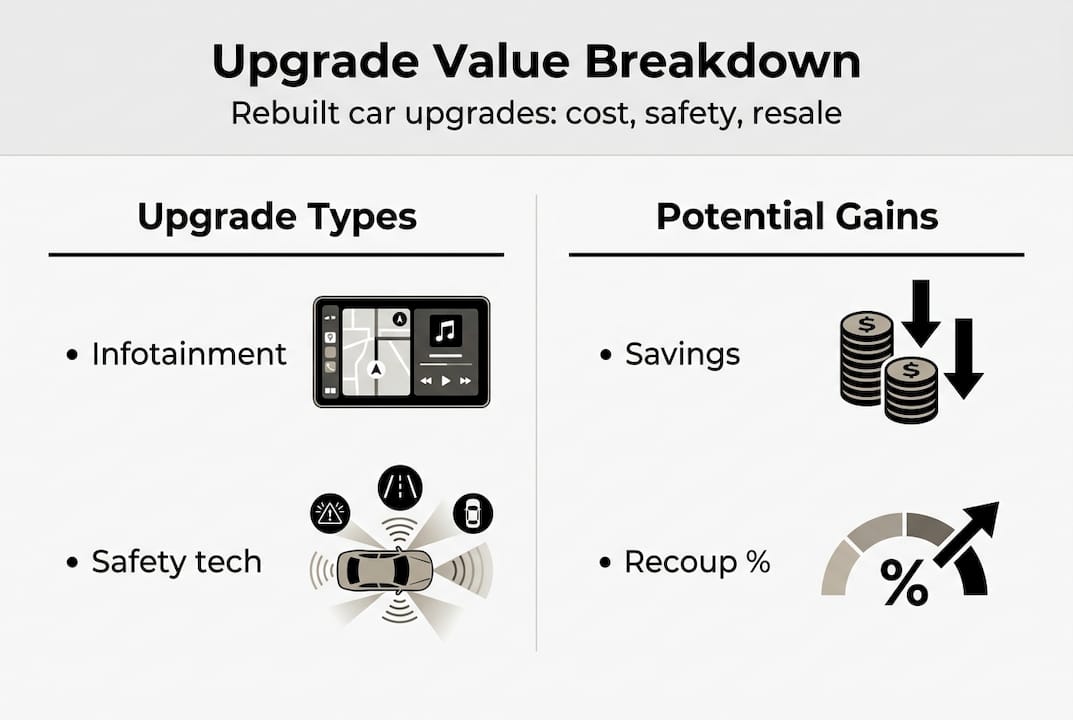
The value of rebuilt title cars is especially strong for buyers who prioritize personalization over resale, because you can invest in exactly the features you want without overpaying for a factory configuration you did not choose.
Here is a quick look at how common upgrades tend to perform in terms of cost and resale return:
| Upgrade type | Typical cost | Estimated resale recoup |
|---|---|---|
| Aftermarket infotainment | $300 to $1,200 | 20 to 40% |
| Suspension upgrade | $500 to $2,000 | 25 to 45% |
| Custom paint or wrap | $800 to $3,500 | 15 to 30% |
| Performance exhaust | $400 to $1,500 | 20 to 35% |
| Interior refresh | $200 to $1,000 | 10 to 25% |
Notice that no upgrade category promises a full return. That is not a flaw in the strategy, it is just reality. Rebuilt title cars carry a value cap. Even with excellent upgrades, the rebuilt brand on the title means the car will typically top out at 50 to 70% of what a comparable clean title vehicle would fetch. Understanding how to price a rebuilt title car before you invest in upgrades helps you set realistic expectations.
Personalization options that buyers tend to love most include:
- Custom wheel and tire packages that change the entire look of the car
- Sound system upgrades for a premium audio experience at a fraction of dealer pricing
- Tinted windows for privacy and heat reduction
- Lifted or lowered suspension for a distinct stance
- Tech integrations like wireless CarPlay or Android Auto
Pro Tip: Before spending a dollar on upgrades, pull a full vehicle history report through NMVTIS (the National Motor Vehicle Title Information System) and collect every repair receipt from the previous owner. Knowing exactly what the car went through and what was fixed gives you a clear picture of where to invest and what to leave alone. This transparency is your best tool, and the budget rebuilt car guide walks through how to use it effectively.
Safety, transparency, and inspection: What every upgrader must know
Savings and customization are exciting, but they mean nothing if the car is not safe. This is the part of the rebuilt title conversation that deserves the most attention, and it is also where transparency earns its keep.

Transparency in the rebuilt title world means having access to the full vehicle history, including what events led to the rebuilt designation, what repairs were made, and what parts were replaced. Full history transparency through NMVTIS reports, repair receipts, and a professional mechanic evaluation is the single most effective way to mitigate risk before and after you upgrade.
State inspections play a huge role here. Before a rebuilt title is issued, the vehicle must pass a state inspection that verifies it meets roadworthy standards. But that inspection is a snapshot in time. Once you start adding upgrades, you are responsible for making sure those modifications do not compromise the car’s safety systems.
Here are the key safety and transparency items every upgrader should check before and during the upgrade process:
- Confirm the airbag system was properly restored and is fully functional
- Verify that the frame has no unrepaired structural issues
- Check that all lighting, braking, and steering systems are in working order
- Ensure any new parts installed during the original repair are from reputable sources
- Review the state inspection certificate and confirm it is current
- Collect receipts and documentation for every upgrade you add
Knowing the rebuilt title risks upfront lets you approach the upgrade process with clear eyes. It is not about fear, it is about being the smartest person in the room.
Pro Tip: Always have a certified, independent mechanic inspect the vehicle before you buy and again before you begin any significant upgrade work. This is especially important for rebuilt title cars, where the repair quality can vary. A good mechanic will catch issues that no online report can flag. The rebuilt car safety guide has more detail on what to look for during that inspection.
Transparency also boosts resale value. Buyers who can see a full paper trail of repairs and upgrades are far more confident, and confidence translates to better offers. Document everything.
Expert strategies: Upgrading smartly for value and reliability (with real-world scenarios)
Now for the part where strategy separates the savvy buyers from the frustrated ones. Experts who work with rebuilt title vehicles regularly point out that low-risk vehicle histories are the most viable candidates for upgrade projects, while heavily repaired vehicles with complex structural histories carry more uncertainty.
Here is how upgrading a rebuilt title car compares to upgrading a clean title vehicle:
| Factor | Rebuilt title car | Clean title car |
|---|---|---|
| Starting purchase price | 20 to 60% lower | Full market value |
| Upgrade budget available | Higher (savings reinvested) | Lower (more spent upfront) |
| Resale ceiling | Capped by rebuilt brand | Higher ceiling |
| Transparency of history | Varies, requires diligence | Often easier to verify |
| Personalization potential | High, especially for projects | High, but costs more to start |
The rebuilt title car wins on entry cost every time. The trade-off is the resale ceiling, which is why the smartest buyers treat these vehicles as long-term keepers or personalization projects rather than short-term flips. Check out the rebuilt car worth guide if you are still weighing the overall value equation.
Here is a numbered approach for upgrading smartly:
- Research the vehicle history thoroughly before purchasing. Use NMVTIS and request all available repair documentation.
- Get an independent inspection from a certified mechanic who has no connection to the seller.
- Set a realistic upgrade budget based on the purchase price savings and your intended use of the car.
- Prioritize safety and function first. Brakes, tires, and lighting before aesthetics.
- Document every upgrade with receipts, photos, and installer information.
- Verify compliance with your state’s emissions and safety standards after each major modification.
- Reassess resale value periodically if you plan to sell, keeping the rebuilt title ceiling in mind.
Common mistakes to avoid include over-investing in cosmetic upgrades that do not improve safety or function, skipping the mechanic inspection to save money upfront, and ignoring state compliance requirements after modifications. Also worth reading: the rebuilt title cons article, which gives an honest look at the downsides so you go in with full information.
Pro Tip: Focus your search on vehicles with lower-risk histories like hail damage, paint defects, or theft recovery. These cars often have minimal structural concerns and offer the cleanest foundation for a rewarding upgrade project.
A fresh take: Why rebuilt title upgrades reward the bold (and what others miss)
The mainstream narrative around rebuilt titles tends to fixate on risk. And yes, risk is real. But the conversation almost always skips the part where a buyer with clear information, a solid inspection, and a thoughtful upgrade plan ends up with a vehicle that is genuinely better than what they could have afforded otherwise.
We have seen it time and again. A buyer finds a well-documented vehicle at a 40% discount, invests in the upgrades they actually want, and ends up with something far more personal and satisfying than any dealer lot could have offered at twice the price. That is not luck. That is strategy.
“Rebuilt titles offer savings and customization value ideal for projects, but risks require transparent documentation and a pro mechanic evaluation.”
The buyers who thrive in this space treat transparency as their superpower, not their burden. They ask for everything, document everything, and upgrade with intention. The rebuilt project car advantages are real for the buyer who is willing to do the work. The risk narrative exists for a reason, but it does not tell the whole story.
Ready to upgrade? Find your ideal rebuilt project car
You have done the reading. You know the legal landscape, the budget math, the safety checklist, and the upgrade strategies that actually work. The next step is finding the right vehicle to bring your vision to life.

ReVroom is the only rebuilt title vehicle marketplace built specifically for this market. Every listing includes vehicle history information and photos of what the car looked like before it was repaired, so you can evaluate each option with the transparency you need. No guessing, no $150 in third-party reports, no surprises. Just the information you need to find a great vehicle and start planning your next upgrade. Browse current listings and see what is waiting for a second chapter.
Frequently asked questions
Are aftermarket upgrades legal on rebuilt title cars?
Yes, standard aftermarket upgrades are legal as long as the car passed state inspection and the modifications comply with your state’s safety and emissions standards.
How much can upgrades increase resale value for rebuilt titles?
Upgrades can recoup 20 to 50% of their cost on resale, but the rebuilt title brand generally caps total value recovery at 50 to 70% of a comparable clean title vehicle.
What history documents should buyers get for upgraded rebuilt cars?
Buyers should secure NMVTIS reports, upgrade receipts, and an independent mechanic evaluation to confirm the vehicle’s history and the quality of all repairs and modifications.
Are rebuilt title upgrades risky for reliability or insurance?
They can carry more complexity, so ensure proper repairs and full documentation are in place and confirm your upgrades pass state inspection before seeking insurance coverage.
