


Rebuilt title cars for sale: buyer's guide to savings in 2026
March 10, 2026
You’ve heard rebuilt title cars are unsafe or impossible to insure. That’s false. Rebuilt titles indicate a vehicle was repaired and inspected after being deemed a total loss, then certified roadworthy by state authorities. Understanding rebuilt titles unlocks 20% to 50% savings on quality vehicles when you know what to look for. This guide explains rebuilt titles, insurance and financing realities, market value, common myths, and smart vetting steps to help you buy confidently and affordably.
Table of Contents
- What Does ‘Rebuilt Title’ Mean?
- Financial Impact And Market Value Of Rebuilt Title Cars
- Insurance Coverage For Rebuilt Title Vehicles
- Common Misconceptions And Myths About Rebuilt Title Cars
- Buyer Verification And Due Diligence: How To Vet A Rebuilt Title Car
- Explore Affordable Rebuilt Title Cars With ReVroom
- Frequently Asked Questions About Rebuilt Title Cars
Key takeaways
| Point | Details |
|---|---|
| Rebuilt title definition | A vehicle repaired after total loss and certified roadworthy through state safety inspections. |
| Typical savings | Rebuilt title cars cost 20% to 50% less than clean title equivalents. |
| Insurance & financing available | Full coverage is available from most major insurers (rates often comparable), and banks and credit unions finance rebuilt titles. Compare quotes and lenders. |
| Common myths debunked | Rebuilt titles are not inherently unsafe, uninsurable, or unfinanceable when properly vetted. |
| Buyer due diligence | History reports, damage photos, and mechanic inspections are essential for safe purchases. |
What does ‘rebuilt title’ mean?
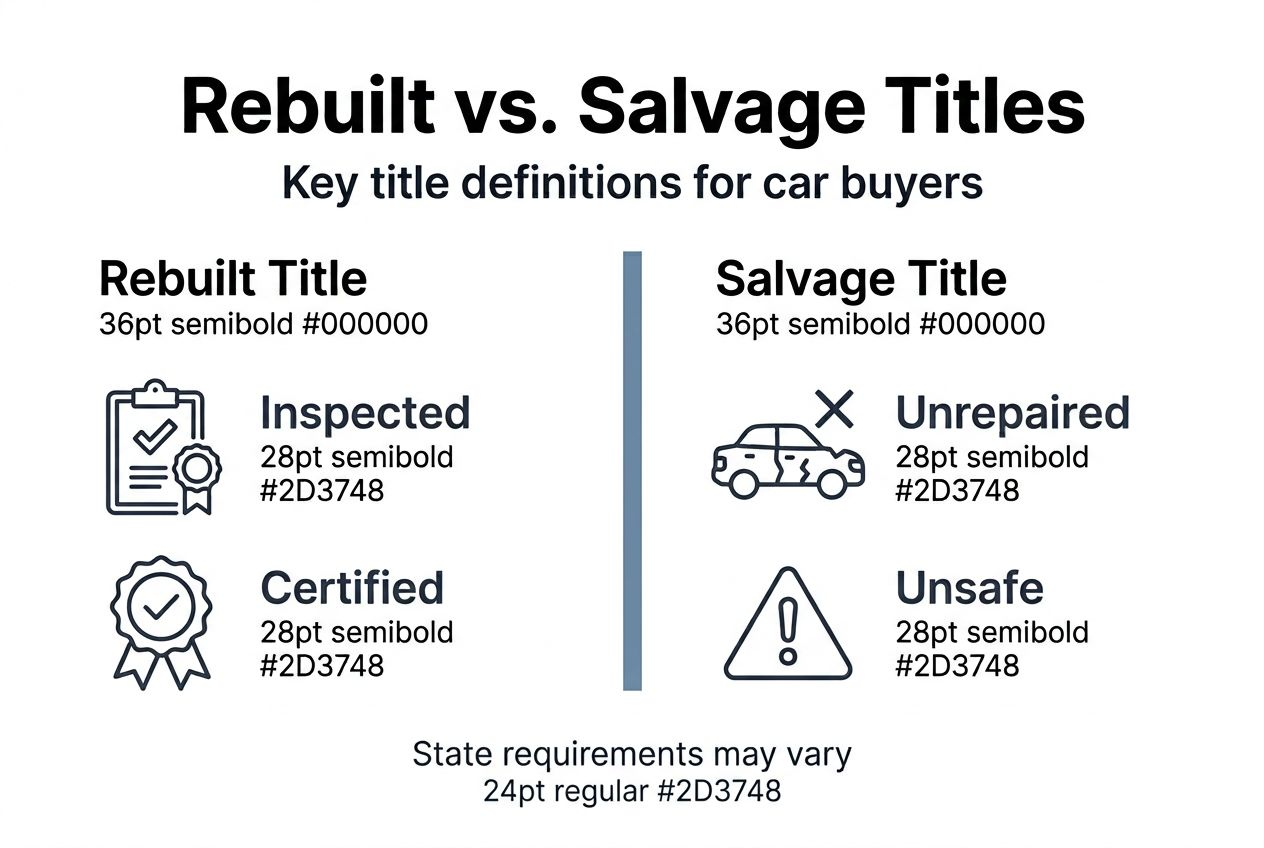
A rebuilt title identifies a vehicle that was declared a total loss by an insurance company, then repaired and passed rigorous state safety inspections. Once certified, the vehicle receives a rebuilt title legal designation allowing it to return to the road legally. This permanent title branding appears on all future title documents and sales records, providing transparency about the vehicle’s history.
Every state requires structural, mechanical, and emissions inspections before granting rebuilt status. Inspectors verify frame integrity, safety systems, brake function, lights, steering, and emissions compliance. These standards ensure vehicles meet roadworthiness requirements before returning to public roads.
Terminology varies by state. Some use “rebuilt,” others say “reconstructed” or “branded.” The legal implications remain consistent: the vehicle experienced a significant event requiring disclosure, was repaired, and passed inspection. Key aspects include:
- Permanent branding that cannot be removed or converted back to clean title status
- Full disclosure required in all sales transactions and registration transfers
- State certification confirming the vehicle meets safety and legal road use standards
- Documentation of repair work and inspection results maintained in official records
Understanding this salvage-versus-rebuilt distinction helps buyers recognize that rebuilt titles indicate repaired, inspected, and road-ready vehicles, not damaged cars awaiting repair.
Financial impact and market value of rebuilt title cars
Rebuilt title vehicles typically sell for 20% to 50% less than equivalent clean title models. This discount reflects market perception and the permanent disclosure of past events. For budget-conscious buyers, these savings can mean affording a newer model year, lower mileage, or better features than clean title alternatives within the same budget.
The reduced market value stems from a few factors: a smaller buyer pool, lower resale value throughout the vehicle’s life, and some buyers avoiding rebuilt titles entirely due to misconceptions. Financing, worth noting, is not one of those factors—banks and credit unions do lend on rebuilt titles.
These value dynamics create opportunities for informed buyers. Lower initial cost means smaller loans, reduced depreciation impact, and more car for your money. The financial benefits include:
- Immediate savings of thousands compared to clean title equivalents
- Access to premium brands and features otherwise out of reach
- Lower sales tax and registration fees based on reduced purchase price
- Reduced depreciation loss since the vehicle already carries discounted value
| Cost Factor | Clean Title | Rebuilt Title | Savings |
|---|---|---|---|
| Average sedan purchase price | $25,000 | $15,000-$20,000 | $5,000-$10,000 |
| Sales tax (6% rate) | $1,500 | $900-$1,200 | $300-$600 |
| Insurance (annual estimate) | $1,200 | ~$1,200 | Comparable |
Balancing savings against the honest trade-offs requires careful evaluation. Consider your budget, financing needs, insurance, and long-term ownership plans. Rebuilt titles offer substantial value when you prioritize transparency and conduct proper due diligence.
Insurance coverage for rebuilt title vehicles
Insurance for rebuilt title cars is widely available. Liability coverage is offered by most major insurers at competitive rates, meeting legal requirements in all states, and full comprehensive-and-collision coverage is available from most major insurers too—not just liability.
Rates are often comparable to a clean-title version of the same car. A few carriers price a rebuilt title a little differently or ask for a quick photo inspection before writing full coverage, which is exactly why comparing two or three quotes pays off. When you provide your inspection report and repair records, the process is smooth.
Insurer policies vary, so shopping around is worthwhile. Key insurance considerations include:
- Liability coverage available from most major insurers at standard rates
- Full coverage available from most major insurers; a few ask for a photo inspection
- Rates are often comparable to a clean-title car—compare a couple of quotes
- Multi-insurer quotes reveal the best rate and coverage for your specific vehicle
Get our rebuilt title insurance guidance before purchasing to understand real costs. Request quotes with the VIN to get accurate premiums, and ask about documentation like an inspection report or repair records that make coverage even easier.
Pro Tip: Contact at least a couple of insurers before buying any rebuilt title car. Get written quotes with the specific VIN so you know your rate going in—some insurers price a rebuilt title more favorably than others.
Common misconceptions and myths about rebuilt title cars
Myths about rebuilt titles prevent buyers from exploring affordable options. The biggest misconception? That rebuilt title cars are inherently unsafe or impossible to insure. This simply isn’t true. State inspections verify safety before granting rebuilt status, and full coverage is readily available from most major insurers.
Another common myth suggests all rebuilt title vehicles suffered severe collision incidents. Reality is different. Many rebuilt titles result from minor incidents like hail or theft recovery that don’t compromise structural integrity. Paint defects, minor flood exposure, or theft recovery can trigger total loss declarations based on repair costs versus vehicle value, not severity of issues.
Some buyers believe rebuilt title branding can be removed or hidden. False. Title branding is permanent and appears on all official documents. Attempts to conceal rebuilt status constitute fraud. Legitimate sellers disclose title status upfront. Understanding these rebuilt title car myths helps you avoid missing good deals:
- Rebuilt titles don’t always indicate severe structural or mechanical problems
- Properly repaired and inspected rebuilt vehicles can be safe and reliable
- Full insurance coverage is widely available, with rates often comparable to a clean-title car
- Financing is available through banks and credit unions—credit unions often the most flexible
- Many rebuilt title vehicles come from minor incidents not involving collision at all
Separating fact from fiction lets you evaluate rebuilt title cars objectively. Don’t let myths cost you missed opportunities. Research each vehicle individually based on its specific history and condition.
Buyer verification and due diligence: how to vet a rebuilt title car
Smart vetting separates quality rebuilt title vehicles from risky purchases. Start by obtaining comprehensive vehicle history reports from multiple sources. Reports reveal previous incidents, title history, ownership records, and sometimes repair details. Cross-reference reports to catch inconsistencies or missing information.
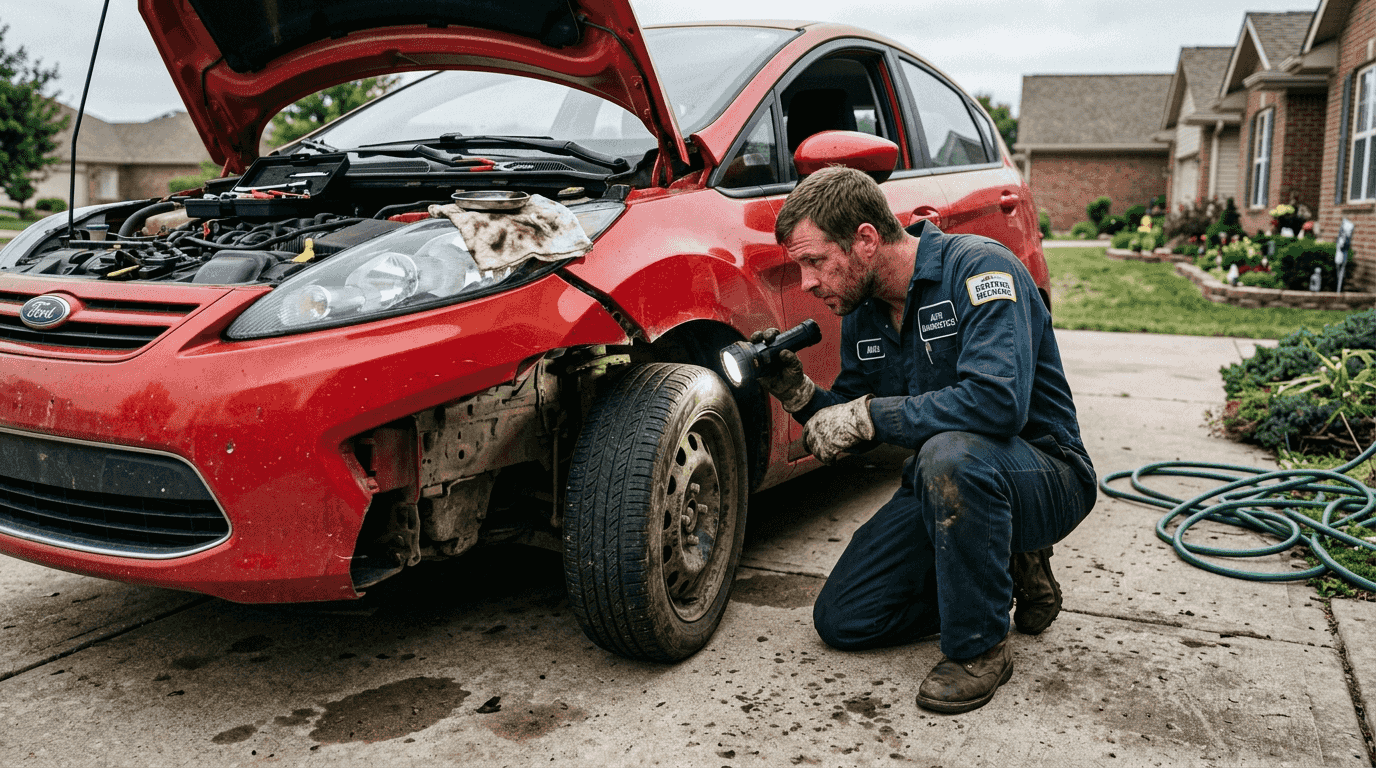
Request detailed photos showing the vehicle before and after repairs. These images help you understand the extent of previous issues and repair quality. Look for structural work, paint quality, panel alignment, and parts replacement. Photos provide context that reports alone cannot.
Arrange an in-person inspection with a certified mechanic experienced in vetting rebuilt title cars. Mechanics can identify poor repairs, hidden issues, or safety concerns. They check frame integrity, suspension alignment, electrical systems, and overall workmanship. This step is non-negotiable for safe purchasing.
Verify state inspection and certification documents confirming rebuilt title status. These prove the vehicle passed required safety checks. Request copies of repair invoices and parts receipts when available. Documentation builds confidence in repair quality and transparency.
Pro Tip: Walk away from any seller who refuses to provide history reports, damage photos, or inspection access. Legitimate sellers of quality rebuilt title vehicles welcome scrutiny because transparency proves their vehicle’s value and builds buyer confidence.
Follow this verification process:
- Obtain vehicle history reports from at least two different providers to cross-reference information
- Review detailed photos of the vehicle before and after repair work was completed
- Schedule inspection with a certified mechanic familiar with rebuilt title evaluation criteria
- Verify state inspection certification and request copies of official documentation
- Examine repair invoices, parts receipts, and any warranty information from repair facilities
- Test drive the vehicle in varied conditions to assess handling, braking, and mechanical function
- Confirm insurance availability and cost with your chosen provider before finalizing purchase
Thorough vetting protects you from fraudulent sellers, incomplete repairs, or vehicles with ongoing issues. Understanding rebuilt title basics combined with careful inspection ensures you find quality vehicles that deliver value safely.
Explore affordable rebuilt title cars with ReVroom
Ready to find your next vehicle and save thousands? ReVroom is the only marketplace built specifically for rebuilt title cars, offering complete transparency that traditional platforms can’t match. Every listing includes accident history details and photos showing what the vehicle looked like before repairs, giving you the information needed to make confident decisions.

ReVroom eliminates the $150 average cost buyers typically spend on reports and investigations per vehicle. Browse quality rebuilt title options with upfront disclosure, saving time and money while finding reliable transportation. Expert guides and resources help you understand rebuilt titles and evaluate vehicles confidently. Transparent listings, verified history information, and buyer-focused tools make ReVroom your partner in smart, affordable vehicle shopping. Keep learning in our guides as you shop.
Frequently asked questions about rebuilt title cars
Can a rebuilt title ever be changed back to a clean title?
No. Rebuilt title branding is permanent and cannot be removed or converted back to clean title status. This permanent designation ensures transparency in all future sales and transfers. Any attempt to conceal or alter title branding constitutes fraud and carries serious legal consequences.
Are rebuilt title cars safe to drive?
Rebuilt title vehicles that passed state safety inspections meet legal roadworthiness standards. However, repair quality varies, so safety depends on thorough vetting. Always obtain history reports, review repair documentation, and have a qualified mechanic inspect the vehicle before purchasing to verify proper repairs and structural integrity.
Why do rebuilt title cars cost so much less than clean titles?
The 20% to 50% discount reflects permanent title branding, market perception, and lower resale value. A smaller buyer pool creates pricing opportunities for informed buyers willing to conduct proper due diligence and verification. Financing is available through banks and credit unions, so it isn’t a barrier.
Will my insurance company cover a rebuilt title car?
Yes. Most insurers offer liability and full comprehensive-and-collision coverage for rebuilt title vehicles, with rates often comparable to a clean-title car. A few carriers ask for a photo inspection, so shop a couple of providers using the specific VIN before purchasing to lock in the best rate.
What should I look for when inspecting a rebuilt title vehicle?
Examine frame integrity, panel alignment, paint quality, and mechanical function. Request photos of pre-repair condition and detailed repair invoices. Have a certified mechanic inspect structural repairs, suspension, brakes, electrical systems, and overall workmanship. Verify state inspection certification and test drive in varied conditions to assess handling and performance.
How do I know if a rebuilt title car was properly repaired?
Review comprehensive history reports, state inspection documents, and repair invoices from certified facilities. Request before and after photos to assess repair extent. Hire an independent mechanic experienced with rebuilt title evaluation to inspect structural work, parts quality, and overall repair standards before finalizing any purchase.
