


Restored vs Salvage Title—What Parents Must Know
February 25, 2026
Every parent faces that moment when they must balance safety, reliability, and affordability for a college student’s first car. Understanding the difference between a restored title and a salvage title is key to protecting both your budget and your peace of mind. In Utah, the right title status means the difference between a car that’s road-ready and one that’s still off-limits. This guide breaks down what these terms truly mean so you can make a confident, informed choice.
Table of Contents
- Restored Title vs Salvage Title Defined
- Key Steps From Salvage To Restored
- Legal And Safety Requirements In Utah
- Financial Impact And Resale Considerations
- How Transparency Makes Buying Safer
Key Takeaways
| Point | Details |
|---|---|
| Distinction Between Titles | A salvage title indicates a vehicle is unsafe to drive due to significant damage, whereas a rebuilt title means the vehicle has been repaired and is legally roadworthy. |
| Importance of Inspection | Vehicles with a rebuilt title must pass a state inspection to ensure they meet safety and mechanical standards before they can be registered. |
| Financial Implications | Rebuilt title vehicles typically cost 20-40% less than clean titles, but they also have lower resale values, impacting long-term financial decisions. |
| Need for Documentation | Always request documentation such as repair records and inspection certificates when considering a rebuilt title vehicle to ensure its history and condition are transparent. |
Restored Title vs Salvage Title Defined
Parents shopping for vehicles understand the difference between these two titles—even if the insurance company’s jargon makes it sound like they’re the same thing. They’re not. Not even close.
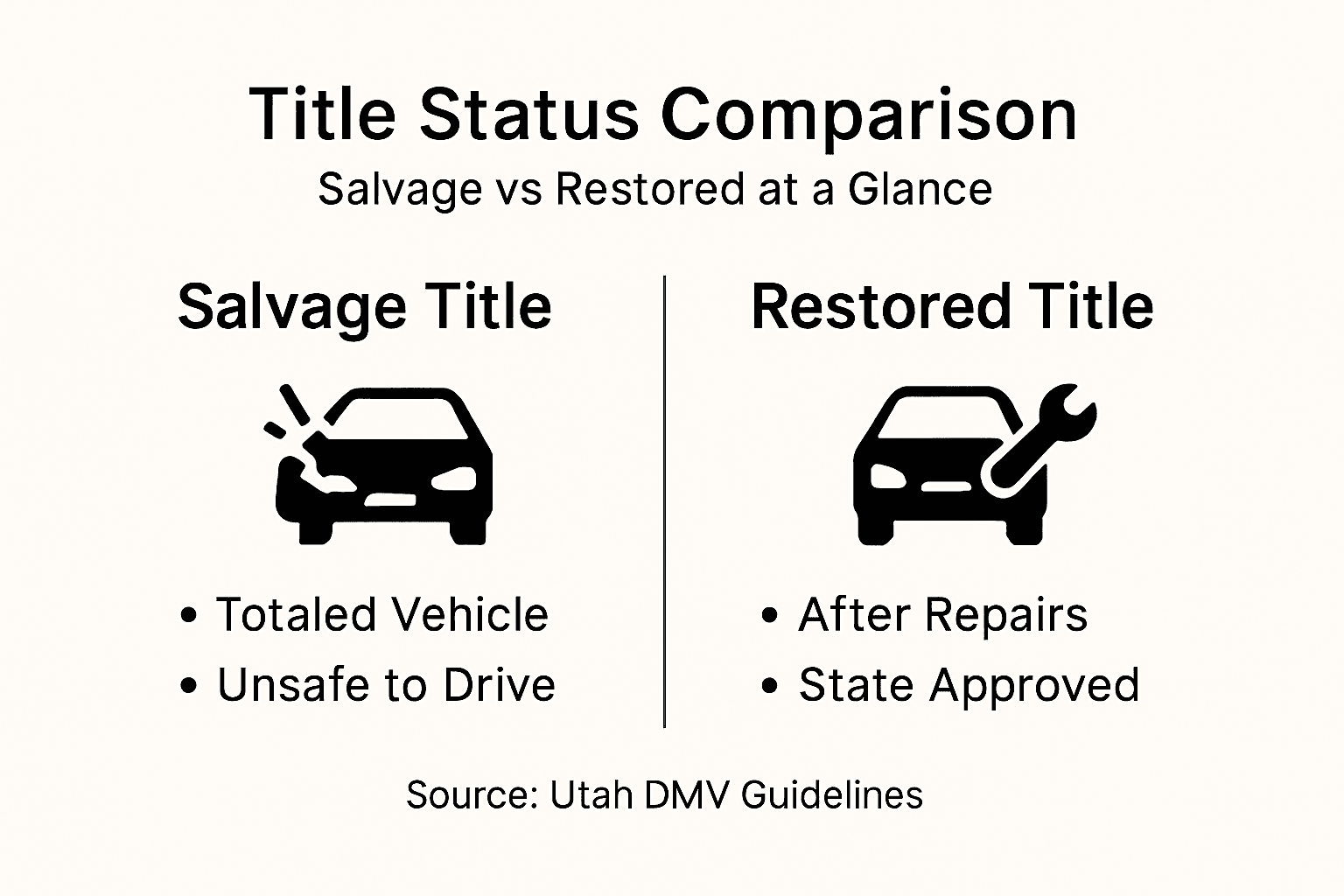
A salvage title is assigned to vehicles that have sustained major damage and were declared a total loss by an insurance company. These cars are not safe or legal to drive in their current state. Salvage title designation indicates substantial damage that typically includes frame damage, flood damage, theft recovery, or accidents severe enough that repair costs exceed the vehicle’s value.
A rebuilt title (also called a restored or reconstructed title) is what happens after a salvage vehicle goes through repairs and passes a state safety inspection. The vehicle is legally roadworthy again and can be registered and driven.
The Critical Distinction
Here’s where most people get confused:
- Salvage title = Vehicle is currently not safe to drive; damaged and awaiting repairs
- Rebuilt title = Vehicle has been repaired and inspected; now deemed safe and legal to operate
A salvage title is a warning label. A rebuilt title is a clean bill of health after repairs.
Think of it like a broken arm in a cast. The cast doesn’t mean the arm is permanently damaged—it means it’s being fixed. Once the cast comes off and physical therapy is complete, you’re back to normal activities. A rebuilt title works the same way.
Why This Matters for Utah Parents
If you’re buying a vehicle for your college student, understanding this distinction protects your budget. Rebuilt vehicles can cost up to 50% less than clean title cars because they have documented history. You get the transparency to make informed decisions.
Salvage title vehicles cannot be legally driven and are not something ReVroom works with. When you see rebuilt title cars on the market, you’re looking at vehicles that have already passed inspection and are road-ready.
Key Differences at a Glance
| Aspect | Salvage Title | Rebuilt Title |
|---|---|---|
| Current Status | Not safe to drive | Safe and legal to drive |
| Repairs | Pending or in progress | Completed and inspected |
| Insurance Status | Cannot be insured until rebuilt | Can be insured |
| Driving Legal | No | Yes |
| Next Step | Must go through repairs and inspection | Ready for immediate use |
This distinction is why doing your due diligence matters. You want rebuilt, not salvage. ReVroom’s listings provide accident history photos and transparent information so you can evaluate exactly what repairs were made and feel confident in your purchase.
Pro tip: When evaluating rebuilt title vehicles for your student, ask for proof of the state safety inspection that converted it from salvage to rebuilt—this document confirms the vehicle met all safety requirements.
Key Steps From Salvage to Restored
Converting a salvage title to a rebuilt title isn’t magic—it’s a structured process that involves repairs, documentation, and inspection. Understanding these steps helps parents evaluate whether a vehicle has truly been restored to roadworthy condition.
The journey from salvage to restored follows a clear path. It starts with comprehensive repairs and ends with state approval. Every step is designed to ensure the vehicle is safe before it hits the road again.
The Restoration Process
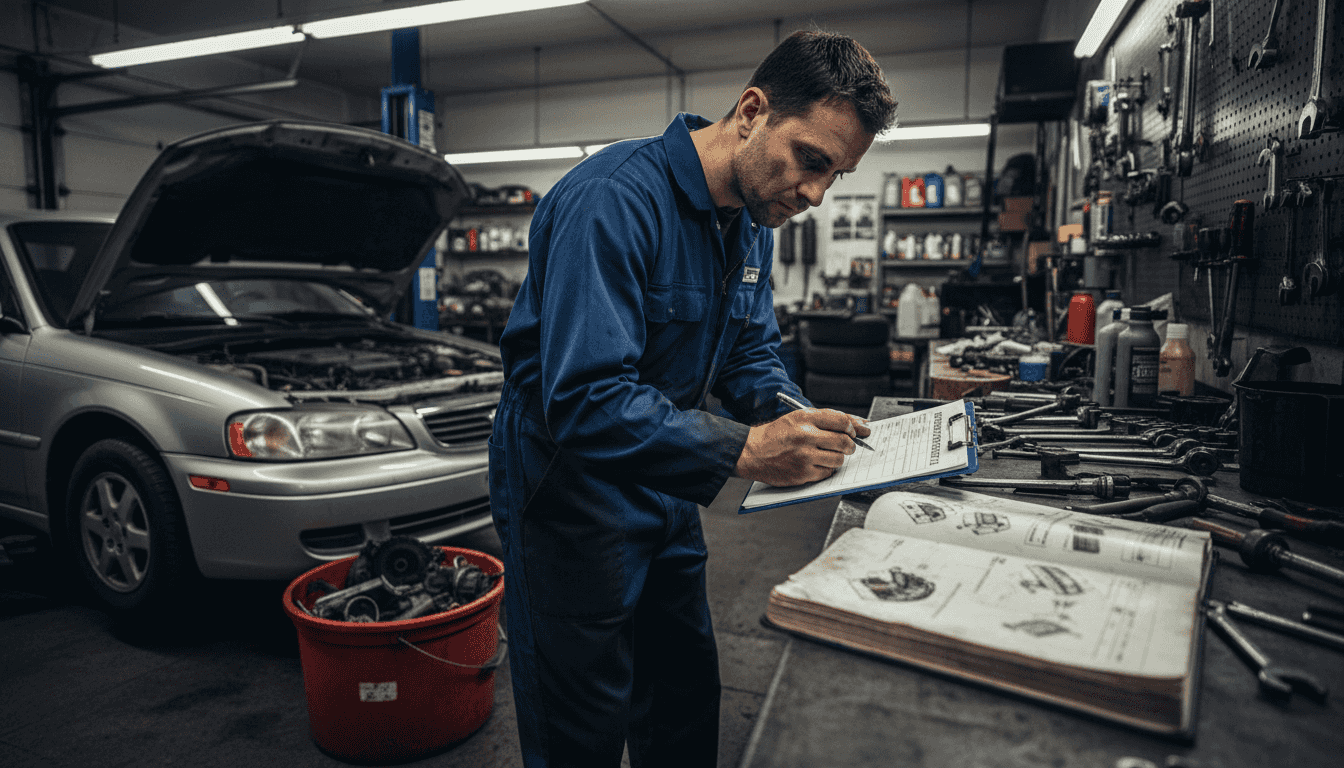
Here’s what happens when a salvage vehicle becomes rebuilt:
-
Repair all damage - The vehicle undergoes complete repairs addressing all documented damage from the salvage declaration.
-
Collect detailed documentation - Repair receipts for parts and labor must be gathered and organized for the state inspection process.
-
Document the damage history - Before-and-after photographs show exactly what was wrong and how it was fixed.
-
Pass the state inspection - A certified inspector verifies all repairs meet legal and safety standards.
-
Submit to the DMV - Once approved, the state issues a rebuilt or restored title.
The rebuilt title proves the vehicle has been vetted by the state—not just repaired by the owner.
What Makes an Inspection Critical
The state inspection is the gatekeeper. An inspector checks that repairs are done correctly and the vehicle is mechanically sound. This isn’t a light review—it’s a detailed safety evaluation that directly impacts whether the vehicle can be legally driven.
For parents in Utah, this means you can trust that any rebuilt title vehicle has passed rigorous state standards. You’re not buying a vehicle based on someone’s promise; you’re buying one that met official requirements.
Documentation Matters More Than You Think
Keep repair receipts, photographs, and inspection records. These documents prove the vehicle’s history and justify its value. When you buy a rebuilt title vehicle, ask for documentation showing what was repaired and by whom.
Licensed rebuilders typically maintain detailed records. This transparency is exactly what buying repaired salvage title cars safely requires from a buyer’s perspective.
ReVroom listings include accident history information and photos from before repairs, giving you the full picture without guessing or wondering what happened.
Why This Process Exists
The salvage-to-rebuilt conversion process protects both buyers and the road. It ensures damaged vehicles don’t end up on the street in unsafe condition. It creates transparency about a vehicle’s history so buyers make informed decisions.
Pro tip: Request proof of the state safety inspection from any rebuilt title vehicle you’re considering—this document is your confirmation that the car has officially been deemed safe and roadworthy.
Legal and Safety Requirements in Utah
Utah has specific rules about rebuilt title vehicles. As a parent buying a car for your college student, understanding these requirements protects both your investment and your child’s safety on the road.
Utah law requires that any vehicle with a salvage title must pass inspection before it can be legally driven. This isn’t optional—it’s the foundation of the rebuilt title system in the state.
What Utah Requires for Rebuilt Titles
The state has clear standards that rebuilt vehicles must meet:
- Rigorous safety inspection - All rebuilt vehicles must pass a state safety and compliance evaluation
- Pollution control compliance - The vehicle must meet Utah’s emission standards
- Mechanical safety standards - Brakes, steering, suspension, and all safety systems must function properly
- Documentation submission - Repair records and inspection certificates must be provided to the state
- Registration eligibility - Only after passing inspection can the vehicle be legally registered
Utah’s inspection requirements exist to ensure rebuilt vehicles are genuinely safe, not just cosmetically repaired.
Why These Standards Matter to You
When you buy a rebuilt title vehicle in Utah, you’re buying one that has been vetted by the state. This means the vehicle has already undergone the scrutiny you’d otherwise have to pay for yourself. Utah’s rebuilt title legal requirements ensure consistency across the marketplace.
The inspection process isn’t a rubber stamp. State inspectors verify actual repairs and functionality, not just paperwork. Your student can drive with confidence knowing the vehicle met official safety standards.
Insurance and Registration in Utah
Once a vehicle passes inspection and receives a rebuilt title, pollution control and mechanical safety requirements are officially certified. This makes insurance and registration straightforward—many insurance companies have no problem covering rebuilt title vehicles, especially with documented proof of passing state inspection.
Registration is handled like any other vehicle once you have the rebuilt title. No special hoops. No extra fees. Just normal vehicle registration.
What Documentation You Need
When evaluating a rebuilt title vehicle, request these documents from the seller:
- State inspection certificate proving it passed
- Repair records showing what was fixed
- Receipts for parts and labor
- Photographs of the vehicle before and after repairs
ReVroom listings provide accident history information and before-repair photos, giving you transparency without having to track down documents yourself.
The steps below summarize required documentation to confirm a rebuilt vehicle’s safety and history:
| Document Type | What It Shows | Why It Matters |
|---|---|---|
| State Inspection Certificate | Vehicle passed safety checks | Confirms legal roadworthiness |
| Repair Receipts | Details of repairs and parts used | Proves work was completed professionally |
| Before & After Photos | Visual evidence of damage and repair quality | Builds buyer confidence, prevents fraud |
Moving Forward Confidently
Utah’s rebuilt title requirements protect buyers like you. They create accountability and transparency. When you see a rebuilt title vehicle that meets these standards, you’re looking at a vehicle that has proven it’s safe and roadworthy.
Pro tip: Before purchasing, contact the Utah Division of Motor Vehicles directly to verify the inspection certificate is legitimate and still valid—this takes five minutes but confirms the vehicle truly meets state safety standards.
Financial Impact and Resale Considerations
Buying a rebuilt title vehicle means making smart financial decisions upfront. The savings are real, but understanding the full picture—including resale value and insurance—helps you avoid surprises down the road.
Rebuilt title vehicles typically cost 20-40% less than comparable clean-titled cars. For a college student’s first vehicle, that’s substantial savings. But cheaper upfront doesn’t automatically mean cheaper overall.
Here are the typical costs and resale impacts for clean versus rebuilt titles:
| Title Type | Average Purchase Price | Insurance Coverage | Resale Value Impact |
|---|---|---|---|
| Clean Title | Highest, full market value | Standard coverage, broad options | Holds value best upon resale |
| Rebuilt Title | 20-40% lower than clean title | Often insurable, may have coverage limits | Sells for less, fewer buyers |
The Savings Are Real—But Have Limits
Here’s where the math gets interesting:
- Lower purchase price - You save thousands compared to clean title equivalents
- Reduced insurance premiums - Some insurers offer lower rates on rebuilt vehicles
- No loan depreciation stress - Less money borrowed means less financial risk
- Future resale challenges - The vehicle will be worth less when you eventually sell it
- Limited buyer pool - Fewer people want rebuilt titles, which affects demand
The real question isn’t whether you save money buying rebuilt—it’s whether those savings justify accepting lower resale value later.
Resale Value Drops Significantly
When your student eventually sells the car, they won’t recover what you paid. Rebuilt title vehicles have significantly reduced resale value compared to clean title cars with identical mileage and condition.
A rebuilt title is permanent. Even if the repair was minor, the title brand stays with the vehicle for its entire life. This limits your buyer pool when it comes time to sell.
Insurance Considerations Matter More Than You Think
Unlike the myth that rebuilt title vehicles are impossible to insure, most insurance companies will cover them. However, they may charge slightly more or offer limited coverage options. Shopping around is essential.
The real issue: some insurers offer reduced payouts on rebuilt vehicles because they calculate payouts based on actual market value. Since rebuilt vehicles are worth less, insurance payouts are proportionally lower.
The Math for Budget-Conscious Parents
Let’s say you buy a rebuilt vehicle for $8,000 instead of $13,000. That’s $5,000 saved immediately. When you sell it in four years, you might recover $4,000 instead of $7,000. The net savings drops from $5,000 to $2,000, but that’s still savings.
Trade-In Complications
If your student wants to trade in the vehicle at a dealership, dealers are often reluctant to accept rebuilt titles. They prefer clean title trade-ins. This can complicate upgrading to a different vehicle later.
Making the Decision
Rebuilt titles make financial sense for budget-conscious parents who plan to keep the vehicle for several years. The longer your student drives it, the more the initial savings justify the lower resale value.
Pro tip: Calculate your true cost by comparing purchase price minus expected resale value, then compare that net cost to clean title alternatives to see real financial benefit over the vehicle’s life.
How Transparency Makes Buying Safer
Transparency is your shield against bad deals and hidden problems. When you know exactly what happened to a vehicle before you buy it, you can make decisions based on facts, not fear or sales pitches.
Rebuilt title vehicles come with documented history—this is actually an advantage. You know what was repaired, by whom, and how thoroughly. Clean title vehicles often hide their past.
What Transparency Actually Protects You From
Transparency in rebuilt title vehicles serves several critical purposes:
- Prevents fraud - Sellers cannot hide or misrepresent the vehicle’s history
- Enables informed decisions - You see before-and-after photos and repair documentation
- Builds buyer confidence - You know exactly what you’re purchasing
- Reduces risk - No surprises after purchase regarding the vehicle’s condition
- Protects resale - Documentation proves proper repairs were completed
Transparency doesn’t guarantee perfection—it guarantees honesty.
How Legal Requirements Protect You
States require clear title branding and vehicle history disclosure for rebuilt vehicles. This isn’t optional—it’s law. Sellers must inform you of the vehicle’s salvage history, and that information becomes part of the permanent title record.
This legal protection means you cannot accidentally buy a rebuilt vehicle thinking it’s clean. The title tells the whole story.
What You Get With Transparent Listings
ReVroom listings include information that typically costs you $150 per vehicle to research elsewhere:
- Detailed accident history information
- Photographs of the vehicle before repairs
- Documentation of repairs completed
- State inspection verification
- Complete vehicle history reports
You see the damage that occurred and the repairs that fixed it. No guessing. No hidden surprises waiting for your student on the highway.
The Real Value of Before-and-After Photos
Photographs tell you more than words ever could. When you see exactly what the vehicle looked like before repair, you can assess whether the damage was minor or severe. You can judge the quality of the repair work yourself.
This visual transparency prevents fraud and helps you compare actual condition against the asking price.
Why Secrecy Costs You Money
Without transparency, buyers spend hundreds investigating vehicles individually. They hire mechanics, purchase reports, and still don’t know everything. With transparency built into listings, that cost and uncertainty disappear.
Your dollar stretches further when you’re not paying for hidden investigation costs or discovering problems after purchase.
Making Confidence-Based Decisions
Confidence comes from information. When you have documented repair history, state inspection approval, and before-and-after photos, you’re making decisions based on facts. You’re not hoping the vehicle is okay—you know it is.
This is exactly what smart tips for safe online shopping car buyers emphasize: knowledge is protection.
Pro tip: Request and carefully review all available documentation before making an offer—repair receipts, inspection certificates, and damage photos take minutes to verify but prevent expensive problems later.
Unlock Smart Savings and Safety with ReVroom for Your College Student
Understanding the difference between rebuilt and salvage titles is the first step toward making an informed car purchase for your student. The key challenge many parents face is navigating complex insurance jargon, verifying safety through inspections, and finding transparent vehicle histories without spending hundreds on reports. You want a safe, roadworthy car that stretches your dollar and protects your family on the road.
At ReVroom, we solve these exact problems with a marketplace built specifically for rebuilt title vehicles. Each listing includes detailed accident histories and before-repair photos so you can see exactly what your prospective car looked like before it was fixed. This transparency empowers you to choose with confidence while saving significantly compared to clean-title alternatives. Because rebuilt vehicles on ReVroom have already passed state inspections, you get peace of mind knowing the car your student drives meets safety standards.

Find the best rebuilt title vehicles for your family now by visiting ReVroom’s rebuilt title marketplace. Dive into detailed histories and save up to half the price of traditional used cars. Ready to go further and make a smarter, safer purchase? Start your search today and discover how your dollar and your car can both go the distance at ReVroom. For the ultimate guide to navigating rebuilt titles, explore our article on Rebuilt vs Salvage Title Explained and learn how we keep you informed every step of the way.
Frequently Asked Questions
What is the difference between a salvage title and a rebuilt title?
A salvage title indicates that a vehicle has sustained major damage and is not legal or safe to drive. In contrast, a rebuilt title means the vehicle has been repaired, passed state inspection, and is now safe and legal to operate.
Why should parents be concerned about purchasing a vehicle with a rebuilt title for their child?
Understanding the distinction between salvage and rebuilt titles is crucial for parents, as a rebuilt title can represent significant savings on a vehicle. However, it’s essential to verify the vehicle’s repair history and inspection status to ensure safety and reliability.
What documentation should I request for a rebuilt title vehicle?
When considering a rebuilt title vehicle, you should ask for the state inspection certificate, repair records, receipts for parts and labor, and before-and-after photographs of the vehicle. This documentation confirms the repairs made and the vehicle’s roadworthiness.
How does the resale value of a rebuilt title vehicle compare to a clean title vehicle?
Rebuilt title vehicles typically sell for 20-40% less than clean title cars due to their history. Buyers are often hesitant, which can limit demand and impact future resale value significantly.
Recommended
- Salvage vs Reconstructed Title: What It Means for Utah Families | ReVroom
- Salvage Title Defined: Complete Guide for Buyers | ReVroom
- Rebuilt Title Versus Salvage Title: Complete Guide | ReVroom
- The Essential Guide to Rebuilt vs Salvage Titles | ReVroom
- Verificare Auto Înainte de Cumpărare Londra | Raport VIN
