


The Real Risk of Buying a Salvage Title Car
May 30, 2026
TL;DR:
- Buying a salvage or rebuilt title car involves significant risks, primarily hidden damage and repair quality concerns. Proper documentation, thorough inspections, and cross-state title checks are essential to making a smart purchase. ReVroom simplifies this process by offering transparent listings with detailed history reports and images, enhancing buyer confidence.
The price tag on a salvage title car can stop you mid-scroll. We’re talking 30%, 40%, sometimes 50% off what you’d pay for the same make and model with a clean title. That kind of discount gets attention fast. But before you pull the trigger, you deserve a clear-eyed look at what that branded title actually means, where the real risk of buying a salvage title car lives, and what separates a smart purchase from a costly mistake. Spoiler: the answer isn’t as black and white as most people think. Let’s break it down.
Table of Contents
- Key Takeaways
- What a salvage title actually means
- The core risks you need to understand
- Financial and logistical challenges
- How to protect yourself before buying
- My honest take on navigating these purchases
- Find your next car with full transparency at ReVroom
- FAQ
Key Takeaways
| Point | Details |
|---|---|
| Salvage vs. rebuilt titles | A salvage title means a car has been declared a total loss; a rebuilt title means it has been repaired and passed a state inspection. |
| Hidden damage is the real threat | Flood-related corrosion and structural issues may not surface until months after purchase. |
| State inspections have limits | Passing a safety inspection confirms basic roadworthiness, not factory-level crash safety restoration. |
| Financing and resale are harder | Many lenders won’t finance these vehicles, and resale value takes a steep hit compared to clean title cars. |
| Documentation changes everything | Verified repair records and a professional inspection can turn a risky buy into a genuinely good deal. |
What a salvage title actually means
The term “salvage title” gets thrown around loosely online, so let’s get specific. A salvage title is a legal designation assigned by an insurance company when a vehicle’s repair costs exceed a certain percentage of its market value, typically between 75% and 90% depending on the state. The car doesn’t have to be totaled beyond recognition. A bad flood, a major collision, or even significant theft damage can trigger a salvage designation.
Here’s where it gets important: a salvage title and a rebuilt title are not the same thing. A salvage title means the car has been declared a total loss and is not legal to drive on public roads as-is. A rebuilt title, sometimes called a reconstructed title, means the car has been repaired and passed a state-mandated safety inspection, making it road-legal again. These are two distinct stages, and confusing them is one of the most common mistakes buyers make.
Why vehicles receive a salvage designation varies widely:
- Collision damage from a serious accident
- Flood or water damage from storms or natural disasters
- Fire damage affecting mechanical or structural components
- Theft recovery where the vehicle was stripped or vandalized
- Hail damage causing extensive cosmetic or structural issues
State requirements for the rebuilt title inspection process differ significantly. Some states require detailed structural assessments and original documentation of repairs. Others have far less rigorous standards, which is a critical factor when evaluating any specific vehicle. State inspections primarily ensure legal compliance and basic safety, not full restoration to factory crashworthiness.
Pro Tip: Before you even evaluate a vehicle, look up your state’s rebuilt title inspection requirements. Knowing the baseline your state holds sellers to will immediately sharpen your questions.
The core risks you need to understand
This is where the conversation gets real. The biggest concern with any car carrying a branded title history isn’t the title itself. It’s what happened to the car and how well it was repaired.
Hidden flood damage
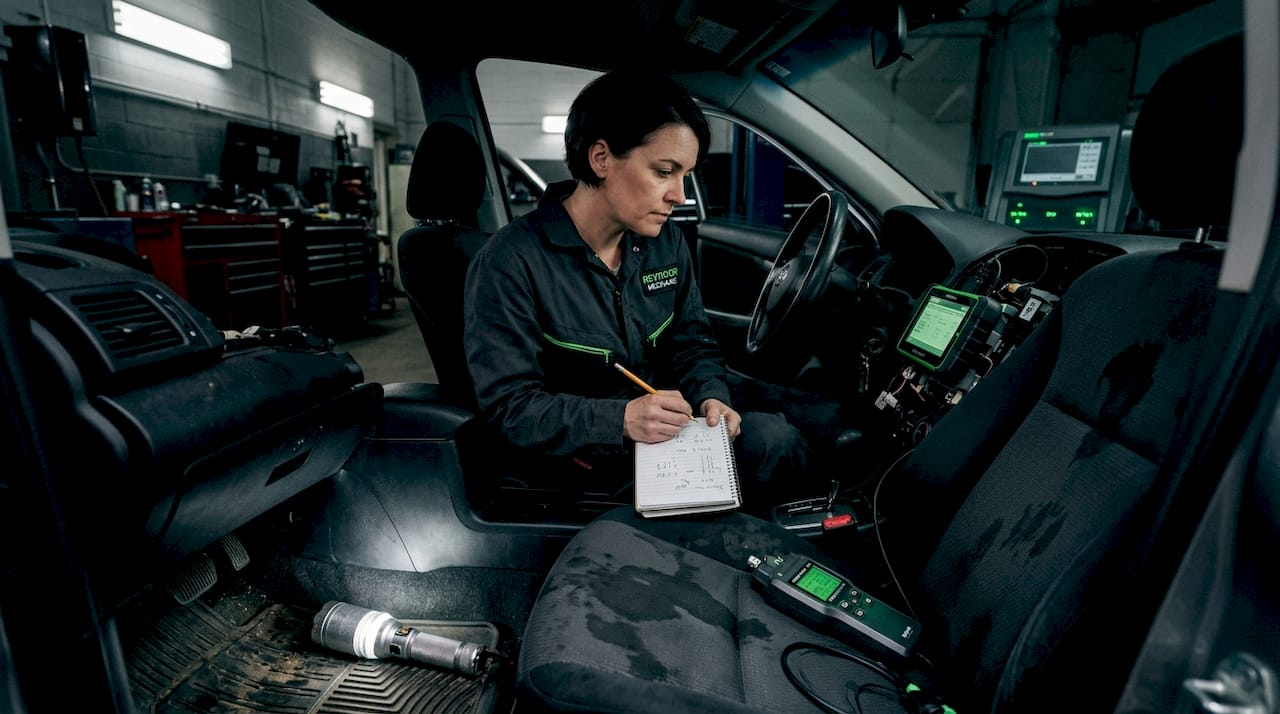
Flood vehicles are among the most problematic. Hidden corrosion and mold can develop after a flood even if state inspections were passed. The reason is simple: water finds its way into spaces that are nearly impossible to fully dry and treat, including wiring harnesses, under carpet padding, behind dashboards, and inside door panels. Corrosion in wiring harnesses can slowly degrade over time, leading to electrical gremlins or outright failures that a surface inspection simply won’t catch.
Practitioners treat flood damage as a “time-delayed failure.” The car works fine when you buy it. Six months later, your power windows stop working. A year later, your ABS light comes on. This isn’t a scare tactic. It’s a pattern that auto inspectors see repeatedly.
Structural and frame damage
Structural damage to a frame or unibody that is poorly repaired compromises crash safety even if the vehicle appears fully restored. The tricky part is that a frame can look straight to the naked eye while still being out of specification by millimeters. Those millimeters matter enormously in a collision, affecting how crumple zones absorb impact and how airbags deploy.
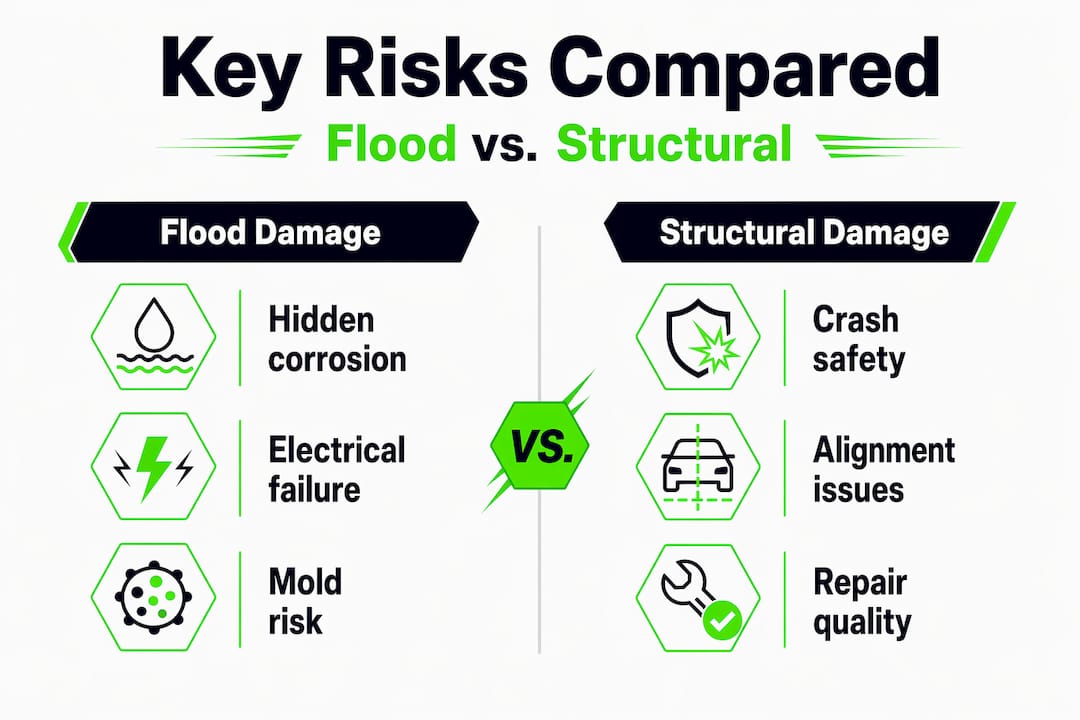
| Damage type | Why it’s risky | What to verify |
|---|---|---|
| Frame or unibody damage | Compromises crash protection | Before/after frame measurements |
| Flood damage | Time-delayed electrical and mold issues | Professional moisture inspection |
| Airbag deployment | Replacement quality varies widely | Confirm OEM or equivalent parts used |
| Fire damage | Wiring and fluid lines may be compromised | Full mechanical teardown inspection |
Pro Tip: Ask for before-and-after frame measurements from the repair shop. If a seller can’t produce documentation showing the frame was restored to manufacturer specifications, that’s a significant red flag.
The limitation of visual inspection cannot be overstated. A well-repaired car can look perfect and a poorly repaired car can look perfect. The difference lives in the paperwork and a professional inspection, not in how the car presents on a sunny afternoon test drive.
Financial and logistical challenges
Setting aside the physical condition of the vehicle, buying a car with this kind of title history creates a set of practical headaches that many buyers don’t anticipate until they’re already emotionally invested.
Here’s what you’ll likely run into:
-
Financing obstacles. Salvage title cars can be hard to finance and may require alternatives like personal loans at higher interest rates. Many traditional lenders and banks won’t touch a branded title vehicle at all. For more on this, ReVroom’s guide to financing a rebuilt car breaks down your realistic options clearly.
-
Insurance limitations. Insurance companies often limit coverage on vehicles with branded title histories, with liability-only coverage being common and full collision or comprehensive coverage being harder to secure. That said, many insurers work comfortably with properly documented rebuilt vehicles, so don’t assume it’s impossible. Shop around before you assume the worst.
-
Resale value hits hard. Rebuilt title vehicles typically sell for 20% to 40% less than comparable clean title cars. This is the market being honest about perceived risk. If you’re buying at a discount but planning to sell in three years, understand that the next buyer will expect the same or greater discount.
-
Title fraud risk. This one deserves its own serious attention. Title washing occurs when a vehicle is re-registered in a state with more lenient titling laws, effectively erasing the branded title from view. A car that was totaled in Louisiana can sometimes reappear in Montana with a cleaner-looking title history.
“Title and brand history reports are the critical starting point for risk mitigation, as visual checks alone cannot reveal fraud or cross-state history issues.” — NMVTIS Consumer Access Program guidance
Cross-checking through national databases is the only reliable defense against title washing. Don’t rely on a single source.
How to protect yourself before buying
The good news is that the risk of buying a salvage title car is largely manageable with the right approach. Here’s the due diligence checklist that separates confident buyers from regretful ones.
- Run an NMVTIS report. The NMVTIS Consumer Access Program provides official title and brand history across state lines, including total loss designations and flood branding. It’s one of the most reliable tools available.
- Check the VIN with NICB. The National Insurance Crime Bureau’s VINCheck is a free tool that flags vehicles reported as stolen or total loss, adding another layer to your history check.
- Hire a specialist mechanic. Don’t just take it to any shop. Find a mechanic or inspection service familiar with the specific type of vehicle history involved. A flood specialist approaches things differently than someone primarily looking at collision repairs.
- Demand repair documentation. Specifically request before-and-after frame measurements, parts invoices, and shop repair records. Well-documented repairs with frame measurements provide significantly more confidence than a verbal assurance.
- Trust your nose. Kelley Blue Book stresses independent inspections to spot flood damage. Musty odors, water stains on seat belts, silt in hard-to-clean corners, and corrosion on metal brackets under carpets are real tells. Sellers can detail a car to mask these signs temporarily.
- Price it right. A discount less than 20% below comparable clean title vehicles may not offset the additional risk and future resale challenges. If the “deal” is only 10% off, the math often doesn’t work in your favor.
ReVroom’s rebuilt title inspection guide is worth bookmarking. It walks through inspection specifics and helps you know exactly what to ask at each step.
My honest take on navigating these purchases
I’ve seen people get burned by branded title vehicles and I’ve seen people drive away with genuinely great cars at prices that made their friends jealous. The difference almost always comes down to one thing: documentation.
The uncomfortable truth about state inspections is that passing one is a minimum bar, not a seal of approval. It tells you the car can legally be on the road. It doesn’t tell you the frame is perfectly straight or that the flood remediation was thorough. Treating that inspection sticker as the end of your research is where people get hurt.
In my experience, the vehicles that make sense are the ones where you can actually trace the repair history. A hail damage car that was repaired at a reputable shop with photos of the before state, itemized parts lists, and a clear paper trail? That’s a compelling buy. A flood-title car from a private seller with no documentation and a “trust me, it runs great” pitch? Walk away.
The context of why a vehicle carries branded title history matters more than the brand itself. That’s the nuance most listicles skip. The real risk lies in repair quality and documentation rather than the title designation alone. Arm yourself with information, hire a good inspector, and the picture becomes a lot clearer fast.
— Cameron
Find your next car with full transparency at ReVroom
If the research process sounds like a lot of work, that’s because it has been. Until now. ReVroom is the only marketplace built specifically for rebuilt title vehicles, and the transparency built into every listing changes the math entirely.
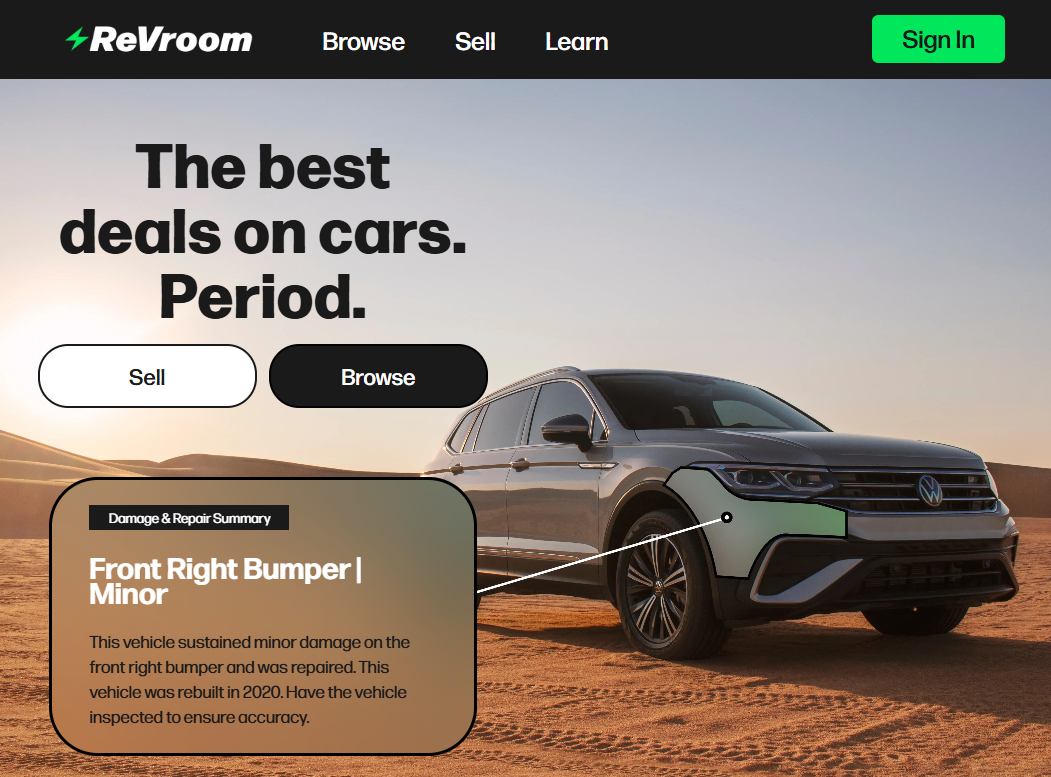
ReVroom includes vehicle history information and photos of what each car looked like before it was repaired, so you can evaluate the real story without spending $150 on outside reports. You can see what you’re getting before you ever set foot near the car. Explore rebuilt title listings on ReVroom and find vehicles that have already passed the documentation test. Smart buyers deserve a smarter marketplace. Go further.
FAQ
What is the biggest risk of buying a salvage title car?
The biggest risk is hidden structural or flood-related damage that passed a basic state inspection but wasn’t fully remediated. Demanding repair documentation and a professional pre-purchase inspection is the most effective way to mitigate this risk.
Are salvage title cars worth buying?
They can be, when the price discount reflects the risk, repair documentation is thorough, and an independent inspection confirms quality. A discount of at least 20% to 40% below clean title market value is generally considered the threshold where the numbers start making sense.
What is title washing and how do I spot it?
Title washing is when a branded vehicle is re-registered in a more lenient state to make its title history appear cleaner. Running an NMVTIS history report and a NICB VINCheck together is the best defense, since these databases pull cross-state data that a single title document won’t show.
Can you get insurance on a car with a branded title history?
Yes, most insurance providers can cover rebuilt title vehicles. Coverage options and payout levels can vary depending on the insurer and the vehicle’s documented repair history, so getting multiple quotes before purchasing is a smart move.
What documents should I ask for before buying?
Request the full title history, before-and-after repair photos, frame measurement records, parts invoices, and the name of the shop that performed repairs. If any of these are unavailable or the seller is reluctant to provide them, treat it as a serious warning sign.
