


Understand the real risks of buying salvage title cars
April 30, 2026
TL;DR:
- Nearly 12% of used BMWs have salvage or rebuilt titles, posing potential risks.
- Salvage titles indicate total loss; rebuilt titles are repaired vehicles passing safety inspections.
- Buying troubled-titled cars involves safety, insurance, financing, and resale challenges that require careful investigation.
Picture this: you’re browsing used cars online and spot a loaded SUV for half the price you expected. The catch? It carries a title that raises eyebrows. Vehicles with troubled title histories are far more common than most buyers realize. Nearly 12% of used BMWs on the market carry a salvage or rebuilt title, and that figure extends across nearly every make and model. For budget-conscious shoppers, the discounts are genuinely tempting. But before you hand over your cash, you owe it to yourself to understand exactly what you’re getting into, what the real risks are, and where the smart money actually lands.
Table of Contents
- What is a salvage title and why do cars get them?
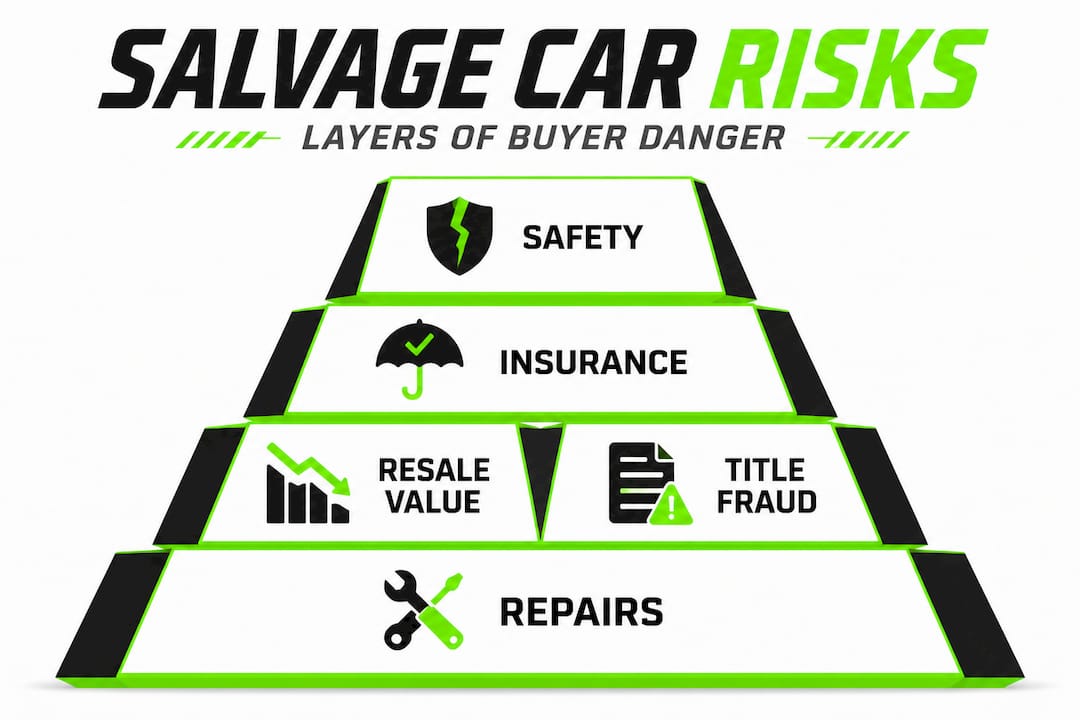
- The main risks of buying a salvage title car
- Which risks hit your wallet? Insurance, financing, and resale challenges
- Hidden dangers: Title washing and protecting yourself
- Why budget buyers must weigh more than just price: Our take
- Navigate the salvage title market with confidence
- Frequently asked questions
Key Takeaways
| Point | Details |
|---|---|
| Hidden risks | Salvage title cars may have undetected safety and reliability problems that put owners at risk and can be expensive to fix. |
| Financial obstacles | Buyers face higher insurance costs, limited financing options, and permanently lower resale value. |
| Protection steps | A thorough inspection and full documentation are essential to avoid buying a dangerous or overpriced vehicle. |
| Not always a deal | The up-front discount on salvage title cars rarely outweighs the ongoing costs and headaches for most drivers. |
What is a salvage title and why do cars get them?
Let’s start at the beginning, because a lot of confusion in this space comes from mixing up terms that mean very different things.
A salvage title is issued when an insurance company declares a vehicle a total loss. That declaration happens when repair costs exceed a state threshold of the vehicle’s actual cash value, often around 75% in states like New York, though this percentage varies widely by state. The car doesn’t necessarily need to be crushed or undrivable. It just needs to be expensive enough to fix that the insurer would rather write a check than pay the repair bill.
What causes a total loss declaration? It’s a longer list than most people expect:
- Collision damage from accidents, ranging from minor fender benders to major crashes
- Flood damage from storms, hurricanes, or even a single severe rain event
- Fire damage, whether from an engine fire or an external source
- Hail damage that pits and dents every panel on the car
- Theft recovery, where a stolen car is found but deemed not worth restoring by the insurer
Here’s where the terminology really matters. A salvage title means the car has been declared a total loss and has NOT yet been repaired or inspected. You cannot legally drive a salvage title vehicle on public roads in most states. A rebuilt title (sometimes called a reconstructed title) is what happens next: the vehicle is repaired, passes a state safety inspection, and is issued a new title reflecting its history. According to Consumer Reports, rebuilt titles are issued after salvage vehicles pass state inspections that verify basic roadworthiness and identity, though these inspections do not confirm full crash safety or long-term reliability. That distinction is critical.
A clean title, by comparison, means the car has never been declared a total loss. But clean doesn’t mean perfect. Plenty of clean title cars have significant accident history that was simply never severe enough to trigger a total loss declaration. Understanding the difference between these designations is your first real advantage as a buyer. For a deeper breakdown, the rebuilt vs clean title essentials guide on ReVroom walks through exactly what each designation means in practice.
Here’s a quick reference for how these titles stack up:
| Title type | Drivable on public roads | Repaired and inspected | Resale value impact |
|---|---|---|---|
| Clean title | Yes | N/A | None |
| Rebuilt title | Yes | Yes | Moderate reduction |
| Salvage title | No (in most states) | No | Significant reduction |
The takeaway? Salvage and rebuilt titles are related, but they are not the same thing. Treating them as synonyms is one of the most common and costly mistakes buyers make.
The main risks of buying a salvage title car
Knowing the difference between title types is useful. But you came here for the real talk, and here it is.
The risks associated with vehicles that carry troubled title histories fall into a few distinct categories, and some of them are more serious than others.
Safety concerns sit at the top of the list. Poor repair quality can lead to frame misalignment, weakened crumple zones, and airbag systems that were improperly reset or replaced. A car that looks perfectly fine from the outside can behave very differently in a second collision if its structural integrity was never properly restored. The problem is that state inspections for rebuilt titles focus on roadworthiness basics, not on whether the car will protect you in a crash the way it was originally engineered to.
Hidden vehicle history is the second major concern. Flood-involved vehicles are a prime example. Corrosion and electrical failures from water exposure often don’t show up immediately. They tend to surface six months to two years after purchase, when the wiring harness starts corroding, the infotainment system glitches out, or the transmission begins acting unpredictably. You might buy what looks like a clean, repaired vehicle and start noticing strange electrical gremlins within a year.
Long-term reliability is harder to predict with any vehicle that has significant history. Repairs vary enormously in quality. A vehicle repaired by a skilled, certified shop with quality parts is a very different animal from one that was pieced together on the cheap to flip fast. The problem for buyers is that it’s not always easy to tell which kind you’re looking at.
The real danger isn’t the title itself. It’s the unknown quality of the repair work behind it. That’s what buyers need to investigate.
Here’s where budget-minded buyers often get tripped up. The upfront price is lower, sometimes dramatically so. That’s real savings. But a vehicle with hidden structural or electrical issues can quickly erase those savings through repair bills, failed inspections, or a dangerous situation on the road.
Pro Tip: Before any purchase, insist on an independent pre-purchase inspection from a mechanic who has no relationship with the seller. This single step is the most effective protection you have.
The risks described above apply most heavily to flood-affected and structurally compromised vehicles. Exploring rebuilt car risks and value in detail can help you calibrate how serious the concern is for any specific vehicle type.
Which risks hit your wallet? Insurance, financing, and resale challenges
Physical risks are only part of the story. The financial side deserves equal attention, because it affects your budget in ways that aren’t obvious upfront.
Insurance limitations are one of the most frequently misunderstood aspects of buying a vehicle with a troubled title history. Many insurers will only offer liability coverage, which means they’ll cover damage you cause to others but won’t pay out if your vehicle is totaled or stolen. Premiums can run 20 to 40% higher than for clean title equivalents, and full comprehensive and collision coverage can be genuinely difficult to find. That said, insurance availability varies widely by insurer and vehicle type, so always get quotes before you commit to a purchase.
Financing is another wall you may hit. Most traditional lenders, including banks and credit unions, refuse to finance vehicles with troubled title histories or impose strict limitations. This means the majority of these purchases require cash or creative financing arrangements. If your budget depends on a loan, this is a significant practical obstacle.

Resale value takes a permanent hit. Rebuilt title vehicles sell at 20 to 40% discounts compared to clean title equivalents, and flood-affected vehicles can see discounts up to 60%. The important thing to understand is that this discount doesn’t go away when you sell. You bought at a discount, and you’ll sell at a discount too. That resale value reduction is permanent, baked into the vehicle’s history in a way that no amount of repairs or detailing will change.
Here’s how the financial picture looks when you lay it out:
| Financial factor | Clean title vehicle | Rebuilt title vehicle |
|---|---|---|
| Insurance availability | Full coverage standard | Often liability-only; full coverage limited |
| Financing options | Bank, credit union, dealer | Cash or specialty lenders often required |
| Purchase price discount | None | 20 to 40% (up to 60% for flood) |
| Resale value | Market rate | Permanently reduced |
The numbers above tell an interesting story. The upfront discount is real, but it comes with a set of financial trade-offs that can narrow or even eliminate your actual savings depending on how long you plan to own the vehicle and what insurance and financing costs look like for your specific situation.
- Always get an insurance quote before finalizing a purchase, not after.
- Confirm your financing situation before falling in love with a specific vehicle.
- Factor the resale discount into your long-term cost calculation.
- Compare the rebuilt vs clean title price differences for the specific model you want.
Pro Tip: Check out dedicated resources on financing a rebuilt title car and rebuilt title resale value before you start negotiating. Knowing your numbers in advance is the most powerful thing you can bring to a deal.
Hidden dangers: Title washing and protecting yourself
Here’s the risk that doesn’t get nearly enough attention: some sellers don’t just sell vehicles with troubled histories. Some actively try to hide that history.
Title washing is the illegal practice of re-registering a vehicle in a state with less stringent titling laws to effectively erase or obscure its history. Once the car is re-titled in that state, it may come back to the market without the flags that would otherwise alert a buyer. According to IHS data, title washing affects roughly 1 in 325 used cars on the market. That might sound like a small number, but when millions of used vehicles change hands every year, it adds up fast.
What makes title washing especially frustrating is that it turns a manageable risk into an invisible one. A buyer doing everything right, asking questions, looking at the title, even running a single VIN report, can still get fooled if the paper trail has been strategically cleaned up.
The key warning signs to watch for include:
- A price that seems too good even for a vehicle with history, suggesting the seller is trying to move it fast
- Missing or inconsistent service records that don’t match the vehicle’s claimed history
- Multiple state registrations in a short period of time
- A VIN report that shows limited history for a vehicle that appears older or more worn than the records suggest
- A seller who discourages or resists independent inspection
Your best protection is layering multiple verification steps, not relying on any single source of information.
What to do before you buy:
- Run VIN checks through at least two separate services. No single report is comprehensive.
- Get an independent pre-purchase inspection from a mechanic you trust, not one recommended by the seller.
- Request all available repair records and documentation. A legitimate seller should be able to provide them.
- Get an insurance quote before signing anything. An insurer may flag issues you haven’t spotted.
- Check the salvage car buying guide for a step-by-step process tailored to vehicles with complex histories.
The good news is that transparency tools have improved significantly. Resources for finding salvage cars safely and safely buying repaired vehicles exist precisely to help buyers navigate this landscape without getting burned.
Pro Tip: If a seller can’t or won’t show you comprehensive repair documentation, treat that as a red flag, not a minor inconvenience. Walk away.
Why budget buyers must weigh more than just price: Our take
Here’s the honest truth, spoken as a friend who has seen both sides of this market up close.
The risks attached to vehicles with troubled title histories are real and they stack. They’re not scary stories invented to keep buyers away from good deals. They reflect genuine patterns that show up again and again. Expert warnings about these vehicles apply most forcefully to buyers who don’t have a trusted mechanic in their corner, who need financing to make the purchase work, or who are counting on selling the vehicle in a few years and recouping most of their investment.
That said, not every vehicle with a troubled title history carries equal risk. A well-documented theft recovery or a hail-affected vehicle with clear cosmetic repairs and a verified mechanical history is a very different proposition from a flood-affected car with incomplete records. The smartest buyers in this space are the ones who treat transparency as a non-negotiable requirement. They don’t rationalize away missing documentation. They don’t assume the price discount accounts for all the unknowns. They ask hard questions, insist on independent inspections, and walk away from any deal that leaves them guessing.
If you want to explore whether a rebuilt title vehicle can make sense for your specific situation, the guide on are rebuilt cars worth it gives you an honest framework for making that call.
Navigate the salvage title market with confidence
Ready to find a smarter, safer deal? The more you know going in, the better your outcome is going to be.

ReVroom was built for exactly this moment, when you want the value of a rebuilt title vehicle but you also want to know what you’re actually buying. Every listing on ReVroom includes vehicle history information and photos of what the car looked like before it was repaired, so you can size up a deal without paying $150 per vehicle just to gather the basics. Whether you want to find salvage vehicles listed with full transparency or simply want to educate yourself before stepping into any negotiation, ReVroom’s growing library of guides, tools, and listings is the place to start. The best deals go to the buyers who show up informed. Let’s get you there.
Frequently asked questions
Are salvage title cars always unsafe to drive?
Not all vehicles with troubled title histories are unsafe, but poor repairs can cause serious structural and safety issues that a routine visual inspection might miss entirely. Independent mechanical inspection is essential before purchase.
Can I get full insurance coverage for a salvage or rebuilt title car?
Insurance is often limited to liability, and full comprehensive and collision coverage can be difficult or significantly more expensive to obtain. Always shop for an insurance quote before committing to a purchase.
Are there any “good” salvage title cars that are safe to buy?
Some experts suggest that vehicles with hail, cosmetic, or theft recovery histories and full documentation can be safer bets than flood or frame-damaged cars, provided a thorough independent inspection is completed.
What is title washing and how can I spot it?
Title washing is the illegal practice of re-titling a vehicle in a state with looser laws to conceal its history. Running multiple VIN checks, requesting full repair records, and getting an independent inspection are your best defenses.
Do salvage title cars save enough money to be worth the risks?
These vehicles often carry 20 to 40% price discounts versus clean title equivalents, but higher insurance costs, financing challenges, and permanently reduced resale value often offset the upfront savings for most buyers.
