


Reliable Vehicles Under $10,000: Your Complete Buying Guide
August 5, 2026
You can find a dependable daily driver for under $10,000 by targeting proven reliable models, running a vehicle history report on every listing, and paying for an independent pre-purchase inspection before you hand over a dollar. That combination catches the problems you can’t see from photos and gives you real negotiating leverage. If you want to stretch your budget even further, certified rebuilt and branded-title vehicles on Revroom are state-certified, road-ready, and can cost up to 50% less than a comparable clean-title car.
The short version: Search private listings and Revroom for reliable models in the $7,000–$10,000 range. Run a vehicle history report. Pay $100–$150 for an independent inspection. Keep $1,000–$3,000 in reserve for post-purchase costs. That’s the whole playbook.
A cosmetically rough car with documented maintenance history is almost always a safer long-term buy than a shiny one with no records. Mechanics consistently recommend prioritizing service history over appearance at tight budgets. A common recommendation is to keep a financial reserve available beyond your purchase price for registration, insurance, and unexpected expenses.
Table of Contents
- Where can you find good vehicles under $10,000?
- Which reliable models can you realistically find under $10K?
- How do you properly vet any used car under $10,000?
- What does it actually cost, and how long does it take?
- How do you negotiate and pay without getting burned?
- Should you consider a rebuilt or branded-title vehicle?
- Your step-by-step buying checklist: search to keys in hand
- Key Takeaways
- An honest perspective on buying at this price point
- Certified rebuilt cars under $10,000 worth a look
- Useful sources and where to read more
- FAQ
Where can you find good vehicles under $10,000?
The best inventory under $10,000 lives across several channels, each with its trade-offs.
- Private-party classifieds (Facebook Marketplace, Craigslist): Private sellers often offer lower prices but provide no buyer protections. A professional inspection is essential.
- Independent used-car lots: Provide more inventory and sometimes limited warranties, but prices are generally higher than private sales for similar cars.
- Revroom marketplace: Focused on certified rebuilt and branded-title vehicles, including certification and repair photos.
- National aggregators (AutoTrader, Cars.com): Helpful for broad searches and price comparisons, though listing quality varies.
When searching, set your price cap below $10,000 to allow room for fees. Target moderate mileage vehicles unless maintenance records are exceptional. Look for listings with detailed service records, single ownership, and clear title status. Avoid ‘sold as-is’ listings unless you are prepared to manage potential unknown repairs.
Pro Tip: Set saved searches with email alerts on at least two platforms. Good sub-$10K listings move fast, often within 48 hours. Being first to respond is half the battle.

Read listing photos like a checklist: missing undercarriage shots, blurry interior images, or photos taken only in low light are omissions worth noting. A seller who photographs everything openly usually has nothing to hide.
Which reliable models can you realistically find under $10K?
Practical daily drivers to target
The Toyota Corolla (2012–2017), Honda Civic (2012–2016), Honda Fit (2009–2014), and Mazda3 (2012–2017) are the workhorses of the sub-$10K market. You’ll typically find them with 90,000–140,000 miles, and that’s fine. The average U.S. vehicle age is about 12.8 years, meaning higher mileage is normal and manageable when maintenance is documented.
| Model | Typical Mileage Under $10K | Why Target It |
|---|---|---|
| Toyota Corolla (2012–2017) | 90,000–130,000 mi | Near-bulletproof reliability; cheap parts |
| Honda Civic (2012–2016) | 90,000–140,000 miles | Excellent fuel economy; strong resale data |
| Honda Fit (2009–2014) | — | Surprisingly roomy; low repair costs |
| Mazda3 (2012–2017) | 90,000–130,000 mi | Fun to drive without the repair premium |
| Toyota RAV4 (2009–2012) | 90,000–140,000 miles | Practical SUV with strong longevity record |
One model-year caveat worth knowing: avoid the Honda Civic’s 2016 CVT if you’re buying used at this mileage range. The earlier 6-speed automatic is more proven. Similarly, the Mazda3’s 2014–2016 SKYACTIV engines are the sweet spot for reliability.
Fun picks that sometimes appear under $10K
The Mazda MX-5 Miata (2006–2012) and older Subaru Impreza WRX (2004–2007) occasionally surface under $10K. Both are genuinely enjoyable to drive. The catch: the WRX needs a pre-purchase compression test and turbo inspection, and parts costs run higher than a Civic. Budget an extra $1,000–$1,500 in your repair reserve if you go this route.
Worth knowing: Consumer Reports rates several models in the $7,000–$10,000 range as having above- or well-above-average reliability, including the Corolla and Fit. That’s your shortlist anchor.
How do you properly vet any used car under $10,000?
This is where most buyers either save money or lose it. Follow these steps on every listing before you commit.
- Pull a vehicle history report first. Check title status, accident history, odometer readings across multiple records, and number of owners. Inconsistent odometer readings are an immediate disqualifier. A history report costs $20–$40 and takes five minutes.
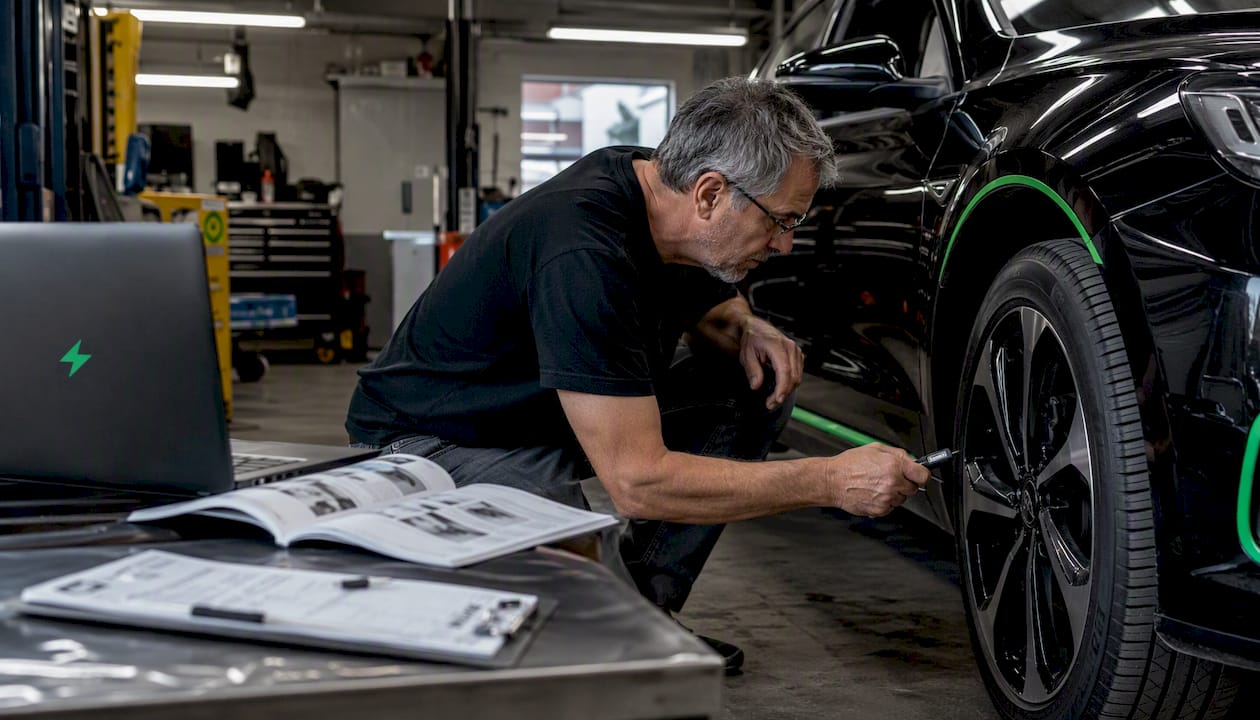
- Order an independent pre-purchase inspection (PPI). A licensed mechanic inspects the car on a lift for $100–$150. This is widely considered the single highest-return investment a buyer can make at this price point. The findings often reduce the purchase price by more than the inspection cost.
- Check electronics and comfort systems during the test drive. Run the A/C for 10 minutes, test every window, connect your phone to the infotainment system, and check the heat. Repairs for A/C and infotainment can run $500–$1,200 on older vehicles, a meaningful chunk of a $10K budget.
- Look for title brands. “Rebuilt,” “branded,” “lemon law buyback,” and “flood” are all different situations. A rebuilt title from a state-certified repair is very different from a flood title. Know which brand you’re looking at.
- Watch for seller red flags. Vague service records, refusal to share the VIN, or pressure to decide today are all warning signs. A seller who refuses an independent PPI should be treated as a walk-away situation, full stop.
Pro Tip: Check the tires and brake pads during your inspection. Worn tires ($600–$900 to replace all four) and thin brake pads ($200–$400 per axle) are reliable predictors of deferred maintenance across the whole car.
What does it actually cost, and how long does it take?
The sticker price is only part of the math. Here’s what a realistic sub-$10K purchase actually looks like financially.
| Cost Item | Low | Typical | High |
|---|---|---|---|
| Purchase price | $7,000 | $10,000 | $10,000 |
| Taxes and registration (est. 8%–10%) | $600–$900 | $600–$900 | $1,000 |
| Vehicle history report | $20 | $30 | $40 |
| Independent PPI | $100 | $100–$150 | $150 |
| Immediate repairs/maintenance | — | $500 | $2,000 |
That “high” column is why the $3,000 rule exists. The rule suggests keeping at least $3,000 available beyond your purchase price as a buffer for registration, insurance, and unexpected repairs. Spending your entire $10K on the car itself and having nothing left is how buyers end up stranded.
The $3,000 rule in plain terms: It’s not a law, it’s a cushion. Whether you use it as a minimum cash purchase floor, a post-purchase reserve, or a down payment buffer when financing, the point is the same: don’t arrive at ownership with zero breathing room.
Timeline-wise, finding a solid car at this price point typically takes one to three weeks of active searching. Buyers who set up alerts on multiple platforms and move quickly on good listings close faster. Rushing because you “need a car now” is how people skip the inspection and regret it.
How do you negotiate and pay without getting burned?
Negotiation basics
Your PPI report is your best negotiating tool. If the mechanic finds $800 in needed work, you have documented grounds to ask for a price reduction. Most private sellers will negotiate when you show them a written inspection report rather than just asking for a lower number.
- Lead with facts, not feelings: “The inspection found the rear brakes need replacement, which quotes at $350. I’d like to adjust the price accordingly.”
- Ask for repairs or a credit, not both.
- Know your walk-away number before you arrive.
Payment safety
Never wire money to a stranger. For private-party purchases, use a cashier’s check from your bank, a verified bank transfer, or a licensed escrow service for amounts over $5,000. Hand over payment only after you have the signed title in hand.
Dealers offer more buyer protections and sometimes a limited warranty, but you’ll pay $500–$2,000 more for the same car. That markup can be worth it if the warranty covers the first 30–90 days. For private sales, your protection is the inspection and the title verification.
Common scams to avoid:
- Fake escrow sites: Scammers create convincing escrow pages. Use only services your bank recommends.
- Cloned listings: The same photos appear on multiple platforms at suspiciously low prices. Reverse-image search the photos.
- Pressure to close immediately: Any seller who says “I have three other buyers coming today” and won’t give you 24 hours for an inspection is a red flag.
Should you consider a rebuilt or branded-title vehicle?
Here’s where your $10K can go further than most buyers realize.
A rebuilt or branded title means a vehicle was previously declared a total loss by an insurance company, then professionally repaired and inspected by a state-certified authority confirming it’s road-ready. It is not a salvage vehicle. Salvage means the car hasn’t been repaired and isn’t legal to drive. Rebuilt means it has been repaired and passed state inspection. That distinction matters.
The savings are real: Rebuilt and branded-title vehicles can cost up to 50% less than a comparable clean-title car. At the $10K level, that could mean the difference between a 2013 Corolla with 130,000 miles and a 2017 Corolla with 70,000 miles.
The trust signals to look for in any rebuilt-title listing:
- State-required certification confirming the repair meets road-safety standards
- Pre-repair photos showing what the damage looked like
- Post-repair photos showing the completed work
- A detailed vehicle history report covering the incident and repair timeline
Revroom includes all of these in every listing. That’s not standard practice on general classifieds, where a rebuilt-title listing might tell you nothing beyond the title brand itself.
Pro Tip: Ask the seller: “What state certified this vehicle, and can you show me the inspection certificate?” A legitimate rebuilt-title vehicle has paperwork. If the seller can’t produce it, treat the listing like an unverified private sale and price your offer accordingly.
A few practical questions buyers often ask about rebuilt-title cars:
Can I insure a rebuilt-title vehicle? Yes, though some insurers limit comprehensive and collision coverage. Shop around, and get a quote before you buy.
Will it affect registration? No. Rebuilt-title vehicles register normally in all 50 states.
What about resale value? Rebuilt-title cars do carry a resale discount, which is exactly why you’re buying one at a lower price. If you’re buying a daily driver you plan to keep for five-plus years, that discount works in your favor at purchase.
For deeper guidance on reliable rebuilt cars and which models hold up best after certification, Revroom’s blog covers specific picks with repair-cost context.
Your step-by-step buying checklist: search to keys in hand
Follow this in order. Don’t skip steps because a car “looks good.”
- Set up saved searches on at least two platforms with your price cap, mileage limit, and preferred models. Enable email alerts.
- Contact the seller and ask for the VIN, full service records, and the reason for selling. Vague answers to these three questions are a signal.
- Run a vehicle history report using the VIN. Check title status, accident history, and odometer consistency.
- Schedule an independent PPI at a licensed shop near the seller. You pay for it; you choose the mechanic.
- Test drive checklist: cold start (listen for knocks), highway speed (check for vibration), A/C and heat, all windows, all lights, infotainment, and brakes under moderate pressure.
- Negotiate using PPI findings. Get any agreed repairs or price reductions in writing before you sign.
- Verify the title at handoff. The seller’s name on the title must match their ID. Check for liens. Sign the title transfer in the presence of both parties.
- Complete registration at your state DMV within the required window (typically 10–30 days depending on your state).
Pro Tip: Bring a printed copy of the vehicle history report and the PPI summary to the sale. Having documents in hand signals you’re a serious, informed buyer, and sellers take lowball offers more seriously when they see you’ve done the work.
For a deeper walkthrough of how to evaluate a cheap car listing before you even schedule a test drive, Revroom’s guide covers the specific listing signals worth your time.
Key Takeaways
Finding a reliable vehicle under $10,000 comes down to targeting proven models, verifying history before you visit, and keeping cash in reserve for the costs that follow the purchase.
| Point | Details |
|---|---|
| Target proven models | Corolla, Civic, Fit, and Mazda3 offer the best reliability-to-cost ratio under $10K. |
| Always run a history report | Check title status, odometer records, and accident history before scheduling a visit. |
| Pay for an independent PPI | A $100–$150 inspection is your best negotiating tool and your protection against hidden repairs. |
| Budget beyond the sticker | Keep $1,000–$3,000 in reserve for taxes, registration, and post-purchase maintenance. |
| Revroom expands your options | Certified rebuilt and branded-title listings on Revroom include state certification, repair photos, and vehicle history, up to 50% cheaper than clean-title equivalents. |
An honest perspective on buying at this price point
The conventional wisdom says buying a car under $10,000 is inherently risky. We’d push back on that framing. The risk isn’t the price. The risk is skipping the verification steps that any price point demands.
What buyers consistently underestimate is how much the rebuilt-title category has changed. A decade ago, finding a certified rebuilt vehicle with documented repair history and pre-repair photos was genuinely difficult. Today, platforms like Revroom have made that transparency the baseline, not the exception. The buyer who dismisses rebuilt-title options entirely is often paying $3,000–$5,000 more for a clean-title car with the same mileage and a thinner paper trail.
The other thing worth saying plainly: a cosmetically perfect car with no service records is a worse buy than a dinged-up one with a full maintenance folder. Every time. The folder tells you what the previous owner cared about. The shine tells you what they wanted you to see.
Certified rebuilt cars under $10,000 worth a look
Spending your full $10K on a clean-title car and arriving at ownership with nothing left is a common mistake. Revroom offers a different path: certified rebuilt and branded-title vehicles that are state-inspected, road-ready, and priced up to 50% below clean-title equivalents, with every listing including pre- and post-repair photos and a full vehicle history.
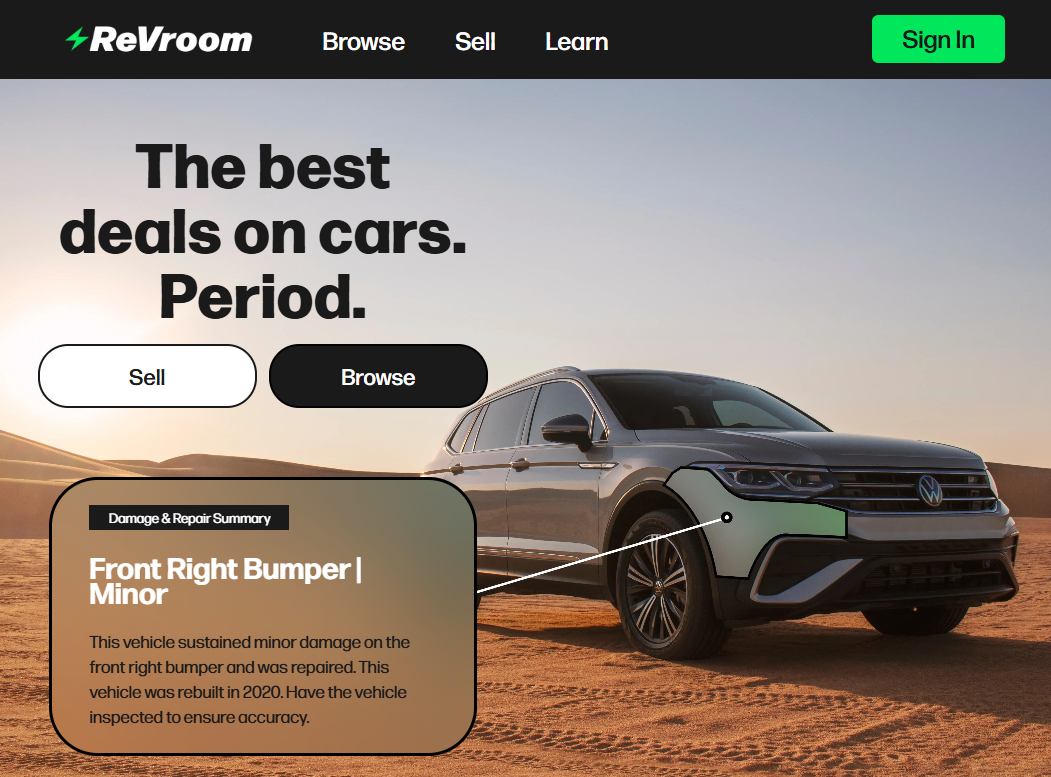
If you spot a rebuilt or branded-title vehicle anywhere online and want to know what happened to it, how severe it was, and whether the price is fair, a Revroom History Report costs $15 and takes minutes. That’s less than a tank of gas for the confidence to decide clearly. Browse certified listings and run a report at Revroom.org.
Useful sources and where to read more
- Best Used Cars and SUVs Under $10,000 — Consumer Reports
- Most Reliable Used Cars Under $10,000 — U.S. News & World Report
- 7 Tips for Buying a Reliable Used Car Without Getting Scammed — Military.com
- Best 10 Used Cars Under $10K for 2026 — Revroom Blog
- Most Reliable Rebuilt Cars: Budget-Friendly Picks — Revroom Blog
- 7 Safest Used Cars for Budget-Conscious Buyers — Revroom
FAQ
What is a good reliable car under $10,000?
The Toyota Corolla (2012–2017), Honda Civic (2012–2016), and Honda Fit (2009–2014) are consistently rated above average for reliability at this price point. Prioritize documented service history over low mileage.
What kind of car can you buy with $10,000?
At $10,000, you can realistically find a well-maintained compact sedan, hatchback, or small SUV with 90,000–130,000 miles. Certified rebuilt and branded-title vehicles on platforms like Revroom can get you a newer model year or lower mileage for the same budget.
What is the $3,000 rule for cars?
The $3,000 rule is a budgeting guideline suggesting you keep at least $3,000 available beyond your purchase price to cover registration, insurance, and unexpected repairs. It’s flexible advice, not a fixed formula, designed to prevent buyers from arriving at ownership with no financial cushion.
What is the most reliable car for under $10,000?
Consumer Reports and U.S. News both point to the Toyota Corolla and Honda Civic as top reliability picks under $10,000. The specific model year and maintenance history of the individual car matter more than the nameplate alone.
