


What Should a Dealership Do With a Rebuilt or Branded Title Trade-In? Wholesale Options Compared (2026)
September 18, 2026
Short answer: a franchise or clean-title dealership should sell a rebuilt or branded title trade-in to a buyer who retails those cars, not push it through the lane on Tuesday. The lane prices the car for whoever happens to be there. A rebuilt title retailer prices it for the customer who will drive it, and that is usually the higher number. This guide is for the used-car manager or dealer principal holding the keys to a branded trade-in: what the four exits pay, why the rebuilt specialist can outbid the auction, and how to list the car on a dealer-to-dealer market that, as published, costs the seller nothing.
Key takeaways
- A branded trade-in is not a problem car. It is inventory for a different retailer, and that retailer is the buyer to find.
- Clean-title stores price branded trade-ins for the auction exit. Rebuilt title dealerships price them for retail. That gap is why the specialist often pays more.
- Four exits: the lane, a wholesaler, a local rebuilt dealership, or a dealer-to-dealer marketplace. The last two put the car in front of buyers who want the title.
- RPM, the ReVroom Private Market, lets a traditional dealership list a branded trade-in once and take rising offers from branded-title retailers. As published, it is free for sellers.
- Rebuilt title cars retail at a median of $17,471 on ReVroom's data, roughly 20 to 40 percent under clean-title value. The buyer's margin, not the title, sets the wholesale number.
Why does a clean-title dealership offer so little on a rebuilt title trade-in?
Short answer: because it cannot retail the car, so it prices the trade for the only exit it has, which is the auction.
This is not stinginess; it is arithmetic. A franchise store's front line is built on clean titles, certified pre-owned programs, and captive financing that often excludes branded titles. When a customer rolls in with a rebuilt Silverado, the store's real question is what the lane will pay minus fees, transport, and the days the car sits. The offer reflects that exit. The customer hears a lowball. The store hears a fair wholesale number. Both are right, and the reason is that the store is not the right buyer.
Rebuilt title dealerships run the opposite math. They retail these cars every day, they know what a minor hail history on a 2022 Explorer sells for on a rebuilt lot, and they price the trade against that. We explain the consumer side of this in what dealerships really offer for rebuilt title trade-ins. This page is the dealer side: if you are the clean-title store, the question is not how to avoid the car. It is how to sell it to the person who wants it.
What is a rebuilt or branded title trade-in actually worth?
Short answer: retail sits roughly 20 to 40 percent below clean-title value, and wholesale sits below retail by the buyer's margin. The buyer's business model, not the title brand, is the variable you control.
The ReVroom Rebuilt Title Market Snapshot, built from 16,000-plus rebuilt title retail sales, is the retail ceiling for your appraisal:
| Rebuilt title retail market (September 2026) | Number |
|---|---|
| Median sold price | $17,471 |
| Median discount versus clean-title value | $4,607 |
| Share sold 25% or more below clean-title value | About 1 in 3 |
| Median discount on a 2023 model year | $6,569 |
| Median discount on a 2015 model year | $2,038 |
| Vehicles with only minor or moderate history | 88% |
Read it from the buyer's side. A rebuilt retailer who can sell that 2022 Explorer for clean value minus $5,000 to $8,000 can pay you more than a lane bidder who has to resell it wholesale again. Newer cars carry the biggest dollar discounts and the biggest dollar margins, which is why a branded late-model trade is the one most worth routing carefully. The history and severity data shows the mix: 83 percent collision, 9.3 percent hail, and hail cars are among the fastest movers.
What are the ways to sell a branded title trade-in, and what does each pay?
Short answer: four exits. Two of them sell to buyers who do not want the title; two sell to buyers who came for it.
| Exit | Who buys | What sets the price | Cost and friction | Speed |
|---|---|---|---|---|
| Auction lane | Whoever is in the lane; many cannot retail branded titles | Bidding depth that day, suppressed by the brand | Seller fees, transport, run days | Sale day |
| Wholesaler or buyer service | A middleman who resells to a rebuilt retailer | The retailer's number minus the middleman's margin | One call, one offer | Same day |
| Local rebuilt title dealership | A retailer who wants the car | Rebuilt retail value minus its margin | One call, one offer | Same day |
| RPM, the ReVroom Private Market | Branded-title retailers making rising offers | Competing rebuilt retailers, each offer beating the last | Free for sellers (as published); you arrange shipping and payment with the buyer | Live the moment you post |
The pattern is simple. The closer the buyer is to the person who will drive the car, the more of the retail number reaches you. The lane is two steps away. A rebuilt retailer is one. A market where several rebuilt retailers bid against each other is one step away with competition, which is the best of the four when you have the days to let the offers climb.
What is RPM, and how does a franchise dealer use it?
Short answer: a wholesale marketplace where a traditional dealership lists a branded trade-in once and branded-title retailers make offers on it, each required to beat the last.
As published on the RPM page for franchise dealers today:
- Create your listing. ReVroom asks for your asking price, the VIN, images of the vehicle, and a few other details. The listing carries the vehicle history up front, so buyers know what they are bidding on.
- Get offers. The listing goes live the moment you post it. Buyers make offers day and night, and each one must beat the last.
- Close with your buyer. Accept the offer you like and you are connected with the buyer to arrange shipping, document transfer, and payment.
The published terms: RPM is free for sellers, and no credit card is required to create a listing or sell a vehicle. For a used-car manager, the practical difference from the lane is that the buyers on RPM came specifically for branded titles, so the brand raises interest instead of suppressing it, and the offer format does the negotiating. Questions before listing go to [email protected], per the page.
How should a dealership appraise a rebuilt title trade-in?
Short answer: from the rebuilt retail number down, not from the clean book down.
- Start with clean-title value for the year, trim, and miles, the same way you would for any trade.
- Apply the rebuilt discount of roughly 20 to 40 percent to get the rebuilt retail ceiling. Use the history to place it: a minor cosmetic history sits near 20 percent, a structural one near 40.
- Subtract the buyer's margin for the exit you plan to use. A rebuilt retailer's margin is smaller than lane fees plus a second wholesale hop.
- Gather the story. The title, the repair records if the customer has them, and the state inspection certificate. Every one of those documents adds to the offer you will get, because the buyer will ask for them.
- Decide the exit before you write the number. If the car is going to RPM or a rebuilt retailer, you can offer the customer more and still hold your margin.
If the customer asks for advice instead of a number, where to sell a rebuilt title car is the page we send them to. It is honest about the fact that a private sale on a rebuilt-title marketplace can beat any trade offer, which is also why the trade you win is the one you priced for the right exit.
Sell the branded titles you take on trade
Short answer: stop feeding them to the lane. List your branded trade-ins on RPM, free for sellers as published, and let the retailers who want them bid the price up.
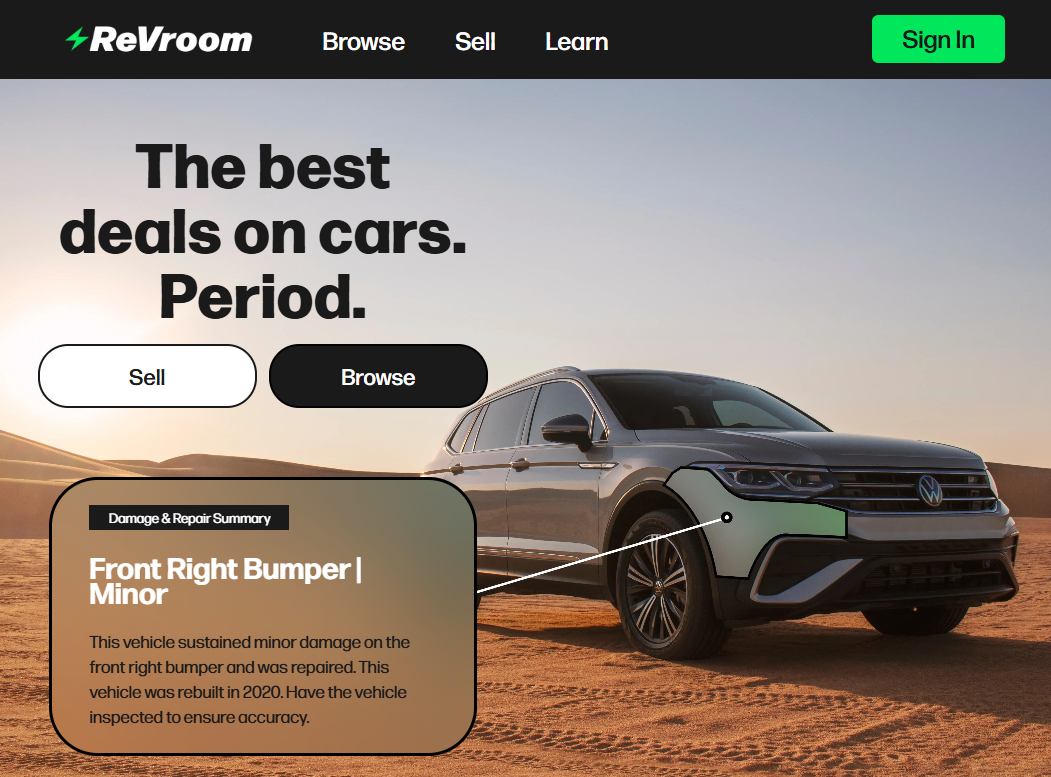
If your store also retails rebuilt titles, open a free dealer storefront and your inventory appears in the rebuilt title dealers by state directory automatically.
FAQ
What do dealerships do with rebuilt title trade-ins?
Most franchise and clean-title dealerships do not retail branded titles, so the trade-in goes to a wholesale exit: the auction lane, a wholesaler, a local rebuilt title dealership, or a dealer-to-dealer marketplace like RPM, the ReVroom Private Market.
Why do rebuilt title dealerships pay more for branded trade-ins?
Because they retail these cars every day and price them against the rebuilt retail market instead of the auction floor. A clean-title store prices a branded trade-in for its auction exit; a rebuilt retailer prices it for the buyer who will drive it.
Should a dealership run a rebuilt title trade-in through the auction?
It is the default, not the best exit. The lane sells to whoever is in it that day, charges fees and transport, and the branded title suppresses bidding from dealers who cannot retail it. A buyer who specializes in rebuilt titles is usually the higher number.
What is RPM by ReVroom for franchise dealers?
RPM is the ReVroom Private Market, a wholesale marketplace where a traditional dealership lists a branded trade-in once and branded-title retailers make offers on it, each required to beat the last. As published, it is free for sellers and no credit card is required to list.
How much is a rebuilt title trade-in worth?
Rebuilt title cars retail roughly 20 to 40 percent below clean-title value; ReVroom's data on 16,000-plus sales shows a median sold price of $17,471 and a median discount of $4,607. Wholesale sits below that retail number by the buyer's margin, which is why the buyer's business model decides the offer.
Can a dealership disclose a branded title and still sell the car?
Yes. Rebuilt and branded title cars are legal to sell everywhere in the country with the brand disclosed. The buyers who want them, rebuilt retailers and the public on a rebuilt-title marketplace, treat the disclosed history as the reason to buy.
