


What Does a Theft Recovery Title Mean for Buyers?
June 7, 2026
TL;DR:
- A theft recovery title is a permanent record indicating a vehicle was stolen, insured, and later recovered, following it through future ownership transfers. While it signals a specific history event, it does not necessarily reflect mechanical damage, and thorough inspections are essential before purchase. The brand cannot be removed or hidden, ensuring transparency and informing buyers to evaluate each vehicle individually.
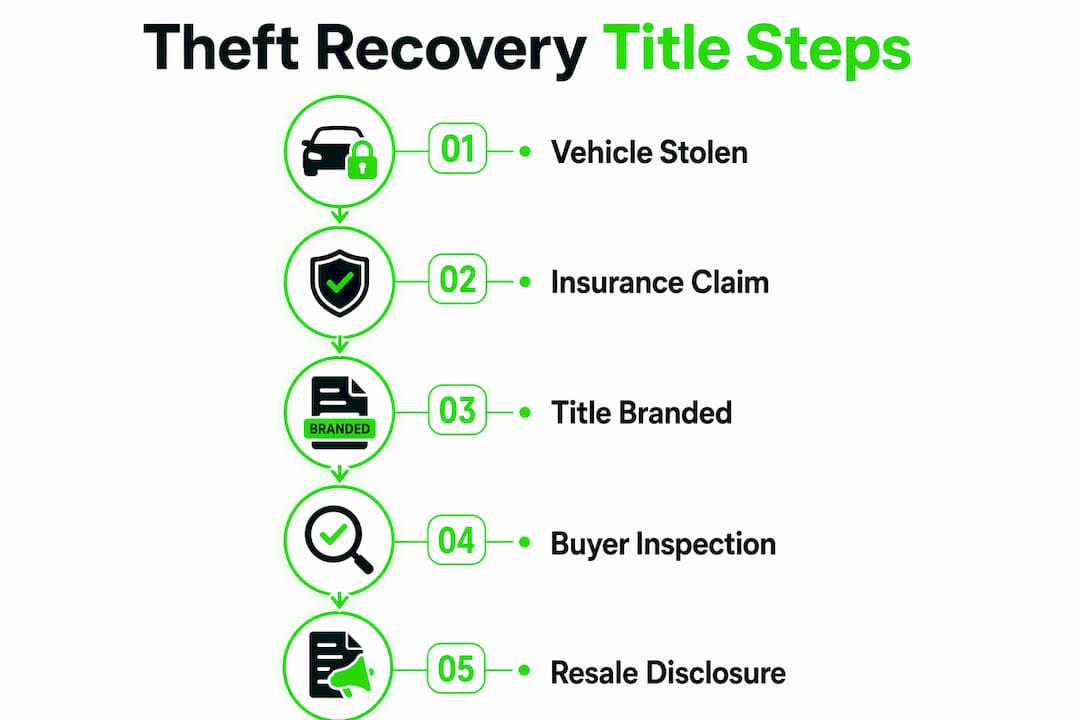
A theft recovery title is an official vehicle designation assigned when a car is reported stolen, an insurance claim is paid out, and the vehicle is later recovered. The title brand is permanent, recorded in state DMV databases and the national NMVTIS system, and follows the car through every future ownership transfer. What it does not automatically mean is that the vehicle is mechanically compromised or unsafe to drive.
That distinction matters more than most buyers realize. A theft recovery brand tells you about a specific chain of events in a car’s history. It does not tell you the car was crashed, flooded, or heavily damaged. In fact, many theft recovery vehicles show minimal physical damage at recovery. Understanding this difference is the first step toward making a confident, informed purchase decision.
What does theft recovery title mean compared to other title types?
The confusion between theft recovery titles and other branded titles is real, and it costs buyers money in both directions. Some walk away from perfectly good vehicles out of fear. Others buy without understanding what they are actually getting. Here is how the main title types compare.
| Title type | What it means | Typical condition | Key implication |
|---|---|---|---|
| Clean title | No major insurance events or brands | Varies widely | No disclosed history, but not a guarantee of condition |
| Theft recovery | Stolen, insurer settled, vehicle recovered | Often minimal physical impact | Permanent brand; history event, not necessarily damage |
| Rebuilt/reconstructed | Declared total loss, repaired, passed inspection | Repaired and road-ready | Up to 50% cheaper than clean title equivalents |
The theft recovery brand is specifically designed to differentiate theft-related insurance events from collision or weather-related total losses. A car can receive this brand even when it comes back from theft in nearly the same condition it left in. That is a meaningful distinction from a rebuilt title, which signals that a vehicle was declared a total loss and then professionally repaired and inspected before returning to the road.
One more thing worth knowing: state rules vary. Some states apply the theft recovery brand automatically after an insurance settlement and recovery. Others use different language or thresholds. Always verify the exact brand language on the official title document rather than relying on a verbal description from a seller.
Pro Tip: When comparing title types, use the difference between title designations as your reference point. The terminology shifts by state, and knowing the official definitions protects you from misreading a vehicle’s actual history.
What are the real implications for value, safety, and insurance?
Here is where buyers need to slow down and think carefully. A theft recovery brand affects three things: perceived value, insurability, and the specific inspection checklist you should use before buying.

On value, the brand creates a discount. That discount can be significant even when the vehicle is in excellent mechanical condition. This is the same dynamic that makes rebuilt title vehicles so attractive to informed buyers. The market penalizes the history event, not always the actual condition of the car.
On insurance, rates can increase after a theft claim, even when the vehicle is mechanically sound. Some insurers treat theft recovery vehicles as higher risk for future claims. That said, most major insurance providers will cover theft recovery vehicles without issue. The key is being upfront with your insurer about the title brand so there are no surprises at claim time.
On safety, the theft recovery brand is a transparency flag about an insurance event, not a direct indicator of mechanical failure. Experts consistently advise buyers not to assume mechanical problems based on the brand alone. What the brand should prompt is a focused inspection, not a reflexive pass.
Here is what to watch for specifically:
- Keys and access systems: Thieves often compromise or duplicate keys. Verify the current key set is the original or has been properly replaced.
- Immobilizer and ignition systems: These are common targets during theft. A compromised immobilizer can create reliability issues down the road.
- Electronics and wiring: Forced entry and hotwiring attempts can leave subtle damage in wiring harnesses that is not visible without a proper inspection.
- Tracking and telematics systems: Some vehicles have factory or aftermarket trackers. Confirm these are intact and functioning.
Pro Tip: Do not skip a professional pre-purchase inspection on any theft recovery vehicle. A qualified mechanic who knows the vehicle’s history can check the specific systems most likely to be affected, giving you a real picture of what you are buying.
How to verify a car with a theft recovery title before buying
Due diligence on a theft recovery vehicle follows a clear sequence. Skip any step and you are buying on incomplete information.
-
Request the official title copy. The title document itself will show the brand designation. Read the exact language. “Theft recovery” and related terms vary by state, so confirm what the brand actually says rather than taking a seller’s summary at face value.
-
Pull an NMVTIS Vehicle History Report. The NMVTIS database aggregates title brand information across all participating states. Approved NMVTIS providers include AutoCheck and VINCheck.info. This report will show you the full title brand history, including any brands applied in previous states of registration.
-
Run a full vehicle history report. Services like Carfax and AutoCheck pull from multiple data sources beyond NMVTIS. Cross-referencing both gives you the most complete picture of the vehicle’s history.
-
Schedule a professional pre-purchase inspection. Focus the mechanic specifically on theft-related systems: keys, immobilizer, ignition, electronics, and wiring. Ask them to document findings in writing.
-
Verify the VIN on all major components. Confirm the VIN on the dashboard, door jamb, and engine block all match. Mismatched VINs can indicate parts replacement or, in rare cases, more serious history.
-
Check for open recalls. Use the NHTSA recall database with the VIN to confirm no outstanding safety recalls exist on the vehicle.
The goal of this process is not to find reasons to walk away. It is to walk in with clear eyes and walk out with confidence, or to catch something real before it costs you.
Why the theft recovery brand follows the car forever
The permanence of a theft recovery brand is not a technicality. It is a consumer protection mechanism, and it works because of NMVTIS. The NMVTIS system shares title brand information across state lines, which closes the loophole that bad actors once used to “wash” a branded title by re-registering a vehicle in a state with looser rules.
Title washing is illegal. The brand cannot be removed by moving the vehicle to another state, repairing it, or re-titling it. Any seller who claims otherwise is either misinformed or being deliberately misleading. Either way, that is a reason to walk.
For honest buyers and sellers, permanence is actually a feature. It means the vehicle’s history is on the record, accessible, and consistent. You know what you are buying. That transparency is the foundation of a fair transaction, and it is exactly the kind of information that empowers buyers to make smart decisions rather than guesses.
The practical implication for resale is straightforward. When you eventually sell a theft recovery vehicle, the brand will still be on the title. Price accordingly and disclose fully. Buyers who do their research will find the history regardless, and a seller who leads with transparency builds trust faster than one who buries the details.
Key takeaways
A theft recovery title records a specific vehicle history event, not a verdict on the car’s current condition. Informed buyers who do their due diligence can find real value in these vehicles.
| Point | Details |
|---|---|
| Definition is specific | A theft recovery title means the car was stolen, insured, and recovered. It is not a collision or weather event. |
| Brand is permanent | NMVTIS records the brand across all states, and title washing is illegal. |
| Condition varies widely | Many theft recovery vehicles show minimal physical impact at recovery. Inspect before assuming. |
| Focus your inspection | Prioritize keys, immobilizers, electronics, and wiring, since these are the systems most affected by theft. |
| Value opportunity exists | The brand creates a market discount that informed buyers can use to their advantage with proper due diligence. |
My honest take on theft recovery vehicles
I have spent years watching buyers make the same two mistakes with theft recovery titles. The first is panic. They see the brand, assume the worst, and walk away from a vehicle that would have served them well for years. The second is the opposite: they see the discount, get excited, and skip the inspection entirely.
Neither approach serves you. The theft recovery brand is information. It tells you something specific happened in this car’s history. Your job as a buyer is to find out what that means for this particular vehicle, not for the category in general.
What I find genuinely interesting about theft recovery vehicles is that the history event that created the brand often has nothing to do with the car’s mechanical integrity. A car stolen from a parking lot and recovered two weeks later in a neighboring city may have a compromised key fob and a scuffed door panel. That is a very different situation from a vehicle that was totaled in a collision. The title brand does not make that distinction for you. Your inspection does.
The buyers I have seen get the best outcomes are the ones who treat the brand as a starting point for questions, not a final answer. They pull the NMVTIS report, they hire a mechanic who knows what to look for, and they negotiate based on what they actually find. That process, done right, is how you buy a rebuilt car safely and come out ahead.
— Cameron
Find your next vehicle with full history upfront
ReVroom is the rebuilt auto marketplace built specifically for buyers who want transparency before they commit. Every listing on ReVroom includes vehicle history information and photos of what the car looked like before it was repaired, so you are never buying blind.

Rebuilt title vehicles on ReVroom are up to 50% cheaper than clean title equivalents, and the history is right there in the listing. No hunting for reports. No guessing. ReVroom does the legwork so you can focus on finding the right car at the right price. Browse current listings and see what informed buying actually looks like at ReVroom.
FAQ
What does a theft recovery title mean exactly?
A theft recovery title is a permanent brand applied to a vehicle’s title after it was reported stolen, an insurance claim was settled, and the vehicle was subsequently recovered. The brand is recorded in state DMV records and the NMVTIS database.
Is a theft recovery title the same as a rebuilt title?
No. A rebuilt title means a vehicle was declared a total loss, professionally repaired, and passed a state inspection before returning to the road. A theft recovery brand records a specific history event involving theft and insurance settlement, and the vehicle may have had minimal physical impact at recovery.
Can a theft recovery title be removed or hidden?
No. The brand is permanent and cannot be removed by re-registering the vehicle in another state or through repairs. NMVTIS shares this information across all participating states, making title washing illegal and detectable.
What should I inspect on a theft recovery vehicle?
Focus on keys and access systems, the immobilizer, ignition components, electronics, and wiring harnesses. These are the systems most commonly affected by theft incidents, even when the vehicle shows no visible exterior impact.
Does a theft recovery title affect insurance?
Insurance rates can be affected after a theft claim, and some insurers treat these vehicles as higher risk. Most major providers will still cover theft recovery vehicles. Always disclose the title brand to your insurer upfront to avoid complications at claim time.
