


What Does Rebuilt Mean on a Car Title? Save Up to 50%
March 4, 2026
You’ve spotted a car that fits your budget perfectly, but the title says “rebuilt.” Your instinct might be to walk away, thinking it’s unreliable or unsafe. Here’s the truth: rebuilt title vehicles can cost 40-50% less than comparable clean title cars while meeting state safety inspections. This guide reveals what rebuilt titles really mean, how inspections validate these vehicles, and practical steps to buy confidently while maximizing your savings.
Table of Contents
- What Does ‘Rebuilt’ Mean on A Car Title?
- How Are Rebuilt Title Vehicles Inspected And Approved?
- Common Misconceptions About Rebuilt Titles
- Cost Benefits And Market Position Of Rebuilt Title Cars
- Insurance Implications And Realities For Rebuilt Title Cars
- The Value Of Transparency In Buying Rebuilt Title Cars
- How To Evaluate And Buy A Rebuilt Title Vehicle Safely
- Explore Revroom’s Transparent Rebuilt Title Marketplace
- Frequently Asked Questions About Rebuilt Title Cars
Key Takeaways
| Point | Details |
|---|---|
| Legal Definition | Rebuilt title indicates a vehicle was declared a total loss by an insurer and later repaired and retitled after inspection. |
| Safety Standards | State inspections verify frame integrity, mechanical function, and roadworthiness before legal retitling. |
| Cost Savings | Rebuilt cars typically offer 30-50% discounts compared to clean title equivalents. |
| Insurance Reality | Over 80% of U.S. insurers provide coverage at market-appropriate premiums. |
| Transparency Value | Access to history and pre-repair photos reduces buyer vetting costs by approximately $150. |
What Does ‘Rebuilt’ Mean on a Car Title?
A rebuilt title indicates a vehicle was declared a total loss by an insurer and later repaired and retitled after inspection. This designation doesn’t mean the car is unsafe. It simply signals transparency about the vehicle’s history.
Insurance companies declare cars total losses for various reasons. Sometimes it’s a collision. Other times, it’s hail, flood, fire, or theft recovery. The math is simple: when repair costs approach or exceed the car’s pre-incident value, insurers pay out and take ownership.
After repairs, the vehicle undergoes a legal rebuilt car retitling process specific to your state. This process includes mandatory inspections to confirm the car meets safety standards. Only after passing inspection can a vehicle receive rebuilt title status and return to the road legally.
Our complete guide to rebuilt titles explains the full designation process. Here’s what triggers a rebuilt title:
- Collision repairs where insurance deemed replacement more cost-effective than repair
- Environmental events like hail, flood, or fire creating significant repair needs
- Theft recovery situations where the vehicle was missing and later found
- Paint defects or manufacturing issues requiring extensive cosmetic work
Pro Tip: The rebuilt designation exists for buyer protection, not to warn you away. It ensures you know exactly what you’re buying before signing.
How Are Rebuilt Title Vehicles Inspected and Approved?
Every rebuilt vehicle must pass a state inspection focused on structural integrity, mechanical soundness, and roadworthiness before receiving its new title. These aren’t casual checks. Inspectors verify critical safety systems function properly.

State standards vary, but all require proof the vehicle is safe to drive. Inspectors examine frame straightness, check for flood indicators, test braking systems, and verify all lights and signals work correctly. Mechanical systems must operate safely and reliably.
Documentation matters too. Repair facilities must provide verifiable records showing what work was completed and which parts were replaced. If a vehicle fails inspection, it cannot legally receive rebuilt title status.
Here’s what inspectors typically verify:
- Frame and structural components are straight and properly aligned
- No evidence of flood compromise in electrical or mechanical systems
- Braking system functions correctly with adequate stopping power
- All safety equipment including lights, signals, and restraints operate properly
- Engine and transmission perform within acceptable parameters
- Suspension and steering components meet safety specifications
Our rebuilt title inspection insights provide deeper detail on this validation process.
Pro Tip: Request inspection documentation when buying. Legitimate sellers provide these records willingly because they prove the vehicle met legal safety requirements.
Common Misconceptions about Rebuilt Titles
Let’s clear up the myths that stop budget-conscious buyers from accessing quality vehicles at fair prices.
Myth number one: rebuilt means unsafe. Reality: mandatory inspections ensure rebuilt vehicles meet the same roadworthiness standards as any other car on the road. No vehicle receives rebuilt status without passing required safety checks.
Myth number two: you can’t insure rebuilt cars. Reality: most insurers cover rebuilt title cars with competitive premiums. Over 80% of insurance providers offer coverage. Premiums reflect current market value, not arbitrary penalties.
Myth number three: rebuilt equals salvage. This confusion causes unnecessary fear. Salvage means not roadworthy. Rebuilt means repaired and inspected. They’re completely different designations.
Studies show properly rebuilt cars present no higher accident risk than clean title vehicles when buyers conduct appropriate due diligence. The key is transparency during the buying process.
Our guide on top myths about rebuilt titles addresses these misconceptions in detail.
“Understanding rebuilt titles transforms them from scary unknowns into smart financial opportunities. The designation isn’t a warning, it’s information that empowers confident decisions.”
Here’s what rebuilt titles actually signal:
- The vehicle has documented history you can review before buying
- State authorities verified the car meets safety standards
- You’re accessing pricing 30-50% below comparable vehicles
- Insurance coverage remains available through mainstream providers
Cost Benefits and Market Position of Rebuilt Title Cars
Rebuilt cars typically sell at a 30-50% discount compared to identical clean title models. That’s real money in your pocket. A $20,000 car becomes $10,000 to $14,000 with similar functionality and legal roadworthiness.
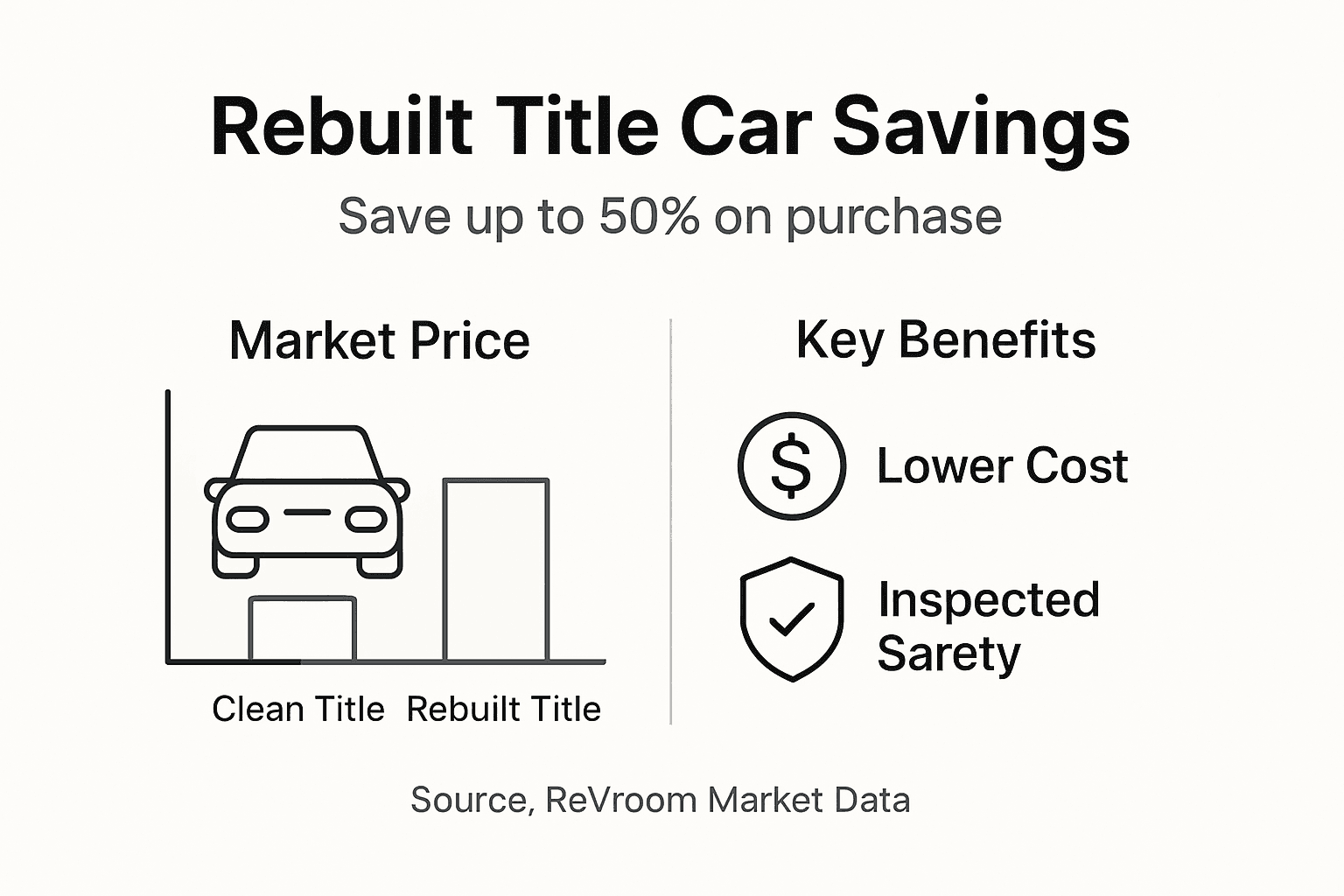
These discounts reflect market perception balanced against the reality that rebuilt vehicles pass required safety inspections. You’re not buying damaged goods. You’re buying transparency at a fair price.
Budget-conscious buyers who prioritize value find rebuilt titles ideal. You get reliable transportation without the premium pricing. The trade-off? Potentially lower resale value and insurance payouts based on current market rates rather than inflated retail pricing.
Our analysis of rebuilt title car values shows consistent pricing patterns across vehicle types and conditions.
| Vehicle Type | Clean Title Price | Rebuilt Title Price | Your Savings |
|---|---|---|---|
| Compact Sedan | $18,000 | $9,000-$12,600 | $5,400-$9,000 |
| Mid-Size SUV | $28,000 | $14,000-$19,600 | $8,400-$14,000 |
| Pickup Truck | $35,000 | $17,500-$24,500 | $10,500-$17,500 |
The math is simple. For buyers comfortable with inspection-verified vehicles and documented histories, rebuilt titles offer exceptional value.
Key financial advantages include:
- Lower purchase price frees budget for maintenance or upgrades
- Reduced loan amounts mean smaller monthly payments
- Insurance costs reflect actual market value, not inflated retail
- You control due diligence instead of trusting dealer markup
Insurance Implications and Realities for Rebuilt Title Cars
Over 80% of insurance providers in the U.S. offer coverage for rebuilt title cars with market-appropriate premiums. The “can’t insure rebuilt cars” myth stops many buyers unnecessarily.
Most insurers provide liability and comprehensive coverage for rebuilt vehicles without issue. Premiums reflect the car’s current market value. You’re not penalized for smart buying.
Some specialty or high-risk insurers may limit certain coverage types, but mainstream providers handle rebuilt titles routinely. The key is shopping multiple carriers for best rates and coverage options.
Insurance approval requires proper documentation. Bring your rebuilt title, inspection certificates, and repair records when requesting quotes. Legitimate insurers appreciate transparency and reward it with competitive pricing.
Our guide to insurance options for rebuilt vehicles details coverage types and provider selection.
What to expect from rebuilt title insurance:
- Liability coverage at standard rates for your driving profile
- Comprehensive and collision options from most major carriers
- Premiums based on vehicle’s current market value
- Possible limitations on certain specialty coverage types
- Competitive quotes when you shop multiple providers
Pro Tip: Get insurance quotes before finalizing your purchase. Confirm coverage availability and costs so there are no surprises after signing.
The Value of Transparency in Buying Rebuilt Title Cars
Access to accident history and pre-repair photos can reduce buyer vetting costs by about $150, improving confidence in purchasing decisions. Transparency eliminates guesswork and fear.
Traditional rebuilt car buying requires expensive investigations. You pay for history reports, hire inspectors, and hope you’re getting complete information. That’s $150 or more per vehicle you seriously consider.
Transparent marketplaces change this equation. When listings include clear disclosure of vehicle history, pre-repair photos showing exactly what happened, and inspection reports verifying legal roadworthiness, you make informed decisions confidently.
Pre-repair photos are especially valuable. They show the extent of the incident, which components were affected, and whether repairs addressed all issues properly. You see what the insurance company saw when making their total loss determination.
Our directory of trusted rebuilt car marketplaces highlights platforms prioritizing transparency.
Transparency delivers real benefits:
- Complete history disclosure eliminates hidden surprises
- Pre-repair photos let you assess incident severity visually
- Inspection documentation confirms legal safety compliance
- Reduced need for expensive third-party investigations
- Confidence to negotiate fairly based on documented facts
How to Evaluate and Buy a Rebuilt Title Vehicle Safely
Smart buying starts with thorough verification. Follow these steps to ensure you’re getting a quality rebuilt vehicle at a fair price.
- Verify rebuilt title status through official vehicle history reports from your state’s DMV or authorized providers.
- Review all available pre-repair photos showing what the vehicle looked like before repairs. Assess incident severity and affected components.
- Confirm the vehicle passed state inspection and holds proper certification. Request documentation proving compliance.
- Contact multiple insurance providers to confirm coverage availability and compare premium quotes before committing.
- Check accident history and check VIN history through comprehensive databases to ensure no surprises.
- Conduct a personal physical inspection or hire a trusted mechanic to verify current condition matches documentation.
- Negotiate price based on documented condition, repair quality, and comparable rebuilt title sales in your market.
Pro Tip: Never skip the in-person inspection, even with excellent documentation. Your eyes and a mechanic’s expertise provide final confirmation before purchase.
Additional due diligence considerations:
- Verify all major systems operate correctly during test drive
- Check for proper panel alignment and paint quality indicating repair workmanship
- Confirm all safety features including airbags were properly replaced or recertified
- Review maintenance records to understand post-repair care
- Ask sellers detailed questions about repair process and parts used
Explore ReVroom’s Transparent Rebuilt Title Marketplace
Ready to access quality rebuilt title vehicles with full transparency? ReVroom provides detailed vehicle history, pre-repair photos, and clear pricing on every listing. We eliminate the $150 vetting cost by including the information you need upfront.

Our platform showcases the rebuilt car retitling process for each vehicle, explains the rebuilt title process clearly, and even helps you understand options to finance a rebuilt car if needed. Every listing includes complete history documentation so you can buy with confidence.
Visit ReVroom today to explore vehicles that save you money without sacrificing transparency or quality. Your next reliable car is waiting.
Frequently Asked Questions About Rebuilt Title Cars
What documents should I verify when buying a rebuilt title car?
Request the rebuilt title certificate, state inspection documentation, repair invoices showing work completed, and pre-repair photos if available. Verify the VIN matches across all documents. A rebuilt title definition guide explains these requirements in detail.
Are rebuilt title cars safe for family use?
Rebuilt cars meeting state inspection requirements are legally roadworthy and safe to drive. Inspections verify critical safety systems function properly. Your responsibility is conducting thorough due diligence before purchase to confirm current condition matches documentation.
Can I finance a car with a rebuilt title?
Many lenders offer financing for rebuilt title vehicles, though terms may differ from clean title loans. Some credit unions and specialized lenders focus on this market. Shop multiple financing sources to compare rates and requirements.
How does a rebuilt title affect resale value?
Rebuilt titles typically maintain their 30-50% discount when you resell. Your buyer receives the same value proposition you did: transparent history at fair pricing. Price your vehicle according to comparable rebuilt title sales in your market.
What should I inspect personally before purchase?
Test drive the vehicle thoroughly, checking acceleration, braking, and handling. Examine body panels for proper alignment and paint quality. Verify all lights, signals, and safety features operate correctly. Consider hiring a mechanic for comprehensive evaluation. Understanding rebuilt title insurance requirements helps you prepare properly.
Do rebuilt titles come from accidents only?
No. Many rebuilt titles result from hail, theft recovery, flood, fire, or even manufacturing defects requiring extensive repair. The designation simply means the vehicle was declared a total loss and later repaired to meet safety standards.
