


What Drives Used Car Prices Down: A 2026 Buyer's Guide
July 17, 2026
TL;DR:
- Used car prices are decreasing mainly due to depreciation, higher inventory levels, and condition factors reducing buyer demand. Buying a vehicle between three and five years old offers a significant discount while avoiding the steepest depreciation. Branded-title cars sell for 20–50% less, providing long-term savings for buyers willing to accept the history.
Used car prices fall primarily because of depreciation, rising inventory levels, and vehicle condition factors that reduce what buyers are willing to pay. Understanding what drives used car prices down gives you a real edge in the market. Right now, used vehicle inventories sit 15–20% above long-term averages, and loan rates are running 5–8%. That combination is pushing dealers to cut prices faster than they have in years. Whether you are shopping for a clean-title sedan or exploring branded-title vehicles, knowing what causes prices to drop tells you exactly when and where to find the best deal.
What drives used car prices down the most?
Depreciation is the single biggest force pulling used car prices lower. A new car loses roughly 20% of its value in the first year alone, and about 60% by year five. That is not a slow bleed. It is a steep cliff that flattens out as the car ages.

The practical implication is straightforward. A car that cost $35,000 new is worth around $14,000 by its fifth birthday, even with clean history and reasonable miles. Buyers who purchase at the three-to-five-year mark skip the worst of that drop and still get a modern, reliable vehicle.
Higher mileage accelerates this decline further. A car driven 20,000 miles a year depreciates faster than one driven 10,000 miles, because wear signals future repair costs to every buyer who looks at it. Deferred maintenance compounds the problem. A car with no service records loses value faster than one with a documented history, even if both look identical at the curb.
Depreciation by year: what the numbers look like
| Year | Approximate value remaining |
|---|---|
| Year 1 | ~80% of original price |
| Year 2 | ~70% of original price |
| Year 3 | ~60% of original price |
| Year 5 | ~40% of original price |
| Year 7 | ~25% of original price |
Pro Tip: Buy at the three-to-five-year mark to let the original owner absorb the steepest depreciation. You get a modern car at a fraction of the new price.

How does market supply and demand affect used car prices?
Supply and demand shape used car prices just as much as age and mileage. When inventory is high and buyers are scarce, prices fall. That is exactly where the market sits in 2026.
Used vehicle inventories are currently 15–20% above long-term averages. Dealers with full lots have one priority: move cars. That pressure translates directly into lower asking prices, better trade-in offers, and more room to negotiate.
“High interest rates and price barriers have squeezed lower-income buyers out of the retail market entirely, creating inventory surpluses that push prices down further across all segments.”
Affordability pressures have shrunk the buyer pool significantly. When fewer people can qualify for a loan at 5–8% interest, demand softens. Dealers respond by cutting prices to attract the buyers who remain.
Seasonal patterns add another layer. Auction conversion rates dropped to 56% during the July 4 holiday week, a clear sign of seasonal softness. Buyers who time their purchases around these dips, such as late summer or the weeks after the holidays, often find better prices than those who shop during peak demand periods like tax refund season.
Key demand factors that push prices lower:
- Loan rates above 5% reduce monthly affordability and shrink the buyer pool
- Seasonal slowdowns in late summer and post-holiday periods reduce competition
- Economic uncertainty causes buyers to delay purchases, increasing dealer inventory pressure
- Market transparency through no-haggle pricing makes price softening visible and measurable
How do branded titles and vehicle condition reduce prices?
Vehicle condition and title status are the most direct levers buyers can use to find a meaningful discount. A branded title, which covers rebuilt, reconstructed, and similar designations, signals that a vehicle was previously declared a total loss by an insurance company, repaired, and certified as road ready by a state inspection. That history creates a permanent price discount.
Branded-title vehicles sell for 20–50% less than comparable clean-title cars, depending on the type and severity of the prior damage. That is a real, measurable discount on a car that has passed a state safety inspection and is legal to drive daily.
The discount persists because of two structural factors. First, major lenders rarely finance rebuilt or branded-title vehicles, which shrinks the buyer pool to cash buyers and those with access to specialty financing. Second, insurance coverage is often limited to liability only, which reduces what buyers are willing to pay. Fewer eligible buyers means lower prices, full stop.
Clean title vs. rebuilt title: what changes for buyers
| Factor | Clean title | Rebuilt/branded title |
|---|---|---|
| Price vs. market | Full market value | 20–50% below clean-title equivalent |
| Financing | Standard bank financing | Specialty lenders or cash |
| Insurance | Full coverage available | Often liability only |
| Resale value | Standard depreciation | Permanent discount at resale |
| State certification | Not required | Required before road use |
A rebuilt title is not the same as a salvage title. A salvage title means the car has not been repaired and is not road legal. A rebuilt title means it has been repaired and passed a state inspection. That distinction matters enormously when you are evaluating price versus value.
The discount only represents real savings when the buyer verifies vehicle history, secures an independent inspection, and plans to keep the car long term. Buyers who flip branded-title cars quickly absorb the permanent resale penalty without getting the benefit of years of low-cost driving. For buyers who want a dependable daily driver and plan to hold it, the math works strongly in their favor.
Pro Tip: A Revroom History Report costs $15 and tells you what happened to the car, how severe it was, and whether the asking price is fair compared to clean-title vehicles nearby. That is less than the cost of a meal and far less than the $150 average buyers typically spend vetting a branded-title vehicle on their own.
Understanding branded title cars in depth helps you separate the gems from the ones worth skipping.
What external factors cause used car prices to drop?
Beyond depreciation and title status, broader market forces shape which cars lose value fastest. Fuel costs are one of the clearest examples. When gas prices rise sharply, demand for large SUVs and trucks softens quickly. Rising fuel costs shift buyer demand toward fuel-efficient models and depress the value of less economical vehicles. A full-size pickup that was selling at a premium during low-gas periods can drop thousands in asking price within months when fuel costs spike.
Brand reputation and reliability records also drive price retention. Brands known for reliability, like Toyota and Lexus, depreciate slower and hold higher resale values than brands with weaker reliability records. A five-year-old Toyota Camry holds its value better than a comparable vehicle from a brand with a reputation for expensive repairs, because buyers price in expected ownership costs.
Other external factors that push prices lower:
- Discontinued models lose value faster because parts and service networks shrink over time
- High insurance costs for certain models reduce buyer demand and suppress prices
- New model releases make prior-year versions less desirable almost overnight
- Macroeconomic slowdowns reduce consumer confidence and delay purchase decisions
The practical takeaway is that model choice matters as much as timing. A fuel-efficient, reliable model from a brand with a strong service network holds value better and costs less to own over time, even if the sticker price looks similar to a less reliable alternative.
Key Takeaways
Used car prices fall fastest in the first five years of a vehicle’s life, and buyers who understand depreciation, inventory cycles, and title status can find significantly better deals.
| Point | Details |
|---|---|
| Depreciation peaks early | New cars lose about 20% in year one and 60% by year five. |
| Inventory surplus lowers prices | Current inventories are 15–20% above average, giving buyers real negotiating power. |
| Branded titles offer the deepest discounts | Rebuilt-title vehicles sell for 20–50% less than clean-title equivalents. |
| Timing purchases saves money | Seasonal dips and post-holiday periods consistently produce lower prices. |
| Model choice affects long-term value | Reliable, fuel-efficient models depreciate slower and cost less to own. |
The honest truth about finding value in a falling market
We spend a lot of time at Revroom watching how buyers approach the used car market, and the pattern is consistent. Buyers who do their homework on depreciation curves and inventory cycles almost always come out ahead. Buyers who shop on impulse, or who fixate on clean titles without understanding what they are actually paying for, often leave money on the table.
The branded-title category is where we see the most misunderstood value. The 20–50% discount is real and permanent. But the savings only materialize for buyers who treat it like a long-term decision. If you buy a rebuilt-title car, drive it for five years as a daily driver, and skip the premium you would have paid for a clean title, you have genuinely saved thousands. If you buy it hoping to flip it in a year, the resale penalty eats your margin.
What we tell buyers consistently is this: the market right now is unusually favorable. Inventory is high, rates are squeezing demand, and dealers are motivated. That combination does not last forever. Buyers who understand what a branded title means and are willing to look past the stigma are finding some of the best per-dollar vehicles we have seen in years. The research is there. The tools are there. The only thing left is the decision to use them.
— Revroom Editorial Team
Revroom makes branded-title buying transparent and affordable
Revroom is the only marketplace built specifically for rebuilt and branded-title vehicles. Every listing includes vehicle history information and photos of the car before repairs, so you can see exactly what you are buying before you commit.
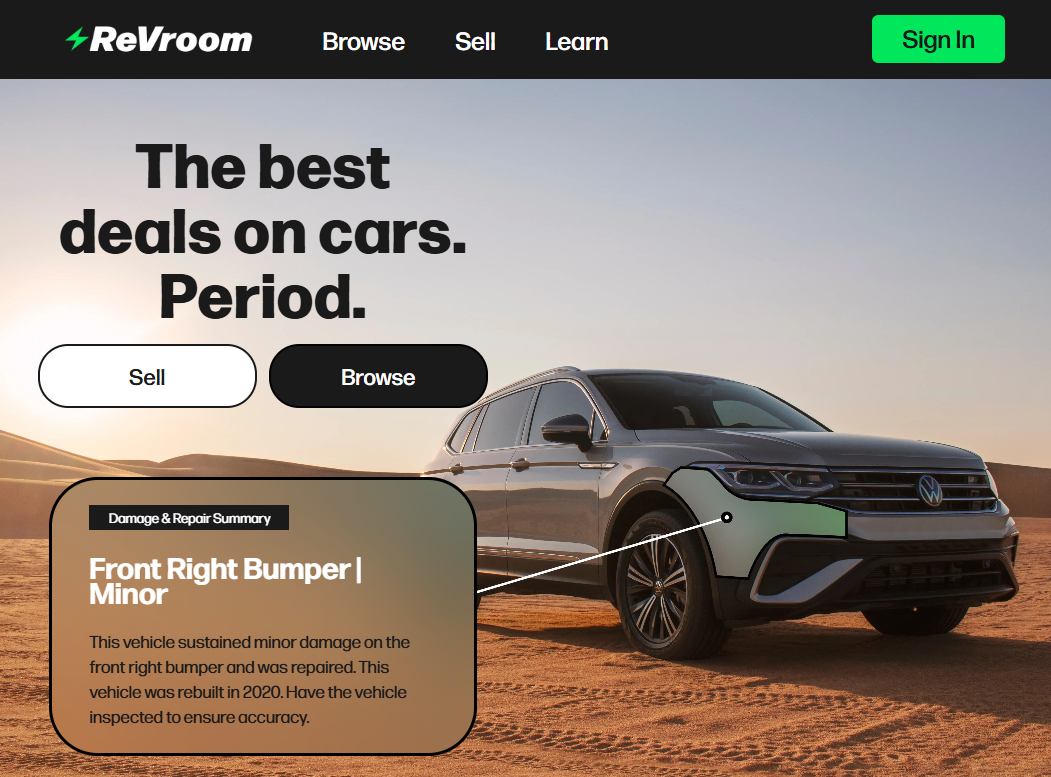
Buyers save an average of up to 50% compared to clean-title equivalents, and every vehicle on the platform has passed state-required certification confirming it is repaired and road ready. You do not need to spend $150 vetting a vehicle on your own. Revroom includes the history upfront, and a Revroom History Report gives you a full price and condition analysis for any branded-title vehicle anywhere for just $15. Browse listings, filter by condition, and find a dependable daily driver for meaningfully less.
FAQ
What causes used car prices to drop the most?
Depreciation is the primary cause, with new cars losing about 20% in the first year and 60% by year five. High inventory levels and reduced buyer demand from elevated interest rates also push prices down significantly.
How does mileage affect used car value?
Higher mileage accelerates depreciation because it signals greater wear and higher future repair costs to buyers. Vehicles with lower mileage consistently command higher prices in the used car market.
Are branded-title cars worth buying for savings?
Branded-title vehicles sell for 20–50% less than clean-title equivalents and represent real savings for buyers who plan to keep the car long term. The discount is permanent, so the value is strongest for daily drivers held over several years.
When is the best time to buy a used car for a lower price?
Seasonal dips, such as late summer and the weeks after major holidays, consistently produce lower prices and weaker competition. Buying during inventory surpluses, like the current 2026 market, adds further negotiating leverage.
What should I check before buying a branded-title vehicle?
Verify the vehicle history, confirm the car has passed its state safety inspection, and review photos of the pre-repair condition. A history report that shows damage type, severity, and local price comparisons gives you the clearest picture before you buy.
