


Best Car Deals Explained: Types Every Buyer Should Know
July 7, 2026
TL;DR:
- Rebuilt title vehicles are offered at discounts of 20% to 40% compared to clean-title cars.
- They are legal to drive and register after passing a state inspection, unlike salvage titles.
Car deal types are defined by the title status of the vehicle, and that single factor shapes everything from the purchase price to your insurance options. Clean title, rebuilt title, and other branded title categories each represent a different vehicle history and a different financial opportunity. Budget-conscious buyers who understand these categories gain a real edge. Rebuilt title vehicles, for example, can cost 20% to 40% less than identical clean-title models. That kind of savings is worth understanding before you ever set foot on a lot.
What are the best car deals explained by title type?
The three main car deal categories are clean title, rebuilt title, and salvage title. Each one tells you something specific about the car’s past and its legal status on the road today.

A clean title vehicle has no record of being declared a total loss by an insurer. It carries the highest resale value and the fewest restrictions on financing and insurance. Clean title is the default expectation for most buyers, and it comes with the highest price tag.
A rebuilt title is granted after a previously salvaged vehicle is repaired and passes a state safety inspection, making it legal to drive and register again. The rebuilt designation is permanent. It follows the car for life, which is why the price drops so significantly compared to a clean-title equivalent.
A salvage title is a different story entirely. Repair costs must exceed 75% to 90% of a vehicle’s market value before an insurer declares it a total loss and issues a salvage title. A salvage vehicle cannot be legally driven or insured on public roads. It is not roadworthy until it is repaired and reinspected. Revroom does not list salvage vehicles for exactly this reason. The marketplace focuses exclusively on rebuilt title cars that have already cleared that bar.
How does a rebuilt title differ from salvage and clean titles?
The clearest way to see the differences is side by side.
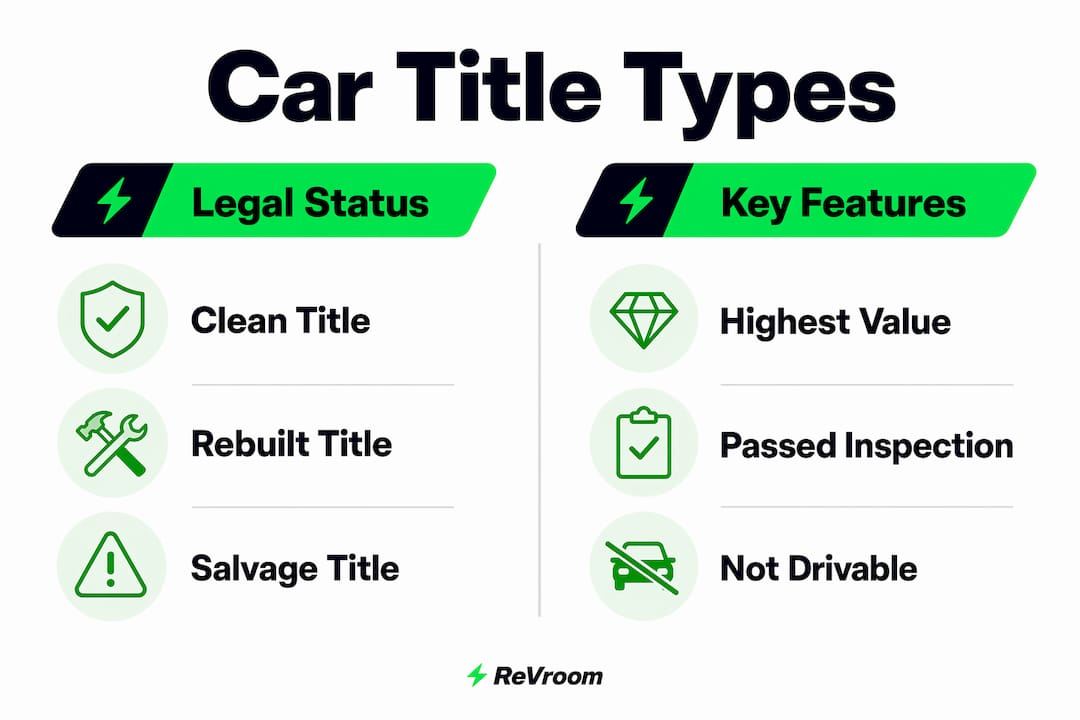
| Feature | Salvage title | Rebuilt title | Clean title |
|---|---|---|---|
| Legal to drive | No | Yes | Yes |
| Registrable | No | Yes | Yes |
| Insurance available | No | Liability, sometimes more | Full coverage |
| Financing available | Rarely | Limited | Standard |
| Resale value | Very low | Discounted | Full market value |
| Inspection required | N/A | Yes, state-mandated | No |
The inspection step is where rebuilt titles earn their status. A salvage vehicle cannot be driven until it is repaired and approved by a state inspector. Once it passes, the state issues a rebuilt title. That title is the official record that the car was fixed and cleared for road use.
One important caveat: inspection rigor varies by state. Some states require thorough mechanical and structural checks. Others conduct minimal visual reviews. That variability matters when you are evaluating how much confidence to place in the rebuilt designation alone.
Pro Tip: Always research the inspection standards in the state where the car was rebuilt, not just where it is being sold. A rebuilt title from a state with strict standards carries more weight than one from a state with a light-touch process.
How do rebuilt and branded titles affect value, insurance, and financing?
The price discount on rebuilt title vehicles is real and significant. Rebuilt vehicles typically sell for 20% to 40% less than clean-title equivalents. Luxury and newer vehicles tend to sit at the higher end of that discount range because financing and insurance restrictions make them harder to move.
Insurance options for rebuilt title cars
Insurance is the area where buyers most often get surprised. Most major insurers limit coverage on rebuilt title vehicles to liability only. That means if you cause an accident, your insurer covers the other party. It does not cover damage to your own car. Some specialty insurers do offer comprehensive and collision coverage for rebuilt titles, but you need to shop specifically for them.
Here is what to do before you buy:
- Call at least three insurers and ask specifically about rebuilt title coverage.
- Get quotes in writing before you finalize the purchase.
- Ask whether the insurer will cover the car at actual cash value or a stated value.
- Confirm whether the rebuilt title affects your premium rate, not just your coverage options.
Financing challenges
Most conventional lenders restrict financing for rebuilt title vehicles. Major banks and credit unions often decline these loans outright. That pushes many buyers toward cash purchases or specialty lenders, who may charge higher interest rates to offset their perceived risk.
Pro Tip: Get financing pre-approval from a specialty lender before you start shopping. Knowing your budget and your lender’s requirements saves you from falling in love with a car you cannot finance.
What should buyers look for when evaluating rebuilt title cars?
Buying a rebuilt title car well requires more than trusting the title itself. The state inspection confirms the car is roadworthy, but it does not guarantee the quality of the repairs. That is your job to verify.
Here is a practical checklist for evaluating any rebuilt or branded title vehicle:
- Request the full repair history. Ask for itemized invoices showing exactly what was repaired, replaced, or repainted. Vague answers are a red flag.
- Get pre-repair photos. Seeing what the car looked like before repairs tells you the origin and severity of the vehicle history. Revroom includes these photos in every listing.
- Order a vehicle history report. A Revroom History Report costs $15 and tells you what happened to the car, how severe it was, and whether the asking price is fair compared to clean-title vehicles in your area.
- Hire an independent mechanic. Verifying structural integrity requires more than a visual check. A qualified mechanic can spot frame damage, misaligned panels, and substandard welds that a state inspector may have missed.
- Watch for red flags. Mismatched paint, uneven panel gaps, and fresh undercoating over rust are signs that repairs were rushed or hidden.
- Negotiate based on findings. Online valuation tools often overgeneralize rebuilt title discounts and ignore repair quality. Use your inspection findings and the vehicle’s specific history to negotiate a price that reflects actual condition.
Not all rebuilt title vehicles carry equal risk. Hail damage vehicles with rebuilt titles are often excellent opportunities because the mechanical systems remain untouched and repairs are mostly cosmetic. A car that was totaled due to a flood or a severe front-end collision requires far more scrutiny.
How can buyers find and secure the best deals across car deal types?
The best car deal for a budget-conscious buyer is not always the cheapest sticker price. It is the vehicle that delivers the most reliable transportation per dollar spent over the time you own it.
Where to find rebuilt and branded title vehicles
- Specialized online marketplaces like Revroom list rebuilt title vehicles with vehicle history information and pre-repair photos already included, so you are not starting from zero.
- Auto auctions can surface deals, but they typically require more due diligence on your part since inspection time is limited.
- Private sellers on general listing platforms sometimes offer rebuilt title cars, but transparency varies widely. A Revroom History Report is especially useful in these situations.
Other deal types worth knowing
Beyond title-based deals, buyers also encounter:
- Cash rebates from manufacturers, which reduce the purchase price directly and require no financing.
- Low-interest financing promotions, often offered at the end of a model year when dealers need to clear inventory.
- Lease specials, which lower monthly payments but do not build equity and come with mileage limits.
Each of these deal types has a different cost structure. A low monthly lease payment can cost more over three years than buying a rebuilt title vehicle outright.
Pro Tip: Calculate total cost of ownership over your expected holding period, not just the purchase price. Factor in insurance, maintenance, and likely resale value. A rebuilt title car kept for five years often beats a financed clean-title car on total cost.
Rebuilt title value is permanent in the sense that the title never clears, but for buyers who plan to keep a car long-term, that resale penalty matters far less. Well-documented repairs and quality inspections can partially offset market concerns when the vehicle history is disclosed transparently.
Key Takeaways
Rebuilt title vehicles offer the deepest discounts in the car market, but the value is only real when buyers verify repair quality, understand insurance limits, and calculate total ownership cost before signing.
| Point | Details |
|---|---|
| Title type defines the deal | Clean, rebuilt, and salvage titles each carry different prices, legal status, and ownership costs. |
| Rebuilt title savings are real | Rebuilt vehicles sell for 20% to 40% less than clean-title equivalents, with steeper discounts on luxury models. |
| Insurance and financing are limited | Most major insurers and lenders restrict coverage and loans for rebuilt titles; shop specialty providers first. |
| Inspection quality varies by state | State inspection rigor differs widely; always hire an independent mechanic regardless of where the car was rebuilt. |
| Total cost beats sticker price | Factor in insurance, maintenance, and resale value over your full ownership period before deciding on any deal type. |
The real opportunity most buyers walk past
Here is something the standard car-buying advice almost never says: the rebuilt title market is one of the last places where an informed buyer still has a genuine edge over the average shopper. Most people hear “rebuilt title” and walk away. That reaction is understandable, but it leaves real value on the table.
The cars that concern me are not the ones with rebuilt titles and full documentation. The cars that concern me are the clean-title vehicles with undisclosed fender repairs and a fresh coat of paint. At least with a rebuilt title, the vehicle history is on record. You know something happened. The question is whether the repair was done right, and that is a question you can actually investigate.
Branded title vehicles represent excellent financial opportunities for buyers who plan to keep their cars long-term and are willing to do the work upfront. The buyers who get burned are the ones who skip the independent inspection or ignore the documentation gaps. The buyers who win are the ones who treat the due diligence as part of the purchase process, not an optional add-on.
Transparency is the whole game. When you can see what happened to a car, how it was fixed, and what it is worth compared to similar vehicles in your area, you are not taking a leap of faith. You are making an informed decision. That is exactly the kind of buying we want to see more of.
— Revroom Editorial Team
Revroom makes rebuilt title shopping transparent

Revroom is the only online marketplace built specifically for rebuilt title vehicles. Every listing includes vehicle history information and photos of what the car looked like before repairs, so you are never guessing about what you are buying. For any rebuilt title car you find anywhere online, a Revroom History Report gives you the full picture for $15. That includes what happened, how severe it was, and whether the price is fair compared to clean-title vehicles near you. Budget-conscious buyers deserve real information, not vague assurances. Start your search at Revroom’s marketplace and find rebuilt title vehicles listed with the transparency you need to buy with confidence.
FAQ
What is a rebuilt title car?
A rebuilt title car is a vehicle that was previously declared a total loss by an insurer, then repaired and passed a state safety inspection. The rebuilt title is a permanent designation that confirms the car is legal to drive and register.
Are rebuilt title cars safe to buy?
Rebuilt title cars can be safe, but safety depends on the quality of the repairs and the rigor of the state inspection. An independent mechanic inspection and a full vehicle history report are the two most reliable ways to verify condition before buying.
How much cheaper are rebuilt title vehicles than clean-title cars?
Rebuilt title vehicles typically sell for 20% to 40% less than comparable clean-title models. Luxury and newer vehicles tend to see the steepest discounts due to financing and insurance restrictions.
Can you get insurance on a rebuilt title car?
Most major insurers offer only liability coverage for rebuilt title vehicles. Some specialty insurers provide comprehensive and collision coverage, so it pays to shop specifically for providers who work with branded title cars before you finalize a purchase.
What is the difference between a salvage title and a rebuilt title?
A salvage title means the car cannot be legally driven or insured on public roads. A rebuilt title means the car was repaired, passed a state inspection, and is now legal to drive and register. Salvage becomes rebuilt only after that repair and inspection process is complete.
