


How salvage becomes a rebuilt title: safe buyer's guide
April 26, 2026
TL;DR:
- Rebuilt title cars can offer 20-40% savings but pose higher insurance and resale risks.
- Conduct thorough paperwork checks, VIN history reports, and independent inspections before buying.
- Vehicles with documented hail, cosmetic, or theft histories tend to be lower risk than flood or frame damage.
A rebuilt title car sounds like a dream for the budget-conscious buyer. You get a real vehicle, often at a fraction of what you’d pay elsewhere, and drive away feeling like you scored the deal of the century. But here’s what most buyers don’t see coming: the savings are real, and so are the traps. Not every rebuilt title vehicle is created equal, and the difference between a genuine bargain and a costly mistake usually comes down to what happened to the car before it was repaired, and how thoroughly that repair was documented. This guide walks you through exactly what you need to know to shop smarter, safer, and with a lot more confidence.
Table of Contents
- What does salvage to rebuilt title mean?
- pros and cons of rebuilt title cars for budget buyers
- navigating insurance and financing with rebuilt titles
- How to safely buy a rebuilt title car
- What most rebuilt title buyers get wrong
- Find rebuilt title vehicles you can trust
- frequently asked questions
Key Takeaways
| Point | Details |
|---|---|
| Know the process | Salvage cars become rebuilt after certified repairs and a state inspection pass. |
| Weigh risks and savings | Rebuilt titles can save 20-40%, but insurance, resale, and hidden repair risks can be significant. |
| Documentation is critical | Only consider rebuilt vehicles with complete repair records, history checks, and independent inspections. |
| Insure and finance wisely | Expect limited insurance and financing options—plan for higher rates or paying cash. |
What does salvage to rebuilt title mean?
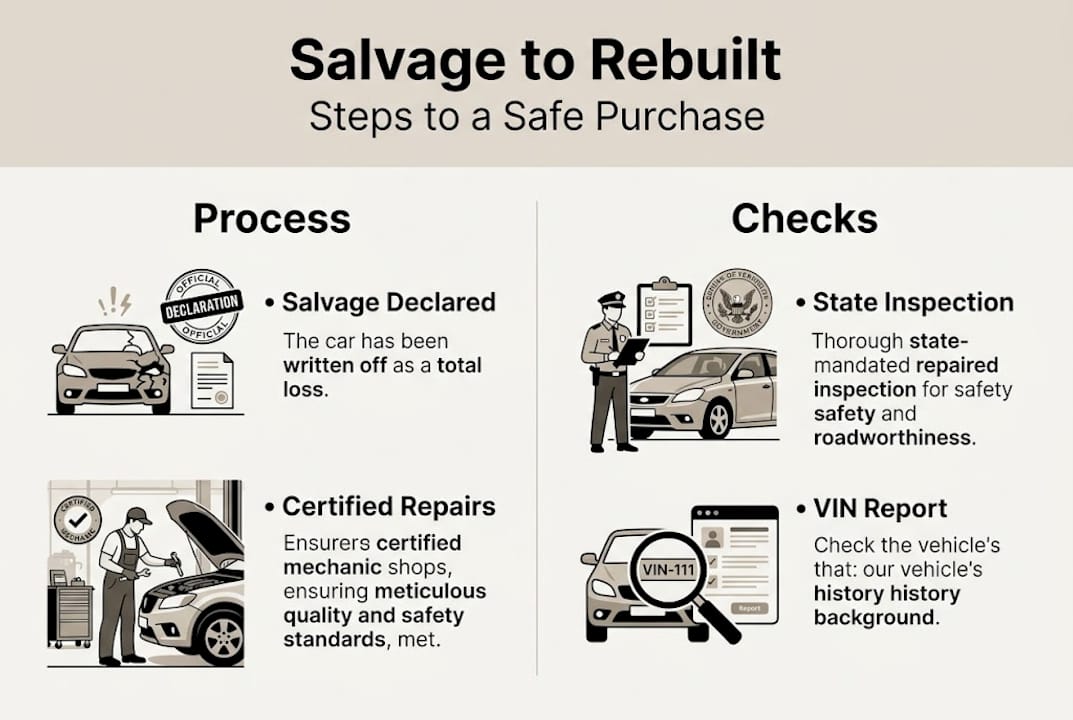
Let’s start at the beginning, because these terms get mixed up constantly. When an insurance company decides that repairing a vehicle would cost more than the car is actually worth, they declare it a total loss. At that point, the car receives a specific designation on its title to signal its history. Once a vehicle is repaired and passes a state-mandated safety inspection, it earns a rebuilt title, also sometimes called a reconstructed or branded title. According to Consumer Reports, salvage vehicles become rebuilt after repairs and state-mandated inspections. That inspection is the legal gate between “total loss” and “back on the road.”
Now, the events that lead a car to that status vary widely. Here are some of the most common:
- Weather events like hail storms that cause significant body or glass damage
- Minor collisions where repair costs exceeded the car’s book value
- Vehicle theft where the car was recovered but deemed too costly to fix by the insurer
- Fire or flood events that affect mechanical or electrical systems
- Paint or cosmetic defects flagged as total losses by certain insurers
Not all of these are equal in terms of risk. A car that took hail damage and had its panels repaired or replaced is a very different animal than one that sat in floodwater for three days. The designation on the title is the same, but the actual condition and future reliability can be worlds apart.
“The title label tells you a car has history. The documentation tells you what that history actually means.”
This is why reading about buying rebuilt title vehicles wisely before you start shopping matters so much. The title itself is just the starting point. What you really need to chase is the paper trail: repair records, photos taken before and after the work was done, and VIN history reports. Think of the title as the cover of a book. You still need to read the chapters.
For a more detailed look at what buying a used car with a rebuilt title really involves day-to-day, there’s no substitute for doing your homework on the specific vehicle in front of you.
pros and cons of rebuilt title cars for budget buyers
Understanding these definitions sets you up to evaluate if these vehicles actually align with your financial goals and risk tolerance. So let’s talk money.
| Factor | What to expect** | Reality check** |
|---|---|---|
| Purchase price | 20-40% below market | Real savings, but do the math on total cost of ownership |
| Insurance cost | Often higher premiums | Some providers charge 20-40% more for full coverage |
| Trade-in value | Lower than clean title | Plan to keep it long-term for best ROI |
| Long-term running cost | Variable | History type matters a lot here |
Consumer Reports notes that savings are real (20-40% off) but come with insurance and resale drawbacks. That’s the honest summary. For buyers who plan to pay cash and keep the car for years, rebuilt titles can be a genuinely smart move. For buyers hoping to flip the car or trade it in a few years, the math looks a lot less friendly.
The risks of rebuilt title vehicles are worth reading carefully, especially when it comes to flood and frame damage. Those two categories carry risks that go beyond cosmetics. Frame damage can compromise structural integrity in a future collision. Water intrusion can quietly corrode electrical systems months or years after the repair. These aren’t deal-breakers for every buyer, but they’re facts you should weigh.

On the upside, a hail-damaged car that received cosmetic panel work or a theft-recovery vehicle with no structural issues can be an excellent buy. The rebuilt title car cons are real, but they aren’t universal. Context, documentation, and rebuilt title value all depend heavily on what kind of event the car went through.
Pro tip: If you’re a cash buyer planning to hold the car for five or more years, a hail or cosmetic-event vehicle with clean repair records could offer genuine savings without disproportionate risk.
navigating insurance and financing with rebuilt titles
The cost savings appeal to budget buyers, but insurance and loans pose their own hurdles. Here’s what to expect.
Let’s talk insurance first. The good news: getting rebuilt title cars insured is far more doable than the internet would have you believe. Most major providers will cover these vehicles. That said, liability insurance is 10-20% higher for rebuilt titles, and full coverage may be 20-40% higher or, in some cases, unavailable depending on the provider and the vehicle’s history.
| Insurance type | What to expect with a rebuilt title** |
|---|---|
| State minimum liability | Generally available from most providers |
| Full coverage (comprehensive + collision) | Available from many, but may cost more |
| Gap insurance | Often unavailable |
| Classic or specialty coverage | Case-by-case basis |
Financing is the trickier piece. Most traditional banks and lenders are reluctant to write loans for rebuilt title vehicles. Your path forward looks like this:
- Pay cash if you can. This is the cleanest option and the most common route for rebuilt title buyers.
- Try credit unions. They tend to have more flexibility and community-oriented lending practices.
- Look into alternative lenders. Some specialize in non-traditional vehicle financing, though terms may be stricter.
- Have your documents ready. Any lender willing to work with you will want to see repair records, the title, and ideally a recent inspection report.
- Know your equity position. Because rebuilt cars are worth less on paper, you’re less likely to be upside-down on a loan if you negotiate well.
Our deep dives on financing a rebuilt car, financing rebuilt title cars, and a step-by-step financing guide can help you map out your options before you walk into any conversation with a lender.
How to safely buy a rebuilt title car
Once you know the system’s pros and cons, here’s exactly how to evaluate and buy a rebuilt title car with more confidence.
- Choose your history type wisely. Start with vehicles that have hail, cosmetic, or theft-recovery histories before considering anything with more complex repair backgrounds.
- Request full documentation. Ask the seller for all repair records, parts receipts, and before-and-after photos. No paperwork, no deal.
- Run a thorough VIN check. Use pre-purchase inspection and VIN checks through services like preventing title fraud and resources like CarFax, the National Motor Vehicle Title Information System (known as the National Motor Vehicle Title Information System or the free database that tracks title history across states), and the National Insurance Crime Bureau.
- Get an independent pre-purchase inspection (PPI). A trusted mechanic who has no stake in the sale should put the car on a lift and look for anything the seller didn’t mention.
- Look closely at the quality of repairs. Panel gaps, mismatched paint, and uneven body lines can all signal corners were cut during the fix.
- Check for title washing. This is when a vehicle’s history is obscured by moving it across state lines to erase its rebuilt designation. A thorough VIN check across multiple databases is your best defense.
Pro tip: A hail-damaged car with a complete folder of repair invoices, before-and-after photos, and a clean VIN report is far lower risk than a mystery vehicle selling below market with vague answers about its history.
For more on how to find safe rebuilt title vehicles and a full rebuilt title cars safety guide, we’ve got the resources to walk you through each step in detail.
What most rebuilt title buyers get wrong
Here’s the uncomfortable truth: most buyers treat rebuilt titles as a single category, as if every car with that label carries the same risk and the same opportunity. They don’t. Not even close.
The single biggest mistake we see is buyers chasing the lowest sticker price without asking what caused the vehicle to earn that title in the first place. A low price on a car with frame or flood history is not a deal. It’s a question mark with wheels. Meanwhile, a hail-repaired car or a theft recovery with solid paperwork can genuinely be one of the best purchases you’ll make. The best value post-inspection comes from vehicles with known, documented, lower-risk histories.
The second mistake is skipping transparency entirely. Whether it’s skipping the VIN report, trusting a verbal history, or assuming the state inspection means the car is fully vetted, shortcuts are where deals go sideways. Documentation is not optional. It is the deal.
Our take: rebuilt titles are not a gamble if you’re informed. The risks of buying rebuilt title vehicles are manageable when you know what to look for. Most buyers who regret their purchase didn’t lack courage. They lacked information.
Find rebuilt title vehicles you can trust
Ready to put these strategies into action and find deals worth your time? Here’s where to begin your search with confidence.
At ReVroom, we built the only marketplace designed specifically for rebuilt title vehicles. Every listing includes vehicle history information and photos of what the car looked like before it was repaired, so you get the transparency you need without spending $150 on reports for every car you’re curious about. You can compare options, spot red flags early, and focus your energy on vehicles that are actually worth your time.

Browse trusted rebuilt title listings and let the information do the heavy lifting. The right vehicle at the right price is out there. We just make it a whole lot easier to find.
frequently asked questions
Can I fully insure a rebuilt title car?
Most insurers will offer at least liability coverage for rebuilt title vehicles, but full coverage may be limited, unavailable, or priced 20-40% higher depending on the provider and the vehicle’s history.
Is it possible to finance a rebuilt title car?
Banks rarely finance rebuilt title cars, but some credit unions and alternative lenders will work with you under stricter terms. Cash purchases are the most common and straightforward route.
Which types of rebuilding history are safest to buy?
hail or theft-recovery vehicles with documented repairs are generally lower risk. Cars with flood or frame-related histories carry hidden complications that are harder to fully assess.
What checks are essential before buying a rebuilt title car?
Always arrange an independent pre-purchase inspection and pull a full VIN history report using PPI and documentation from multiple sources like CarFax and the National Insurance Crime Bureau before committing.
Do rebuilt title cars always save you money?
The upfront price is often 20-40% below market, but insurance premiums, potential repairs, and lower resale value can offset those savings. Total cost of ownership is the number that matters most.
