


Does State Farm cover rebuilt titles? Essential 2026 guide
March 8, 2026
You’ve heard rebuilt title cars are impossible to insure. That’s not true. State Farm covers many rebuilt title vehicles when they meet specific criteria. This guide clarifies eligibility requirements, coverage options, documentation needs, and the application process. You’ll learn how to secure insurance confidently and avoid common pitfalls that delay approval.
Table of Contents
- Understanding Rebuilt Titles: Basics And Definitions
- State Farm’s Policy On Rebuilt Title Insurance
- Documentation And Inspection Requirements For State Farm Coverage
- Coverage Options, Premiums, And Cost Considerations
- Common Misconceptions And Reality Checks
- How To Secure State Farm Insurance For Your Rebuilt Title Vehicle
- Comparing State Farm With Other Insurance Providers
- Explore Insurance Options With Revroom
- FAQ
Key takeaways
| Point | Details |
|---|---|
| State Farm insures qualifying rebuilt titles | Coverage requires inspections and documentation meeting state standards. |
| Liability and full coverage available | Collision and comprehensive options depend on vehicle condition and underwriting assessment. |
| Documentation determines approval | Repair receipts, inspection certificates, and mechanic reports are essential for processing. |
| Premiums run higher than clean titles | Increased underwriting risks elevate rates but vary by location and driver history. |
| Myths cause unnecessary confusion | Many buyers avoid rebuilt titles based on false information about insurance availability. |
Understanding rebuilt titles: basics and definitions
A rebuilt title identifies vehicles restored to safety standards after being declared a total loss by insurers. These cars passed rigorous inspections proving they meet roadworthiness requirements. The title signals a vehicle history that requires transparency, not fear.
Rebuilt titles differ fundamentally from other classifications. Here’s what sets them apart:
- Rebuilt titles indicate successful repair and retitling after total loss designation
- Previous events range from minor incidents like hail or paint defects to theft recovery
- State inspections verify safety and drivability before retitling
- Market values drop significantly compared to clean title equivalents
- Legal status allows registration, driving, and insurance coverage
The distinction matters enormously for insurance eligibility. Clean title vehicles have no total loss history. Rebuilt title vehicles completed repairs and inspections to regain roadworthy status. This makes them insurable by major carriers including State Farm.
Vehicle history impacts resale value noticeably. Buyers can save up to 50% compared to clean title prices. That discount reflects market perception, not necessarily vehicle quality. Many rebuilt title cars deliver reliable performance when properly restored.
State Farm’s policy on rebuilt title insurance
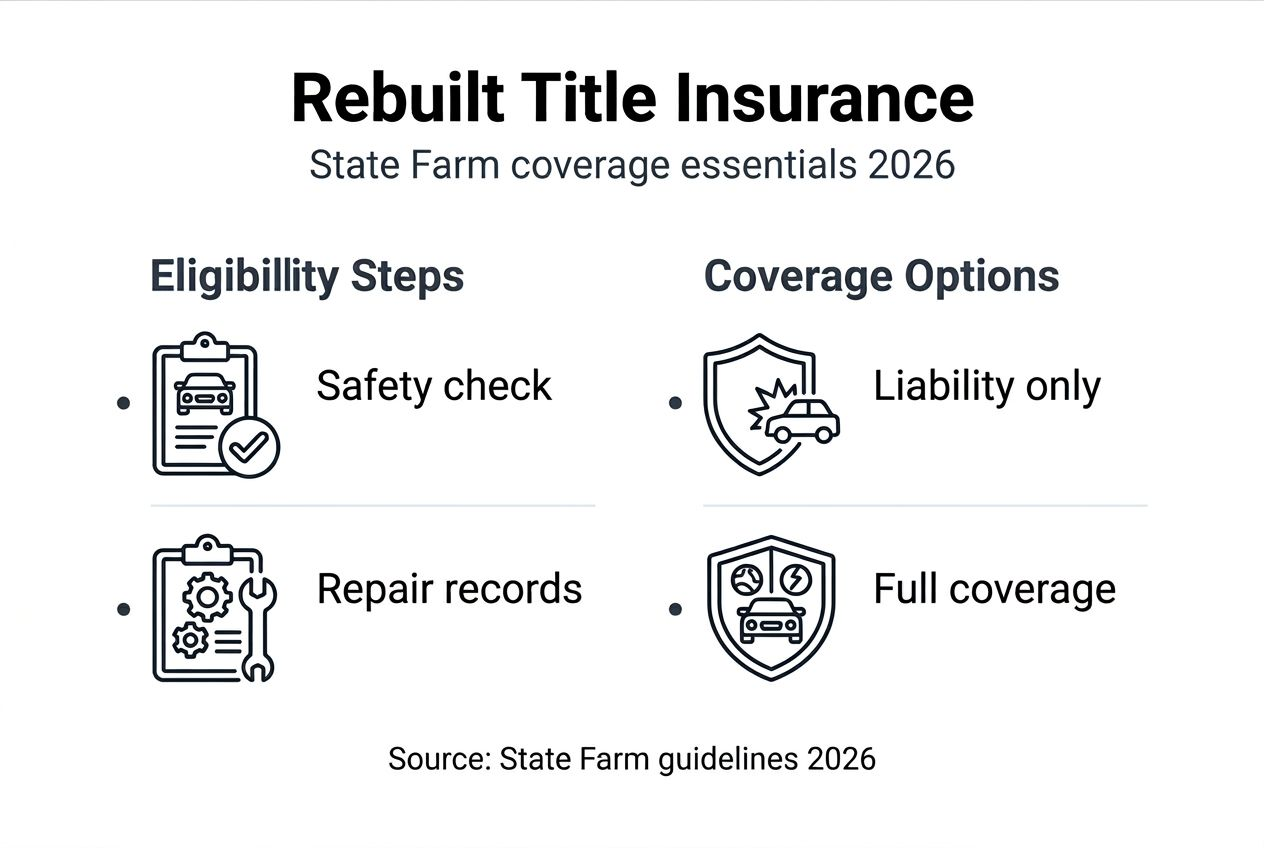
State Farm offers liability insurance and sometimes full coverage for rebuilt title vehicles meeting their standards. Eligibility depends on state regulations and individual vehicle assessments. The insurer evaluates each case based on documentation quality and inspection results.
Coverage availability varies by several factors:
- Liability insurance is typically accessible for properly retitled vehicles
- Collision and comprehensive coverage require case by case underwriting review
- State laws dictate minimum insurance requirements and inspection protocols
- Documentation completeness influences coverage scope and premium calculations
- Vehicle condition at time of application affects approval likelihood
State Farm’s underwriting team examines repair quality and inspection compliance. They want proof the vehicle meets safety standards. Thorough documentation strengthens your application and improves chances for comprehensive coverage options.
The State Farm insure rebuilt titles process requires patience and preparation. Agents review submitted materials against company guidelines and state regulations. Some states have stricter requirements than others for rebuilt title insurance.
Pro Tip: Contact a State Farm agent before purchasing a rebuilt title vehicle to confirm insurability in your state and understand specific documentation requirements upfront.
Documentation and inspection requirements for State Farm coverage
State Farm needs comprehensive repair history and inspection certificates to facilitate underwriting decisions. Complete documentation packages speed approval and increase coverage options. Missing paperwork creates delays and potentially limits available policies.
Gather these essential documents before applying:
- Detailed repair receipts listing all parts replaced and labor performed
- Itemized parts lists with manufacturer information and quality grades
- Before and after photos documenting repair progress and final condition
- State mandated inspection certificates verifying safety compliance
- Mechanic certifications attesting to proper repair procedures and standards
Inspection requirements vary by state but share common goals. Vehicles must pass state safety inspections proving roadworthiness and structural integrity. These inspections check braking systems, suspension components, electrical systems, and frame alignment.
Quality documentation demonstrates transparency and builds insurer confidence. Photos showing pre repair condition help underwriters assess original issues. Detailed receipts prove professional repairs using appropriate parts. Mechanic certifications add credibility to the restoration work.
Organize your paperwork systematically before contacting State Farm. Create a folder with chronological repair records, inspection certificates, and supporting photos. This preparation demonstrates diligence and facilitates faster processing.
Pro Tip: Request certified copies of all inspection documents from your state motor vehicle department. These official records carry more weight than personal copies during underwriting review.
The State Farm rebuilt title insurance guide emphasizes documentation quality as the primary approval factor. Incomplete submissions delay decisions and sometimes result in coverage limitations or denials.
Coverage options, premiums, and cost considerations
State Farm offers two primary coverage tiers for rebuilt title vehicles. Liability only coverage protects other drivers when you’re at fault. Full coverage adds collision and comprehensive protection for your vehicle. Each option carries different cost implications.

Premiums for rebuilt title cars run higher than clean title equivalents due to perceived risks. Insurers factor in potential future issues and lower market values when calculating rates. Expect premium increases ranging from 20% to 50% above comparable clean title rates.
Several factors influence your specific premium:
- Geographic location and state insurance regulations
- Your driving record and claims history
- Vehicle age, make, model, and current condition
- Coverage limits and deductible selections
- Quality and completeness of repair documentation
Reduced market values affect claim payouts if your vehicle is totaled again. Insurers base settlements on current rebuilt title market prices, not original purchase prices. This means lower payouts compared to clean title vehicles of similar age and condition.
Follow these steps to evaluate insurance quotes effectively:
- Request quotes from multiple carriers for accurate comparisons
- Compare identical coverage limits and deductibles across quotes
- Ask about documentation requirements that might affect final rates
- Verify whether full coverage is available or only liability
- Review policy exclusions specific to rebuilt title vehicles
- Calculate total annual costs including premiums and potential out of pocket expenses
Some buyers choose liability only coverage to minimize costs. This works if your vehicle value is low enough that self insuring collision makes financial sense. Others prioritize full coverage on salvage title protection despite higher premiums for peace of mind.
Common misconceptions and reality checks
Myths about rebuilt title insurance create unnecessary barriers for budget conscious buyers. Let’s separate fiction from fact.
Myth: Major insurers like State Farm won’t cover rebuilt title vehicles.
Reality: State Farm and other major insurers provide insurance including full coverage when vehicles meet inspection and documentation standards. Availability depends on individual circumstances, not blanket policies.
Myth: Only liability coverage exists for rebuilt titles.
Reality: Collision and comprehensive coverage are possible through State Farm. Underwriters evaluate each vehicle individually based on repair quality, documentation, and state regulations.
Myth: State Farm insures vehicles without proper inspection or rebuild completion.
Reality: State Farm requires complete retitling and state inspection approval before offering any coverage. Vehicles must legally qualify as rebuilt, not remain in pre repair status.
The insurance industry has evolved significantly regarding rebuilt title vehicles. Carriers recognize that many rebuilt cars offer reliable transportation when properly restored. The key lies in proving quality through documentation.
“State Farm’s willingness to insure rebuilt title vehicles reflects industry recognition that proper repairs and inspections create insurable vehicles. Premiums reflect residual risk, not automatic disqualification from coverage.”
Transparency drives approval success. Hiding vehicle history or submitting incomplete documentation triggers denials. Full disclosure with supporting evidence builds trust and facilitates coverage.
Some confusion stems from conflating different title types. Vehicles with incomplete repairs or those lacking proper retitling face legitimate coverage challenges. Properly rebuilt and retitled vehicles clear these hurdles.
For more clarity on widespread misunderstandings, explore the top myths about rebuilt title cars that prevent buyers from accessing affordable transportation.
How to secure State Farm insurance for your rebuilt title vehicle
Successful insurance applications follow systematic preparation. This step by step process maximizes your approval chances and coverage options.
- Gather complete repair documentation including itemized receipts, parts lists, and mechanic certifications before contacting any insurer.
- Obtain official state inspection certificates and rebuilt title documents from your motor vehicle department.
- Contact a State Farm agent to discuss your specific vehicle and confirm state requirements for rebuilt title insurance in your location.
- Submit comprehensive documentation packages including repair history, inspection certificates, and vehicle photos showing current condition.
- Request quotes for both liability only and full coverage options to understand available choices and cost differences.
- Review policy terms carefully, noting any exclusions or limitations specific to rebuilt title coverage.
- Compare State Farm’s quote against other insurers to ensure competitive pricing and adequate protection.
- Finalize your policy selection understanding coverage limits, deductibles, and any restrictions on claims processing.
Thorough repair and inspection documentation remains the cornerstone of successful applications. Agents can’t approve what they can’t verify. Complete transparency about vehicle history demonstrates good faith and builds insurer confidence.
Timing matters when securing insurance. Contact State Farm before purchasing your rebuilt title vehicle when possible. This confirms insurability and prevents buying uninsurable cars. Some vehicles face coverage challenges despite proper repairs due to specific history factors.
Communication quality affects outcomes significantly. Clearly explain your vehicle’s history, repair process, and current condition. Answer agent questions thoroughly and provide additional documentation promptly when requested.
Pro Tip: Create a digital folder with all documentation in PDF format for easy electronic submission. This speeds processing and ensures agents receive clear, readable copies of critical paperwork.
If considering financing options alongside insurance, review the rebuilt title financing guide to understand how lenders evaluate these vehicles.
The State Farm rebuilt title insurance guide offers additional insights into carrier specific requirements and approval processes.
Comparing State Farm with other insurance providers
State Farm isn’t your only option for rebuilt title coverage. Several major carriers offer policies with varying requirements and costs.
State Farm, GEICO, and Progressive provide rebuilt title insurance with different approaches to underwriting and pricing. Understanding these differences helps you secure optimal coverage at competitive rates.
| Insurance Provider | Coverage Availability | Documentation Requirements | Premium Competitiveness | Notable Features |
|---|---|---|---|---|
| State Farm | Liability and full coverage case by case | Extensive repair history, inspection certificates, mechanic certifications | Moderate to high | Strong brand reliability, established agent network |
| GEICO | Liability standard, full coverage limited | State inspection, title documentation | Competitive | Online quote process, flexible payment options |
| Progressive | Liability and full coverage available | Repair documentation, inspection certificates | Moderate | Snapshot program, bundling discounts |
| Allstate | Liability common, full coverage selective | Comprehensive repair records, inspection proof | Higher | Local agent support, claim satisfaction ratings |
State Farm distinguishes itself through extensive agent networks and established brand trust. Their underwriting process emphasizes documentation thoroughness over automated decisions. This human review approach sometimes benefits complex cases with strong repair evidence.
GEICO offers streamlined digital applications attractive to tech savvy buyers. Their rebuilt title policies typically require less extensive documentation but may limit full coverage availability compared to State Farm.
Progressive balances accessibility with comprehensive coverage options. Their underwriters often approve full coverage when documentation demonstrates quality repairs and inspections.
Premium comparisons require individual quotes since rates vary by location, vehicle, and driver profile. State Farm’s pricing tends toward industry average with room for negotiation through agent relationships.
For broader comparisons across the insurance landscape, consult the insurance covers rebuilt titles guide examining multiple carriers systematically.
Choosing between carriers involves weighing premium costs against coverage breadth and claim service reputation. State Farm’s established presence and agent accessibility make them a solid choice for buyers prioritizing support throughout the policy lifecycle.
Explore insurance options with ReVroom
Navigating rebuilt title insurance feels overwhelming with scattered information and conflicting advice. ReVroom simplifies this process by providing transparency and resources specifically designed for rebuilt title buyers.

ReVroom connects you with vehicles featuring complete history information and repair documentation. Every listing includes photos showing pre repair condition alongside current status. This transparency helps you make informed decisions and strengthens insurance applications.
Our platform gives you the tools to evaluate rebuilt title vehicles confidently. Access detailed vehicle histories that insurers value during underwriting. Understand estimated market discounts to avoid overpaying and ensure fair claim settlements if needed.
Beyond vehicle listings, ReVroom offers educational resources covering insurance, financing, and ownership considerations. Learn which documentation matters most for State Farm and other carriers. Discover how proper preparation accelerates approvals and expands coverage options.
Explore the ReVroom insurance platform to compare vehicles with transparent histories and connect with resources that streamline your rebuilt title purchase journey. Your next reliable, affordable vehicle awaits.
FAQ
Can State Farm insure any rebuilt title vehicle?
State Farm insures rebuilt title vehicles meeting state inspection standards and documentation requirements. Eligibility varies by state regulations and individual vehicle conditions. Some vehicles with complex histories may face coverage limitations. Contact a State Farm agent to discuss your specific vehicle before purchasing.
Are premiums always higher for rebuilt title cars with State Farm?
Premiums typically run higher due to increased underwriting risks and lower market values. Exact increases depend on your state, driving history, vehicle specifics, and coverage selections. Comparing quotes from multiple insurers and preparing thorough documentation can help manage costs. Some drivers find liability only coverage sufficient given lower vehicle values.
Can I get full coverage on a rebuilt title car with State Farm?
Full coverage including collision and comprehensive is possible but requires passing inspections and submitting complete repair documentation. Availability depends on individual vehicle assessment and state regulations. State Farm evaluates each case based on repair quality and inspection compliance. For more details on comprehensive protection, review full coverage on salvage title considerations.
What documents does State Farm require to insure a rebuilt title vehicle?
Essential documents include detailed repair receipts, mechanic certifications, state mandated inspection reports, and photos documenting repairs. Parts lists with manufacturer information strengthen applications. Official rebuilt title documents from your motor vehicle department are mandatory. Submitting a complete package speeds approval and increases coverage options available to you.
Recommended
- Will State Farm Insure a Rebuilt Title? Step-by-Step Guide | ReVroom
- Does State Farm Insure Rebuilt Titles? What Buyers Need to Know | ReVroom
- What Insurance Covers Rebuilt Titles: Complete Guide | ReVroom
- Does a Rebuilt Title Affect Insurance? Complete Guide | ReVroom
- What Is a Title Deed and Why It Matters
- Sicurezza nel noleggio veicoli: obblighi e rischi 2026 | NoleggioQui
