


First Car Vehicle History Explained for New Buyers
July 12, 2026
TL;DR:
- A vehicle history report reveals a car’s past ownership, title brands, and major events affecting its value. Rebuilt titles indicate repairs after a total loss and require inspection, but do not guarantee current safety or quality. Combining history checks with a mechanic’s inspection helps buyers make informed decisions and avoid fraud risks.
A vehicle history report is the definitive tool for understanding a first car’s past ownership, title brands, and major events that affect its value. For parents and first-time buyers, getting first car vehicle history explained clearly is the difference between a great deal and a costly surprise. Rebuilt and branded title cars can cost up to 50% less than clean-title vehicles, making them genuinely attractive options. But that savings only makes sense when you know exactly what you’re buying. This guide walks you through every step, from decoding title brands to running a VIN check to spotting red flags before you sign anything.
What do salvage, rebuilt, and branded titles really mean?
A salvage title means an insurance company declared the vehicle a total loss. That happens when repair costs exceed roughly 75–90% of the car’s market value, depending on the state. At that point, the insurer writes off the car and the title gets branded as “salvage.” A salvage vehicle cannot be legally driven on public roads or insured for regular use until it is repaired and reinspected.
A rebuilt title, also called a reconstructed or branded title in some states, means the vehicle was repaired and then passed a state-mandated inspection. The inspection requirements vary widely by state. Some states require thorough frame checks and airbag verification. Others only review paperwork. That variability matters, and we will come back to it.
Title brands are historical labels, not mechanical or safety ratings. A “rebuilt” stamp tells you the car went through an administrative retitling process. It does not confirm repairs were done to factory specifications or that the car is in perfect condition today. Think of it like a medical record notation. It tells you what happened, not how the patient is doing right now.
Here is a quick comparison to keep these straight:
| Title Type | What it means | Can you drive it? | Insurable? |
|---|---|---|---|
| Clean | No major reported incidents | Yes | Yes, full coverage |
| Salvage | Declared total loss by insurer | No | Limited or none |
| Rebuilt/Branded | Repaired salvage, passed state inspection | Yes | Yes, varies by insurer |
Pro Tip: Ask the seller which state issued the rebuilt title. States with stricter inspection standards, like California, give you more confidence in what “rebuilt” actually means.

How to check car history for your first car purchase
The 17-character Vehicle Identification Number, or VIN, is your starting point for any used car history report. The VIN encodes the manufacturer, country of origin, model year, and a unique serial number. You can find it on the dashboard near the windshield, on the driver’s side door jamb, and on the title document itself. Always verify that the VIN on the car physically matches the VIN on the title. A mismatch is a serious red flag.

Once you have the VIN, run it through multiple sources. No single database captures everything. A comprehensive vehicle history check involves cross-referencing federal and state records to build the most complete picture possible.
Here is the recommended workflow for first-time buyers:
- VIN verification. Confirm the VIN on the car matches the title and any documents the seller provides.
- NHTSA recall check. Go to the National Highway Traffic Safety Administration’s free recall lookup tool at nhtsa.gov. Enter the VIN to see any open safety recalls.
- NMVTIS report. The National Motor Vehicle Title Information System is a federal database. Reports cost $2–$7 and show title brands across all states where the vehicle was registered. This is the most reliable source for spotting branded history.
- Commercial VIN report. Budget $10–$45 for a used car history report from a commercial service. These often include odometer records, ownership count, and accident reports from insurance companies.
- Physical title review. Read the actual paper title. Look for any stamps, brands, or alterations.
- Pre-purchase inspection. Hire an independent mechanic to inspect the vehicle. Budget $100–$200 for this step.
A few things to look for when reading your report:
- Odometer readings that jump or drop between ownership changes
- Multiple states of registration in a short time period
- Gaps in ownership history with no explanation
- Lien records that have not been released
Pro Tip: Run the Revroom History Report for any rebuilt or branded title car you find anywhere online. At $15, it tells you what happened to the car, how severe it was, and whether the asking price is fair compared to similar clean-title vehicles nearby.
What are the biggest risks when evaluating branded title cars?
Title washing is the most dangerous fraud in the used car market. It works like this: a seller takes a salvage-branded vehicle and registers it in a state with looser titling laws. The new state issues a clean or lightly branded title, erasing the vehicle’s history. Title washing is detected by running an NMVTIS report, which pulls registration history from every state. That is why skipping the NMVTIS step is never worth the savings.
Beyond title washing, buyers face several other common pitfalls:
- Odometer rollback. Sellers wind back the mileage to inflate the car’s value. Odometer discrepancies show up in NMVTIS and commercial reports when multiple readings are on file.
- VIN cloning. A fraudster copies the VIN from a legitimate vehicle and attaches it to a stolen or heavily damaged one. Always physically verify the VIN plate has not been tampered with.
- Curbstoning. Unlicensed dealers pose as private sellers to avoid disclosure requirements. If a private seller has multiple cars for sale, that is a warning sign.
- Incomplete repair history. A rebuilt title only confirms the car passed inspection. It does not document who did the repairs or what parts were used.
Vehicle history reports only contain known, reported data. A clean report does not guarantee a problem-free car. Unreported accidents, cash-paid repairs, and out-of-state incidents can all stay invisible in a report. Physical inspection and title document review are not optional extras. They are the only way to catch what reports miss.
Rigorous inspections vary by state. Some states require thorough frame inspections before issuing a rebuilt title. Others only check paperwork. That means the word “rebuilt” carries different weight depending on where the title was issued.
Pro Tip: Tell your mechanic upfront that the car has a branded title. Standard inspections often miss key signs of prior major damage unless the inspector specifically looks for frame misalignment, improper welds, and signs of airbag deployment.
How to use vehicle history plus inspection results to buy smart
Combining your history report with a mechanic’s findings gives you the clearest picture of what you are actually buying. Read the two together. If the report shows a prior collision and your mechanic finds evidence of repaired frame damage, you have a complete story. If the report shows nothing but the mechanic finds signs of major work, that gap is a red flag worth investigating.
Here is a practical final checklist before you commit to any first car purchase:
- Confirm title authenticity. The title should be an original document, not a photocopy. Check for alterations, smudges, or mismatched fonts.
- Verify no active liens. A lien means someone else has a financial claim on the vehicle. Your state DMV can confirm lien status.
- Match all VINs. Dashboard, door jamb, engine block, and title must all show the same number.
- Review inspection results. Your mechanic’s report should address frame condition, airbag status, and the quality of any visible repairs.
- Check insurance availability. Call your insurer before buying. Most companies cover rebuilt title vehicles, but coverage options and premiums vary.
- Negotiate from the report. Any issues your mechanic finds are negotiating points. A rebuilt title already prices in some discount. Known repair needs justify asking for more off.
Rebuilt and branded title vehicles make excellent daily drivers when the history is clear and the inspection is clean. The savings are real. Buying rebuilt title vehicles wisely means treating due diligence as a non-negotiable step, not an optional one. Buyers who skip steps to save time often spend far more fixing problems they could have spotted before signing.
Key Takeaways
Understanding vehicle history is the single most important skill a first-time car buyer can develop before purchasing a rebuilt or branded title vehicle.
| Point | Details |
|---|---|
| Title brands are labels, not ratings | A rebuilt title confirms administrative retitling, not repair quality or current condition. |
| NMVTIS is your fraud detector | Running an NMVTIS report reveals title washing and cross-state branded history for $2–$7. |
| Reports and inspections work together | History reports catch documented events; inspections catch what reports miss entirely. |
| Tell your mechanic about the title | Inspectors must know a car has branded history to check for frame damage and airbag issues. |
| Rebuilt cars can be great daily drivers | With clear history and a clean inspection, branded title vehicles offer real savings with real reliability. |
What I’ve learned watching buyers navigate branded titles
The biggest mistake I see first-time buyers make is treating a vehicle history report as a pass/fail test. They get a clean report and feel like the work is done. It is not. A history report and a pre-purchase inspection serve completely different purposes. One tells you what was reported. The other tells you what is actually there.
The second mistake is going in the opposite direction: seeing a rebuilt title and walking away without looking closer. Rebuilt and branded title cars are not automatically risky. They are cars with a documented past that someone repaired. The title brand tells you something happened. It does not tell you the car is unreliable today. Some of the best deals I have seen are branded title vehicles with minor cosmetic histories that were repaired to a high standard and priced well below market.
Patience is the real skill here. Take the time to run every check. Ask the seller direct questions about the repair history and who did the work. If they cannot answer clearly, that tells you something too. The buyers who get the best outcomes are the ones who treat due diligence as the price of admission, not an inconvenience.
— Revroom Editorial Team
Rebuilt and branded title cars, made transparent at Revroom
Revroom is the only marketplace built specifically for rebuilt and branded title vehicles, and it was designed with buyers like you in mind.
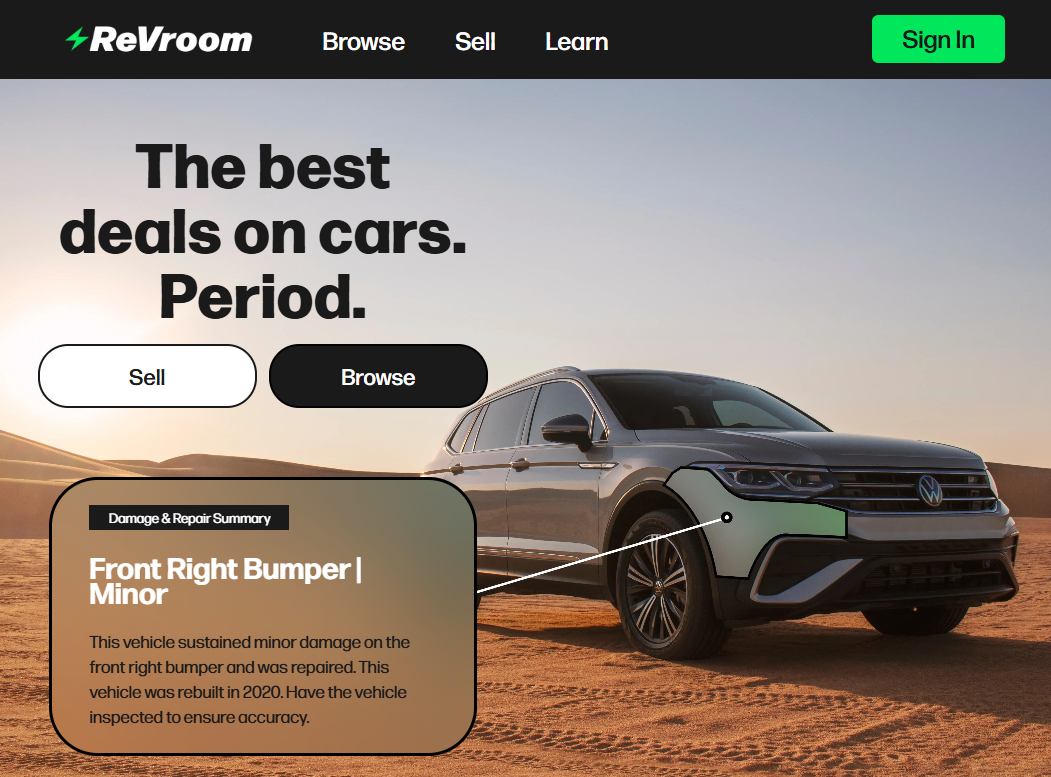
Every vehicle listed on Revroom has passed state-required certification confirming it is repaired and road ready. Each listing includes accident history information and photos of what the car looked like before repairs, so you can see exactly what you are getting. No guessing, no digging through multiple paid reports. Revroom also offers Revroom History Reports for $15, covering any rebuilt or branded title vehicle anywhere. Enter a VIN, price, mileage, and city, and get a clear picture of what happened and whether the price is fair. Real transparency, real savings, real peace of mind.
FAQ
What is a vehicle history report for a first car?
A vehicle history report is a document that compiles a car’s past ownership, title brands, accident records, and odometer readings using its VIN. It is the first tool any first-time buyer should use before purchasing a used vehicle.
What is the difference between a salvage and a rebuilt title?
A salvage title means an insurer declared the car a total loss. A rebuilt title means that same car was repaired and passed a state inspection, making it legal to drive and register again.
Can I trust a rebuilt title car as a daily driver?
Yes. A rebuilt title car with a clear inspection and documented repair history is a reliable daily driver. The title reflects the car’s past, not its current condition.
How do I detect title washing when buying a used car?
Run an NMVTIS report using the car’s VIN. NMVTIS cross-references every state where the vehicle was registered and reveals salvage brands that may have been erased by retitling in a different state.
How much does a used car history report cost?
NMVTIS reports cost $2–$7. Commercial VIN reports typically run $10–$45. A professional pre-purchase inspection adds another $100–$200. Revroom History Reports cover rebuilt and branded title vehicles specifically for $15.
