


Insuring a Branded Title Car: Your 2026 Coverage Guide
July 19, 2026
TL;DR:
- Insuring a branded title vehicle is possible in all U.S. states, mainly through specialty insurers offering full coverage.
- Premium costs are typically 20–40% higher than on clean-title cars and require thorough documentation of repairs and inspections.
- Proper preparation and organized paperwork can streamline approval, but cost considerations often favor liability-only coverage for lower-value vehicles.
Insuring a branded title car is entirely possible, and for most buyers, it is more straightforward than you might expect. A branded title, also called a rebuilt or reconstructed title, is the official designation given to a vehicle that was once declared a total loss, then professionally repaired and certified roadworthy by a state inspection. That is very different from a salvage title, which covers a car that has not yet been repaired or inspected. Branded title vehicles are legal to drive, register, and insure in every U.S. state. The catch is that the insurance process has its own rules, and knowing them before you buy saves you real money and real headaches.
What types of insurance coverage are available for branded title vehicles?
Coverage options for branded title cars fall into two clear categories: liability only and full coverage (collision plus comprehensive). Understanding which one you can actually get, and which one makes financial sense, is the first decision you need to make.

Liability coverage pays for damage you cause to other people and their property. The good news is that liability costs differ by only 0–5% compared to clean-title vehicles. Most major carriers will write a liability policy on a branded title car without much friction.
Full coverage is a different story. Collision and comprehensive coverage on a rebuilt title runs 15–30% higher premiums than on a comparable clean-title vehicle. That price gap exists because insurers struggle to pin down the car’s true market value after a prior total loss.
Major national carriers frequently decline full coverage for branded titles altogether. Major insurers mainly offer liability on these vehicles, while specialty carriers like Dairyland, The General, Bristol West, and Gainsco are the typical sources for full coverage policies. That means your shopping list needs to start with specialty insurers and independent agents, not a quick online quote from a national brand.
A few other coverage realities to know:
- Diminished value clauses cap total-loss payouts at 70% to 80% of standard book value. Even with full coverage, your payout after a total loss will reflect the car’s branded history.
- State minimums still apply. Every state requires at least liability coverage, and branded title cars are no exception.
- Gap insurance is rarely available for branded title vehicles, which matters if you are financing the purchase.
Pro Tip: Before you commit to full coverage premiums, calculate whether the payout cap makes it worth the cost. If the insurer will only pay 70–80% of an already-discounted book value, liability-only coverage may put more money in your pocket over time.
What documentation and inspections are required to insure a branded title car?
Insurers do not take your word for it that a branded title car is in good shape. They want proof, and the more organized your paperwork, the faster your application moves.
Here is what most insurers require:
- State-issued rebuilt title certificate. This comes from your state DMV after the vehicle passes its official inspection. Without it, no insurer will touch the car. The retitling process involves a formal state review of the repairs.
- Passed safety inspection report. State inspection fees range from $40 to $205 depending on where you live. Keep the official report; insurers want to see it.
- Detailed repair receipts. Every part replaced, every labor charge, every shop invoice. This is your paper trail proving the repairs were real and professional.
- Before and after photos. Photos of the vehicle before repairs and after completion help insurers verify the scope of work.
- Mechanic’s statement of roadworthiness. A signed letter from the repair shop confirming the vehicle is safe to drive adds credibility to your application.
- VIN verification. Some states and insurers require a physical VIN check to confirm the car’s identity matches its paperwork.
- Professional appraisal. For higher-value vehicles, an independent appraisal helps establish current market value and supports your coverage request.
| Document | Who requires it | Typical cost |
|---|---|---|
| Rebuilt title certificate | All insurers, all states | Included in DMV fees |
| State safety inspection report | All insurers | $40–$205 |
| Repair receipts and photos | Full coverage insurers | None (collect from shop) |
| Mechanic’s roadworthiness letter | Specialty carriers | None or minor shop fee |
| Professional appraisal | Higher-value vehicles | $100–$300 |
Pro Tip: Scan every document and store them in a single digital folder before you start shopping for insurance. Insurers who receive a complete, organized package approve applications faster and with fewer follow-up requests.
How to shop and apply for insurance on a branded title vehicle
Shopping for rebuilt car insurance requires a different approach than buying coverage for a standard used car. Here is a practical sequence that works.
- Start with independent agents. Independent agents access specialty markets that direct online quotes simply cannot reach. They know which carriers write full coverage on branded titles in your state and can get you bindable quotes quickly.
- Get a bindable quote before you buy. Never purchase a branded title vehicle without confirming you can insure it first. A bindable quote is a real offer, not an estimate. It locks in your coverage terms so there are no surprises at the DMV.
- Compare premiums and coverage terms side by side. Do not just look at the monthly premium. Check the diminished value clause, the payout cap, and any exclusions related to prior damage.
- Check your household policy impact. Adding a rebuilt title vehicle to an existing household policy can cause 3–5% premium increases on your other clean-title vehicles. Factor that into your total cost of ownership.
- Apply with your full documentation package. Submit everything at once: rebuilt title certificate, inspection report, repair receipts, photos, and mechanic’s letter. Incomplete applications get delayed or denied.
Common reasons insurers reject applications include missing documentation, gaps in the repair history, and VIN discrepancies. A few things to watch for:
- Insurers may ask for an independent appraisal if your repair receipts seem incomplete.
- Some carriers exclude coverage for specific damage types related to the vehicle’s prior history.
- Financing a branded title car is rare, but if you do, your lender will require full coverage, which narrows your carrier options significantly.
How does a branded title affect insurance premiums and costs?
The honest answer is that rebuilt title premiums run 20–40% higher than equivalent clean-title vehicles for full coverage. That sounds like a lot until you remember that branded title vehicles themselves cost up to 50% less than clean-title equivalents. The savings on the purchase price typically outpace the insurance premium increase by a wide margin.

Here is how the numbers play out in practice. Liability-only coverage on a branded title car costs roughly the same as on a clean-title car. Full coverage, by contrast, can run around $2,560 per year versus approximately $920 for liability only on similar vehicles. That gap is significant, and it raises a real question: is full coverage worth it?
The answer depends on the car’s value and the diminished value clause in your policy. Insurance payouts on rebuilt titles run 20–40% less than on clean-title cars after a total loss. If you are paying full coverage premiums but your payout is capped well below book value, the math often favors liability only. You can read more about rebuilt vs. clean title price differences to see how this plays out across vehicle types.
Pro Tip: If your branded title car is worth less than $10,000, liability-only coverage is almost always the more practical financial choice. The premium savings over three years will likely exceed any collision payout you would receive.
Budget for these additional costs beyond your premium:
- State safety inspection: $40–$205
- Professional appraisal (if required): $100–$300
- Independent agent consultation: often free, sometimes a small broker fee
Troubleshooting common challenges when insuring branded title cars
Even well-prepared buyers hit roadblocks. Here is how to handle the most common ones.
- Insurer denial. Always request the denial in writing. A written reason tells you exactly what documentation or condition triggered the rejection, and you can address it directly.
- Incomplete repair history. If the previous owner cannot provide full receipts, get an independent mechanic’s inspection and appraisal. That report can substitute for missing paperwork in many cases.
- State insurance department escalation. If you believe a denial is unfair or based on incorrect information, your state’s insurance commissioner handles formal complaints. This is a legitimate and often effective route.
- Financing complications. Lenders require full coverage, but full coverage on a branded title is harder to get. If your lender insists and no carrier will write the policy, you may need to reconsider financing as an option.
- Exclusions buried in the policy. Read every exclusion clause before signing. Some policies exclude coverage for damage related to the vehicle’s prior history, which can leave you exposed in a claim.
“A rebuilt title does not indicate an unsafe vehicle. It presents valuation challenges that require thorough documentation to address.” — WalletHub, 2026
Ongoing management matters too. Renew your documentation file every year. If you make additional repairs or improvements, add those receipts to your file. When your policy renews, re-shop with two or three carriers to confirm you are still getting a fair rate.
Key takeaways
Insuring a branded title car is achievable with the right documentation, the right carrier, and a clear-eyed view of what full coverage actually pays out.
| Point | Details |
|---|---|
| Branded titles are insurable | Every U.S. state allows you to insure a rebuilt title vehicle for at least liability coverage. |
| Full coverage costs more | Expect premiums 20–40% higher than clean-title equivalents for collision and comprehensive. |
| Documentation is the key | Rebuilt title certificate, inspection report, repair receipts, and photos are required for full coverage. |
| Specialty carriers are your best bet | Major national carriers typically offer liability only; specialty insurers write full coverage policies. |
| Liability-only often wins financially | Diminished value clauses cap payouts at 70–80% of book value, making full coverage less cost-effective on lower-value cars. |
The Revroom editorial team’s take on insuring branded title cars
We have watched a lot of buyers get tripped up at the insurance step, and almost every time, the problem is the same: they waited until after the purchase to figure out coverage. That one mistake turns a great deal into a stressful scramble.
The buyers who get this right treat the insurance quote like part of the purchase negotiation. They call an independent agent before they sign anything. They show up with a complete documentation package. They ask the right questions about diminished value clauses upfront. That preparation is not complicated. It just requires doing the work in the right order.
The other thing we see buyers get wrong is assuming full coverage is always the smart move. On a branded title car worth $8,000, paying elevated full coverage premiums for a policy that caps your payout at 70% of an already-discounted value is not protection. It is an expensive habit. Liability-only coverage, paired with the savings you already captured on the purchase price, is often the more rational choice. You can dig deeper into whether rebuilt title insurance costs more to run the numbers for your specific situation.
The bottom line is that insuring a branded title car is not a gamble. It is a process. Respect the process, and the savings are real.
— Revroom Editorial Team
How Revroom makes the insurance process easier
Every vehicle listed on Revroom has passed state-required certification confirming it is repaired and road ready. That matters for insurance because the documentation insurers want, including vehicle history, repair context, and before and after photos, is built into every Revroom listing.
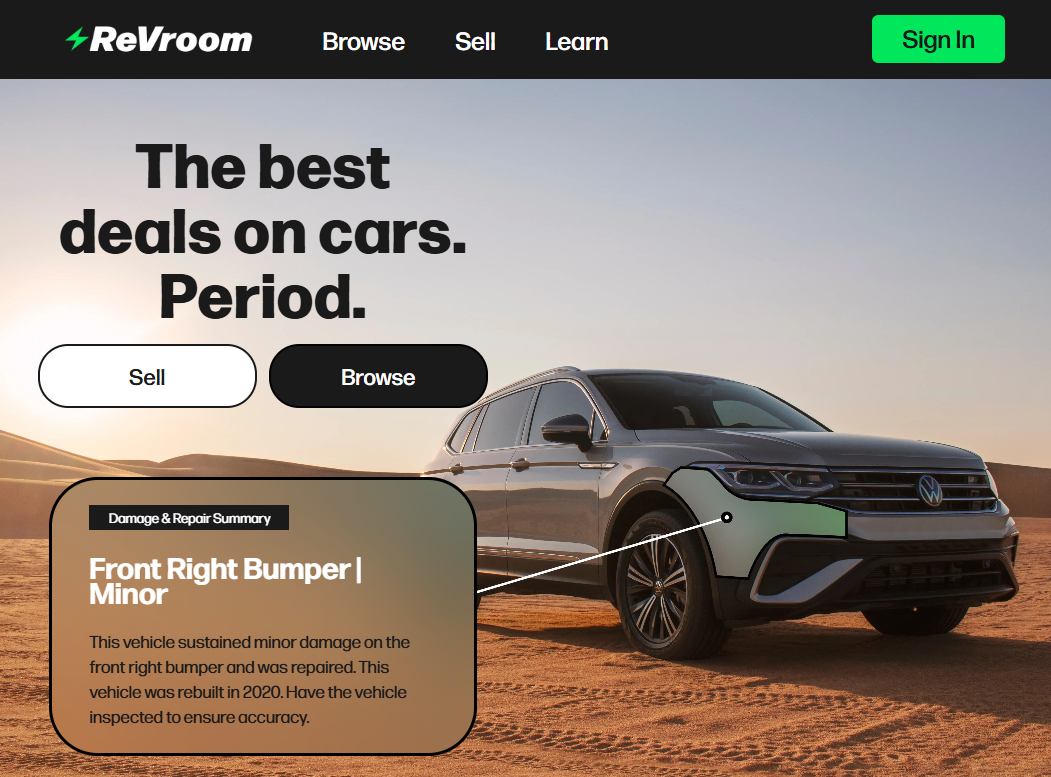
When you find a car through Revroom, you are not starting the insurance process from scratch. The transparency is already there. Buyers who want even more detail before committing can grab a Revroom History Report for $15. It tells you what happened to the car, how severe it was, and whether the price is fair compared to similar clean-title vehicles in your area. That is the kind of information that makes your insurance application stronger and your purchase decision smarter. Browse Revroom’s certified listings and go into your insurance conversation with everything you need.
FAQ
Can you get full coverage on a branded title car?
Full coverage is available for branded title vehicles, but primarily through specialty carriers rather than major national insurers. You will need a complete documentation package including your rebuilt title certificate, state inspection report, and repair receipts.
Is it more expensive to insure a rebuilt title car?
Full coverage premiums on rebuilt title cars run 20–40% higher than on clean-title equivalents. Liability-only coverage costs roughly the same as for a standard used car.
What is the difference between a salvage title and a branded title for insurance purposes?
A salvage title means the car has not been repaired or inspected and is not legal to drive or insure. A branded or rebuilt title means the car has passed a state safety inspection and is fully legal to register and insure.
Does a rebuilt title affect insurance payouts after a total loss?
Yes. Insurers apply diminished value clauses that cap total-loss payouts at 70–80% of book value for rebuilt title vehicles, regardless of repair quality.
Do I need a special inspection before I can insure a branded title car?
Most states require a passed safety inspection before issuing a rebuilt title, and insurers require that inspection report as part of your application. Inspection fees range from $40 to $205 depending on your state.
