


Rebuilt from Salvage Disclosure: What Buyers Must Know
May 31, 2026
TL;DR:
- Rebuilt title vehicles, often priced lower, must be accompanied by full, verified disclosure of their history.
- Verifying via NMVTIS and NICB VINCheck ensures accurate understanding beyond seller claims, reducing risks.
When you spot a rebuilt title vehicle priced significantly below market, the first question you should ask is not “what happened to this car?” but rather “what has been disclosed to me, and can I verify it?” Rebuilt from salvage disclosure, known formally in most states as a branded title disclosure or reconstructed vehicle disclosure, is the legal and practical mechanism that separates a confident, informed purchase from an unpleasant surprise. This guide breaks down exactly what that disclosure means, what sellers are required to tell you, how to verify it independently, and how to use all of that information to score a genuinely good deal.
Key takeaways
| Point | Details |
|---|---|
| Disclosure is legally required | Most states mandate written, signed disclosure before any purchase agreement on a rebuilt title vehicle. |
| Verify with federal tools | NMVTIS reports and NICB VINCheck help confirm vehicle history beyond what a seller tells you. |
| The title brand is permanent | A rebuilt designation stays on the vehicle’s record forever, regardless of how well it was repaired. |
| Paperwork is your best protection | Repair receipts, inspection results, and signed disclosures create a paper trail that protects you legally. |
| Disclosure reveals opportunity | A thorough disclosure means you can negotiate fairly, price accurately, and buy with real confidence. |
What rebuilt from salvage disclosure actually means
You have probably seen the phrase “rebuilt from salvage” on a title or a listing and wondered exactly what it signals. Here is the plain English version: a vehicle is declared a total loss by an insurance company when the estimated cost to repair it exceeds a certain percentage of its market value. That percentage varies by state, but it typically falls between 75% and 90%. Once that happens, the car receives a branded title. After the vehicle is repaired and passes a state inspection, it gets a new designation: rebuilt, reconstructed, or prior salvage, depending on where you live.
The key thing to understand is that rebuilt title vehicles are not the same as vehicles still sitting in that pre-repair state. Those are two very different categories, and the distinction matters enormously. A rebuilt title means the work is done and a government inspector signed off on roadworthiness. The total-loss-to-rebuilt process involves real regulatory steps, not just a fresh coat of paint.
Now, where does disclosure come in? Disclosure laws vary by state but universally require sellers to provide explicit, written notification to buyers that the vehicle carries a branded title. Michigan is one of the clearest examples: Michigan dealers must provide written disclosure with specific state-mandated language, including signatures from both buyer and seller, before the purchase agreement is signed. That is not a courtesy. It is a legal obligation.
Here is what a complete disclosure document typically covers:
- The vehicle’s full identification including make, model, year, and VIN
- The state where the branded title was issued
- The type of title brand (rebuilt, reconstructed, or prior total loss)
- A clear statement in mandated language that the vehicle was previously deemed a total loss
- Signatures from both the buyer and the seller or dealer
Pro Tip: Ask specifically for a copy of the signed disclosure form for your records before the deal closes. That document is your legal protection if disputes arise later.
The branded title designation is also permanent. A rebuilt title stays on the record forever, regardless of how many subsequent owners the vehicle has. That permanence is actually a feature, not a flaw. It means future buyers will always have access to the vehicle’s full history.
Verification methods that go beyond the seller’s word
Understanding disclosure is one thing. Verifying that everything you have been told is accurate is another. Title washing is a real practice: moving a vehicle across state lines can sometimes cause a branded title to get registered as a clean title in the new state, effectively hiding its history. That is exactly why independent verification tools exist, and why using them is non-negotiable.
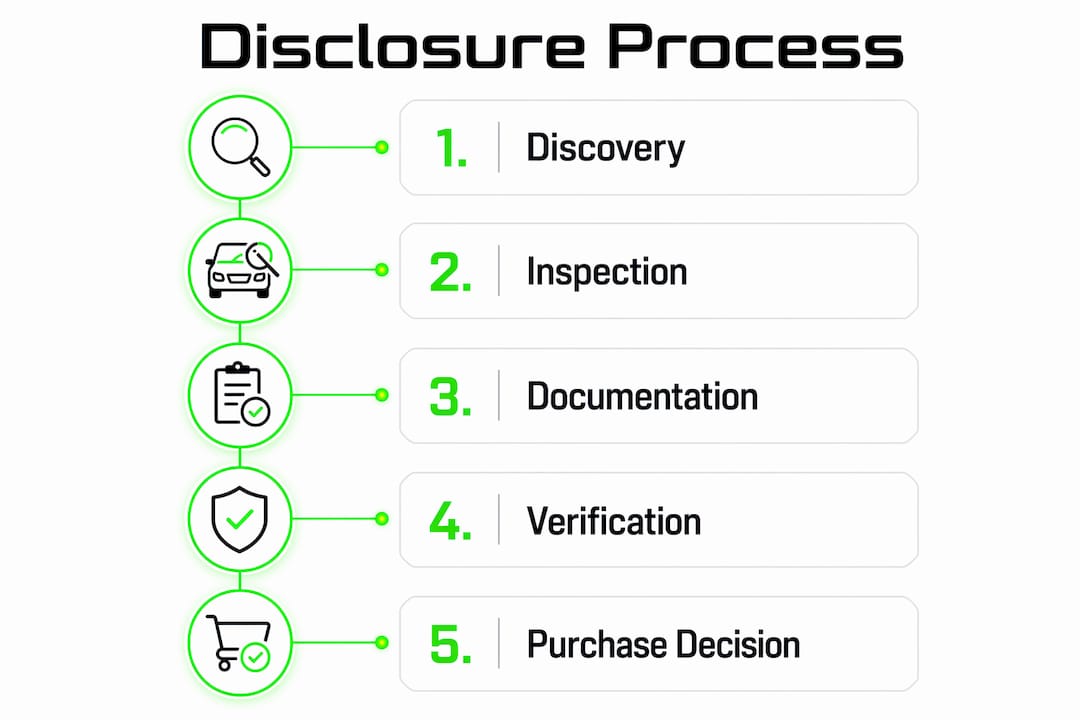
Here is a practical sequence to follow when verifying any rebuilt vehicle’s history:
- Run an NMVTIS report. The National Motor Vehicle Title Information System aggregates data from state titling agencies, insurance companies, and salvage yards across the country. It gives you title brand history, odometer readings, and total-loss records that cross state lines. This is your most authoritative federal data source.
- Use NICB VINCheck as an initial screen. The NICB VINCheck tool is free and checks for theft reports and insurance total-loss records from member companies. It is not exhaustive, but it catches obvious red flags fast.
- Match the VIN everywhere. Check the VIN on the title, the dashboard plate, the driver’s side door jamb, and the engine block. Any inconsistency is a serious warning sign.
- Compare the disclosure document against the NMVTIS report. The state where the title was branded, the date, and the type of event listed should align. If a seller says the vehicle had minor hail history and the NMVTIS report flags a different state with a different event, ask questions before you go further.
- Request all repair documentation. Repair receipts and inspection records are critical to verifying what was actually done to the vehicle beyond what the title brand says. A thorough seller will have these ready.
Pro Tip: When history details across the seller’s disclosure, the title, and database reports do not match, request detailed repair documentation before proceeding. Inconsistencies are not always fraud, but they always deserve an explanation.
Statewide variation in inspection processes also means a rebuilt vehicle inspected in one state may have faced stricter or looser standards than one inspected in another. Knowing where the inspection happened is worth factoring into your confidence level.
What disclosure means for value, insurance, and your wallet
Here is where a lot of buyers get tripped up by conventional wisdom. Clear, thorough rebuilt from salvage disclosure does not automatically make a vehicle a bad deal. In many cases, it makes it a great one. Rebuilt title vehicles often carry price tags that are 20% to 50% below comparable clean-title vehicles. When the disclosure is complete and the repair documentation is solid, that gap is pure buyer upside.
Let’s put some common assumptions next to reality:
| Common misconception | What the evidence actually shows |
|---|---|
| Rebuilt title cars are nearly impossible to insure | Most major insurers cover rebuilt title vehicles. Payouts reflect market value of the rebuilt title car, not inflated dealer markups. |
| A clean title means no history worth knowing | Many clean-title vehicles have undisclosed accident history. The title brand does not tell the whole story either direction. |
| Disclosure means the car is risky | Disclosure means the car is transparent. A full paper trail is a buyer advantage, not a red flag. |
| Repair documentation does not change pricing | Well-documented repairs and recent independent inspections consistently support fairer, higher resale pricing. |
The rebuilt designation does affect resale value, and you should factor that in honestly when you negotiate the purchase price. But that same designation is also why you are likely paying significantly less up front. Treat it as a known variable rather than an unknown risk.
Manufacturer warranties are another area worth clarifying. In most cases, the original manufacturer’s warranty does not transfer after a vehicle has been rebuilt. Some extended warranty providers will cover rebuilt title vehicles, but you should confirm that before purchase rather than assume it.
What the disclosure document, combined with repair receipts and an independent inspection, actually gives you is a complete picture. That picture lets you price the car accurately, negotiate from a position of knowledge, and walk in with eyes wide open.
How to use disclosure documents to protect yourself
Reading the disclosure is step one. Using it strategically is step two. Here is a practical checklist to apply every time you are reviewing rebuilt vehicle paperwork:
- Confirm the disclosure is signed and dated before any purchase agreement or deposit changes hands. An undated or unsigned disclosure does not create the legal record it is supposed to.
- Ask the seller direct questions about what the vehicle’s history involved, when it was repaired, who did the work, and whether photos from before the repair exist.
- Order an independent pre-purchase inspection (PPI) from a mechanic who has no relationship with the seller. This is the single most effective way to verify repair quality beyond documentation.
- Keep copies of everything. The signed disclosure form, the NMVTIS report, repair receipts, the inspection report, and any seller communications should be stored together. If a dispute ever surfaces, this package is your evidence.
- Learn what different types of vehicle history typically mean for repair scope and complexity. Hail history, theft recovery, and other events generally involve very different repair profiles. Understanding the type of event gives you context that the title brand alone does not provide.
The goal here is not paranoia. It is preparation. A buyer who shows up with a printed NMVTIS report and a list of informed questions signals to every legitimate seller that this transaction is going to be clean and fair.
My take: disclosure is where the opportunity lives
I have seen buyers walk away from genuinely strong vehicles because the words “rebuilt title” spooked them before they read a single line of the disclosure. And I have seen buyers overpay for clean-title cars because they assumed a clean title meant a clean history. Both are mistakes rooted in the same problem: treating the title designation as the whole story.
In my experience, the rebuilt title vehicles that represent real value are almost always the ones with thorough, transparent disclosures. When a seller hands you a complete disclosure form, a stack of repair receipts, and invites you to inspect the car independently, that is not a warning sign. That is a seller who has nothing to hide and every incentive to be straight with you.
The rebuilt title market gets a bad reputation because of the cases where disclosure was incomplete or absent. But layered verification through NMVTIS and NICB VINCheck, combined with physical inspection, removes most of that uncertainty. What remains is an asset class trading at a significant discount precisely because the average buyer has not done their homework. Do your homework. The opportunity is real.
When disclosure is complete and you have verified it independently, you are not buying a mystery. You are buying a known quantity at an uncommon price. That is not a risk. That is how smart shoppers find the best deals in any market.
— Cameron
Explore rebuilt title vehicles on ReVroom
ReVroom is the only marketplace built specifically for rebuilt title vehicles, and transparency is baked into every listing. Each vehicle on ReVroom includes vehicle history information and photos from before repairs so you can evaluate what you are actually buying before you ever contact a seller.

You do not need to spend $150 on outside reports just to feel confident about a listing. ReVroom does that work for you. If you are ready to see what the rebuilt title market actually looks like when it is done right, explore rebuilt title listings and find your next vehicle today. Want to go deeper on the title itself? Check out ReVroom’s rebuilt vs. reconstructed title guide for everything you need before you buy.
FAQ
What does “rebuilt from salvage” mean on a title?
It means the vehicle was previously declared a total loss, then repaired and inspected to meet roadworthy standards. The branded title designation is permanent and must be disclosed to all future buyers.
Is rebuilt from salvage disclosure required by law?
Yes. Disclosure is legally required in every U.S. state, though exact requirements vary. Michigan, for example, mandates specific written language with buyer and seller signatures before any purchase agreement is finalized.
How can I verify a rebuilt vehicle’s history independently?
Run an NMVTIS report through an approved provider and use the free NICB VINCheck tool, then cross-reference both with the seller’s disclosure document and physical VIN labels on the vehicle.
Does a rebuilt title make a car harder to insure?
Not significantly. Most insurance providers cover rebuilt title vehicles without issue. Payouts are based on the market value of the rebuilt title car, so buying at the right price protects you in a claim scenario.
What should I do if the disclosure does not match the vehicle’s history reports?
Request complete repair documentation before moving forward. Inconsistencies between the disclosure and database reports are not always fraudulent, but every discrepancy deserves a clear, documented explanation from the seller.
