


Selling a Car With a Salvage Title (2026): Can You Sell or Trade It In, Who Buys It As-Is, What It's Worth, and When Rebuilding First Pays
February 21, 2026
Short answer: yes, you can sell a salvage title car, and the price you get depends almost entirely on one thing: whether the car is still a salvage title or has already been repaired, inspected, and retitled as rebuilt. A salvage title car sells as-is to a small group of buyers who can legally take an unrepaired car (rebuilders, rebuilt title dealerships, salvage auctions, and cash-for-cars outfits), and they price it backward from what the repairs will cost. A rebuilt title car can be sold to anyone, and the best money comes from a private sale to a buyer who is shopping for a rebuilt title on purpose. This guide covers both, in the order you will actually face them.
Key takeaways
- A salvage title means the car has not been repaired and inspected yet, so in most states it cannot be registered or driven. You can still sell it, just not to a regular retail buyer.
- Rebuilt title dealerships and independent rebuilders usually make the best as-is offer, because they know what the car is worth once it is fixed. Clean title lots price it for the auction.
- Once a car passes its state inspection and carries a rebuilt title, it is road-legal, insurable, and financeable, and it typically sells for 20 to 50% under a clean title comparable.
- The best place to sell a rebuilt title car is a marketplace where every buyer already wants one. Listing on ReVroom costs $5, with no success fee.
- Whatever title you hold, disclose the brand in writing, in the first line of the listing. It filters out the wrong buyers for free.
Table of Contents
- Can you sell a car with a salvage title?
- Salvage title vs rebuilt title: which one are you selling?
- How to sell a salvage title car, step by step
- Where can you sell a salvage title car as-is?
- Should you rebuild the car before you sell it?
- How to sell a rebuilt title car for the most money
- What is a salvage title car worth when you sell it?
- Can you trade in a salvage or rebuilt title car?
- What paperwork do you need?
- Frequently asked questions
Can you sell a car with a salvage title?
Short answer: yes, in every state, but the buyer pool is small. A salvage title (some states issue a salvage certificate instead) means an insurer or the state declared the car a total loss and it has not yet been repaired and passed the state's rebuilt inspection. Until that happens, most states will not register it for the road, which rules out the ordinary used-car buyer and most dealerships.
The people who do buy salvage title cars are rebuilders, rebuilt title dealerships, salvage auctions (usually through a broker or a direct-purchase program if you are a private seller), cash-for-cars and parts buyers, and the occasional private buyer who plans to do the rebuild. Every one of them is running the same math: what the car will be worth with a rebuilt title, minus what it costs to get there, minus their margin. Your job as the seller is to make that math easy, which is why the paperwork and photos further down matter even for an as-is sale.
Selling a car with a salvage title: which situation are you in?
Short answer: the right buyer depends on where the car sits between "just totaled" and "rebuilt and inspected." Find your row, and you have your first two phone calls.
It works a bit like selling a house mid-renovation. A finished house sells to families. A gutted one sells to contractors. The half-done one sells to whoever can see the finish line, and the paperwork you hand them decides how much they pay.
| Your situation | Can you sell it? | Can you trade it in? | Who to call first |
|---|---|---|---|
| Insurer just totaled it and you kept it (salvage title, not repaired) | Yes, as-is | Rarely at a clean-title lot; a rebuilt title dealer sometimes will | A rebuilt title dealer or independent rebuilder, then a salvage auction or direct-purchase program |
| Repaired, but not yet through the state's rebuilt inspection | Yes, as-is (still salvage on paper) | Same as above | A rebuilder or rebuilt title dealer. Bring receipts and photos of the repair |
| Repaired and inspected, carrying a rebuilt title | Yes, to ordinary drivers | Yes, at most dealerships; a rebuilt title dealer usually offers more | A private sale on ReVroom for a flat $5, or a rebuilt title dealer |
| Still owe money on it | Yes, once the lien is paid off at or before the sale | Yes; the dealer pays off the loan as part of the deal | Your lender for a payoff letter, then the buyer |
| Not worth repairing | Yes, for parts value | Not usually | A cash-for-cars or parts buyer |
One honest note on the trade-in row, because it is the question we get most. A clean-title franchise store usually can't retail a salvage or rebuilt car, so its offer is priced for the auction lane. A rebuilt title dealership retails them every week and knows what they are worth, so its offer is usually the better one. If you want both numbers, find a rebuilt title lot near you in the ReVroom dealer directory.
And if your car already carries a rebuilt title, you are holding the finished house. It costs $5 to list on ReVroom: no percentage of the sale, no success fee and no subscription, as published on the sell page.
Salvage title vs rebuilt title: which one are you selling?
Short answer: if your title says salvage, the car has not been through the state's inspection yet; if it says rebuilt (or rebuilt salvage, reconstructed, or prior salvage, depending on the state), it has. That single difference changes who can buy the car and what they will pay.
| Salvage title | Rebuilt title | |
|---|---|---|
| What it means | Declared a total loss; not yet repaired and inspected | Repaired, passed the state inspection, retitled |
| Can the buyer drive it? | Generally not until it is rebuilt (state rules vary) | Yes, road-legal like any used car |
| Can the buyer insure and finance it? | Usually not for road use until it is rebuilt | Yes. Most major insurers cover rebuilt titles and many banks and credit unions finance them |
| Who buys it | Rebuilders, rebuilt title dealerships, salvage auctions, cash-for-cars buyers | Anyone: private buyers, rebuilt title dealerships, national chains, general dealers |
| What it sells for | A fraction of clean value, priced backward from repair cost | Typically 20 to 50% under a clean title comparable |
| Paperwork | Salvage title or certificate, bill of sale, written disclosure | Rebuilt title, bill of sale, disclosure, inspection paperwork, repair receipts |
| Best next step | Get as-is offers, or rebuild it and then sell | List it where buyers want a rebuilt title |
If the two brands are still blurry, our explainer on the difference between a salvage title and a rebuilt title walks through how a car moves from one to the other.
How do you sell a salvage title car? Six steps
Short answer: confirm what your title says, gather the paperwork and photos, get two or three as-is offers from salvage buyers or rebuilders, compare them with what the car would bring once rebuilt, then disclose the brand and sign the title over the way your state requires.
Selling a salvage car is a lot like selling a house that needs a new roof. You can sell it as-is to someone who fixes houses for a living, or fix it first and sell to a family. Both work. The trick is knowing which number is bigger after the roof is paid for.
| Step | What you do | Why it matters |
|---|---|---|
| 1. Read the title | Check whether it says salvage, or already says rebuilt (or reconstructed, rebuilt salvage, prior salvage) | Salvage cars sell to rebuilders; rebuilt cars sell at retail |
| 2. Gather the file | Title, insurance settlement letter if you have it, repair estimate, keys, and clear photos of the car as it sits | Buyers price uncertainty; a full file gets a firmer offer |
| 3. Get as-is offers | Ask two or three rebuilders, salvage buyers or cash-for-cars buyers for a written number | One offer is a guess; three is a market |
| 4. Run the rebuild math | Rebuilt value minus repair, parts, inspection and time | If the gap is wide and you have a shop you trust, rebuilding first can pay |
| 5. Disclose the brand | Put "salvage title" in the listing and on the bill of sale | Disclosure is required under state rules and it protects you |
| 6. Transfer the title | Sign it over and file the paperwork your state asks for | Until the transfer is filed, the car can still be tied to you |
If you go the rebuild route and the car comes back with a rebuilt title, it can be sold to everyday drivers. That is the point where listing it on ReVroom makes sense: a flat $5, no percentage of the sale, as published on October 6, 2026. ReVroom does not list salvage titles; as the sell page puts it, a salvage car "has to be repaired and certified by your state before it can be retitled as rebuilt, and once it carries that title you can list it here." For the cash-offer side, our guide to selling a salvage car for cash compares who pays what.
Where can you sell a salvage title car as-is?
Short answer: to someone whose business is fixing them. Here is the field, ranked by what sellers usually walk away with:
- A rebuilt title dealership or independent rebuilder. These shops retail rebuilt cars every day, so they can see the finished car inside your unrepaired one and usually pay the most of the as-is group. Call two or three and bring the repair estimate if you have one. Many franchise dealers that end up holding branded trade-ins pass them along to exactly these buyers, so you are skipping a middleman.
- A salvage auction. Copart and IAA run the big national salvage auctions. Copart also buys directly from individuals through Copart Direct (offer, pickup, cash when they collect the car). Getting a car into the auction itself as a private owner usually means going through a licensed broker, and the auction and the broker both take fees, so ask for the fee schedule in writing before you commit. It is a wide audience, and the price is whatever the room says that day.
- Cash-for-cars and parts buyers. The fastest option and normally the lowest, because they price the car as parts and scrap. A sensible choice for a car that is not worth repairing.
- A private buyer who plans to rebuild it. Facebook Marketplace and Craigslist have a small but real audience of people who buy salvage cars to fix. Put the salvage status in the first line and expect questions about what happened and what has been done so far.
One thing to know going in: most clean title dealerships and national chains will not buy a salvage title car outright, or will price it for an immediate auction exit. That is not them being difficult. They have no way to retail it.
Should you rebuild the car before you sell it?
Short answer: rebuild it if the cost of repairs and inspection is clearly less than the gap between your best as-is offer and what the car would fetch with a rebuilt title. Otherwise, sell it as-is. That gap can be large, which is why rebuilders exist.
If you are weighing the repair as a business rather than a one-off, our breakdown of whether rebuilding salvage cars is profitable walks through the per-car math.
The rebuilt title path means finishing the repairs, keeping every receipt (many states ask for parts receipts at inspection), passing the state's rebuilt or salvage inspection, and applying for the new title. We walk through the whole process in how rebuilt cars are retitled. Two honest notes. First, the inspection confirms the paperwork and that the car is roadworthy; it is not a guarantee of repair quality, so document your work as if a picky buyer will read every page, because one will. Second, the rebuilt brand stays on the title for life. That is exactly why the buyer gets a discount, and exactly why the right buyer is happy to pay for a well-documented one.
How to sell a rebuilt title car for the most money
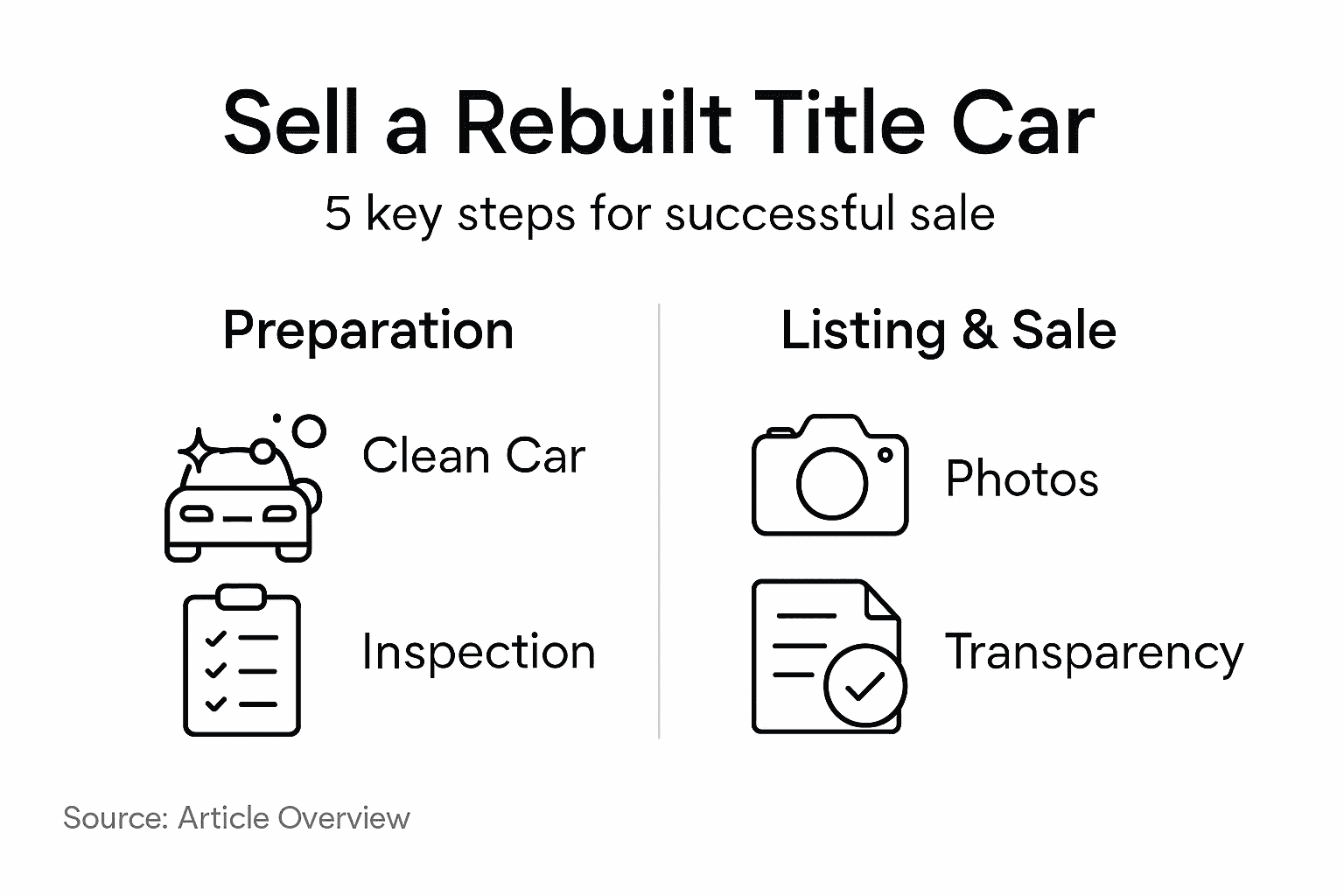
Short answer: sell it to someone who came looking for a rebuilt title, price it honestly, and hand over paperwork that answers questions before they are asked. Five steps cover it.
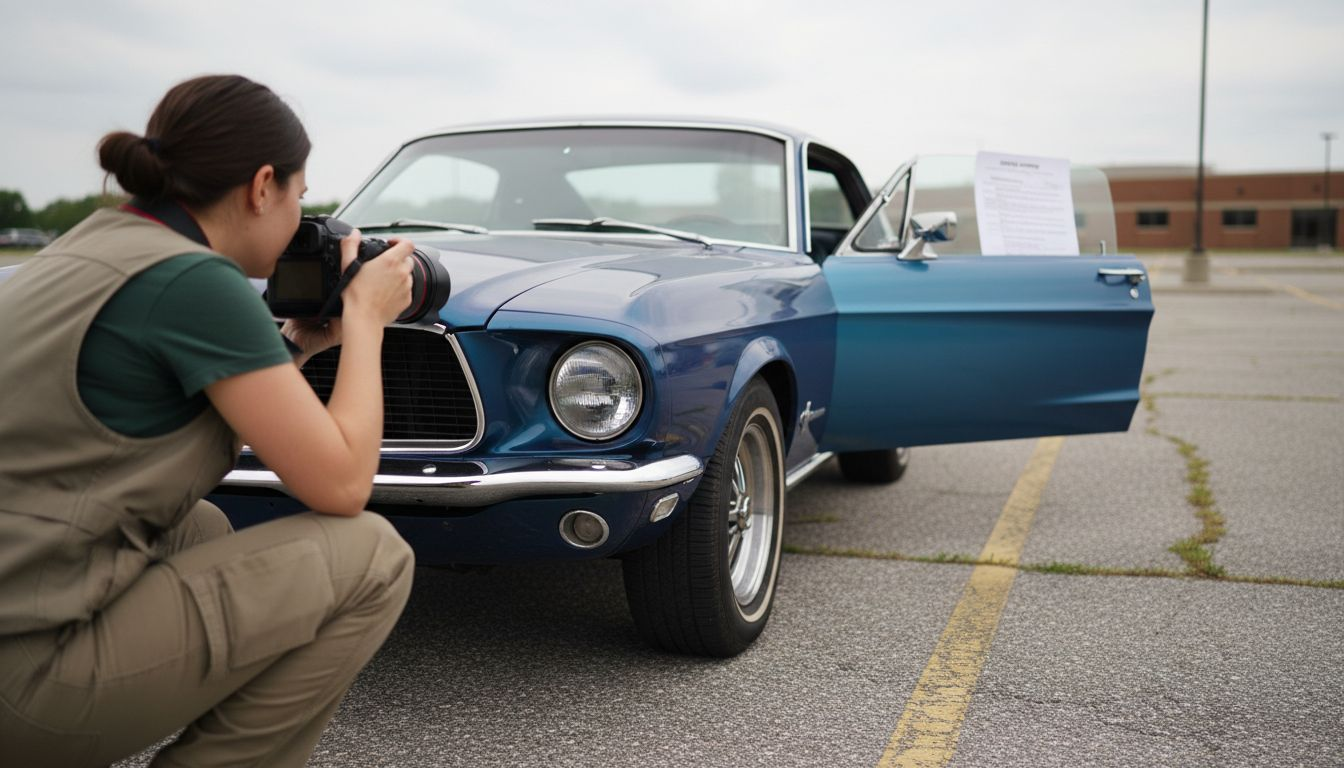
- Gather the paperwork. The rebuilt title, repair receipts, the inspection certificate, maintenance records since the rebuild, and photos of what was repaired if you have them. Before-and-after shots are gold.
- Price it from the clean title down. Start with what a clean title version of your car sells for, then subtract the going rebuilt discount. Across 17,000+ rebuilt title vehicles tracked in the ReVroom Rebuilt Title Market Snapshot, buyers saved a median of $4,590 versus clean title value, and one in three sold 25% or more below market. Price inside that range and say so in the listing. For the long version, read how much a rebuilt title affects value.
- List it where the buyers already are. On ReVroom, the only marketplace built for rebuilt and branded title cars, listing costs $5 and there is no success fee. Listings show what was repaired, photos where they are available, and the title status, and buyers can filter by history type and in-house severity grade, so they arrive already comfortable with the title. General classifieds work too, but you will spend the week explaining what a rebuilt title is. Our guide to where to sell a rebuilt title car ranks every option.
- Disclose in writing from the first message. Title status, what happened to the car, what was repaired, and who did the work. Written disclosure is required in many states, and it is the cheapest trust you can buy.
- Close it properly. Verified payment (cashier's check, bank transfer, or cash counted together) before you sign the title. A bill of sale with both names, the price, VIN, mileage, and the words "rebuilt title." Copies of everything. Plates off and insurance canceled once the title is signed, plus any release-of-liability form your state uses. If the buyer lives in another state, read how to transfer a rebuilt title step by step.
What is a salvage title car worth when you sell it?
Short answer: as-is, roughly the rebuilt value minus repair cost minus the buyer's margin; once rebuilt, typically 20 to 50% under a clean title comparable, and closer to the top of that range when the history was minor.
Real numbers help here. In the October 2026 ReVroom Rebuilt Title Market Snapshot, the median rebuilt title vehicle sold for $17,499, buyers saved a median of $4,590 against clean title value, and 87% of sold cars carried only minor or moderate documented history. The deepest discounts usually sit with severe history. Newer cars save more in dollars: a 2023 rebuilt saves a median of about $6,537, more than three times a 2015 ($2,034). The biggest lever you control is documentation. A rebuilt car with receipts, inspection paperwork, and photos of the repair sells nearer the clean price than the same car with a shrug. For the salvage side of the math, see our salvage title vehicle value guide.
Can you trade in a salvage or rebuilt title car at a dealership?
Short answer: a rebuilt title car, yes, at most dealerships, and a rebuilt title dealership will usually offer more than a clean title lot or a national chain; a salvage title car, sometimes, and again the rebuilt title dealership is the one to call.
The reason is simple. A clean title franchise store cannot retail a branded title, so its offer is priced for the auction the car is headed to. A rebuilt title dealership retails them daily and knows the values. We cover the numbers and the named chains in what dealerships really offer for rebuilt title trade-ins, Does CarMax buy rebuilt titles? and Does Carvana buy rebuilt title cars?
What paperwork do you need to sell a salvage or rebuilt title car?
Short answer: the title itself, correctly signed; a bill of sale; a written disclosure of the brand; and whatever release-of-liability or seller notice your state uses. Add the repair receipts and inspection certificate for a rebuilt car, and the repair estimate or insurer paperwork for a salvage one.
- The title (salvage or rebuilt), signed only after payment clears, in the buyer's exact legal name
- A bill of sale with both parties, date, price, VIN, mileage, and the title brand written out
- Written disclosure of the brand and what was repaired (required in many states, smart in all of them)
- Repair receipts, the inspection certificate, and maintenance records since the rebuild
- Your state's release-of-liability or notice-of-sale form, filed promptly
- A photo of the signed title and the buyer's ID for your own records
State forms differ. Our Texas and Florida guides cover two of the biggest, and your DMV's website will have the rest.
Whichever title you are holding, the finish line is the same: a buyer who understands what they are getting and a file that proves it. When your car is rebuilt and road-legal, list it on ReVroom for $5 and put it in front of buyers who came looking for exactly that.

Frequently Asked Questions
Can you sell a salvage title car without fixing it?
Yes. Sell it as-is to a rebuilder, a rebuilt title dealership, a salvage auction (through a broker in many states, or a direct-purchase program like Copart Direct), or a cash-for-cars buyer. Expect a wholesale price built backward from what the repairs will cost.
Who buys salvage title cars?
Rebuilders and rebuilt title dealerships usually make the best as-is offer, followed by salvage auctions and their brokers, cash-for-cars and parts buyers, and private buyers who plan to do the rebuild themselves. Most clean title dealerships and national chains do not retail salvage cars, so they either decline or price the car for an immediate auction sale.
How much is a salvage title car worth?
As-is, a fraction of clean title value: the buyer starts from what the car will be worth once rebuilt and subtracts repair cost and margin. Once it carries a rebuilt title it typically sells 20 to 50% under a clean title comparable. ReVroom's Rebuilt Title Market Snapshot (updated October 1, 2026) puts the median buyer saving at $4,590 per vehicle across 17,000+ rebuilt title sales.
Do I have to tell the buyer the car has a salvage or rebuilt title?
Yes. The brand is printed on the title, many states require written disclosure, and an undisclosed brand is the fastest way to have a sale unwind. Put the title status in the first line of the listing and in the bill of sale.
Can I sell a salvage title car on ReVroom?
ReVroom lists rebuilt and branded title cars that have passed their state inspection and are road-legal. Once your car is repaired, inspected, and retitled as rebuilt, you can list it for $5 with no success fee. While it still carries a salvage title, use the as-is options above: rebuilders, rebuilt title dealerships, salvage auctions, or cash-for-cars buyers.
Is it better to sell a rebuilt title car privately or trade it in?
Privately, for the most money, especially on a marketplace where buyers are looking for a rebuilt title on purpose. Trading in is faster. If you trade in, a rebuilt title dealership will usually offer more than a clean title lot or a national chain, because it can retail the car instead of sending it to auction.
Can you sell a rebuilt title car to a buyer in another state?
Yes. The rebuilt brand carries onto the new state's title, the buyer registers the car at home, and some states run their own inspection first. Hand over the signed title, bill of sale, inspection paperwork, and repair receipts so the buyer's DMV visit is a formality.
Does a rebuilt title hurt resale value?
It lowers the price versus a clean title, typically by 20 to 50%, which is the same discount your buyer will pass along when they sell. Documentation is what moves you toward the small end of that range: receipts, the inspection certificate, and photos of what was repaired.
How do you sell a car with a salvage title?
Confirm what the title says, gather the title, any insurance settlement letter, repair estimates and photos, get two or three written as-is offers from rebuilders or salvage buyers, compare them with what the car would bring once rebuilt, then disclose the salvage brand on the bill of sale and transfer the title the way your state requires.
Where can I sell my salvage title car?
As-is, to rebuilders, rebuilt title dealers, salvage auctions (often through a broker or direct-purchase program) and cash-for-cars or parts buyers. Once the car has been repaired and retitled as rebuilt, you can sell it to everyday buyers, including by listing it on ReVroom for a flat $5.
Will a dealership take a salvage title car as a trade-in?
Sometimes. Most clean-title franchise stores and national chains will not take an unrepaired salvage title car, or will price it for the auction lane. A rebuilt title dealership is the one to call, because it can repair and retail the car. Once the car carries a rebuilt title, most dealerships will take it in trade, and a rebuilt title dealer usually offers more.
What is the process for trading in a salvage title car?
Bring the salvage title, any repair estimate, receipts and photos, and the payoff letter if you still owe money. Call a rebuilt title dealership first, get its offer in writing, and compare it with a direct-purchase or auction offer. If the car has already been rebuilt and inspected, compare the trade offer with a private sale.
