


Used Car Private Seller Near Me: Certified Rebuilt Cars
July 28, 2026
Yes, you can get a reliable daily driver from a used car private seller near you — and if that car carries a rebuilt or branded title, you could pay significantly less than a comparable clean-title vehicle. The catch is that private listings require you to do the vetting yourself. Three steps make any nearby listing worth pursuing:
- Run a VIN/vehicle-history check. Services that query NMVTIS catch title washing and cross-state history a local title review can miss.
- Confirm state-issued rebuilt certification. A rebuilt title means the car was repaired and passed a state-mandated safety inspection. No certification? Walk away.
- Book an independent pre-purchase inspection (PPI). A professional mechanic catches what paperwork cannot. Combined with a history report, total cost typically runs under $200.
Red flags that stop the process cold: seller refuses to share the VIN, name on the title doesn’t match their photo ID, no state certification, any sign of flood history, or repair records that don’t add up.
Table of Contents
- What’s the difference between a rebuilt title and a salvage title?
- Why does your state’s rebuilt certification matter so much?
- How to vet a rebuilt/branded title car step by step
- What paperwork do you need when buying from a private seller?
- What does the full process cost and how long does it take?
- Private seller vs. dealer vs. certified platform: which is right for you?
- Revroom makes the certified rebuilt-title search easier
- FAQ
- Key Takeaways
What’s the difference between a rebuilt title and a salvage title?
A salvage title means an insurance company declared the car a total loss. It is not road-legal and cannot be registered for daily use. A rebuilt title means that same vehicle was repaired, passed a state safety inspection, and is now certified as road-ready. Think of salvage as the “before” and rebuilt as the “after.” Revroom works exclusively with rebuilt and branded title vehicles — never salvage.
Why does your state’s rebuilt certification matter so much?
Every state issues rebuilt or reconstructed titles differently, and inspection rigor varies widely. Some states require detailed documentation and a thorough mechanical review; others set a lower bar. That gap is why a state certification is necessary but not sufficient on its own. Always add an independent PPI on top of it, regardless of which state issued the title.
How to vet a rebuilt/branded title car step by step
- VIN check first. Pull a rebuilt title history report before you drive anywhere.
- Request repair photos and receipts. A legitimate seller has documentation of what was fixed and who did the work.
- Confirm the title name matches the seller’s photo ID. Title assignment must carry the owner’s signature to be legally valid.
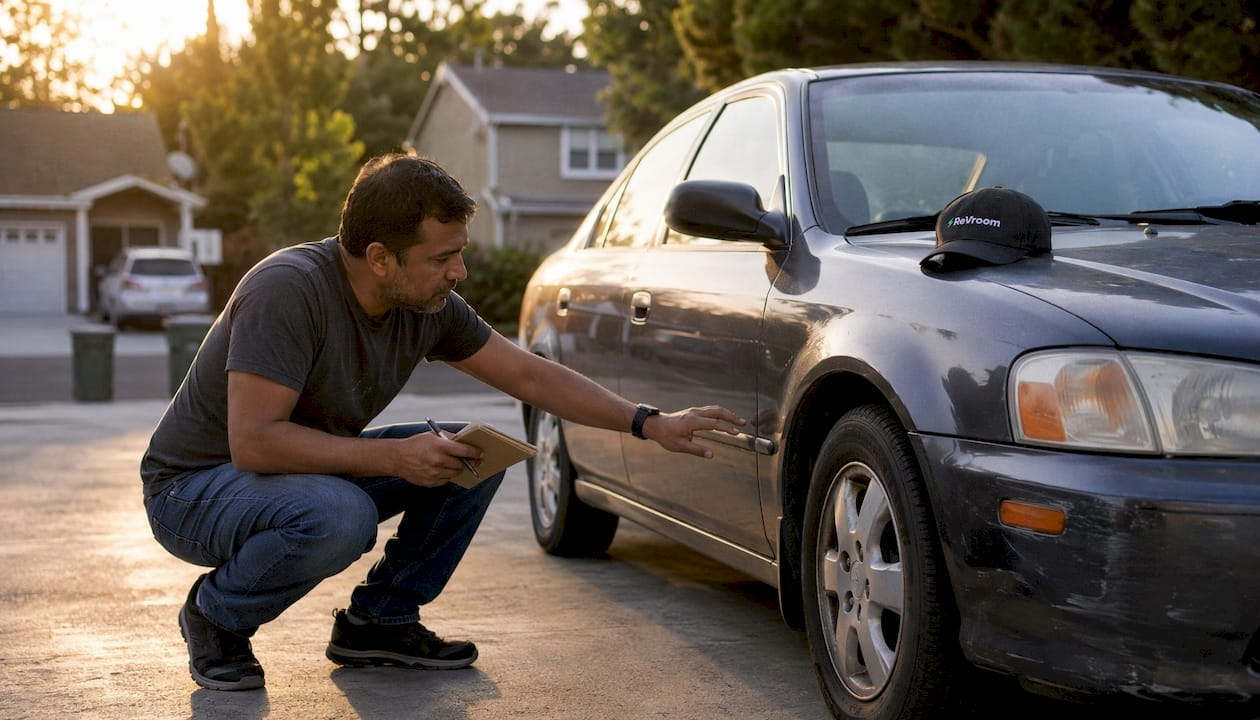
- Book a PPI. Bring a flashlight and ask the seller to let the car sit off for an hour before the mechanic arrives — fluid colors and leaks read more accurately on a cold engine.
- Test drive in daylight. Bright light reveals paint inconsistencies and body panel gaps that indoor or nighttime inspections miss.
- Check insurance before you commit. Coverage varies for rebuilt titles; confirm full coverage is available for your specific vehicle.
Pro Tip: Consumer Reports flags flood history as a long-tail risk — corrosion and electrical issues can surface months later. Skip any vehicle with flood history unless a specialist corrosion inspector clears it.
What paperwork do you need when buying from a private seller?
You need a signed bill of sale (two copies), the title assigned to your name with the seller’s signature, an odometer disclosure statement (federally required for vehicles under ten years old), and any emissions documentation your state requires. Meet at your local DMV if possible — it simplifies the transfer and confirms everything is in order on the spot.
What does the full process cost and how long does it take?
Budget roughly $15–$200 in due-diligence costs: a Revroom History Report runs $15, and a full PPI typically costs $100–$150. The whole process from first contact to title transfer usually takes one to two weeks when sellers are responsive and your state’s DMV isn’t backed up.
Financing is the one area where rebuilt titles complicate things. Many traditional lenders won’t approve auto loans on branded titles, so cash or a personal loan is the practical path for most budget buyers.
Private seller vs. dealer vs. certified platform: which is right for you?
| Option | Savings | Transparency | Vetting burden |
|---|---|---|---|
| Private seller | High | Low | All on you |
| Used-car dealer | Moderate | Moderate | Partial |
| Revroom (certified marketplace) | High | Built in | Done for you |
Private sellers offer the lowest prices but zero built-in protection. Dealers add some process but rarely specialize in rebuilt titles. Revroom sits in a different category: every listing is state-certified, includes repair photos and vehicle history, and comes with the option to pull a $15 History Report before you ever contact a seller.
Revroom makes the certified rebuilt-title search easier
Searching for a used car from a private seller near you is worth it — but the vetting work adds up fast. Revroom is the alternative for buyers who want the same savings without spending hours chasing VIN reports, repair receipts, and mechanic appointments.

Every vehicle on Revroom has passed state-required certification and comes with repair photos and vehicle history built into the listing. No guesswork, no missing paperwork. And if you’re already looking at a rebuilt or branded title car anywhere else, a Revroom History Report gives you a full picture of what happened, how severe it was, and whether the price is fair — for $15. Browse certified rebuilt cars near you and pull a report before your next seller meeting.
FAQ
What does “rebuilt title” mean when buying from a private seller?
A rebuilt title means the car was previously totaled by an insurer, then repaired and passed a state safety inspection. It is road-legal and registerable, unlike a salvage title.
Rebuilt and branded title cars typically sell for roughly 20–40% less than equivalent clean-title vehicles, and that discount tends to be permanent.
Can you get financing for a rebuilt title car?
Many lenders won’t finance rebuilt or branded title vehicles. Cash or a personal loan is the most reliable path, as noted by Experian.
Is a Revroom History Report worth it before buying privately?
At $15, a Revroom History Report tells you what happened to the car, how severe it was, and whether the asking price is fair compared to similar clean-title vehicles nearby — less than the cost of a meal.
What red flags should stop a private sale immediately?
Walk away if the seller refuses to share the VIN, the title name doesn’t match their ID, there’s no state-issued rebuilt certification, or the repair records are incomplete or inconsistent.
Key Takeaways
Rebuilt and branded title cars from private sellers can be reliable daily drivers at 20–40% below clean-title prices, provided you run a VIN check, confirm state certification, and book an independent inspection before signing anything.
| Point | Details |
|---|---|
| Rebuilt vs. salvage | Rebuilt titles are road-legal and state-certified; salvage titles are not — they are two very different designations. |
| Price discount | Rebuilt and branded title cars sell for roughly 20–40% less than clean-title equivalents, and that gap is usually permanent. |
| Vetting costs | A history report plus a professional PPI typically costs under $200 total — money well spent before any private purchase. |
| Financing reality | Many lenders won’t finance rebuilt titles; cash or a personal loan keeps your options open. |
| Revroom advantage | Revroom listings include state certification, repair photos, and vehicle history upfront — plus $15 History Reports for any rebuilt title car, anywhere. |
