


Cars Under $5,000: Best Picks and Buying Checklist
August 6, 2026
TL;DR:
- You can find reliable used cars under $5,000 by prioritizing vehicle history and pre-purchase inspections. Marketplaces like Revroom offer certified rebuilt and branded-title cars with detailed documentation, reducing fraud risk. Most affordable models are high-mileage versions of popular sedans like the Toyota Corolla and Honda Civic, which require careful vetting and upfront maintenance budgeting.
Yes, you can find a dependable daily driver for under $5,000. The key is prioritizing vehicle history and a pre-purchase inspection over low mileage or fresh paint. Well-maintained high-mileage cars routinely outperform low-mileage ones with no service records, which means the odometer number matters far less than what happened between those miles.
Here’s your TL;DR if you’re ready to act now:
- Target mechanically proven models like the Toyota Corolla, Honda Civic, or Hyundai Elantra.
- Run a VIN/vehicle history report using Carfax or a Revroom History Report before you commit to anything.
- Schedule a pre-purchase inspection (PPI) with an independent mechanic, even for a $3,000 car.
- Set aside $1,000–$1,200 for immediate catch-up maintenance after purchase.
- Use Kelley Blue Book (KBB) and Edmunds to verify the asking price against local comps.
Revroom is also worth bookmarking: every listing on the platform carries state-required certification, pre-repair photos, and a vehicle history report, which removes most of the guesswork that makes budget car shopping stressful.
Table of Contents
- Where can you find cars under $5,000?
- Which models show up most often under $5,000 and actually hold up?
- How do you evaluate any car under $5,000 before buying?
- What will it actually cost you after you buy?
- How do you avoid scams and negotiate a fair price?
- Why rebuilt and branded-title cars deserve a second look
- Key Takeaways
- The honest truth about buying cheap cars
- Revroom makes the sub-$5,000 search easier
- Useful sources
- FAQ
Where can you find cars under $5,000?
The sub-$5,000 market moves fast. In many metro areas, a well-priced reliable listing disappears within 1–3 hours, so knowing where to look, and having your checklist ready, is half the battle.
Private-party classifieds
Facebook Marketplace and Craigslist carry the largest volume of affordable used cars and typically offer the lowest prices because there’s no dealer overhead. The trade-off is documentation. Most private sellers won’t have a Carfax ready, service records are hit or miss, and fraud risk is higher than on any other channel. That said, this is where the real bargains live, and with the right verification steps, you can shop here safely.

Small local dealers and auction-sourced lots
Small independent dealers often source inventory from auctions, which means you’ll see a mix of clean-title and branded-title vehicles. Prices run slightly higher than private party, but dealers are legally required to disclose known title brands. Some will allow a PPI; others won’t. Always ask upfront.
Rebuilt and branded-title marketplaces
Revroom is built specifically for rebuilt and branded-title vehicles, which are cars that were declared a total loss by an insurer, professionally repaired, and then certified road-ready by the state. Every listing includes pre-repair photos and vehicle history information, so you’re not guessing about what happened before you buy. Prices on rebuilt-title vehicles can run up to 50% below comparable clean-title cars, which makes this segment one of the most productive places to search when your budget is tight.
Pro Tip: Set up saved searches on Facebook Marketplace and Craigslist with alerts for your target models. Check them first thing in the morning, when overnight listings are fresh and haven’t been picked over.
Source comparison at a glance
| Source | Price level | Documentation | Fraud risk | PPI allowed? |
|---|---|---|---|---|
| Facebook Marketplace / Craigslist | Lowest | Rarely included | Higher | Usually yes |
| Small local dealers | Moderate | Partial (title disclosure required) | Lower | Sometimes |
| Revroom (rebuilt/branded title) | Low to moderate | Pre-repair photos + history included | Low | Yes |
Use KBB and Edmunds to cross-check any asking price against local market comps before you make an offer. A car listed at $4,800 might be a steal or $800 over market depending on the model, year, and mileage.
Which models show up most often under $5,000 and actually hold up?
Most affordable used cars in this price range are mid-2000s to early 2010s models with mileage typically between 120,000 and 200,000. That sounds like a lot, but for the right model with documented maintenance, it’s not a dealbreaker.
| Model | Typical price range | Expected mileage | Known weak points |
|---|---|---|---|
| Toyota Corolla | — | 120,000–200,000 | Minor oil consumption on some 1ZZ engines |
| Honda Civic | $3,000–$5,000 | 120,000–200,000 | AC compressor wear on older models |
| Hyundai Elantra | — | 120k–180k | Timing chain tensioner on some engines |
| Mazda3 | $3,000–$5,000 | 120,000–200,000 | Rear suspension bushings wear over time |
| Nissan Sentra | — | 120,000–200,000 | CVT durability on 2013+ models |
| Ford Focus (manual) | — | 120k–180k | Avoid PowerShift automatic; manual is solid |
| Chevrolet Malibu | — | 120,000–200,000 | Timing chain and water pump on Ecotec engines |
| Buick LeSabre / Park Avenue | — | — | Intake manifold gaskets on 3800 V6 |
A few notes worth calling out specifically. The Ford Focus PowerShift dual-clutch automatic is a well-documented problem; if you find a Focus in your budget, the manual transmission version is the one to target. Similarly, Nissan’s CVT on 2013 and newer Sentras has a mixed reliability record, so verify transmission service history carefully. The Buick 3800 V6, on the other hand, is one of the most durable American engines ever built. A high-mileage LeSabre with a clean service record is genuinely one of the better-kept secrets in budget car buying.
- Best all-around value: Toyota Corolla and Honda Civic, for parts availability and long-term reliability data.
- Best bang for the buck: Buick LeSabre or Park Avenue, where the stigma of an “old person’s car” keeps prices low and reliability high.
- Best if you want something newer-feeling: Hyundai Elantra or Mazda3, which tend to have more modern interiors at this price point.
Pro Tip: Less-popular trims and slightly older model years often deliver the best mechanical value. A 2008 Civic EX with 160,000 miles and full service records will serve you better than a 2012 Civic LX with 90,000 miles and no paperwork.
How do you evaluate any car under $5,000 before buying?
The inspection process is where budget buyers either protect themselves or get burned. Follow this in order.
Before you leave the house
- Run a vehicle history report — Use Carfax or a Revroom History Report. Look for title brands, prior airbag deployment, odometer discrepancies, and the number of previous owners.
- Check the asking price against KBB and Edmunds — for the specific year, trim, and mileage.
On-site inspection checklist
- Exterior walkaround: Look for mismatched paint, uneven panel gaps, or overspray on trim, which can indicate prior bodywork.
- Tire and frame check: Uneven tire wear often signals alignment or suspension issues. Look along the frame rails for bends or fresh welds.
- Undercarriage look: Get low and look under the car for rust, leaks, or patched areas. Active drips are a negotiation point or a dealbreaker.
- Fluid checks: Pull the oil dipstick (milky oil = coolant contamination), check the coolant reservoir, and look at the transmission fluid color.
- Cold start: Arrive before the seller warms the car up. Blue smoke on startup means oil burning; white smoke that doesn’t clear means coolant issues.
- OBD-II scan: A $20 Bluetooth OBD reader and a free app will show you any stored trouble codes. A seller who refuses this is telling you something.
- Test drive: Listen for transmission shudder, brake pulsation, steering pull, or any clunks over bumps. These are all negotiation levers, not automatic dealbreakers.
- Post-drive check: After the drive, look under the car again for fresh drips.
A professional PPI on a lift costs money and can prevent costly mistakes. Ask the mechanic to prioritize the timing belt or chain, transmission condition, suspension wear, and any active leak sources. Most independent shops will do this for a car you’re considering buying.
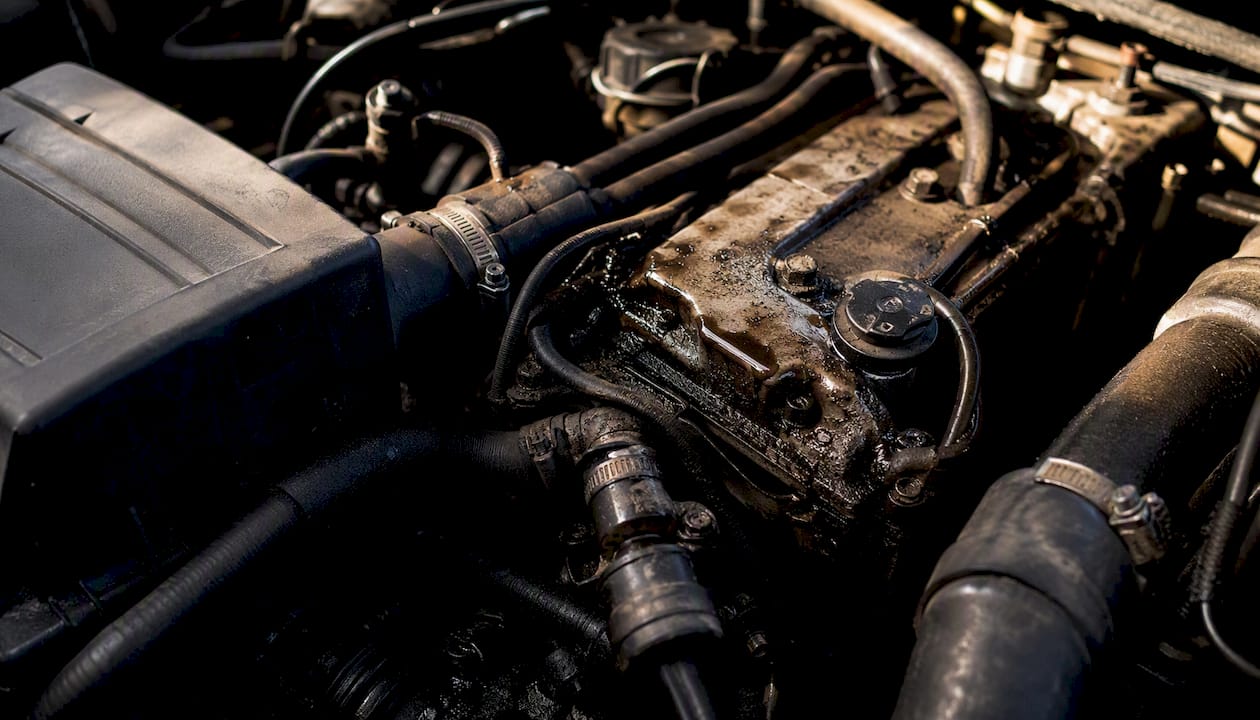
Pro Tip: A freshly cleaned engine bay on an older car is a yellow flag, not a green one. Sellers sometimes degrease to hide active oil or coolant leaks. Look for wet spots in corners and crevices that are hard to clean, or inconsistent grime patterns that suggest selective cleaning.
What will it actually cost you after you buy?
The sticker price is only part of the math. Budget buyers who skip this step are the ones who end up calling the car a money pit six months later.
Immediate costs to plan for
| Cost item | Typical range |
|---|---|
| State taxes and registration | Varies by state; budget $200–$500 |
| Catch-up maintenance (fluids, brakes, tires) | $500–$1,200 |
| Six-month emergency fund | $1,000–$1,200 |
Plan for a budget for immediate catch-up maintenance after any sub-$5,000 purchase. That covers fluid flushes, brake pads if worn, and possibly a set of tires. Think of it as the cost of inheriting someone else’s deferred maintenance.
The financing trap
If you’re thinking about financing a $4,000 car, run the numbers first. Average used-car loan APRs were running around 11.5%–12% in recent periods, and many lenders won’t touch older vehicles or will require a minimum loan amount that exceeds what you’re borrowing. At those rates, financing a $4,000 car over 36 months adds hundreds of dollars in interest and erases much of the cost advantage. Cash is king at this price point. If you need financing, a credit union with a short loan term is your best option.
Timeline: search to ownership
- Days 1–3: Set up alerts, identify 3–5 target models, and prepare your inspection checklist.
- Days 3–7: Contact sellers, screen listings for VIN and documentation, and schedule viewings.
- Days 7–14: Complete on-site inspections, run history reports, and schedule PPIs.
- Days 14–21: Negotiate, finalize payment, and complete title transfer.
Title transfers typically take 1–2 weeks through your state DMV. Budget deals stall most often at the PPI scheduling stage, so book the mechanic before you’ve fully committed to a car.
How do you avoid scams and negotiate a fair price?
The sub-$5,000 market attracts more fraud than any other price segment. Odometer rollback and title-brand scams are more common here, and the pressure to act fast makes it easier to skip the checks that would catch them.
Red flags that should stop you cold
- No VIN in the listing, or a seller who won’t share it.
- Asking price that’s $1,000+ below every comparable listing.
- Pressure to wire money, use Zelle, or pay before you’ve seen the car.
- Mismatched wear patterns: a low-mileage claim paired with a worn steering wheel, faded pedal rubber, and a sagging driver’s seat.
- Musty smell inside the car or waterlines on the door jambs, both signs of flood history.
- Service records that don’t match the VIN when you cross-check them.
Practical scam prevention
- Always run a VIN check through NMVTIS-approved providers or Carfax before you meet a seller.
- Meet at a bank or credit union for cash transactions. It’s safer, and it signals you’re a serious buyer.
- Never pay a deposit to “hold” a car you haven’t inspected in person.
Negotiation that actually works
Get a repair estimate from your PPI mechanic in writing. Then use it.
That’s it. Specific, documented, and unemotional. Sellers respond to repair estimates far better than to vague lowball offers. If the seller won’t budge at all on a car with documented issues, that’s a signal about how the rest of the transaction will go.
Pro Tip: Ask for a repair credit rather than a price cut when possible. “Can you cover the cost of the struts?” sometimes lands better than a lower number because it feels smaller to the seller, even when the dollar amount is identical.
Why rebuilt and branded-title cars deserve a second look
The biggest misconception in budget car buying is that a branded title automatically means a bad car. It doesn’t. A branded title is a history label, not a mechanical verdict. A vehicle that was rear-ended, declared a total loss by an insurer because repair costs exceeded a percentage of its value, professionally repaired, and then passed a state safety inspection is road-ready. The title brand reflects what happened, not what the car is now.
Rebuilt and branded-title vehicles can often be substantially cheaper than comparable clean-title cars. For a buyer with a $5,000 budget, that gap can mean the difference between a 2008 Civic with 180,000 miles and a 2014 Civic with 95,000 miles.
A well-documented rebuilt vehicle with state certification and pre-repair photos gives you more information than most private-party clean-title listings ever will. You know what happened, you know it was repaired, and you know the state signed off on it.
How Revroom changes the equation
Revroom is the only marketplace built specifically for this segment. Every listing includes the vehicle history, pre-repair photos showing what the car looked like before repairs, and state-required certification confirming it’s road-ready. That’s the documentation stack that typically costs buyers around $150 per vehicle to assemble on their own, built into every listing by default.
| Dimension | Generic private-party listing | Revroom listing |
|---|---|---|
| Price | Low | Low to moderate |
| Pre-repair photos | Rarely available | Included |
| Vehicle history | Buyer must source | Included |
| State certification | Not applicable | Required for all listings |
| PPI option | Depends on seller | Yes |
Pro Tip: When evaluating a rebuilt-title listing on Revroom, filter by the type of prior incident and look at the pre-repair photos directly. A car with cosmetic panel damage and a clean mechanical history is a very different proposition from one with structural repairs, and the photos let you see that distinction before you ever contact the seller. Learn more about what branded titles mean for buyers.
Key Takeaways
Finding a dependable car under $5,000 comes down to three things: targeting proven models, verifying vehicle history before you visit, and budgeting for immediate maintenance on top of the purchase price.
| Point | Details |
|---|---|
| Prioritize history over mileage | A documented service record matters more than a low odometer reading at this price point. |
| Budget beyond the sticker | Set aside $1,000–$1,200 for catch-up maintenance and keep a separate emergency fund. |
| Always run a VIN check | Use Carfax or a Revroom History Report before committing to any listing. |
| Get a PPI | A pre-purchase inspection (PPI) can help prevent major surprise repairs after purchase. |
| Revroom for branded-title value | Every Revroom listing includes state certification, pre-repair photos, and vehicle history, removing the usual vetting burden. |
The honest truth about buying cheap cars
Here’s something most buying guides won’t say plainly: the sub-$5,000 market rewards patience and punishes urgency. The buyers who get burned are almost always the ones who skipped the PPI because the seller was “in a hurry” or who wired a deposit before seeing the car because the listing looked too good to pass up.
The cars are real. The deals are real. But so are the scams, and the gap between a great $4,500 car and a terrible one often comes down to a single $150 inspection and a vehicle history report.
Rebuilt and branded-title vehicles deserve more credit than they get in this conversation. The title label tells you something happened. The pre-repair photos, the state certification, and the vehicle history tell you what happened and what was done about it. That’s more transparency than most private-party clean-title listings offer, and at a lower price. For ordinary buyers who want a reliable daily driver without paying a clean-title premium, that combination is genuinely worth considering.
Revroom makes the sub-$5,000 search easier
Searching for affordable used cars across dozens of private listings is time-consuming, and verifying each one adds up fast. Revroom gives budget buyers a shortcut: a marketplace where every vehicle has already cleared state-required certification, comes with pre-repair photos, and includes vehicle history information in the listing itself.
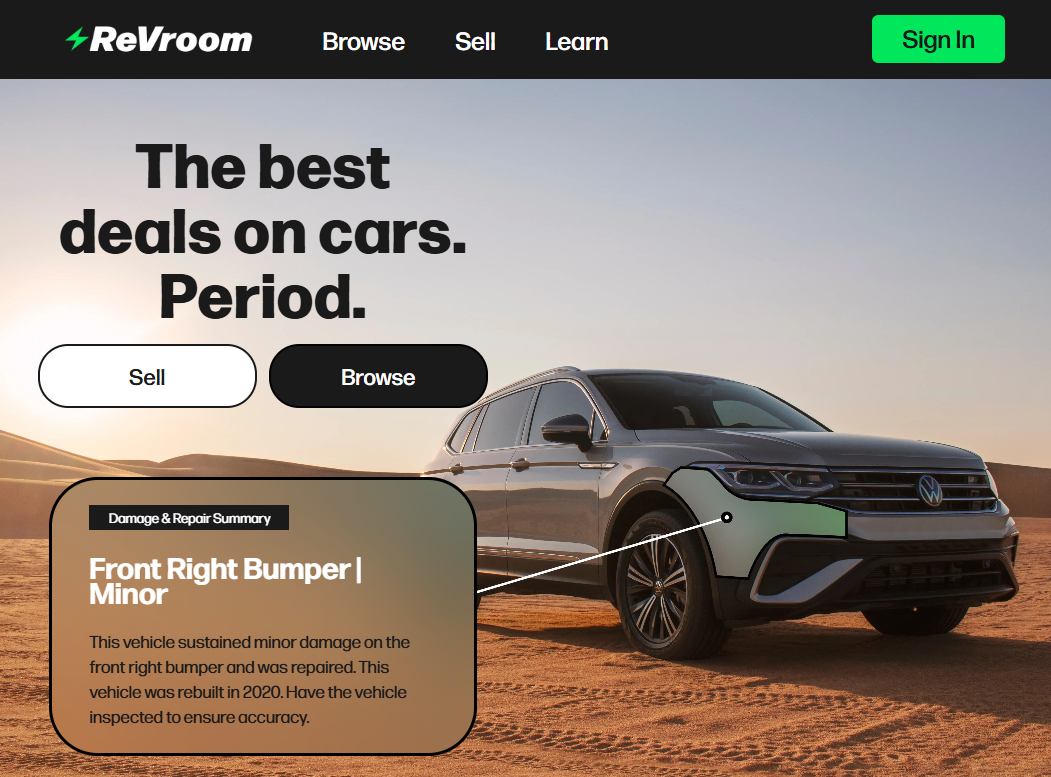
A Revroom History Report costs $15 and works on any rebuilt or branded-title vehicle, anywhere. Got a VIN from a Facebook Marketplace listing you’re not sure about? Run the report. It tells you what happened to the car, how significant it was, and whether the asking price is fair compared to similar clean-title vehicles in your area. For less than the cost of lunch, you get the confidence to say yes or walk away.
Browse state-certified listings and run a Revroom History Report at revroom.org.
Useful sources
These tools and resources will help you verify listings, check prices, and understand title rules before you buy.
- NMVTIS Consumer Portal: The National Motor Vehicle Title Information System lets you check a vehicle’s title history, odometer reading, and brand history through approved data providers.
- FTC Used Car Guidance: The Federal Trade Commission’s consumer advice on buying used cars, including what a vehicle history report should cover.
- Kelley Blue Book Vehicle History Report Guide: Explains what a vehicle history report covers, what it costs ($25–$40 typically), and why it doesn’t replace a PPI.
- Revroom History Report: A $15 vehicle analysis report for any rebuilt or branded-title vehicle. Covers what happened, severity, and price fairness versus local clean-title comps.
- Branded title explained for budget buyers: Practical breakdown of title brands, what they mean for paperwork, and what to expect from state certification.
- Should you buy a branded-title car?: Decision-focused guide for buyers weighing rebuilt-title listings against private-party clean-title options.
FAQ
Can you really find a reliable car for under $5,000?
Yes. Well-maintained high-mileage vehicles regularly outperform low-mileage cars with no service records. The key is prioritizing documented maintenance history and a pre-purchase inspection over cosmetics or odometer readings.
What models are the best cars under $5,000?
The Toyota Corolla, Honda Civic, and Hyundai Elantra are the most consistently reliable options at this price point. The Buick LeSabre with a 3800 V6 is an underrated pick for buyers who want durability at the lowest possible price.
How much should I budget beyond the purchase price?
Plan for $1,000–$1,200 in immediate catch-up maintenance and keep a separate emergency fund of similar size for the first six months of ownership. Registration, taxes, and title transfer typically add another $200–$500 depending on your state.
Is a rebuilt or branded-title car a good option under $5,000?
A rebuilt or branded-title vehicle can be an excellent choice when it comes with state-required certification and transparent documentation. Revroom lists only state-certified, road-ready vehicles and includes pre-repair photos and vehicle history in every listing, which gives buyers more information than most private-party listings ever provide.
What’s the fastest way to check a car’s history before buying?
Run a VIN check through a Carfax report or a Revroom History Report ($15) before you visit any listing. The NMVTIS database is also a free starting point for title and odometer history through approved providers.
