


Rebuilt title vehicles: smart decisions for safe savings
March 27, 2026
Most buyers hear “rebuilt title” and immediately pump the brakes. The assumption is that these vehicles are risky, uninsurable, or somehow lesser. But that assumption is costing a lot of people a lot of money. Rebuilt title vehicles can run up to 50% cheaper than comparable clean title cars, and the gap between a great deal and a bad one usually comes down to one thing: knowing what you’re looking at. This guide breaks down exactly what rebuilt titles mean, what the real tradeoffs are, and how to shop for one without second-guessing yourself at every turn.
Table of Contents
- What is a rebuilt title vehicle?
- The pros and cons of buying a rebuilt title vehicle
- How to evaluate a rebuilt title car before buying
- How rebuilt title cars affect insurance, financing, and resale
- Smart places and processes for buying rebuilt title vehicles
- Find rebuilt title car deals and expert guidance
- Frequently asked questions
Key Takeaways
| Point | Details |
|---|---|
| Know the trade-offs | Most rebuilt title cars offer big savings, with a lower resale value as the honest flip side. |
| Verify before you buy | Always demand repair records and get a full inspection by a trusted mechanic before committing. |
| Insurance & financing are available | You can insure (full coverage) and finance a rebuilt title through banks and credit unions. Compare a few quotes and lenders. |
| Buy from trusted sources | Buy rebuilt title vehicles from sellers who provide clear documentation and transparency. |
What is a rebuilt title vehicle?
A rebuilt title is issued to a vehicle that was previously declared a total loss by an insurance company and has since been repaired and passed a state inspection. Think of it as a car that earned its way back onto the road. The rebuilt title designation is the government’s official stamp that says: this vehicle was reviewed, repaired, and cleared for use.
It’s worth knowing how rebuilt titles differ from other title types at a glance:
| Title type | What it means | Drivable? | Inspected after repair? |
|---|---|---|---|
| Clean title | No total loss declaration | Yes | N/A |
| Rebuilt title | Was total loss, now repaired and inspected | Yes | Yes |
| Other branded titles | Varies by state and situation | Varies | Varies |
Here’s what typically has to happen before a car earns a rebuilt title:
- The vehicle is declared a total loss by an insurer based on repair cost versus market value
- A repair shop or individual restores the vehicle to a drivable, functional condition
- The owner submits the vehicle for a state inspection
- The state approves the repairs and reissues the title as rebuilt
The label matters for a few practical reasons. It affects how a future buyer values the car and shapes resale down the road. For budget-savvy shoppers, understanding this label is the foundation of every smart decision that follows. Our guide to what rebuilt titles are worth digs into the value side.
The pros and cons of buying a rebuilt title vehicle
Some buyers swear by rebuilt titles. Others steer clear entirely. Both camps have valid points, and the truth lives somewhere in the middle depending on your situation.
The case for rebuilt titles:
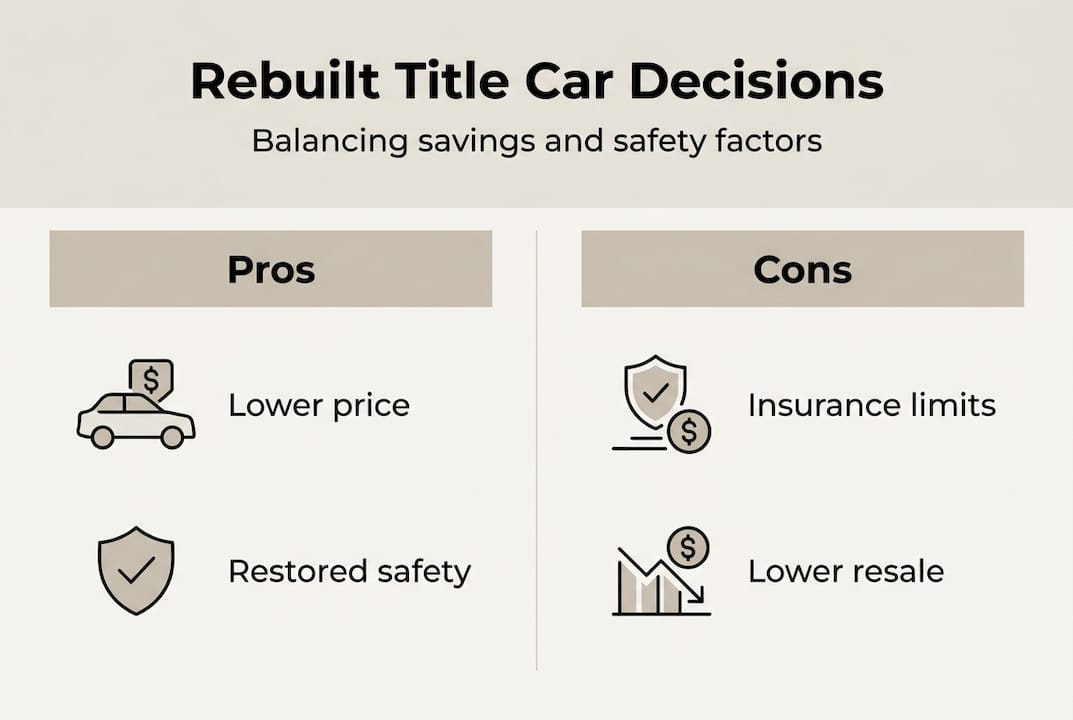
- Purchase prices are typically 20 to 40% lower than the same model with a clean title
- You can access newer model years and higher trim levels that would otherwise be out of budget
- For buyers who do their homework, the value proposition is genuinely strong
- Vehicle history is often more traceable than with typical used cars
The honest trade-offs:
- Repair quality varies depending on who did the work—which a pre-purchase inspection surfaces
- Resale value will likely be lower than a clean title equivalent, offset by the lower price you paid
- Not every buyer has the time to vet a vehicle thoroughly, though the steps are learnable
The real pros and cons of rebuilt title cars are worth understanding, and the trade-offs are manageable with the right approach. Insurance and financing, notably, aren’t among them—both are readily available.
The buyers who tend to do well with rebuilt titles are those who take the time to review vehicle history, get an independent inspection, and buy from transparent sources. It’s not about being a car expert. It’s about being an informed buyer.
How to evaluate a rebuilt title car before buying
Price alone should never close the deal on a rebuilt title vehicle. Here’s a step-by-step process to make sure you’re buying smart, not just cheap.
- Request all repair documentation. A reputable seller should be able to show you what work was done, by whom, and when. Vague answers here are a red flag.
- Verify the state inspection certificate. Every rebuilt title vehicle should have passed a state inspection. Ask to see proof. If it doesn’t exist, walk away.
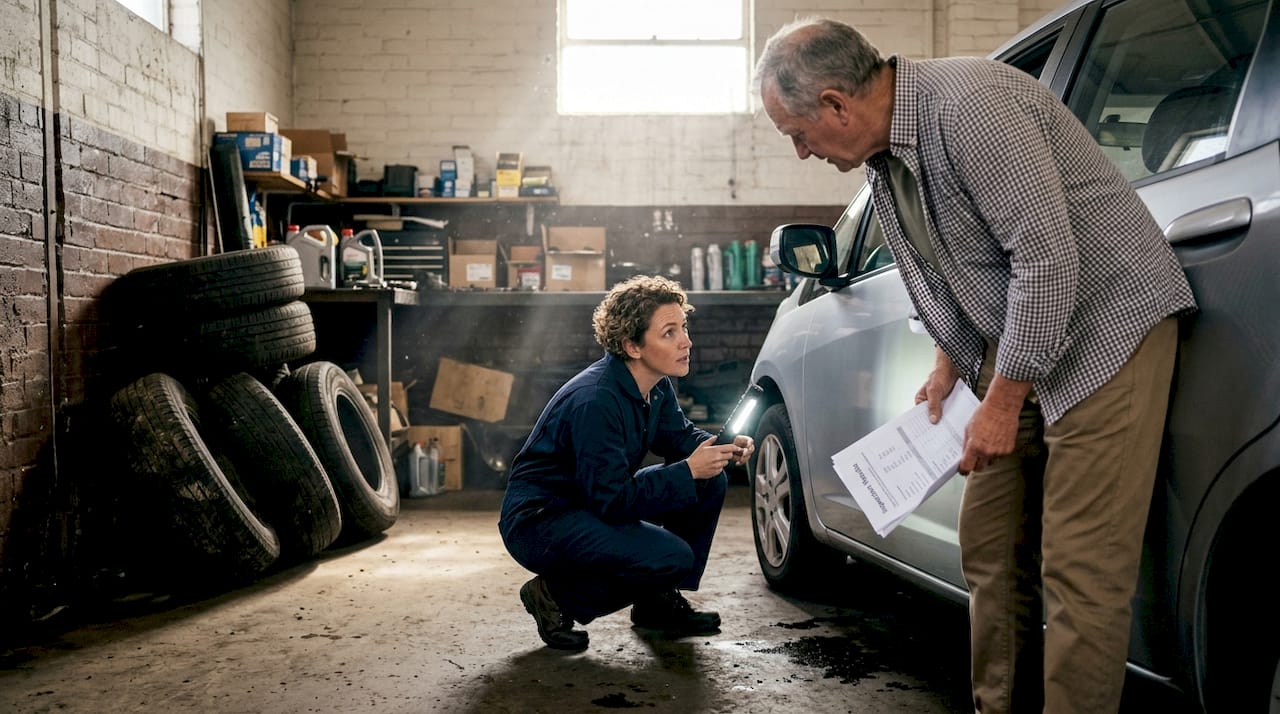
- Get a pre-purchase inspection (PPI) from a trusted mechanic. This is your independent set of eyes on the vehicle. A good mechanic can spot inconsistencies that paperwork alone won’t reveal.
- Review the vehicle history report. Look for the sequence of events: what happened, when, and what was done about it. Gaps in the timeline deserve questions.
- Check for mismatched components. Panels that don’t align, paint that doesn’t match, or parts that seem out of place can signal rushed or incomplete repairs.
- Confirm the title status directly with your state’s DMV. Don’t rely solely on what the seller tells you.
For a deeper look at the full process, our guide to buying a rebuilt car safely is worth bookmarking before you start shopping.
Pro Tip: If a seller hesitates to provide repair records or pushes back on an independent inspection, that hesitation is your answer. Trustworthy sellers welcome scrutiny because transparency protects everyone.
How rebuilt title cars affect insurance, financing, and resale
Once you decide a rebuilt title car might be the right move, there are three ongoing ownership factors worth understanding before you sign anything.
Insurance
Here’s something the internet gets wrong constantly: insuring a rebuilt title vehicle is not difficult. Most major insurers cover rebuilt title cars with full comprehensive-and-collision coverage, and rates are often comparable to a clean-title car. A few carriers price a rebuilt title a little differently or ask for a quick photo inspection, which is exactly why comparing two or three quotes before you buy is smart. The one honest nuance is that a total-loss payout reflects the car’s (lower) market value—a reason to buy at the right price, not a reason to avoid rebuilt titles.
Financing
Banks and credit unions finance rebuilt title cars, with credit unions often the most flexible. Terms vary by lender, so it pays to shop—but “no one finances rebuilt titles” is a myth. Getting pre-approved before you fall in love with a specific car saves you from a frustrating surprise at the finish line.
Resale value
Be honest with yourself here. A rebuilt title will likely carry a lower resale value than a clean title equivalent. If you plan to sell in a few years, factor that into your math now. If you plan to drive the car for a long time, the upfront savings often more than compensate.
For more on the lending side, our rebuilt car financing guide walks through your options clearly, and we cover insurance, financing, and warranties together here.
Pro Tip: Get insurance quotes and financing pre-approval before you commit to a specific vehicle. Knowing your numbers upfront keeps you in the driver’s seat during negotiations.
Smart places and processes for buying rebuilt title vehicles
Where you buy matters just as much as what you buy. The rebuilt title market has historically been fragmented and hard to navigate, but that’s changing.
Expert consensus points clearly toward sticking with trusted sellers and platforms that provide robust vehicle history records. Here’s what to look for in a reputable source:
- Transparent vehicle history. The listing should show you what the car looked like before repairs, not just after. Photos and history reports should be included, not something you have to hunt down.
- Seller accountability. Whether it’s a dealer or a private seller, there should be a clear record of who is selling and what they’re representing.
- No pressure to skip inspection. Any seller worth buying from will encourage you to inspect the vehicle in person before committing.
- Clear title documentation. The rebuilt title should be verifiable and transferable. Confirm the process for transferring the title in your state before you hand over any money.
- A secure payment process. Use traceable payment methods and insist on a proper bill of sale.
The rebuilt title market rewards buyers who do their research and penalizes those who skip steps. The good news is that the steps are learnable, and our guide to buying a rebuilt car safely makes them a lot less intimidating.
Find rebuilt title car deals and expert guidance
You now have a real framework for approaching rebuilt title vehicles with confidence. The price advantage is genuine. The trade-offs are manageable. And the difference between a smart purchase and a stressful one usually comes down to transparency.

ReVroom was built specifically for this moment. As the only online marketplace dedicated to rebuilt title vehicles, ReVroom includes vehicle history photos and pre-repair information directly in each listing, so you’re not piecing together the story yourself. No $150 background reports. No guesswork. Just the information you need to make a call you feel good about. Whether you’re just starting your search or ready to browse listings, explore the ReVroom marketplace or keep learning in our guides.
Frequently asked questions
Is it hard to get insurance for a rebuilt title car?
No. Most major insurers cover rebuilt title vehicles with full coverage, and rates are often comparable to a clean-title car. A few carriers ask for a photo inspection, so comparing a couple of quotes before you buy is a smart move.
Can I get a loan to buy a rebuilt title vehicle?
Yes. Banks and credit unions finance rebuilt title cars, with credit unions often the most flexible. Terms vary by lender, so it pays to compare, and getting pre-approved before you shop puts you in a stronger position.
How much cheaper are rebuilt title vehicles compared to clean title cars?
Rebuilt title vehicles typically cost 20 to 40% less than comparable clean title models, and in some cases the gap can be even wider depending on the vehicle and market.
Do rebuilt title vehicles pass state safety inspections?
Yes. A rebuilt title is only issued after the vehicle passes a state inspection confirming it has been repaired to a drivable, roadworthy condition. Standards vary by state, so it’s worth knowing your local requirements.
