


What salvage title means for car buyers in 2026
April 28, 2026
TL;DR:
- A salvage title indicates a vehicle was declared a total loss by an insurance company.
- The safety and reliability depend on repair quality and proper documentation.
- Buyers should conduct thorough inspections and verify vehicle history before purchasing.
You find a used car listed online at a price that makes you do a double take. It’s the right make, the right color, practically the right everything. Then you spot two words in the listing: “salvage title.” Suddenly the thrill of scoring a good deal turns into a knot in your stomach. Is this car safe? Can you even drive it legally? Will insurance touch it? These are fair questions, and the fact that the internet gives you ten different answers doesn’t help. This guide cuts through the noise and explains exactly what a salvage title means, what it doesn’t mean, and how smart buyers can protect themselves every step of the way.
Table of Contents
- What is a salvage title car?
- What leads to a car getting a salvage title?
- Can you drive, register, or insure a salvage title car?
- Are salvage title cars safe? What buyers must know
- A smarter way to assess salvage and rebuilt titles
- Ready to shop smarter? Start with the right resources
- Frequently asked questions
Key Takeaways
| Point | Details |
|---|---|
| Salvage title basics | A salvage title means the car was declared a total loss by insurance, usually after major damage or theft. |
| Not all risks equal | Flood and frame-damaged vehicles pose bigger risks than theft or hail-damaged cars with clean repairs. |
| Legal and insurance limits | Salvage title cars can’t be legally driven until rebuilt and passing inspection; insurance options may be limited. |
| Smart buying steps | VIN checks, mechanic inspections, and repair documentation are essential to minimize risk when buying salvage or rebuilt vehicles. |
| Patience pays off | Carefully researching and inspecting salvage title cars ensures buyers get value and avoid costly surprises. |
What is a salvage title car?
Let’s start at the beginning. A salvage title is a legal designation placed on a vehicle’s ownership record by the state when an insurance company declares that vehicle a total loss. That declaration happens when the cost to repair the car climbs too close to, or exceeds, what the car is actually worth.
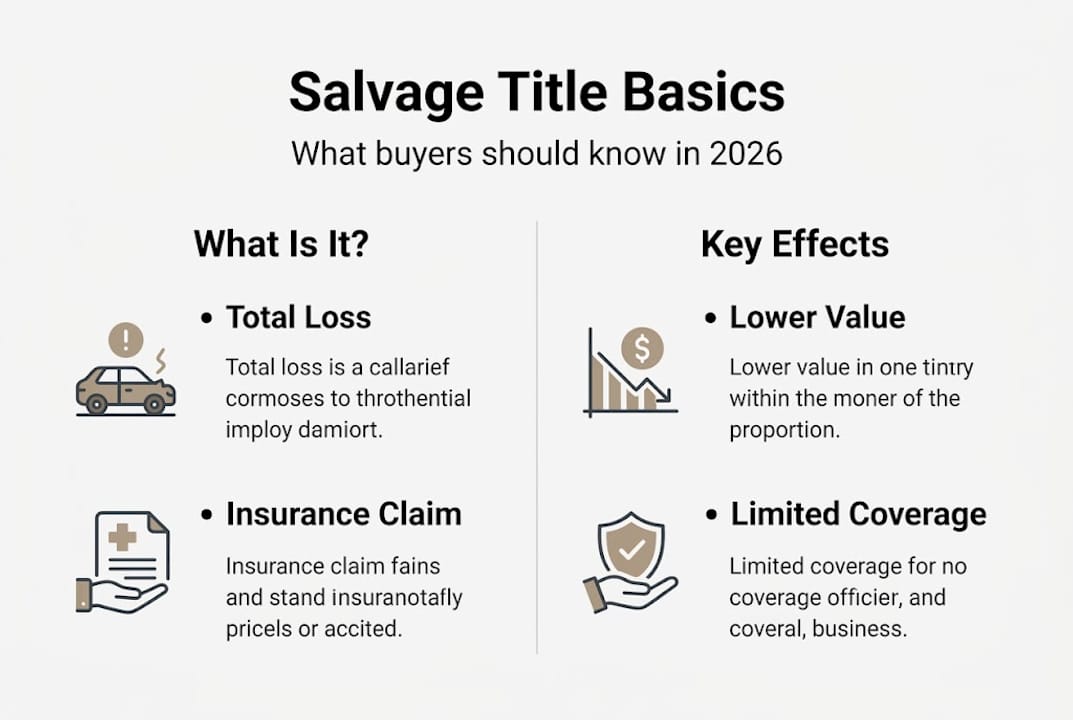
According to industry sources, a salvage title is issued when an insurance company declares a vehicle a total loss, typically because repair costs exceed 60 to 100 percent of its actual cash value, depending on the state where the vehicle is registered. That range matters more than most people realize.
Here is a quick look at how thresholds differ across some major states:
| State | Total loss threshold | Method used |
|---|---|---|
| New York | 75% of ACV | Fixed percentage |
| Wisconsin | 70% of ACV | Fixed percentage |
| Texas | 100% of ACV | Total loss formula |
| California | 100% of ACV | Total loss formula |
| Florida | 80% of ACV | Fixed percentage |
| Illinois | Exceeds ACV | Total loss formula |
As you can see, what counts as a total loss in one state might not qualify in another. A fender bender on an older vehicle in New York could trigger a salvage title, while the same incident in Texas might not. State thresholds vary this significantly, and older vehicles are especially susceptible to being salvaged for relatively minor incidents simply because their actual cash value is low to begin with.
“A salvage title doesn’t automatically mean the car is a wreck. Sometimes it just means the math didn’t work out for the insurance company.”
Once a vehicle receives a salvage title, it cannot legally be driven on public roads in that condition. It sits in a kind of legal limbo until it is either repaired and re-inspected or sold off for parts. This is a critical distinction that separates a salvage title vehicle from a rebuilt or reconstructed title vehicle, which has already gone through the repair and inspection process and is legal to drive again.
The range of events that can result in a salvage title is broader than most buyers expect. Major collisions are the most commonly imagined cause, but floods, fires, hail storms, and theft recoveries all make the list too. Understanding why a car received its salvage title is one of the most important steps you can take as a buyer.
What leads to a car getting a salvage title?
With the definition in place, it helps to look at what actually puts a car in salvage territory, because the cause of that status tells you a lot about what you might be dealing with down the road.
Salvage titles result from collisions, flood and fire incidents, theft recoveries, and hail, with flood damage posing the highest long-term risks due to hidden corrosion in electronics. That last point deserves extra attention. Water works its way into every crevice of a vehicle, including places no visual inspection can easily reach. Corroded wiring, compromised sensors, and weakened structural components can surface months or even years after a flood event.
Here is a comparison of the most common causes and what they typically mean for risk and resale:
| Cause | Typical risk level | Long-term concerns | Resale impact |
|---|---|---|---|
| Major collision | Moderate to high | Frame integrity, airbags, SRS system | Significant |
| Flooding | High | Electrical corrosion, mold, sensors | Very significant |
| Hail damage | Lower | Mostly cosmetic, some structural | Moderate |
| Theft recovery | Lower to moderate | Depends on condition when recovered | Moderate |
| Fire | High | Wiring, structural integrity | Very significant |
The numbers behind salvage vehicles are eye-opening. About 27% of collision claim vehicles were totaled in 2022, with roughly 3.5 million vehicles going to auction yearly and 1 in every 325 used cars carrying a washed title that hides its salvage history.
That last statistic, “1 in 325,” is worth pausing on. Title washing is the practice of moving a vehicle across state lines to exploit gaps in how states share title records, effectively erasing the salvage brand from the paperwork. It happens more than most people would like to believe, and it is one of the biggest fraud risks in the used car market.
Here are some of the most common pitfalls buyers run into when evaluating the cause of a salvage title:
- Sellers downplaying flood history by listing a vehicle as a theft recovery or minor incident
- Missing documentation on what was actually repaired and by whom
- Clean-looking interiors that mask water damage, mold, or corroded wiring underneath
- Cross-state purchases where title records from the state of origin are not easily accessible
- Vehicles with replaced VIN plates or inconsistencies between the VIN on the car and the paperwork
Buying safely in this space requires knowing what questions to ask and what red flags to watch for. Cause matters. A hail-damaged car and a flood-damaged car wearing the same title label are two very different propositions for a buyer.
Can you drive, register, or insure a salvage title car?
Now that you understand the why, it is time to talk about the practical realities of living with a salvage title. The short answer is: you cannot simply buy a salvage title vehicle and drive it home.

Vehicles with salvage titles cannot be legally driven on public roads in most states until they have been repaired and passed a state safety inspection, after which they receive a rebuilt title. That conversion process is what separates a salvage vehicle from a rebuilt one, and it involves more than just fixing the visible problems.
Here is a general outline of how the conversion from salvage to rebuilt typically works:
- Purchase the salvage vehicle at auction or from a private seller, with the salvage title in hand
- Complete all necessary repairs, addressing the issues that caused the total loss declaration
- Gather documentation of every repair, including receipts, part numbers, and labor records
- Submit the vehicle for a state-mandated safety inspection, which varies by state but often includes a VIN verification
- Apply for a rebuilt or reconstructed title through the state DMV, along with all supporting repair documentation
- Receive the rebuilt title once the state approves the application and inspection results
The path from salvage to rebuilt is not impossible, but it is involved. Each state has its own rules, fees, and inspection requirements, so what works in one state may not apply in another.
On the insurance side, things get more complicated. Insurance for rebuilt title vehicles tends to run 20 to 40 percent higher than comparable clean title vehicles. Many insurers limit coverage to liability only, declining to offer comprehensive or collision coverage, or they require additional inspections before writing a full policy. This is something buyers should budget for and research before committing to a purchase.
Financing is another layer of complexity. Most traditional lenders, including banks and credit unions, will not write loans for salvage or rebuilt title vehicles. Some specialty lenders exist, but options are limited and rates tend to be high.
Pro Tip: Cash purchases are the most practical route for salvage and rebuilt title vehicles. Always run a VIN check through NMVTIS or a similar service before buying, and request all available inspection and repair records from the seller. Use the rebuilt vs salvage title guide to understand exactly what documentation you should be asking for before you hand over a single dollar.
Are salvage title cars safe? What buyers must know
This is the question everyone is really asking. And the honest answer is: it depends, but perhaps not in the way you think.
No large-scale studies on rebuilt title accident rates exist. The risks come from poor repairs, including frame misalignment, airbag and SRS system issues, and corrosion. They do not come from the title label itself. A vehicle that was repaired correctly by qualified technicians and passed a rigorous state inspection can be a very solid purchase. A vehicle that was patched together carelessly and pushed through a lenient inspection process is a different story entirely.
Key insight: The title tells you the vehicle’s history. The repair quality determines your future with it.
Here is what every serious buyer should verify before moving forward with a salvage or rebuilt title vehicle:
- Professional pre-purchase inspection (PPI): Have a trusted, independent mechanic inspect the vehicle before you buy it. Not the seller’s mechanic. Your mechanic.
- Frame integrity check: Structural damage that was not properly repaired can compromise crash safety. This is not negotiable.
- Airbag and SRS system verification: Airbags and supplemental restraint systems must be fully functional. Fake airbags and disconnected sensors are a real concern in improperly repaired vehicles.
- Electrical system review: Look for signs of corrosion, patched wiring, or inconsistent behavior in lights, sensors, and onboard systems.
- Complete repair documentation: Ask for invoices, receipts, and part records. If a seller cannot produce them, that is a significant red flag.
- Flood and fire screening: Even if not listed as flood or fire-related, look for signs of water intrusion or heat damage inside the vehicle.
Pro Tip: Run the VIN through NMVTIS, the National Motor Vehicle Title Information System, which pulls title records from multiple states. This is one of the best tools available for catching title washing fraud. Cross-reference it with at least one additional vehicle history service for a fuller picture. Resources on buying rebuilt title vehicles wisely and evaluating repaired vehicles carefully can help you build a complete checklist before you ever see the car in person.
Flood and major frame vehicles deserve extra caution. Unless the documentation is thorough, the repairs are verifiable, and the inspection was conducted by a credible source, these are the categories where caution is most warranted. Not because the title says so, but because the underlying vehicle history makes verification harder.
A smarter way to assess salvage and rebuilt titles
Here is something most guides will not tell you: most buyers focus entirely on the wrong thing. They see the title label and either run away or shrug it off. Both reactions miss the point.
The label is just the starting line. What actually determines whether a purchase is smart or not is the quality of the repairs and the paper trail behind them. A theft recovery vehicle with complete documentation and a clean inspection is often a far better buy than a collision vehicle with missing records and a seller who “can’t remember” where the repairs were done.
We have seen it time and again. Hail vehicles and theft recoveries tend to carry lower risk than poorly documented collision or flood repairs. The vehicle history itself matters less than what happened after. Were the repairs professional? Are there invoices? Did it pass inspection with flying colors or barely squeak through?
Title washing and missing records are the real threats in this market. Not the word “salvage” on a title. Smart buyers come prepared with multiple VIN checks, an independent mechanic, and the patience to walk away if something doesn’t add up. Emotional purchases are where buyers get burned. Take your time. The right vehicle is out there, and finding legitimate deals is absolutely possible when you know what to look for.
Ready to shop smarter? Start with the right resources
Doing this research on your own can cost you real time and real money. Properly vetting a rebuilt title vehicle typically runs buyers an average of $150 per vehicle in reports and investigations, and that adds up fast when you’re comparing multiple options.

ReVroom was built to change that. As the only online marketplace built specifically for rebuilt title vehicles, ReVroom includes vehicle history information and photos showing what each car looked like before it was repaired, right in the listing. No extra fees, no digging around on your own. Just the transparency you need to make a confident, informed decision. Browse ReVroom car listings and see the difference that upfront information makes when you’re shopping for a rebuilt title vehicle that fits your budget and your life.
Frequently asked questions
Does a salvage title always mean a car was in a bad accident?
No. Salvage titles can result from theft recovery, hail damage, or even minor incidents on older vehicles where repair costs exceed the car’s low market value, not just severe collisions.
Can I get full insurance on a rebuilt title car?
Full coverage can be harder to secure and more expensive. Insurance for rebuilt title vehicles tends to run 20 to 40 percent higher, and some insurers limit policies to liability only or require additional inspections before offering comprehensive coverage.
Is it possible to finance a car with a salvage or rebuilt title?
Financing is uncommon for these vehicles. Most buyers use cash or explore personal loan options, since traditional lenders typically decline to write auto loans for salvage or rebuilt title cars due to lender risk concerns.
How can I check if a car’s salvage history is hidden?
Run the VIN through NMVTIS and cross-reference it with at least one other vehicle history database. Title washing fraud often involves moving vehicles across state lines to obscure the salvage brand, so multi-source verification is your best defense.
Are salvage title cars always unsafe?
No. Risks stem from poor repairs, such as frame misalignment, airbag failures, or corrosion, not from the title designation itself. A properly repaired and inspected vehicle can be a solid, reliable choice when the documentation backs it up.
