


Save big: top benefits of buying rebuilt title cars
April 6, 2026
TL;DR:
- Rebuilt title cars are professionally repaired vehicles that pass state inspections and are legally roadworthy.
- They offer 20 to 40 percent savings, allowing buyers to afford newer or higher-end models.
- Proper documentation, inspections, and transparent history reduce risks, making them practical for budget-conscious buyers.
Finding a reliable car on a tight budget can feel like searching for a parking spot at the mall on Black Friday. Frustrating, competitive, and rarely rewarding. But there’s a category of vehicles that budget-conscious buyers, first-time owners, students, and families consistently overlook: rebuilt title cars. These are vehicles that have been professionally repaired, passed state inspections, and are ready to hit the road again, often at prices up to 50% lower than comparable clean-title options. This guide breaks down the real benefits, practical considerations, and honest tradeoffs so you can make a confident, informed decision.
Table of Contents
- What is a rebuilt title car?
- Affordability: Getting more car for your money
- Transparency and accident history: Smarter, safer choices
- Insurance, resale, and ownership: What you need to know
- Is a rebuilt title car right for you? Decision checklist
- The uncomfortable truth about rebuilt title cars
- Ready to find your rebuilt title deal?
- Frequently asked questions
Key Takeaways
| Point | Details |
|---|---|
| Major cost savings | Rebuilt title cars can help you save 20–40 percent compared to similar clean-title models. |
| Transparency benefits | These vehicles offer full repair histories and must pass state inspections, giving buyers peace of mind. |
| Smart for budgets | Choosing rebuilt titles lets first-time buyers and families access better models and features within their price range. |
| Know the process | Understanding inspection, insurance, and resale steps ensures confident purchasing and ownership. |
What is a rebuilt title car?
A rebuilt title is an official designation given to a vehicle that was previously declared a total loss by an insurance company, then professionally repaired and restored to a safe, drivable condition. Once repairs are complete, the car must pass a state-mandated inspection before it can legally return to the road. Only after clearing those legal and technical evaluation steps does the vehicle receive its rebuilt title.
It’s worth knowing that vehicle histories vary widely. Some cars earn rebuilt titles after significant repairs, while others went through the process because of hail damage, paint issues, or theft recovery. The rebuilt title simply means the car was restored and cleared for road use. It does not tell the whole story on its own, which is exactly why reviewing the full vehicle history matters.
Here’s what typically happens before a car earns a rebuilt title:
- An insurance company declares the vehicle a total loss based on repair cost estimates.
- A repair shop or individual purchases and professionally restores the car.
- The owner submits the vehicle for a state inspection to verify roadworthiness.
- Once it passes, the state issues a rebuilt title, officially clearing it for registration and road use.
One thing worth clearing up: rebuilt titles and what are sometimes called “other title types” are not the same thing. Rebuilt means repaired and inspected. Understanding that distinction is key to rebuilt title eligibility and smart shopping. There are also plenty of rebuilt title myths floating around online that can cloud your judgment if you let them.
Pro Tip: Always ask the seller for any available paperwork related to the repair process, including what work was done and by whom. The more documentation you have, the clearer your picture of the car’s current condition.
Affordability: Getting more car for your money
Now that we know what rebuilt titles are, let’s see how their biggest appeal, affordability, works in your favor.
The price difference between a rebuilt title vehicle and a comparable clean-title car is not subtle. Buyers commonly see savings of 20 to 40 percent or more, and in some segments, the gap is even wider. That kind of margin opens real doors. Instead of settling for an older base model, you might find yourself behind the wheel of a newer vehicle with better safety features, lower mileage, or a more fuel-efficient engine, all within the same budget.
For students working with limited savings, or families trying to stretch every dollar, that difference is not just nice to have. It’s genuinely life-changing.
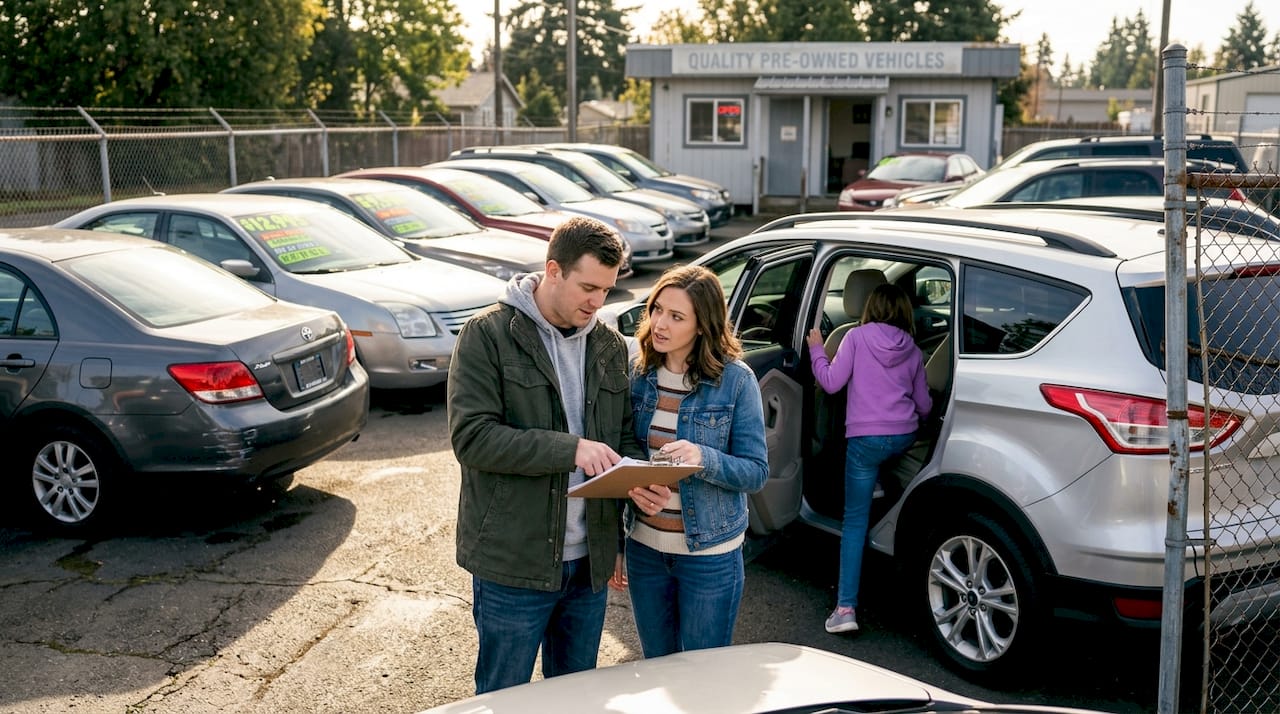
| Vehicle segment | Clean-title avg. price | Rebuilt-title avg. price | Estimated savings |
|---|---|---|---|
| Compact sedan | $22,000 | $14,000 | ~$8,000 |
| Midsize SUV | $35,000 | $22,000 | ~$13,000 |
| Full-size truck | $48,000 | $30,000 | ~$18,000 |
| Luxury sedan | $55,000 | $33,000 | ~$22,000 |
Think of it like shopping the clearance section at your favorite store. The item is the same, the quality has been verified, and the price reflects its history, not a hidden defect. The budget-smart rebuilt car guide breaks this down further if you want to go deeper on the numbers.
Here’s why rebuilt titles make particular sense for budget-focused buyers:
- Lower purchase price means less money tied up in a depreciating asset.
- Access to newer models with modern safety tech at older-model prices.
- Lower registration fees in many states, since fees are often tied to vehicle value.
- More negotiating room because the market for rebuilt titles is less competitive.
The rebuilt vehicle benefits go well beyond the sticker price, and once you see the full picture, it’s hard to look at the used car market the same way.
Transparency and accident history: Smarter, safer choices
Beyond price, transparency in what you’re buying is a major reason rebuilt title cars deserve a closer look.
Here’s something that surprises most buyers: a rebuilt title car often comes with more documented history than a typical used car. Because the vehicle had to pass a formal inspection before receiving its rebuilt designation, there’s a paper trail. Compare that to a clean-title used car that may have been in multiple incidents with zero documentation. Clean title does not automatically mean clean history.
The positive aspects of rebuilt titles include this built-in accountability. Repairs had to meet a standard, and the state verified it. That’s a layer of oversight many used car buyers never get.
Here’s a step-by-step checklist for evaluating transparency when shopping rebuilt title vehicles:
- Request the full vehicle history report and review it carefully for any gaps.
- Ask for photos of the vehicle before and after repairs were completed.
- Confirm the repair shop’s credentials and look for professional documentation of the work.
- Verify the inspection passed by checking with your state’s DMV or motor vehicle agency.
- Schedule an independent in-person inspection with a mechanic you trust before committing.
“Transparency is the single most underrated advantage of a well-documented rebuilt title vehicle. Buyers who do their homework often end up with more confidence in their purchase than buyers of undocumented used cars.”
Pro Tip: An independent mechanic inspection before purchase is one of the smartest moves you can make with any used vehicle, rebuilt title or otherwise. It gives you eyes on the car that no online report can fully replace.
Insurance, resale, and ownership: What you need to know
After understanding the value and transparency of rebuilt vehicles, let’s get practical about insurance, resale, and what ownership involves.
Insurance for rebuilt title cars is more available than most people realize. The idea that these vehicles are difficult or impossible to insure is one of the most widely repeated myths in the auto world, and it’s largely inaccurate. Most major insurance providers cover rebuilt title vehicles without issue. Rates and payout structures may differ because insurers base payouts on the vehicle’s market value, which reflects the rebuilt title designation. The key is shopping around and being upfront with your insurer about the title type.
For financing, options exist but may be more limited than with clean-title vehicles. Some lenders are selective, so it helps to come prepared. The financing rebuilt cars resource walks through what to expect from lenders and how to position yourself well.
| Factor | Rebuilt title | Clean title |
|---|---|---|
| Insurance availability | Widely available | Widely available |
| Insurance payout basis | Market value (rebuilt) | Market value (clean) |
| Financing options | Available, may be limited | Broadly available |
| Resale value | Lower but reflects purchase price | Higher but depreciates faster |
| Registration process | Standard, requires rebuilt title docs | Standard |
On resale, yes, a rebuilt title will affect the vehicle’s resale value compared to a clean-title equivalent. But here’s the thing: you likely paid significantly less upfront. When you factor in the rebuilt title value relative to what you paid, the math often still works in your favor.
A few quick tips to maximize your ownership experience:
- Keep all repair and inspection documentation to show future buyers.
- Maintain the car well and keep service records to build confidence in resale.
- Be upfront with insurers and compare at least three quotes before committing.
- Understand your state’s registration requirements for rebuilt title vehicles ahead of time.
Is a rebuilt title car right for you? Decision checklist
With all the facts laid out, here’s a checklist to help you decide if a rebuilt title car matches your needs.
Not every buyer is in the same situation, and a rebuilt title vehicle is not a one-size-fits-all answer. But for many budget-conscious shoppers, the combination of lower price and documented history makes it a genuinely smart option. The rebuilt car buying tips from buyers who have navigated this process are worth reading before you start shopping.
Work through this checklist honestly:
- Is your budget a primary constraint? If yes, rebuilt titles give you significantly more purchasing power.
- Are you comfortable reviewing vehicle history? The more you engage with the documentation, the better positioned you are.
- Do you have access to a trusted mechanic? An in-person inspection before purchase is strongly recommended.
- Is this a daily driver or a secondary vehicle? Either works, but knowing the use case helps you prioritize features.
- Are you okay with a lower resale value? If you plan to drive the car for several years, this matters less.
- Have you compared insurance quotes for rebuilt title vehicles? Do this early so there are no surprises.
- Are you buying from a source that provides full vehicle history? Transparency in the listing is non-negotiable.
Pro Tip: Pair this checklist with an independent mechanic inspection and you’ve covered the two biggest bases in smart rebuilt title shopping. One gives you the paper trail, the other gives you eyes on the car itself.
The uncomfortable truth about rebuilt title cars
Let’s be honest about something the mainstream auto world rarely admits: the stigma around rebuilt titles is more about perception than reality. Media coverage, cautious dealerships, and well-meaning but outdated advice have painted these vehicles as a last resort. But that framing ignores a lot of evidence.
A clean title does not guarantee a clean history. Many clean-title vehicles have been in incidents that were never formally reported, repaired quietly, and sold without a word. Meanwhile, a properly documented rebuilt title car has been inspected by the state, repaired by professionals, and carries a paper trail that most used cars simply do not have.
The real risk for budget-conscious buyers is not the rebuilt title. It’s overpaying for a clean-title car while assuming that designation means something it does not. Buyers who skip research and due diligence on any used vehicle are taking a gamble. Buyers who engage with rebuilt title misconceptions and do their homework often come out ahead, financially and practically.
The stigma costs buyers real money. Don’t let it cost you yours.
Ready to find your rebuilt title deal?
You’ve done the reading. You know the benefits, the tradeoffs, and the questions to ask. Now it’s time to put that knowledge to work.

ReVroom is the only online marketplace built specifically for rebuilt title vehicles. Every listing includes vehicle history information and photos of what the car looked like before repairs, so you can evaluate each option with confidence before you ever leave your couch. No guessing, no $150 investigation fees, no surprises. Browse rebuilt title car listings today and see what your budget can actually get you. If you’re still figuring out where to start, the guide on where to buy rebuilt titles is a great first stop. Your next car is out there, and it might be better than you expected.
Frequently asked questions
How much can I save by buying a rebuilt title car?
Savings typically range from 20 to 40 percent compared to similar clean-title vehicles, and in some segments the gap is even larger depending on the make, model, and condition.
Is it safe to buy a rebuilt title vehicle?
Rebuilt cars must pass detailed state inspections and repairs are documented, but you should always verify the paperwork and schedule your own in-person inspection before purchasing.
Can I finance or insure a rebuilt title car?
Yes, both financing and insurance are generally available for rebuilt title vehicles, though options may vary by lender and insurer, so comparing multiple quotes is a smart move.
Are there special steps to register a rebuilt title car?
Registration follows a process similar to any other vehicle, but you will need to present the rebuilt title documentation and proof of the passed inspection when you visit your state’s motor vehicle office.
Where is the best place to shop for rebuilt title cars?
Online marketplaces with verified listings and transparent vehicle histories offer the safest and most convenient experience, and ReVroom’s step-by-step guide walks you through exactly how to find the right car with confidence.
